Food allergies, intolerances and sensitivities

This is an issue I have strong feelings about so I thought it was time to say something about it.

Food allergy

I sit in camp one; I have an allergy to nuts. This wonderful allergy means that I was have always been very good at reading the back on packets. Always looking to see if what I wanted to buy contained nuts or had traces of nuts. It sucks, really it does, I have to go so far as to read what my shampoo, soap and deodorant contains. Believe me that almond oil in shampoo isn’t good. I will be honest allergies can be problematic at times. I know there are far worse things to have allergies to so I won’t complain … well, I will but not too much.

Not the only one

We got a great surprise in 2015 when we discovered the little man in our family (my stepson) appears to have developed a sensitivity to nuts. As I have no input to his genetic make-up I can’t be blamed on this one. I have to admit I was intrigued that he developed sensitivity all of a sudden; he had never been interested in or liked nuts but never had any issue with them. As far as we know there are no other family members with nut allergies, so the fact he had eaten them then had a reaction was odd. I decided to find out what can trigger a reaction, so I did some reading.

The basics

I know and understand the basic science around sensitivities and allergies. The body attacks the item of food the same way it does a foreign bacteria or a virus. The bodies reaction is what is dangerous; the best case scenario is hives and generalised swelling. The worst-case scenario is an anaphylactic reaction that will land you in hospital or dead. In my experience, there is not a lot of understanding of how serious a food allergy is. A big issue I find is that people think your allergy is a lifestyle choice, like people who say they can’t eat gluten but are not diagnosed Celiac. Knowing what a food allergy means is important.

Understanding the difference

So what is the difference between food sensitivity, intolerances, and allergies? Here is a simple breakdown.

Food allergy

We can start with an allergy, this is an immune reaction to a food, this is similar to how the body fights infection it’s just that the body uses its defences to attack food. An allergic reaction could be something mild like itching or hives; on the other hand, it could be something as severe as anaphylaxis which causes swelling of the throat and tongue, trouble breathing and dizziness. The more you are exposed to an allergen the more severe a reaction can become. Most people start with the itching and hive, but you can have an anaphylactic reaction the first time to eat something.

Food intolerance

Food intolerance is when your body is missing a vital enzyme needed to process a specific food. There are symptoms associated with food intolerance. Usually, some form of gastric distress or inflammation, prolonged exposure to foods you cannot process can lead to intestinal damage, but it cannot trigger anaphylaxis.

Food sensitivities

So that leaves food sensitivities, these are a little more board, you can have an unpleasant reaction to food like reflux brought on my spicy foods, headaches or bloating. Sensitivities are not fun, but they are not life-threatening. Sensitivities can be the start of the journey to a food allergy, but most of the time they are not a big issue.

Here in New Zealand

Recently here in New Zealand, there have been some incidents of hospitalisation due to food allergies and even the tragic death of a teenager. It has been good to see that food safety is being taken seriously, but prevention is preferable to apologies.

In some cases, I think New Zealand is pretty good when it comes to food allergies. A school-based survey in 2013 that found over 8% of school kids reported they had an allergy to one or more food. I know that schools here in New Zealand are taking steps to minimise the risks to their students by banning some foods from lunchboxes because so many children have allergies and sensitivities. While this is a step in the right direction, it isn’t enough. Understanding is the key.

What are people allergic to?

While trooping around the interweb, I found a heap of people talking about their reactions to food and the reactions their children were having to things like;

  • Lactose
  • Wheat
  • Gluten
  • Rice
  • Egg
  • Sugar
  • Nuts
  • Yeast
  • Soy

These are just the most commonly mentioned foods; the full list is much longer.

Seems to be more allergies

I have to admit I was shocked at how many people are developing food allergies and intolerances. Now I know that in some cases people are self-diagnosed, so the exact numbers may never be known, but there seems to be an increase of instances. From everything I’ve read, no one knows why we are seeing this increase in food allergies and sensitivities. There are plenty of theories about potential causes but nothing that would suggest a way to reduce the number of people developing allergies or prevent us from developing them in the first place. I don’t have any answers, but I do hope that one day someone can help those of us who have allergies and sensitivities.

Prevention

So if we aren’t able to prevent people from developing sensitivities, intolerances, and allergies what can we do? I think a key difference we can make is educating people. Those of us who live with these things every day understand the consequences of eating the wrong things, so we avoid them at all costs. Not everyone understands how serious the consequences can be.

Proper education

One of the major concerns I have is the lack of understanding of those who do not suffer from food allergies. I am especially concerned with those who are responsible for serving food. I believe that there should be more information about how dangerous allergies are and how their actions can put those of us who have allergies in harm’s way. While little signs keep popping up on counters in cafes and restaurants about advising servers about allergies they don’t mean much. Last time I did disclose an allergy I was promptly told that you recommended I didn’t order any food. Hardly what you want to hear at brunch.

Standards might not be right

It is all well putting up signs that warn customers that there are allergens in food, but it doesn’t resolve the real issue – poor food service and handling practices. Don’t get me wrong I am not bashing individuals; I am bashing the system. A few years ago I completed the Basic Food Handling course that food service/manufacturing staff in New Zealand are supposed to attend. I was surprised there was very little information included about food allergies, what they are, what you should do and how to prevent cross-contact of foods.

Cross-contact

I’m talking about cross-contact, not to be confused with cross contamination. Cross-contamination when foods are mixed, like raw meat with cooked meat. For anyone who cooks knows the fundaments to prevent cross-contamination, if you mix raw with cooked someone will get sick. The Basic Food Handling course explains the reasons why cross contamination is bad and clear step on how to prevent it. Cross-contact, on the other hand, is not explained, and it is not highlighted how dangerous it can be.

What is it?

Cross-contact happens when one food comes into contact with another food and their proteins mix. When that happens, each food then contains a small amount of the other food. What people don’t always understand is that even this tiny amount of food that is transferred can cause reactions in people with food allergies. Unlike cross-contamination, cooking food does not remove allergens; the only way to prevent a reaction is to avoid any food that has come into contact with an allergen source.

Most cross contact is accidental, using the same thongs to pick up a piece of cake that was used to pick up a nut and seed slice or using the same spatula to flip a cheeseburger as you use for a hamburger. I want to think that this kind of cross contact is rare, sadly it isn’t. I can also say that from experience when you flag that something like that had occurred the response is never good.

What would I do?

With the rise of food allergies, we need to make some changes. I think that information about cross-contact should be included as part of the food safety training. It is just as important as knowing about cross-contamination and can have serious consequences. Teach people about safe food handling and preparation in a broader context. It isn’t hard to keep people safe and prevent cross contact with allergens. Some simple things can be done to avoid cross-contact and to make it safer for those with allergies to eat out.

  • Using utensils, cutting boards and pans that have been thoroughly washed with soap and water when working with allergens.
  • Have separate utensils such as thongs for each of the foods being served
  • Using separate utensils and dishes for making and serving safe foods. Some families choose a different colour like red for preparation of foods with allergens.
  • If you are making several foods, cook the allergy-safe foods first.
  • Keep the safe foods covered and away from other foods that may splatter.
  • If food has come into contact with an allergen, make it clear that the food may cause a reaction.
  • Clearly label foods and state any allergens on the menu
  • Wash your hands with soap and water before touching anything else if you have handled a food allergen. Soap and water or commercial wipes will remove a food allergen.
  • Scrub down counters and tables with soap and water after making meals.

Until the foodservice and manufacturing industries make some changes, those of us with food allergies will have to remain vigilant when it comes to buying foods and eating out. It doesn’t make life fun, but it could be worse.

Remember – The world is full of things that can kill you, but no one wants to be killed by their dinner.
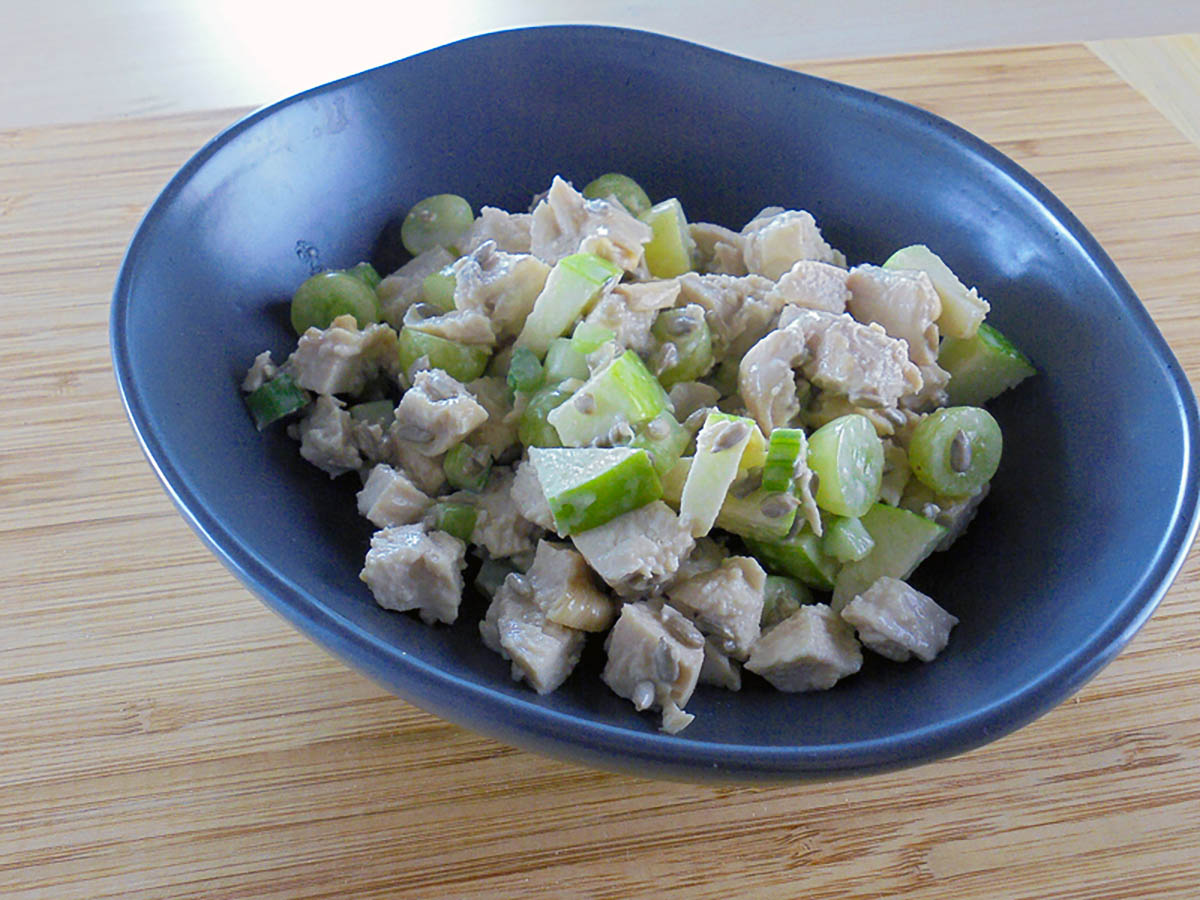

Waldorf salad

Easy make ahead salad 

It is a summer of salads!! The warm months mean lots of fresh veggies and endless possibilities for salad. Anyone that knows me knows I could eat salad for every meal, I love them, lots. Most of the time I stick with the simple mixture of protein, lettuce leaves, crunchy veg and a simple dressing. On occasion, I like to make something a little fancier. 

Classic Waldorf salad 

The original version of the Waldorf salad was made with apples, celery and mayonnaise. Later on, chopped walnuts were added to the dish and became integral. Every time I have seen Waldorf on a menu, it had walnuts included, thanks to my stupid nut allergy I have never had the pleasure of enjoying the salad. Until now. 

Switch it up 

Regular visitors here will know I can’t leave things alone, I have to mess around with recipes and switch out ingredients. The Waldorf salad was a prime candidate for me to mess with. First up was an alternative to walnuts. As with many recipes, I find that switching out nuts with sunflower seeds, this means you get all the crunch with no risk of death. Next up was bumping up the protein. Generally speaking, I have a high protein diet so having meat as part of my salad is essential. In this instance, I went with some cooked and cooled chicken. 

Meal prep winner 

This salad is one of my favourites for mixing up a big batch and portioning out for meals for the week. I like to make a double batch of the salad and keep it in the fridge ready for lunches, snacks and easy dinners when it is too hot to make a meal. 

Chicken Waldorf salad recipe

Ingredients 

Chicken Waldorf salad ingredients
  • 2 cups of cooked diced chicken 
  • 1 apple, diced 
  • 1 cup chopped celery 
  • 1 cup grapes, halved 
  • 1/2 cup chopped sunflower seeds 
  • 1/4 cup easy mayo
  • 2 tsp. lime juice 
  • 2 tsp. honey 
  • salt and pepper 
Chicken Waldorf salad

Chicken Waldorf salad

  • Servings: 8
  • Rating: ★★★★★
  • Print

A nut-free take on this classic salad


Credit: Cath @ easycleaneats

Ingredients

  • 2 cups of cooked diced chicken 
  • 1 apple, diced 
  • 1 cup chopped celery 
  • 1 cup grapes, halved 
  • 1/2 cup chopped sunflower seeds 
  • 1/4 cup easy mayo 
  • 2 tsp. lime juice 
  • 2 tsp. honey 
  • salt and pepper 

Directions

  1. In a bowl, combine chicken, apple, celery, and seeds. 
  2. In a bowl, combine the mayonnaise, lime juice, and honey. 
  3. Season to taste. 
  4. Spoon dressing over chicken salad and toss to coat. 

Nutrition

Per Serving: 262 calories; 10.6 g fat; 9.4 g carbohydrates; 11.4 g protein

Equipment

  • Large mixing bowl
  • Small mixing bowl
  • Whisk
  • Spoon
  • Measuring cups
  • Measuring spoons

Nutritional disclaimer

Nutrition information is provided as an estimate based on the ingredients used and available in my area (New Zealand). The nutritional information is here to help you understand the recipe; I use MyFitnessPal to generate my estimates. For more accurate nutritional information, please use a nutritional calculator with the ingredients in your area.


Broccoli pesto frittata

Something quick and easy, please

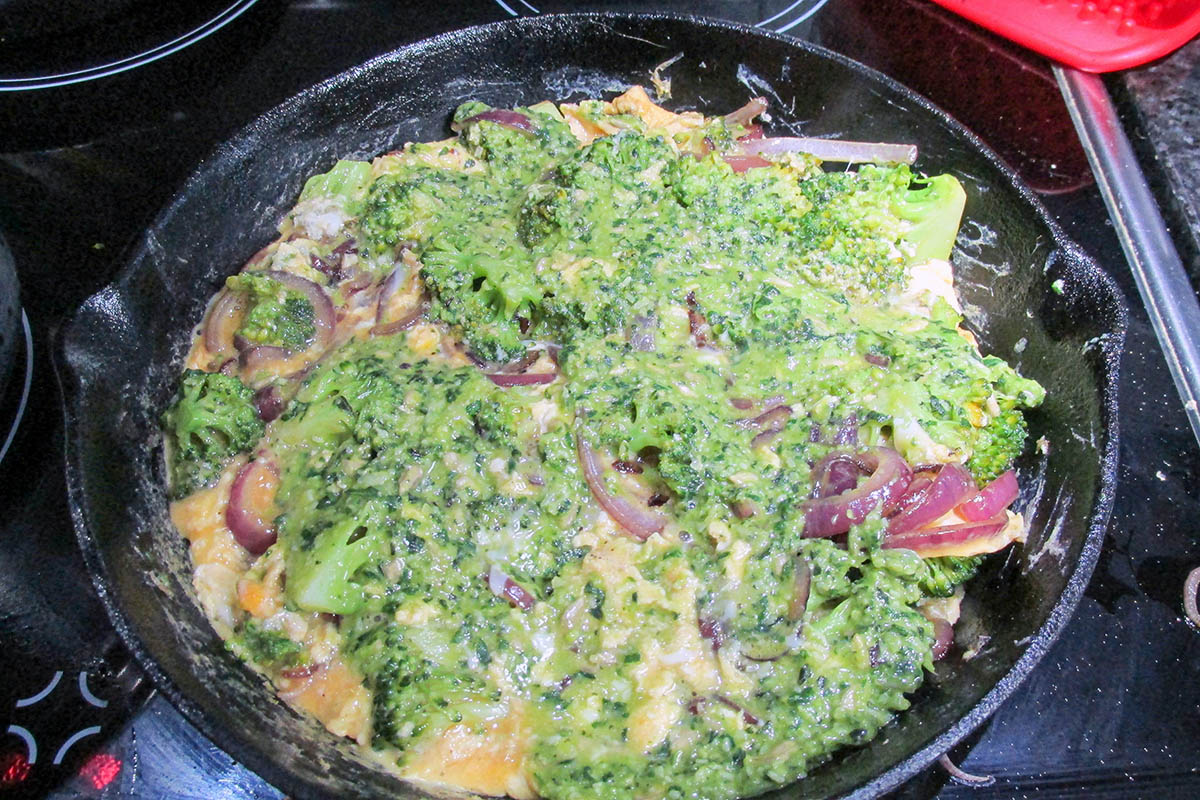
It is hot and sticky here in Auckland, the last thing I want to be doing in spending hours over a hot stove. This week’s recipe comes from the I don’t want to be in a hot kitchen collection but still want a home-cooked meal. This Broccoli Pesto Frittata is a quick and easy recipe that takes minutes to prepare and can be served hot or cold.

Broccoli pesto frittata

Leftovers are welcome

My fridge is a mish-mash of food at the minute, there are about four kinds of cheese, a range of cut meats, jars of sauces and cooked vegetables. Post-Christmas and New Year meals are generally an effort to empty the fridge as fast as possible. With three hungry mouths to feed I had a quick rummage around the fridge and cupboards. I had a stash of nut-free pesto and steamed broccoli in the fridge this week which was the inspiration for this recipe.

Broccoli pesto frittata recipe

Ingredients

Broccoli pesto frittata
  • 3 tbsp. nut free pesto
  • 2 tsp. butter 
  • 1 red onion, chopped
  • 4 cups broccoli, steamed and roughly chopped
  • 8 eggs
  • Salt and pepper

Broccoli pesto frittata

  • Servings: 8
  • Rating: ★★★★★
  • Print

This quick and easy frittata is a great way to use up late leftover pesto


Credit: Cath @ easycleaneats

Ingredients

  • 3 tbsp. nut free Pesto
  • 2 tsp. butter 
  • 1 red onion, chopped
  • 4 cups broccoli, steamed and roughly chopped
  • 8 eggs

Directions


1. Preheat the oven to 190 degrees C/375 degrees F. 
2. In an oven-safe pan or cast-iron skillet, heat the butter over medium heat.
3. Add the onion to the pan and cook for 10 minutes or until the onion is soft.
4. Add the broccoli to the onions and mix.
5. Beat 4 of the eggs and add them to the pan. 
6. Spread the 3 tablespoons of pesto on top of the eggs.
7. Beat the remaining eggs and pour them over the pesto.
8. Put the pan into the oven and bake for 20 minutes or until the eggs are browned on top.
9. Remove the pan from the oven and let the frittata cool for 10 minutes before slicing and serving.
recipe-directions]

Nutrition

Per Serving: 128 calories; 9 g fat; 5 g carbohydrates; 8 g protein

Equipment

  • Cast-iron
  • Knife
  • Chopping board
  • Spatula
  • Spoon 
  • Measuring cups
  • Measuring spoons
  • Mixing bowl
  • Whisk 

Nutritional disclaimer

Nutrition information is provided as an estimate based on the ingredients used and available in my area (New Zealand). The nutritional information is here to help you understand the recipe; I use MyFitnessPal to generate my estimates. For more accurate nutritional information, please use a nutritional calculator with the ingredients in your area.


Kale Pesto

Pesto that won’t kill me

Stupid nut allergies have prevented me from trying a number of foods over the years that look, smell and no doubt taste amazing. Pesto was one of the things I had wanted to try for years, but as it contains pine nuts it’s been a no go. 

I had a moment of genius (or madness, I can never really tell the difference) and figured that I could replace the pine nuts with something else, after a little trial and error I found a combination that worked.

The verdict 

My taste tester assures me that the flavours are in the same balance as normal pesto made with nuts the only difference is the texture of the sunflower seeds, I suppose I have to take his word for it because I don’t fancy the hospital trip that I would get if I checked. If you don’t have to avoid nuts sub the sunflower seeds for the same amount of pine nuts.

Nut-free pesto

Baby kale everywhere

I recently planted some kale out on my deck and it has grown like crazy. With so much baby kale leaves around I decided to make some pesto with it. The baby kale adds a new dimension of flavour that works well with eggs. Green eggs and ham anyone?

Nut-free kale pesto recipe

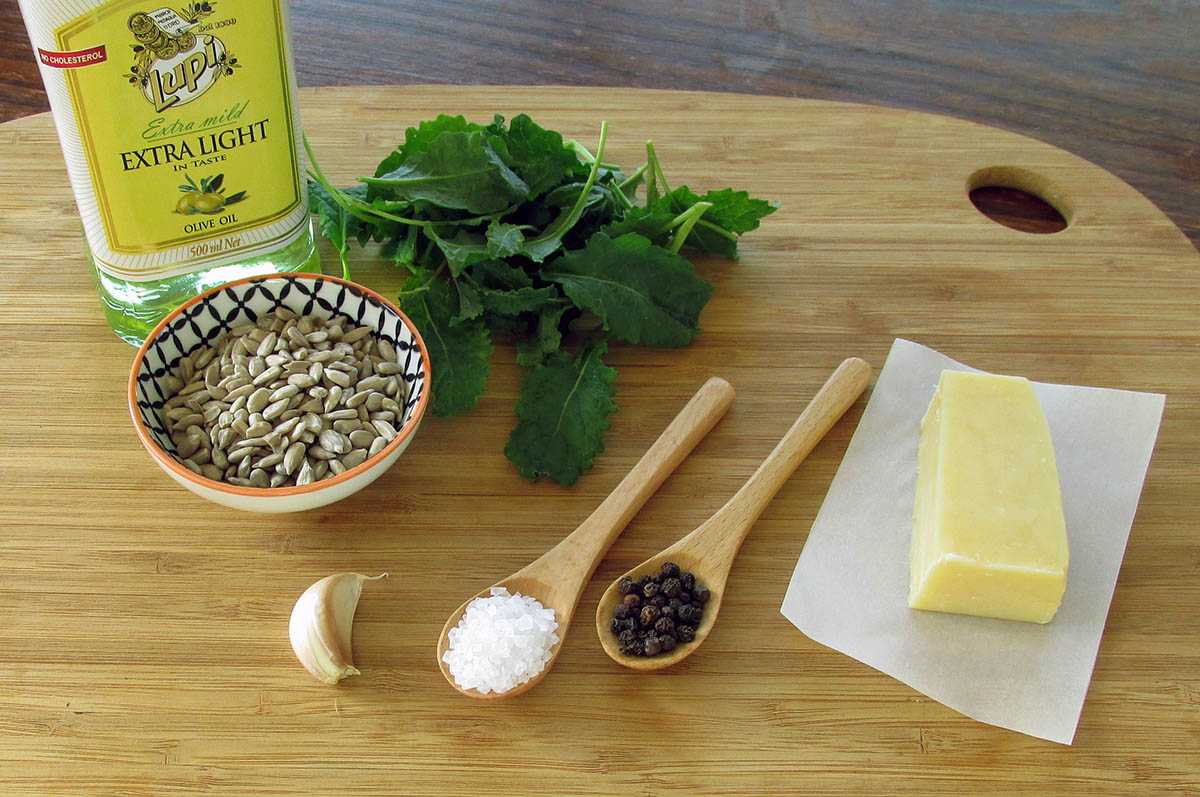
Kale pesto ingredients

Ingredients

  • 1/2 garlic clove, chopped
  • 3 handfuls fresh baby kale leaves, picked and chopped
  • 1 handful sunflower seeds, very lightly toasted
  • 1 handful Parmesan cheese, freshly grated
  • 3 tbsp. olive oil
  • Salt and pepper to taste

Instructions

Pound the garlic and the baby kale leaves in a pestle and mortar, or pulse in a food processor. 

Add the sunflower seeds to the mixture and pound or pulse again. 

Add the parmesan and mix with a spoon or do a quick pulse again.

Stir gently and add olive oil or put the food processor on its lowest setting and pour in the oil.

Add a little oil at a time so you don’t drown everything else.

Season to taste.

Add the remaining cheese and oil to your taste and preferred consistency.

The finished pesto should look shiny and a little creamy. 

Nut-free pesto

  • Servings: 10
  • Rating: ★★★★★
  • Print

This nut-free pesto is a great alternative for anyone that has to stay away from tree nuts.


Credit: Cath @ easycleaneats

Ingredients

  • 1/2 garlic clove, chopped
  • 3 handfuls fresh baby kale leaves, picked and chopped
  • 1 handful sunflower seeds, very lightly toasted
  • 1 handful Parmesan cheese, freshly grated
  • 3 tbsp. olive oil
  • Salt and pepper to taste

Directions

  1. Pound the garlic and the baby kale leaves in a pestle and mortar, or pulse in a food processor.
  2. Add the sunflower seeds to the mixture and pound or pulse again.
  3. Add the parmesan and mix with a spoon or do a quick pulse again.
  4. Stir gently and add olive oil or put the food processor on its lowest setting and pour in the oil.
  5. Add a little oil at a time so you don’t drown everything else.
  6. Season to taste.
  7. Add the remaining cheese and oil to your taste and preferred consistency.
  8. The finished pesto should look shiny and a little creamy. The finished pesto should look shiny and a little creamy.

Nutrition

Per Serving: 123 calories; 10.1 g fat; 2.1 g carbohydrates; 6.2 g protein

Equipment

  • Food processor
  • Spatula 
  • Measuring spoons 

Nutritional disclaimer

Nutrition information is provided as an estimate based on the ingredients used and available in my area (New Zealand). The nutritional information is here to help you understand the recipe; I use MyFitnessPal to generate my estimates. For more accurate nutritional information, please use a nutritional calculator with the ingredients in your area.


Breakfast crunch

Nut-free please

I am one of those unfortunate people that is allergic to not only peanuts but also tree nuts. When it comes to food options, not having nuts on the menu can be challenging at times and frustrated at others. There are so many foods I would love to try or eat regularly but won’t get the chance thanks to nuts. Not eating nuts doesn’t have to be the end of the world; there are always replacements and alternatives that mean you can have a nut-free option. This recipe is my attempt to create a nut-free version of a usually nut packed recipe.

Nut-free breakfast crunch

My take on granola

I don’t always want a protein shake or eggs for breakfast, at times I want something with a bit more texture and some crunch to start my day. This recipe is ben a staple in our fridge for a long time now, I recently updated this recipe to add in some more variety with the addition of hemp hearts and buckwheat groats. I like to add it to the top of my smoothie bowl or some coconut yoghurt.

Nut-free breakfast crunch

Nut-free breakfast crunch ingredients

Ingredients

  • 1 cup pumpkin seeds
  • 1 cup coconut threads
  • 1 cup sunflower seeds
  • 1 cup buckwheat groats
  • 1/2 cup hemp hearts
  • 1/4 cup figs, chopped
  • 2 tbsp. honey
  • 2 tbsp. coconut oil
Toast the hemp hearts
Toast the coconut
Toast the coconut
Toast the buckwheat groats
Add the toasted seeds to the chopped figs
Toast the sunflower seeds
Add the sunflower seeds
Toast the pumpkin seeds
Mix everything together with the melted coconut oil and honey
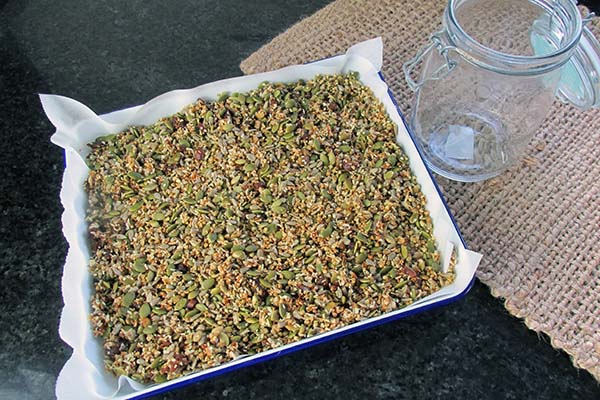
Spread the mixture out on a baking tray
Transfer the mixture to an airtight jar.

Breakfast crunch

  • Servings: 15
  • Rating: ★★★★★
  • Print

This seed packed breakfast crunch is an ideal option for breakfast or sprinkled on top of ice cream.


Credit:Cath @ easycleaneats

Ingredients

  • 1 cup pumpkin seeds
  • 1 cup coconut threads
  • 1 cup sunflower seeds
  • 1 cup buckwheat groats
  • 1/2 cup hemp hearts
  • 1/4 cup figs, chopped
  • 2 tbsp. honey
  • 2 tbsp. coconut oil

Directions

  1. Over a medium heat lightly toast the seeds and coconut.
  2. In a small pan heat the coconut oil and honey and mix them together.
  3. While the honey and oil are warming start toasting the seeds.
  4. Take a frying pan and warm it over a medium heat.
  5. Toast each kind of seed individually so you get an even toasting.
  6. Add the toasted seeds and coconut to the oil and honey mixing well.
  7. Add the figs and stir well.
  8. Pour the mix onto a lined baking tray and let it cool.
  9. Break into chunks and store in an airtight container.

Nutrition

Per Serving: 204 calories; 11 g fat; 21 g carbohydrates; 7 g protein

Equipment

  • Saucepan
  • Frying pan
  • Whisk
  • Spatula
  • Baking tray 

Nutritional disclaimer

Nutrition information is provided as an estimate based on the ingredients used and available in my area (New Zealand). The nutritional information is here to help you understand the recipe; I use MyFitnessPal to generate my estimates. For more accurate nutritional information, please use a nutritional calculator with the ingredients in your area.


Sun butter

Nut-free option

I am one of those unfortunate people that is allergic to not only peanuts but also tree nuts. When it comes to food options, not having nuts on the menu can be challenging at times, and frustrated at others. There are so many foods I would love to try or eat regularly but won’t get the chance thanks to nuts. Not eating nuts doesn’t have to be the end of the world; there are always replacements and alternatives that mean you can have a nut-free option. This recipe is my attempt to create a nut-free version of a usually nut packed recipe.

My version of peanut butter

I often feel a little cheated when it comes to nuts; because of them there is a huge amount of foods I don’t get to eat, and nut butters are on the list. As nut allergies are common alternatives are available but not always well known. Sun butter is a nice alternative as sunflower seeds have a slightly nutty taste and are packed with nice fats. The downside is that it can be hard to find and much more expensive than the nut versions. 

Make your own

If you are like us and you try to avoid mass-produced processed foods, the best option is to make your own. When you make your own, you get to control which ingredients you use and how much or how sweet you want it to be. Once you have a go at making your own and you realise how easy it is you will never go back to store-bought again. After a little trial and error, I came up with this recipe. This sun butter is simple to make, easy to store and can be used in lots of different ways.

Sun butter recipe 

Ingredients

  • 1 cup sunflower seeds
  • 2 tbsp. oil
  • 1 tsp. salt
Lightly toast the sunflower seeds
Process the seeds until they become a little powdery, this takes about a minute
If you have used a spice mill move the seed powder to a food processor.
Continue to blend the seeds
Scraping the sides of the processor down when needed.
Add the oil part way through processing and continue blendingAdd the oil part way through processing and continue blending
It takes about 15 minutes to get to a buttery consistency
Sun butter ready for the fridge

Sun butter

  • Servings: 30
  • Rating: ★★★★★
  • Print

This homemade sunflower seed butter is my perfect alternative to peanut butter


Credit: Cath @ easycleaneats

Ingredients

  • 1 cup sunflower seeds
  • 2 tbsp. oil
  • 1 tsp. salt

Directions

    . Lightly toast the sunflower seeds over a medium heat for about 5 minutes.
  1. Remove seeds from the heat and place them in a food processor or spice mill some with salt.
  2. Process the seeds until they become a little powdery, this takes about a minute.
  3. If you have used a spice mill move the seed powder to a food processor.
  4. Continue to blend the seeds, scraping the sides of the processor down when needed.
  5. Add the oil part way through processing and continue blending.
  6. It takes about 15 minutes to get to a buttery consistency.
  7. Depending on if you want chunky or smooth you may need to add more oil or blend a little longer

Nutrition

Per Serving: 50 calories; 4 g fat; 2.5 g carbohydrates; 2 g protein

Equipment 

  • Frying pan
  • Spatula
  • Food processor
  • Jar

Try this with

Nutritional disclaimer

Nutrition information is provided as an estimate based on the ingredients used and available in my area (New Zealand). The nutritional information is here to help you understand the recipe; I use MyFitnessPal to generate my estimates. For more accurate nutritional information, please use a nutritional calculator with the ingredients in your area.