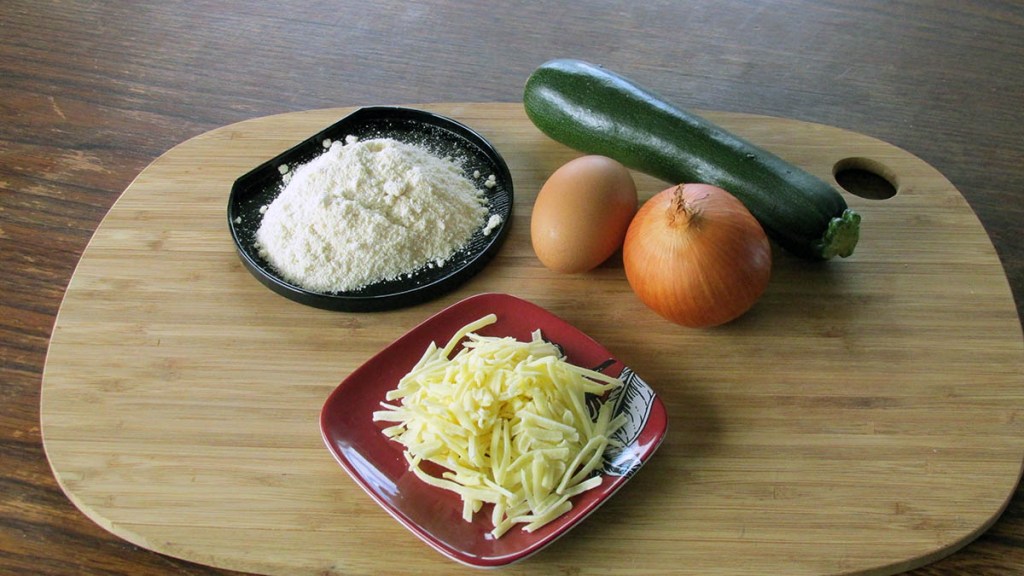
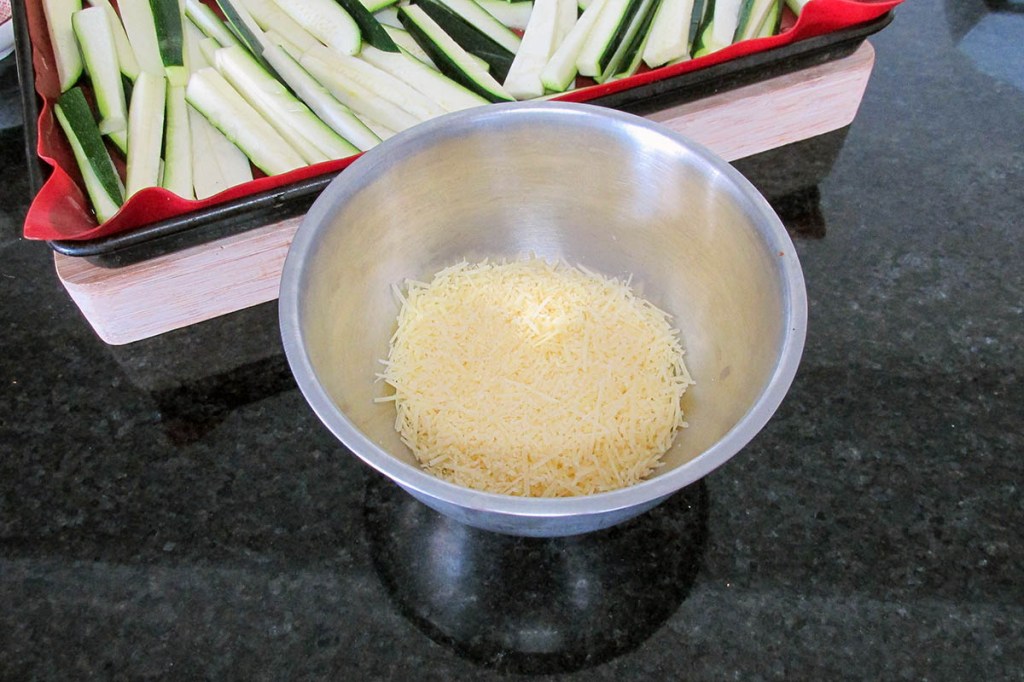
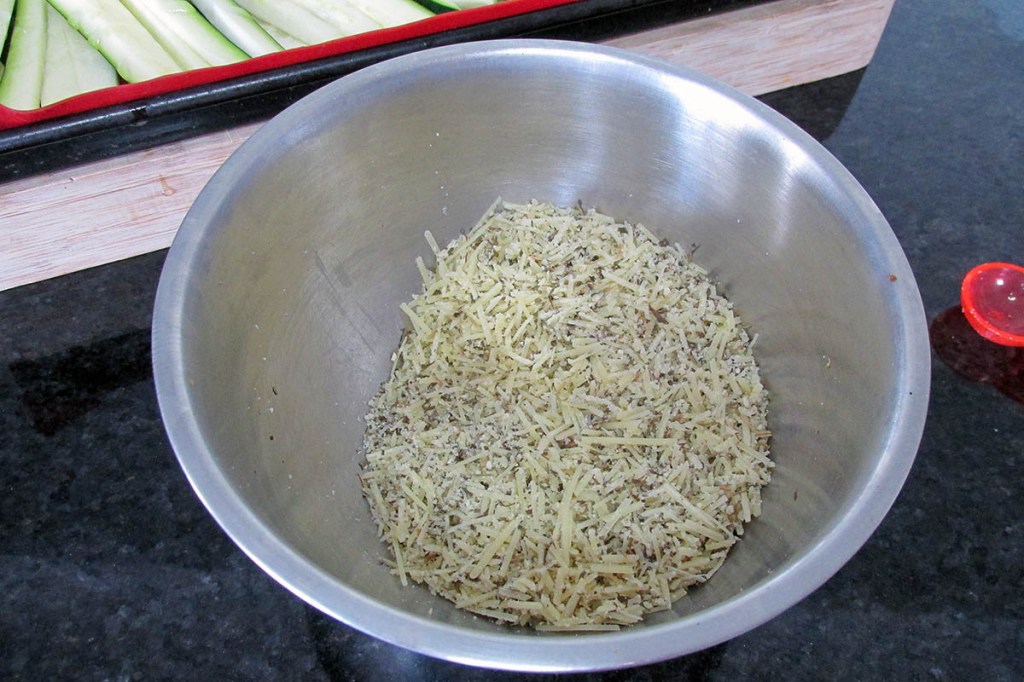
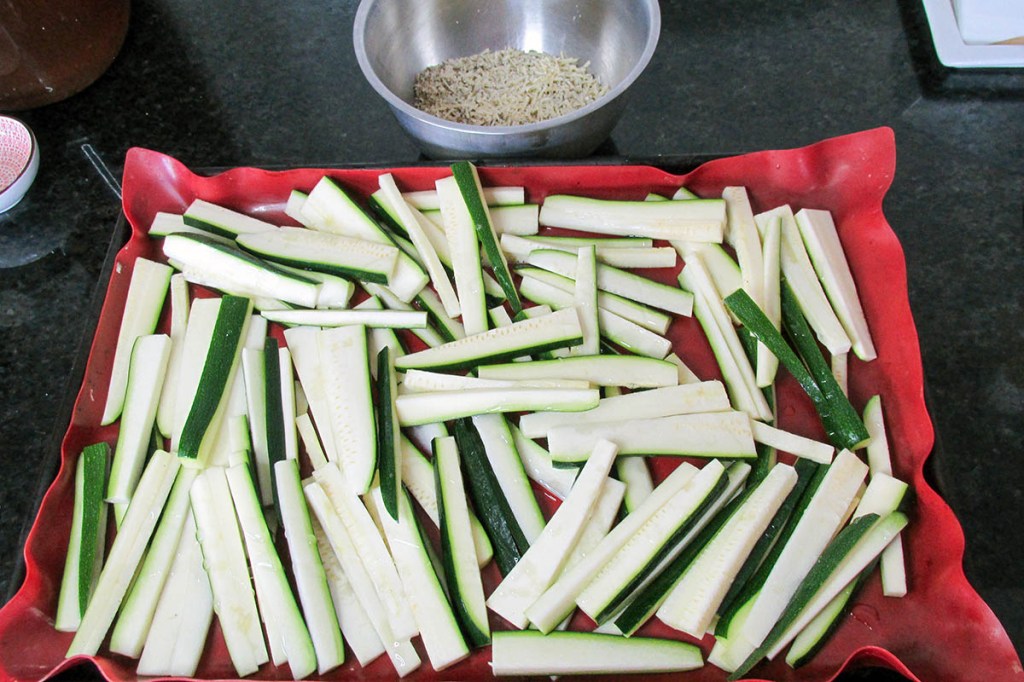
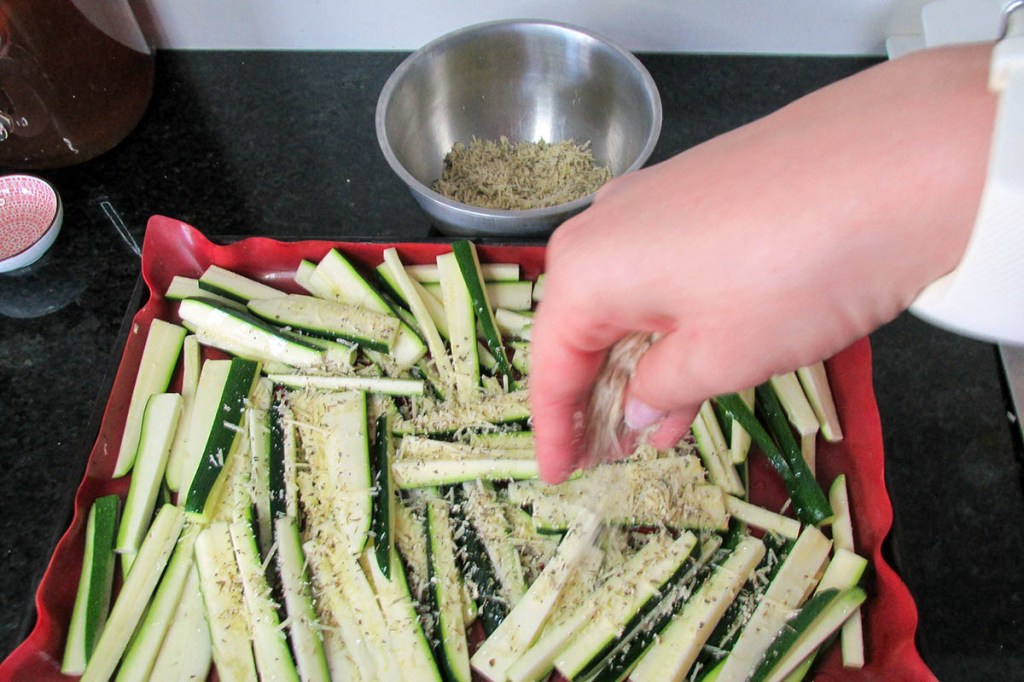
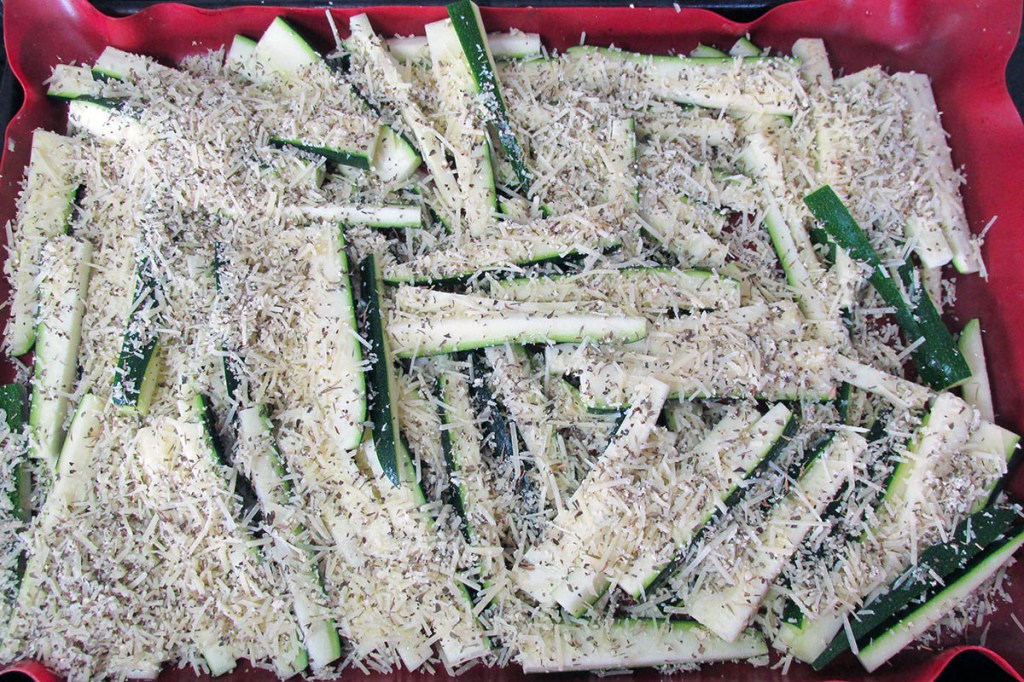
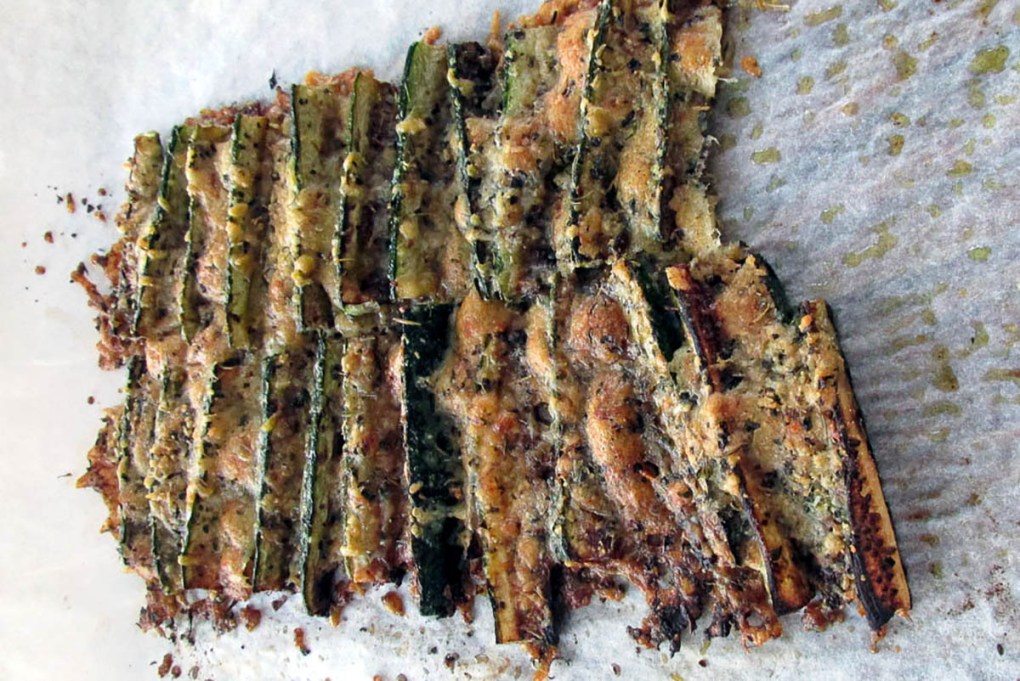
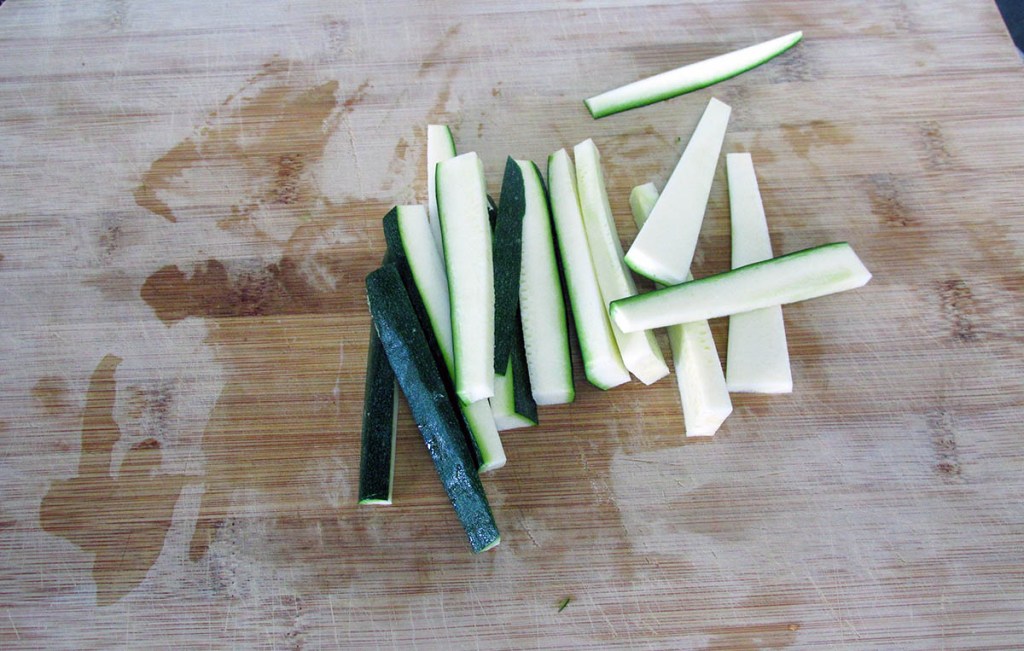
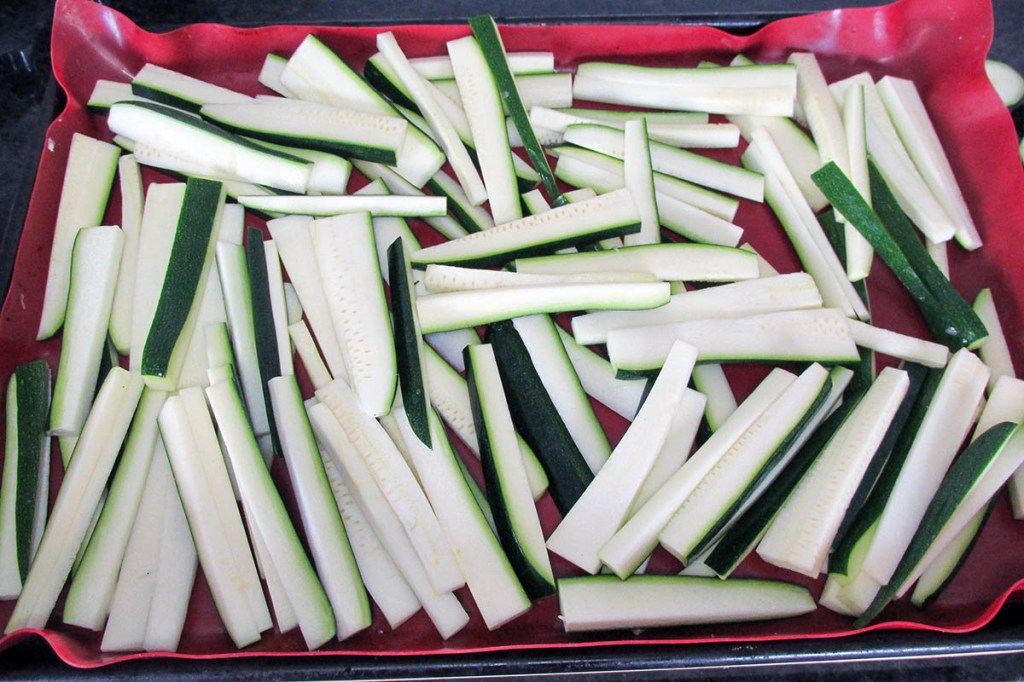
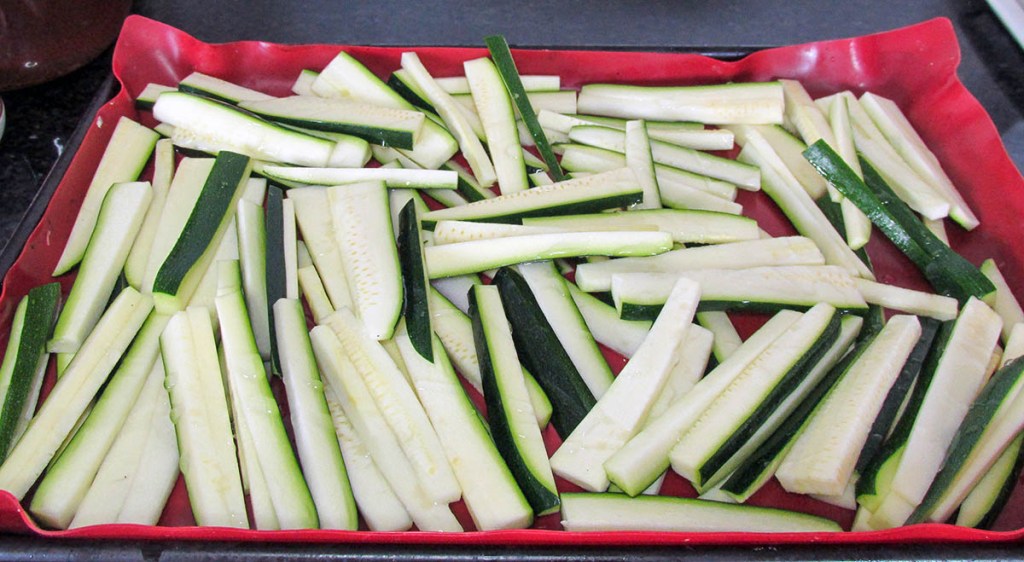
I’ve been getting courgettes from our little plant on the deck for a while now. They have been growing like crazy. I have a few good-sized courgettes hanging out that need to be used before the birds get them. I decided that making some fries was the best way to use them up and make something tasty.
Lower carbs
I like fries, but don’t like the carb coma that usually follows eating them. Whenever possible, I like to swap out the traditional potato fries with something different. These courgette fries have the fantastic combination of soft centres with a crunchy outside thanks to the cheese.
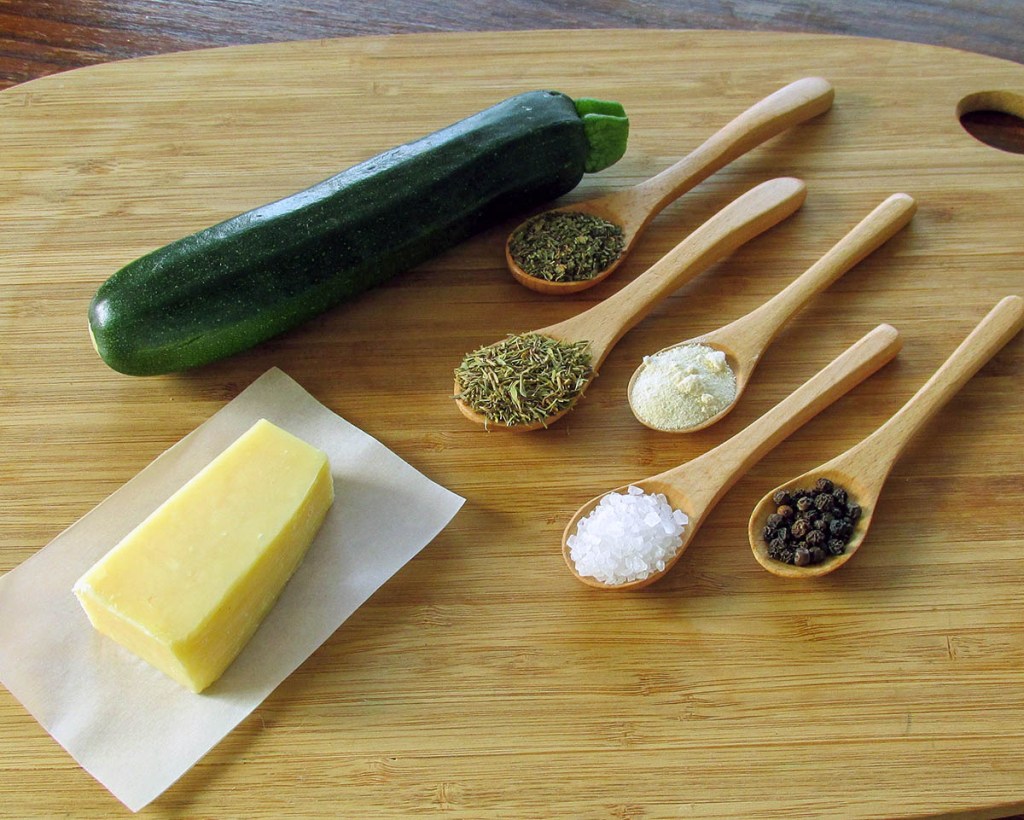
Courgette fries recipe
Ingredients
4 courgettes
1/2 cup parmesan cheese, grated
1/2 tsp. thyme
1/2 tsp. basil
1/4 tsp. garlic powder
salt and pepper
Equipment
Knife
Chopping board
Mixing bowl
Baking tray
Baking paper or a silicone liner
Nutritional disclaimer
Nutrition information is provided as an estimate based on the ingredients used and available in my area (New Zealand). The nutritional information is here to help you understand the recipe; I use MyFitnessPal to generate my estimates. For more accurate nutritional information, please use a nutritional calculator with the ingredients in your area.
Stupid nut allergies have prevented me from trying a number of foods over the years that look, smell and no doubt taste amazing. Pesto was one of the things I had wanted to try for years, but as it contains pine nuts it’s been a no go.
I had a moment of genius (or madness, I can never really tell the difference) and figured that I could replace the pine nuts with something else, after a little trial and error I found a combination that worked.
The verdict
My taste tester assures me that the flavours are in the same balance as normal pesto made with nuts the only difference is the texture of the sunflower seeds, I suppose I have to take his word for it because I don’t fancy the hospital trip that I would get if I checked. If you don’t have to avoid nuts sub the sunflower seeds for the same amount of pine nuts.
Baby kale everywhere
I recently planted some kale out on my deck and it has grown like crazy. With so much baby kale leaves around I decided to make some pesto with it. The baby kale adds a new dimension of flavour that works well with eggs. Green eggs and ham anyone?
Nut-free kale pesto recipe
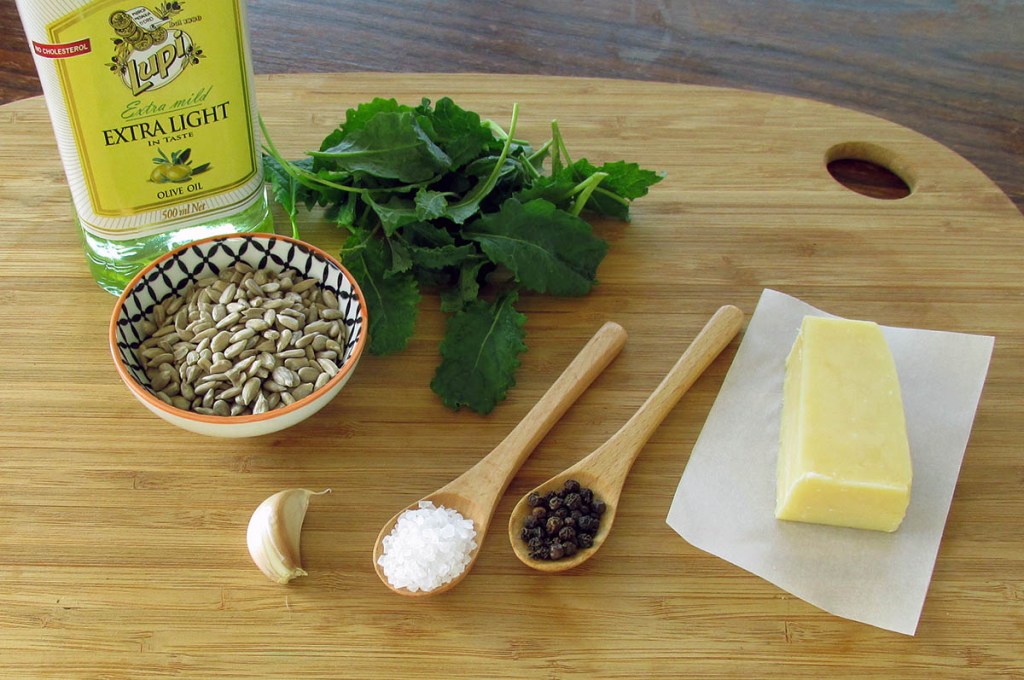
Kale pesto ingredients
Ingredients
1/2 garlic clove, chopped
3 handfuls fresh baby kale leaves, picked and chopped
1 handful sunflower seeds, very lightly toasted
1 handful Parmesan cheese, freshly grated
3 tbsp. olive oil
Salt and pepper to taste
Instructions
Pound the garlic and the baby kale leaves in a pestle and mortar, or pulse in a food processor.
Add the sunflower seeds to the mixture and pound or pulse again.
Add the parmesan and mix with a spoon or do a quick pulse again.
Stir gently and add olive oil or put the food processor on its lowest setting and pour in the oil.
Add a little oil at a time so you don’t drown everything else.
Season to taste.
Add the remaining cheese and oil to your taste and preferred consistency.
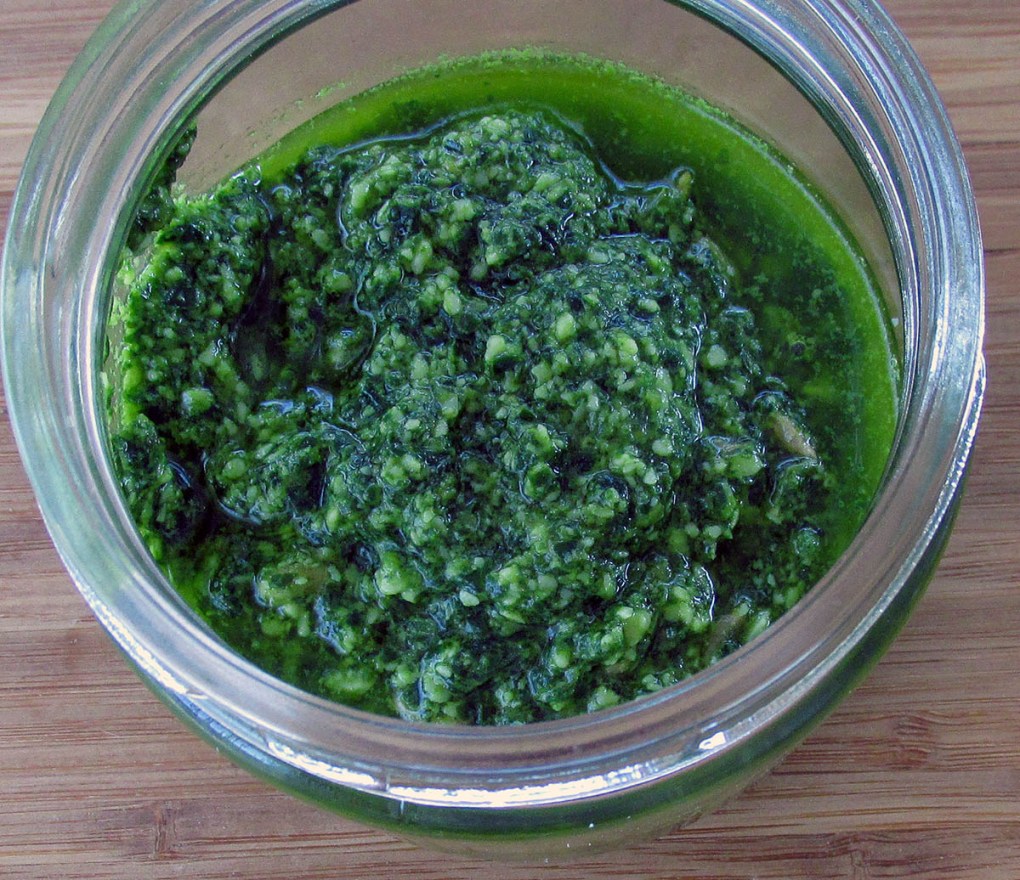
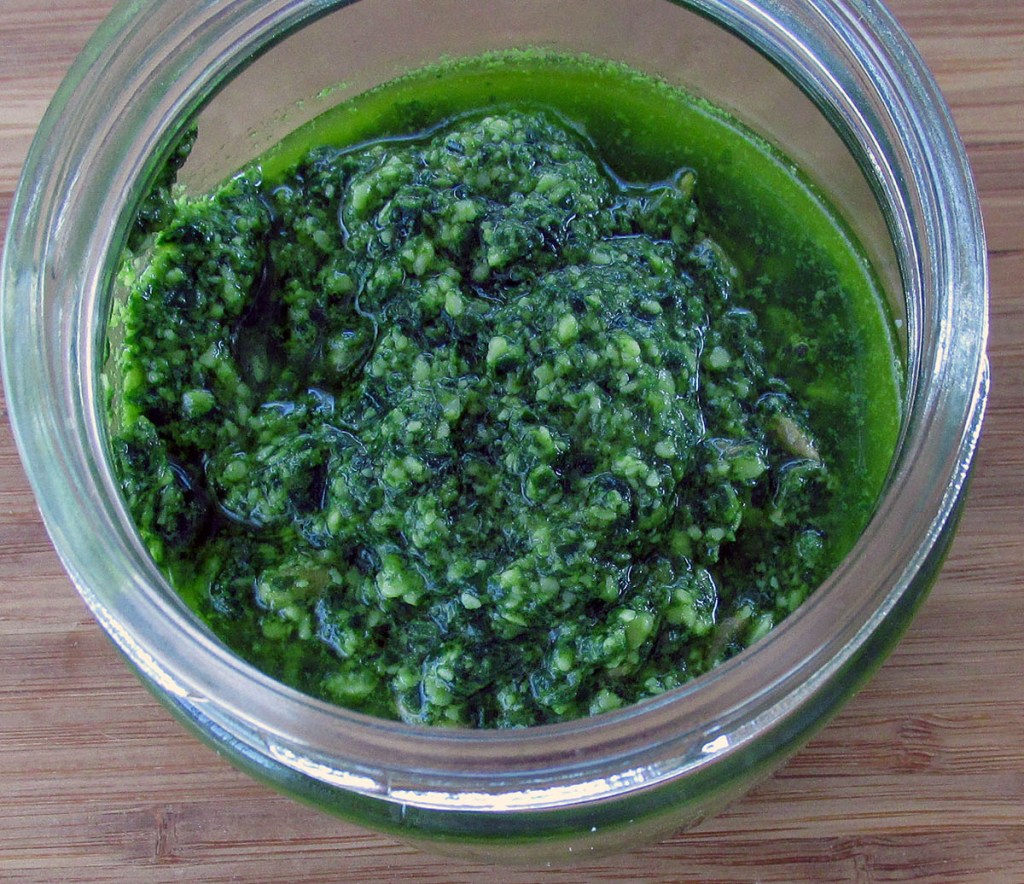
The finished pesto should look shiny and a little creamy.
This nut-free pesto is a great alternative for anyone that has to stay away from tree nuts.
Credit: Cath @ easycleaneats
Ingredients
1/2 garlic clove, chopped
3 handfuls fresh baby kale leaves, picked and chopped
1 handful sunflower seeds, very lightly toasted
1 handful Parmesan cheese, freshly grated
3 tbsp. olive oil
Salt and pepper to taste
Directions
Pound the garlic and the baby kale leaves in a pestle and mortar, or pulse in a food processor.
Add the sunflower seeds to the mixture and pound or pulse again.
Add the parmesan and mix with a spoon or do a quick pulse again.
Stir gently and add olive oil or put the food processor on its lowest setting and pour in the oil.
Add a little oil at a time so you don’t drown everything else.
Season to taste.
Add the remaining cheese and oil to your taste and preferred consistency.
The finished pesto should look shiny and a little creamy. The finished pesto should look shiny and a little creamy.
Nutrition
Per Serving: 123 calories; 10.1 g fat; 2.1 g carbohydrates; 6.2 g protein
Equipment
Food processor
Spatula
Measuring spoons
Nutritional disclaimer
Nutrition information is provided as an estimate based on the ingredients used and available in my area (New Zealand). The nutritional information is here to help you understand the recipe; I use MyFitnessPal to generate my estimates. For more accurate nutritional information, please use a nutritional calculator with the ingredients in your area.
Years ago, mayo was a high-use item; I think at one point we were using 500g a week. The problem was that the mayo we used contained a considerable amount of sugar, which is not ideal. The solution is to make your own without the sugar.
Make your own
If you are like me and you try to avoid mass-produced processed foods, the best option is to make your own. When you make your own, you control which ingredients you use and how much or how sweet you want it to be. Once you’ve tried making your own and seen how easy it is, you will never go back to store-bought again.
Making it for ourselves
Easy mayo
I came across a mayo recipe in a book and decided to give it a go, we all liked it but it’s me so I couldn’t help experimenting and seeing what if would be like using different kinds of mustard.
The winner for me was whole-grain Dijon. It added a nice flavour and a little texture that I liked. What I appreciate most is knowing exactly what went into it. It takes just a few minutes to make, and the taste is fantastic. Once you try it, you’ll likely never go back to store-bought mayo.
Easy mayo
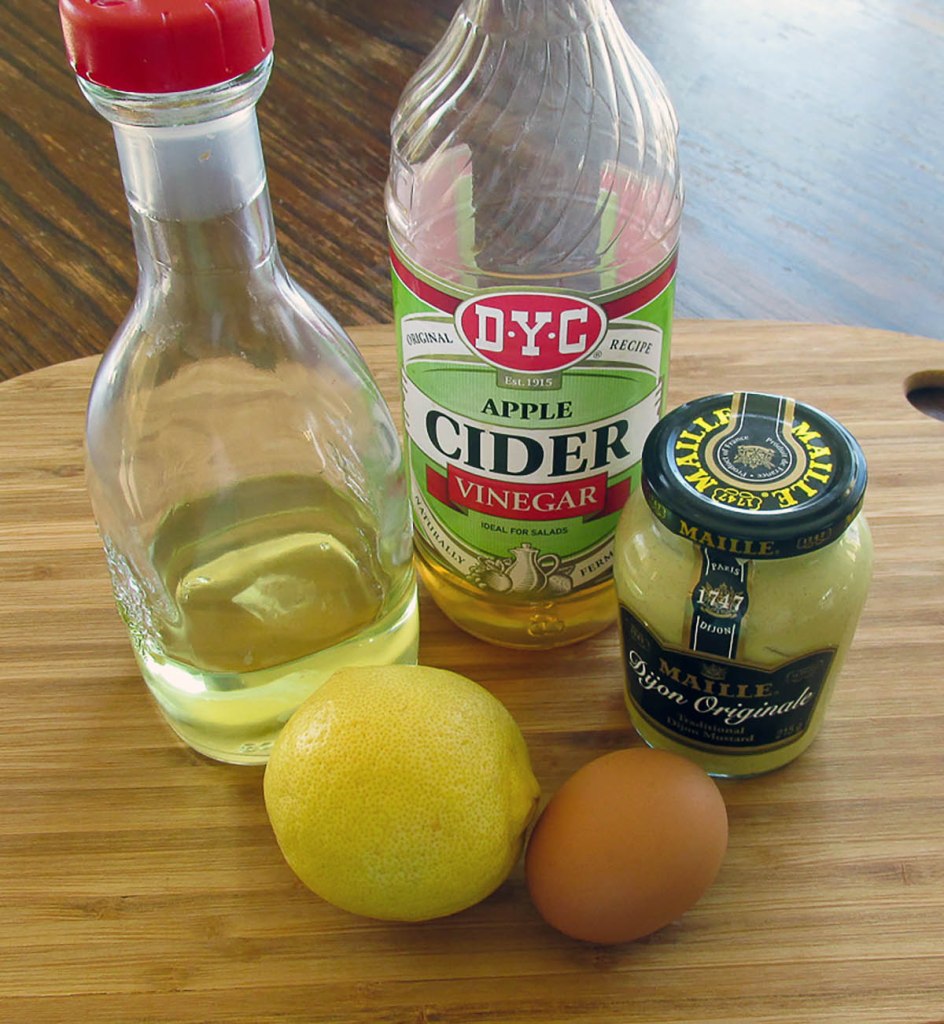
Easy mayo ingredients
Ingredients
1 egg
2 tbsp. lemon juice
1/2 tsp. Dijon mustard
1/2 tsp. apple cider vinegar
1 1/4 cup extra light olive oil
Instructions
Put one cup of oil into something that makes it easy to pour.
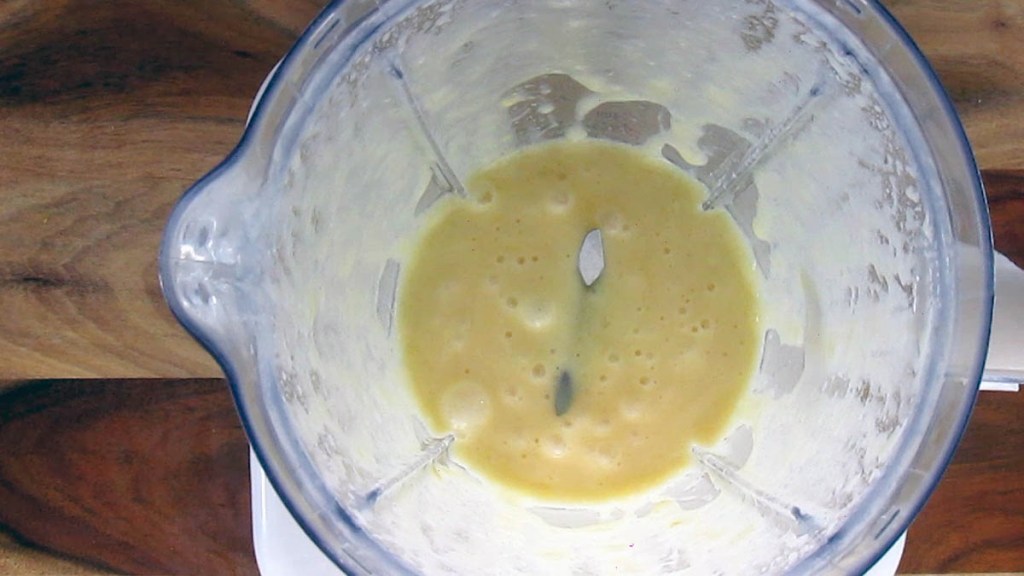
Put everything else into the blender or food processor.
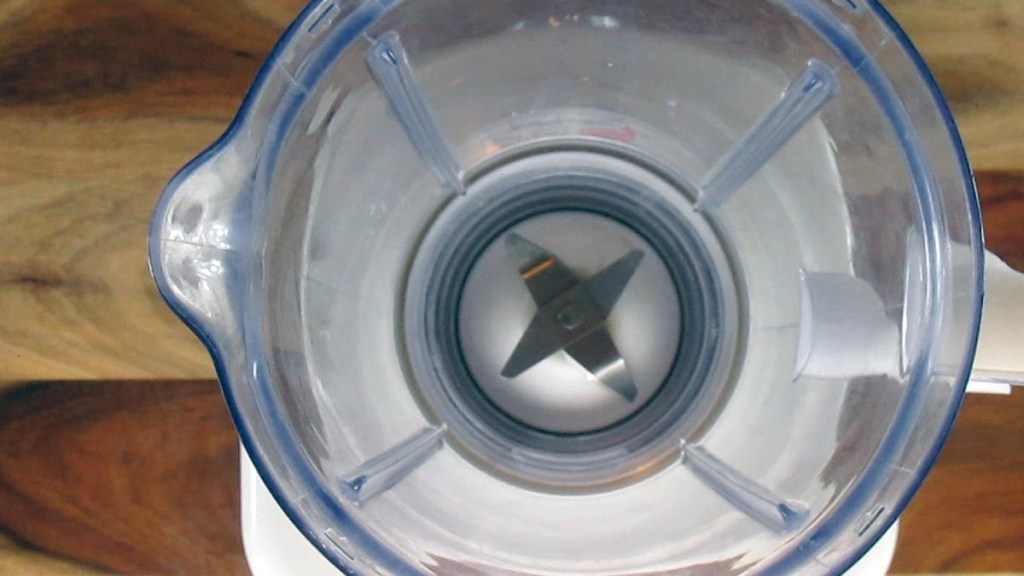
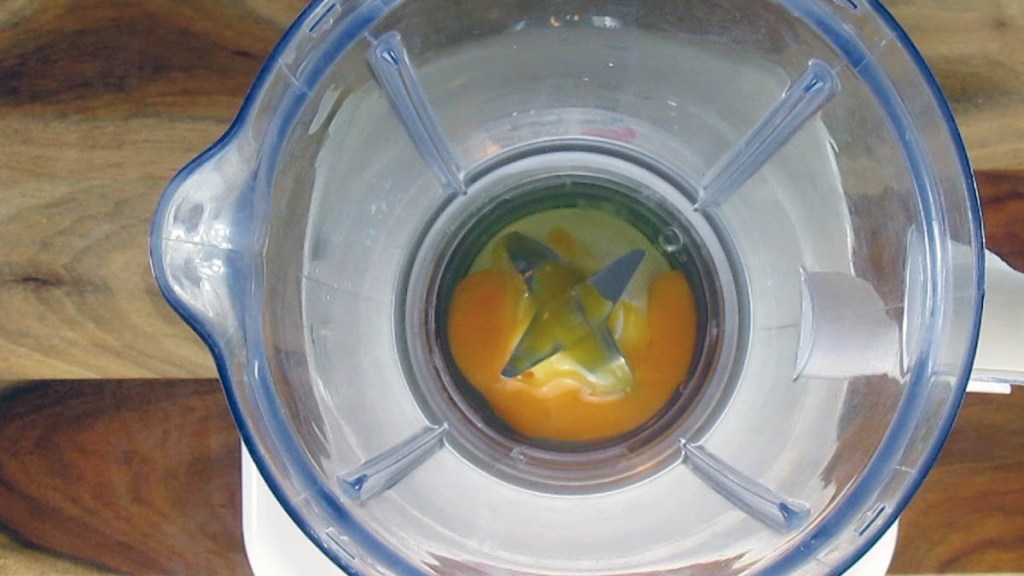
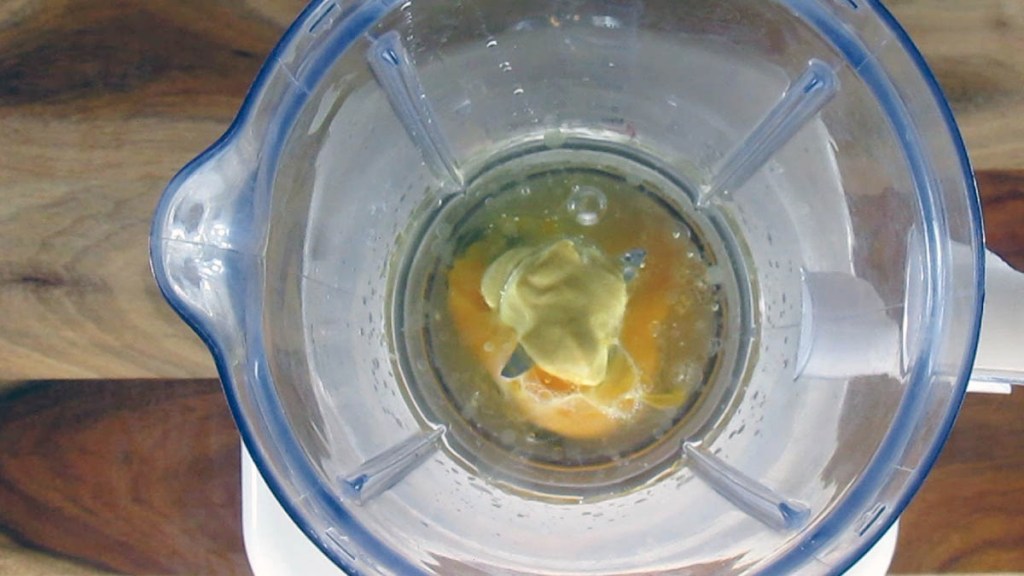
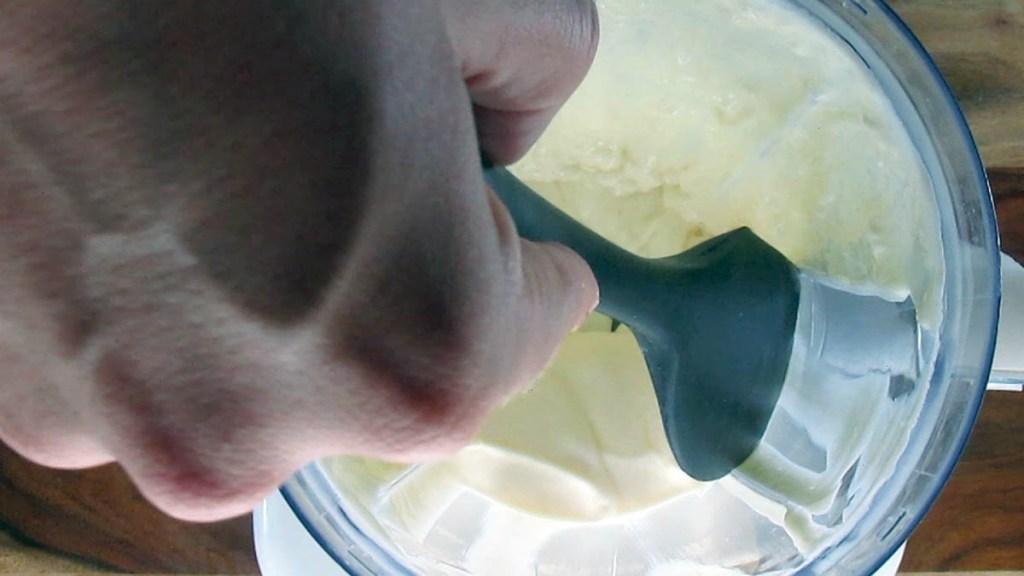
Take a blenderAdd the eggAdd the vinegar and 1/4 cup of oilAdd the mustard and let everything hang out
Let them come to room temperature together, 30 minutes.
Mix everything together thoroughly so it is well blended.
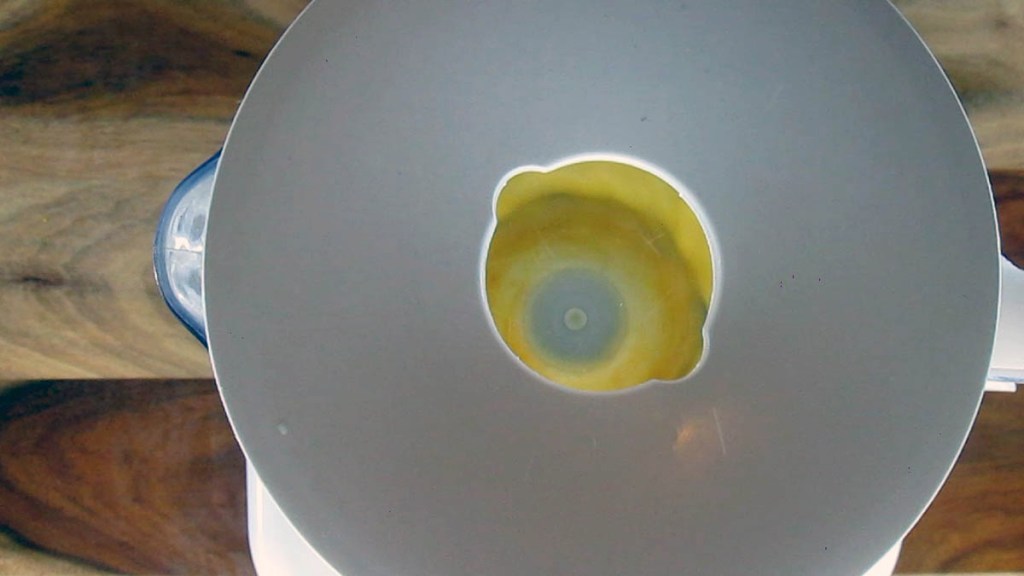
Give everything a blend together so it is well mixedEverything is well blended
Now, for the most challenging part, incorporating the remaining 1 cup of oil into the mixture.
Now for the hardest partIncorporating the remaining 1 cup oil into the mixture slowly
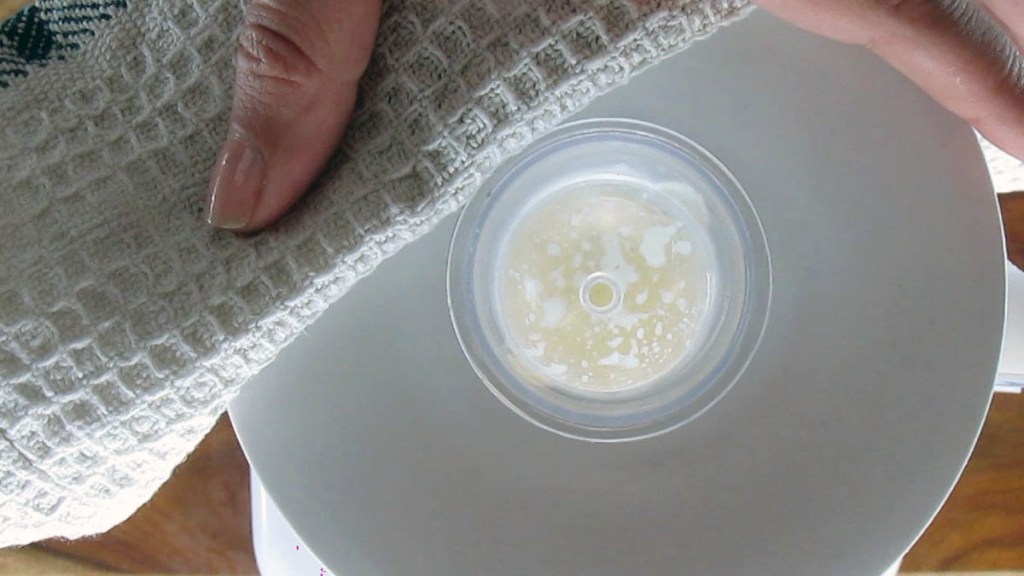
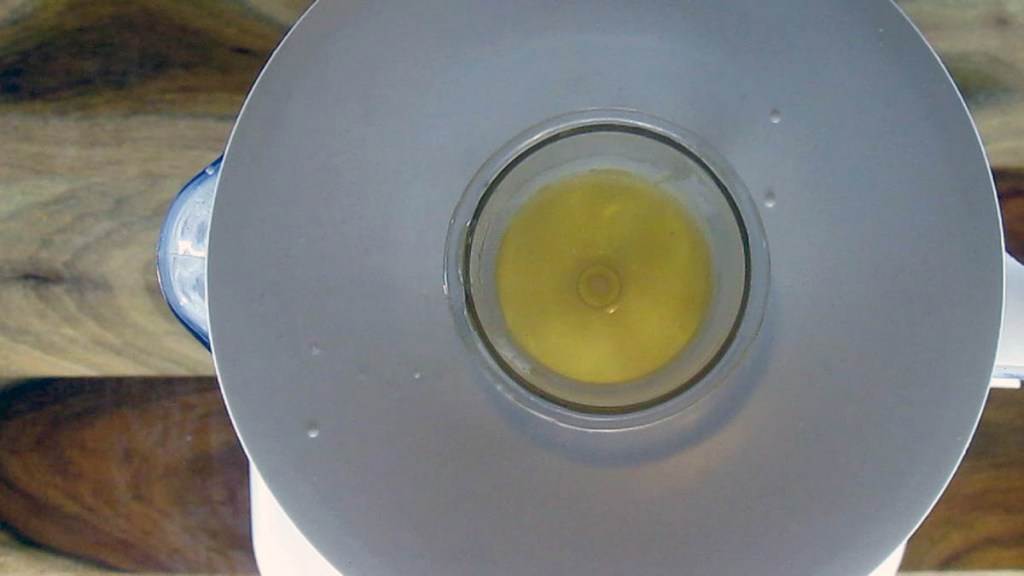
This is the hardest part because it needs to be done slowly, I mean, the slightest drizzle you can manage.
Adding the oil should take 3 minutes
Adding the oil should take 3 minutes; if you do it quicker, it may not work.
The sound of your blender or processor make will change as the closer you get to your mayo being doneScrape down the sides of the blender
The sound of your blender or processor will change as you get closer to your mayo being ready.
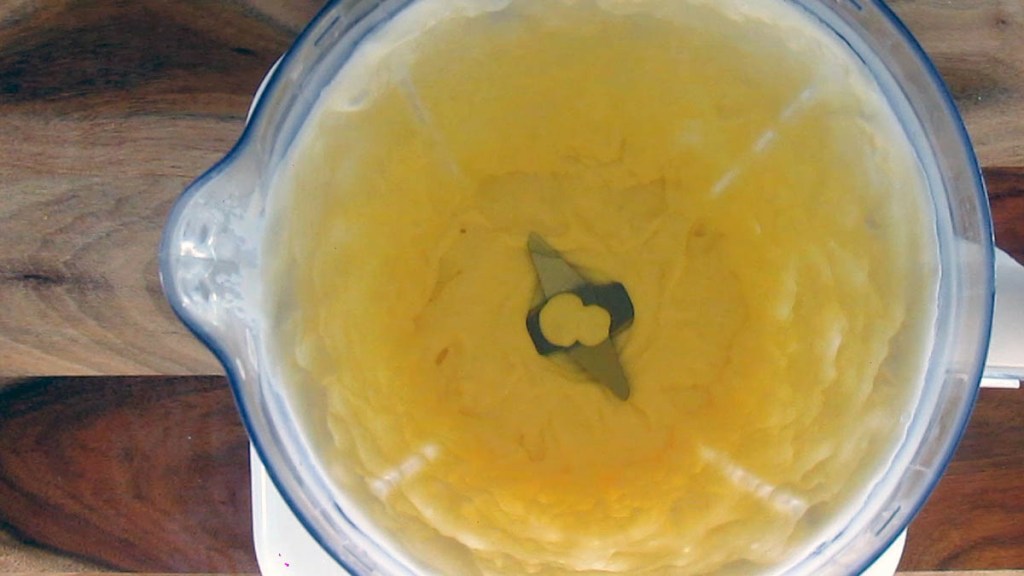
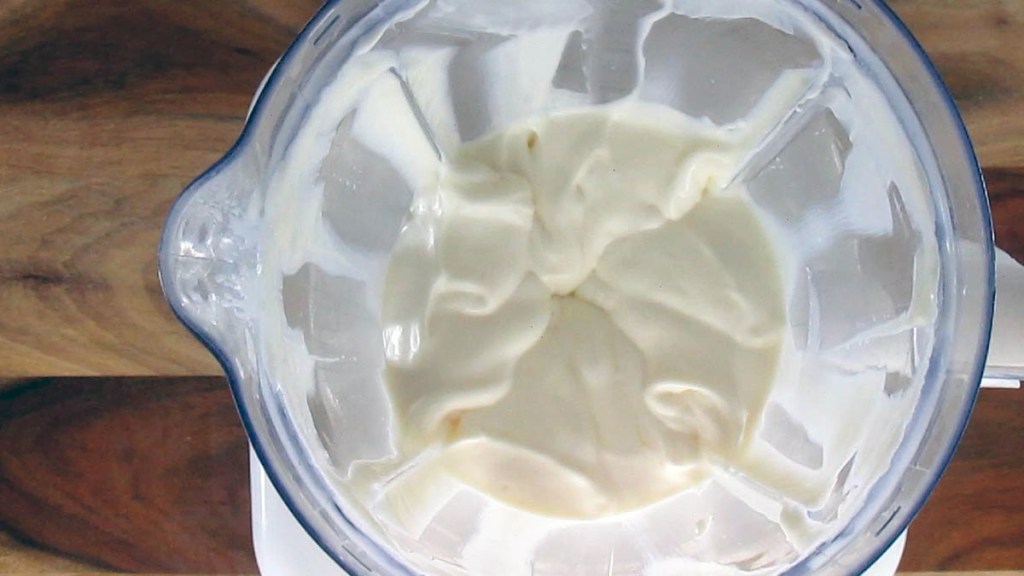
You will end up with a silky and shiny mayo
You will end up with a silky, shiny mayo ready to be put in a jar and kept in the fridge.
Easy to make, this mayo uses the whole egg and has no extra sugar or nasties.
Credit: Cath @ easycleaneats
Ingredients
1 egg
2 tbsp. lemon juice
1/2 tsp. Dijon mustard
1/2 tsp. apple cider vinegar
1 1/4 cup extra light olive oil
Directions
Put one cup of oil into something that makes it easy to pour.
Put everything else into the blender or food processor.
Let them come to room temperature together, 30 minutes.
Give everything a blend together so it is well mixed.
Now for the hardest part, incorporating the remaining 1/4 cup oil into the mixture.
This is the hardest part because it needs to be done slowly, the smallest drizzle you can manage.
Adding the oil should take 3 minutes; if you do it quicker if may not work.
The sound of your blender or processor make will change as the closer you get to your mayo being done.
You will end up with a silky, shiny mayo ready to be put in a jar and kept in the fridge.
Nutrition
Per Serving: 83 calories; 9.2 g fat; 0.4 g carbohydrates; 0.2 g protein
Equipment
Measuring cups
Measuring spoons
Measuring jug
Spatula
Blender
Nutritional disclaimer
Nutrition information is provided as an estimate based on the ingredients used and available in my area (New Zealand). The nutritional information is here to help you understand the recipe; I use MyFitnessPal to generate my estimates. For more accurate nutritional information, please use a nutritional calculator with the ingredients in your area.
When setting off on a journey to remove processed foods from your diet, you may stop and ask yourself the question What can I eat instead of rice/couscous/pasta/bread?
The answer is to find a suitable replacement.
The options are limitless; you can find gluten-free, sugar-free, grain-free, I could go on. An easy way to eat clean and simple is to switch out the standard meal padding of rice/couscous/pasta/bread with a vegetable alternative or something you can make yourself.
This recipe is an excellent alternative that can be easily added to your meal.
Easy to make with the right tools
It is simple to make when the ingredients are prepared, but the preparation can take some time. I spent a year grating all of my cauliflowers by hand before moving over to a food processor and away from the weekly skin grafts to my fingers. I was becoming concerned that my family would develop a liking of long pig in their food. A food processor with a grating attachment is a must if you intend to move away from real rice. You can process 4 cauliflower heads in the time it takes to grate one by hand. To make couscous I like to use the larger grating attachment to get a more chunky texture.
Perfect hot or cold
As with regular cous cous you can have this hot or cold, once it has been cooked the options are unlimited. You can freeze cauliflower if it is raw or cooked. That means you can make the most of cauliflower when they are in season and cheap. I like to buy in bulk, grate, portion and freeze.
This easy to make alternative to couscous is a must know recipe for clean eating, paleo, primal and keto diets.
Credit: Cath @ easycleaneats
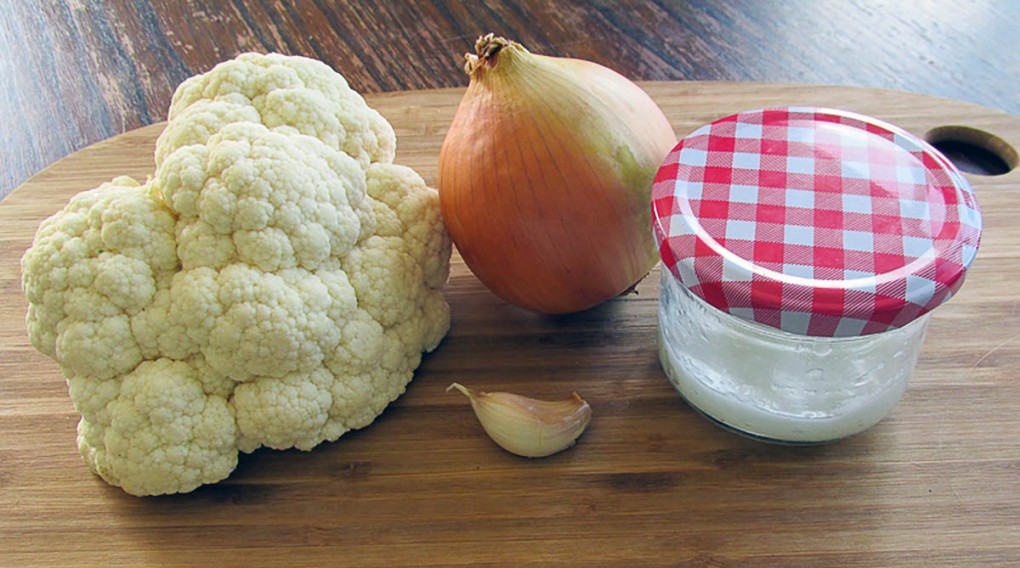
Ingredients
1 head cauliflower grated
1/2 onion, finely minced
1 tbsp. coconut oil
1 garlic clove minced (optional)
Directions
Break the cauliflower into large florets.
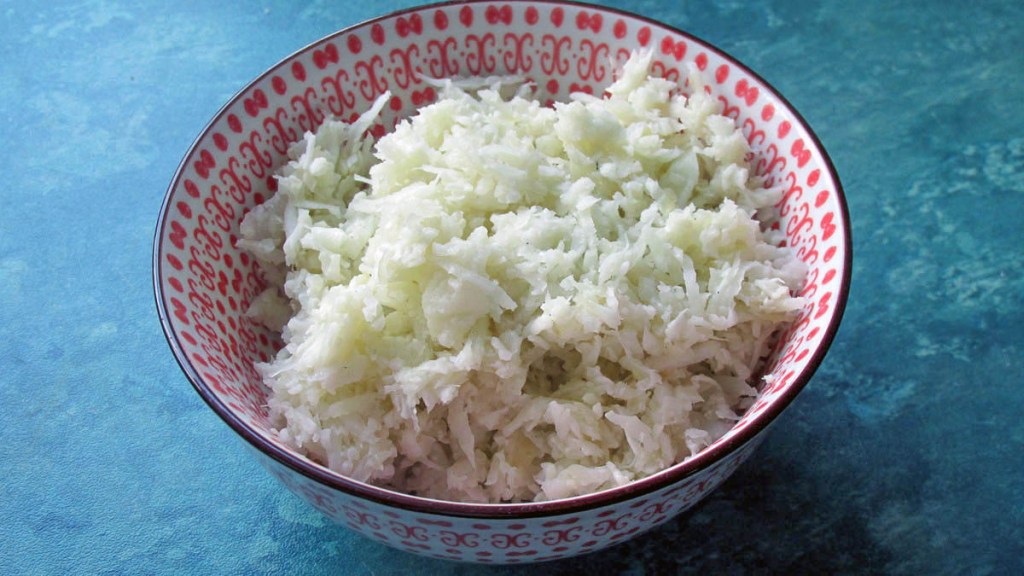
Use a food processor with a corse grating attachment to grate cauliflower.
If you don’t have a food processor you can grate the cauliflower by hand.
Finely chop the onion.
When all of the cauliflower is grated transfer it to a mixing bowl.
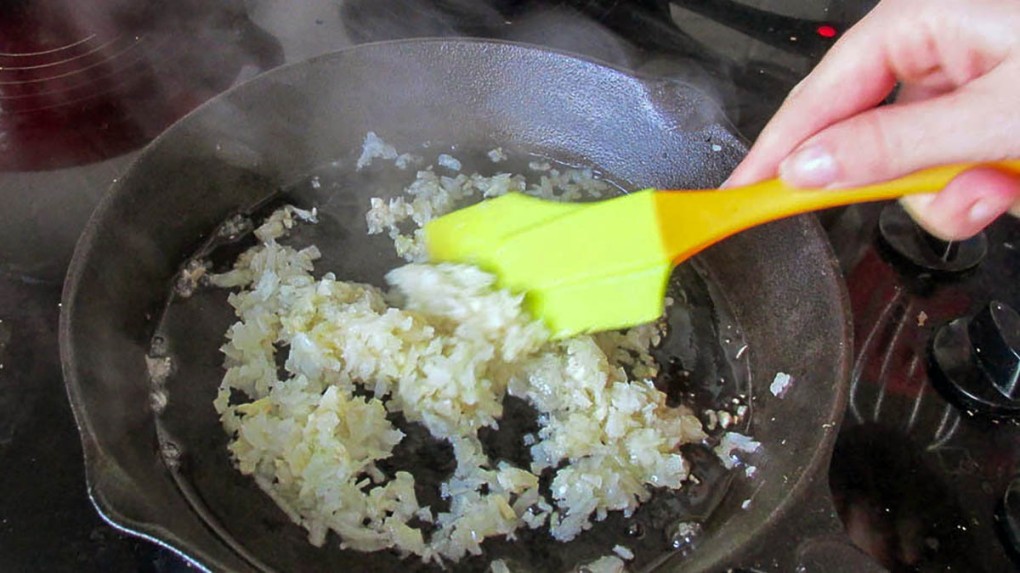
Take a large frying pan over a medium heat and melt some coconut oil.
Add the onion to the frying pan.
Cook the onion until it is softened.
Add the cauliflower to the frying pan.
Cook the cauliflower and onion for 5 minutes.
Keep the cauliflower moving in the pan, you don’t want it to colour.
When the cauliflower has softened it is ready to serve.
Serve hot or cold.
You can freeze the cauliflower cous cous to use anytime you need it.
Nutrition
Per Serving: 54 calories; 0 g fat; 12 g carbohydrates; 3 g protein
Equipment
Food processor
Grating attachment
Mixing bowl
Frying pan
Spatula
Measuring spoons
Nutritional disclaimer
Nutrition information is provided as an estimate based on the ingredients used and available in my area (New Zealand). The nutritional information is here to help you understand the recipe; I use MyFitnessPal to generate my estimates. For more accurate nutritional information, please use a nutritional calculator with the ingredients in your area.
An odd name I know, some people call the zoodles, but I like to call them coodles because I’m still not comfortable calling courgettes zucchini.
These replacement noodles are a brilliant substitute for regular noodles and pasta. An excellent julienne slicer will serve you well when making coodles.
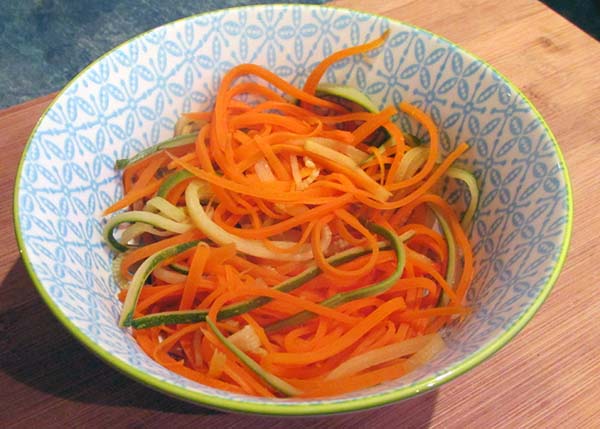
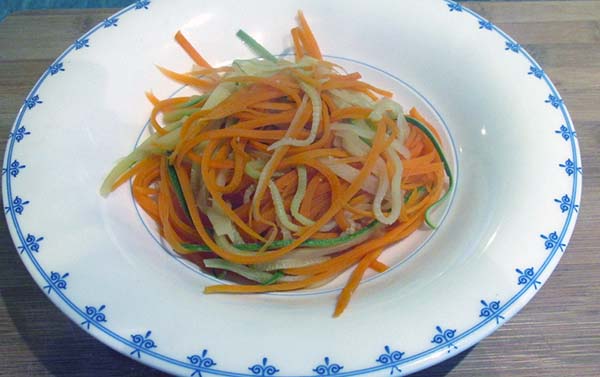
Bowl of coodles
They go with everything
Coodles are a versatile staple in our house. They can be eaten hot or cold, added to a salad or used in your favourite pasta dishes. There are many ways to make and cook coodles depending on what you intend to use them for. I cover off these different techniques in more detail in ways to make and cook coodles. For this recipe, I am going over the easiest way to make coodles.
What do you do?
When setting off on a journey to remove processed foods from your diet, you may stop and ask yourself the question What can I eat instead of rice/couscous/pasta/bread?
The answer is to find a suitable replacement.
The options are limitless; you can find gluten-free, sugar-free, grain-free, I could go on. An easy way to eat clean and simple is to switch out the standard meal padding of rice/couscous/pasta/bread with a vegetable alternative or something you can make yourself.
This recipe is the no-frills no added flavour version that can be made and then added to things like chicken carbonara, Bolognese and prawn parmesan coodles.
Coodle recipe
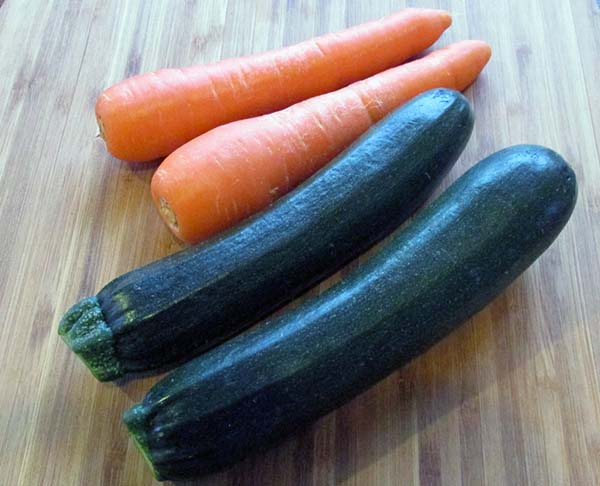
Coodle ingredients
Ingredients
2 carrots
2 courgettes
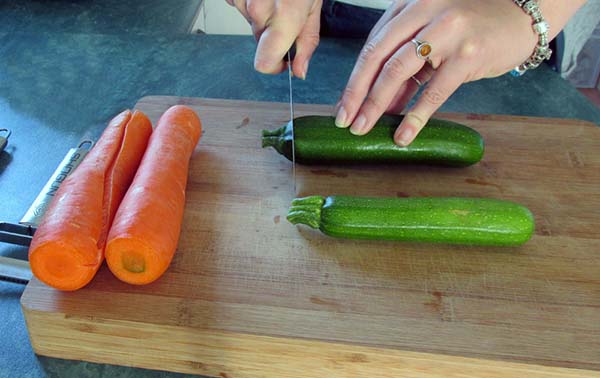
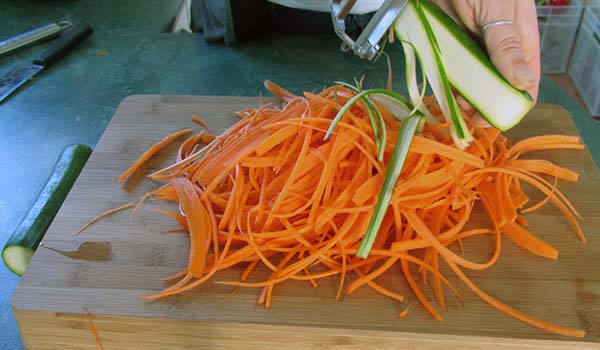
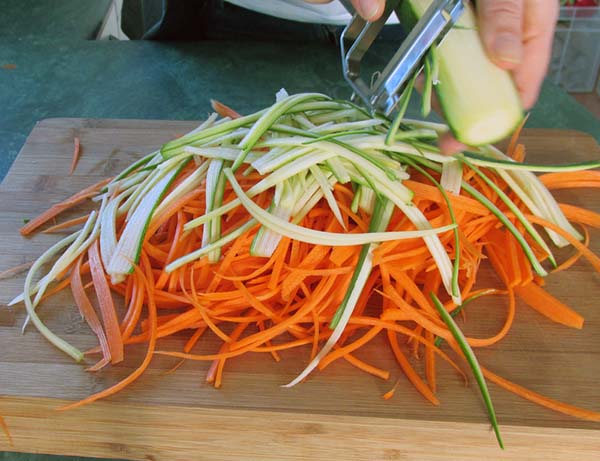
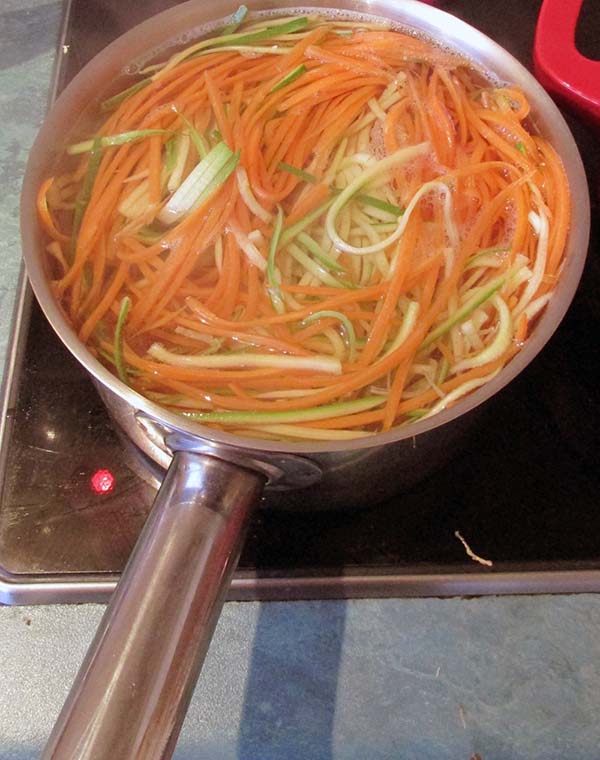
Take the top and bottom off the carrots with a sharp knife.Take the top and bottom off the courgettes with a sharp knife.Julienne the vegetable to create spaghetti strings.Julienne the vegetable to create spaghetti strings.Cook the coodles for approximately 3 minutes in boiling water.Serve hot or cold.
This easy to make alternative to pasta is a must know recipe for clean eating, paleo, primal and keto diets.
Credit: Cath @ easycleaneats
Ingredients
2 carrots
2 courgettes
Directions
Take the top and bottom off the carrots and courgettes with a sharp knife.
Julienne the vegetable to create spaghetti strings.
Cook the coodles for approximately 3 minutes in boiling water.
Serve hot or cold.
Nutrition
Per Serving: 54 calories; 0 g fat; 12 g carbohydrates; 2 g protein
[/recipe]
Try this with
Chicken carbonara
Lemon chicken
Equipment
Knife
Chopping board
Julienne vegetable peeler
Saucepan
Wooden spoon
Colander
Nutritional disclaimer
Nutrition information is provided as an estimate based on the ingredients used and available in my area (New Zealand). The nutritional information is here to help you understand the recipe; I use MyFitnessPal to generate my estimates. For more accurate nutritional information, please use a nutritional calculator with the ingredients in your area.
I’ve been revisiting recipes that have been some of my old school recipes and family favourites that were our staples when we got started as clean eaters. I first posted this recipe in 2015, at that time, the kids were fussy, vegetables had to be hidden and disguised, and there was no potential for intense flavours or spice.
Times (thankfully) have changed, the kids have grown (like man-sized grown), and they now enjoy a wide range of foods. Things like vegetables are enjoyed, spice and chilli are consumed without complaint, and new ingredients are tried without tantrums.
As the kids have grown my recipes have changes organically to meet their palates and preferences, I’ve updated this recipe because of that, but fear not, all I have done is make it a little bit better.
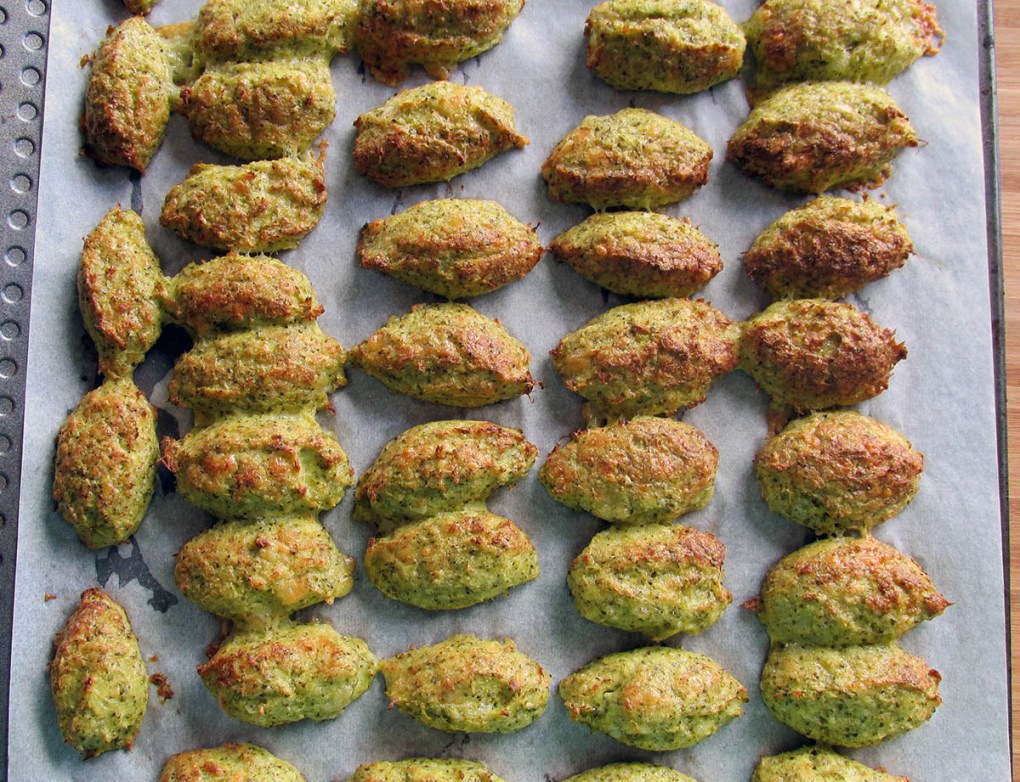
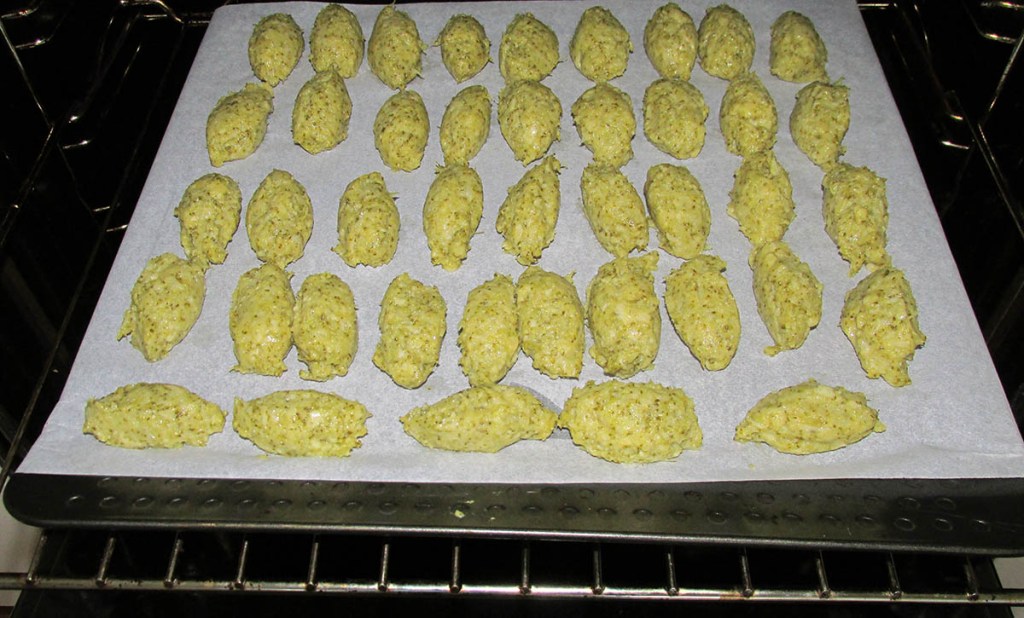
Broccoli tots fresh from the oven
Eat your greens
I think that this recipe is responsible for the total broccoli love that the youngest person in our house feels. As the former ‘will only eat white food’ member of the family it gives me great pleasure to watch these tots last seconds on his plate; truth be told they are a massive hit with everyone.
Worth the effort
These tots are a little messy to make and can take some time, but they are worth the effort. If you are looking for a new way to get some vegetables into the kids, they are worth a try.
Broccoli tots recipe
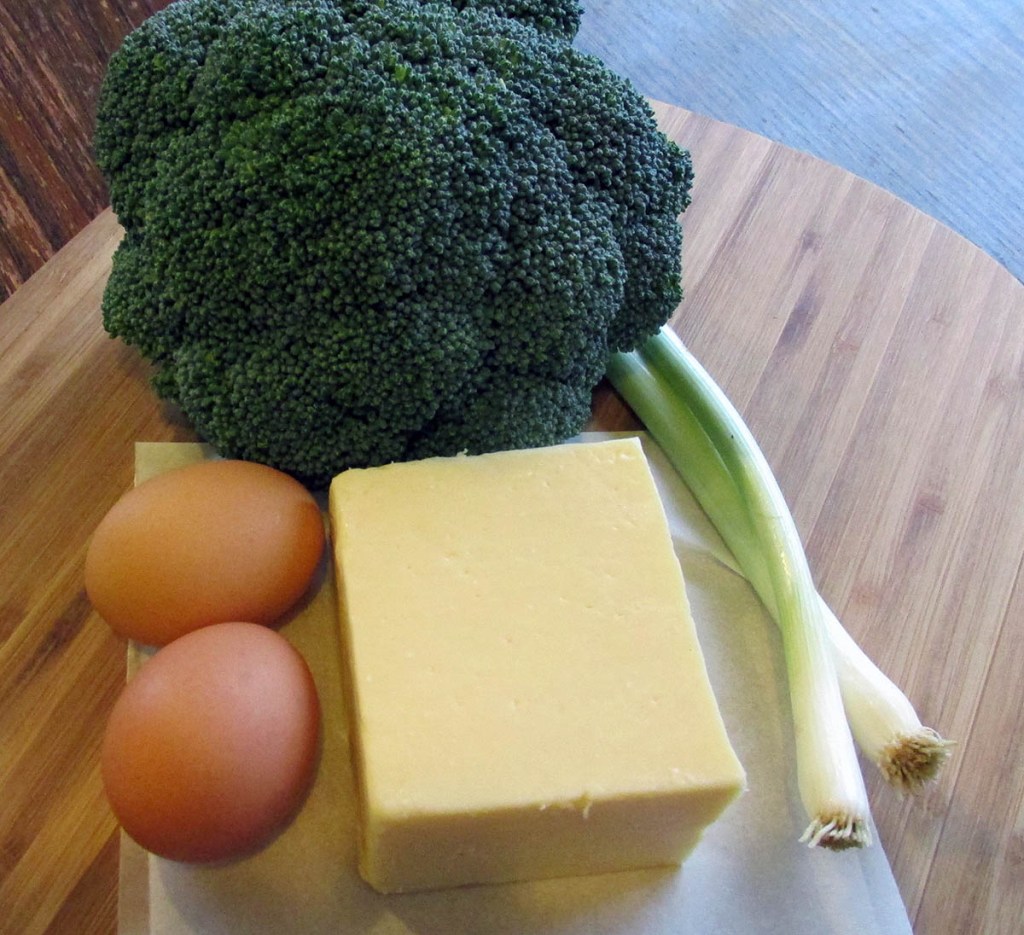
Broccoli tots ingredients
Ingredients
340g broccoli florets
1 egg
1 egg white
1/2 cup spring onion, finely chopped
2/3 cup cheddar cheese, grated
salt and pepper to taste
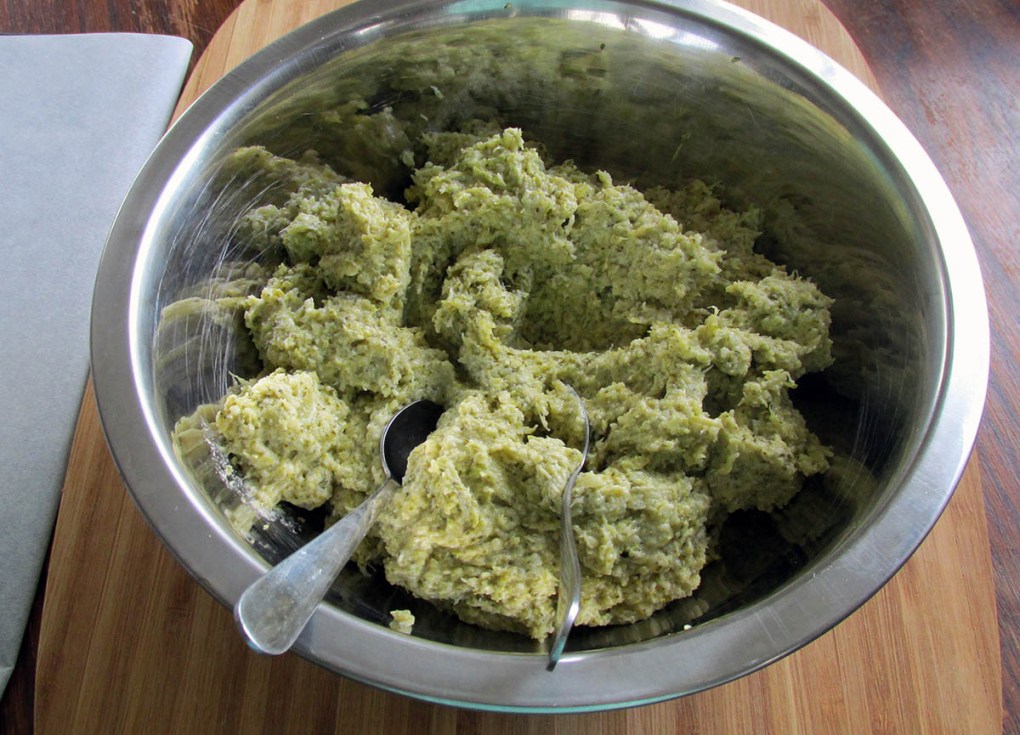
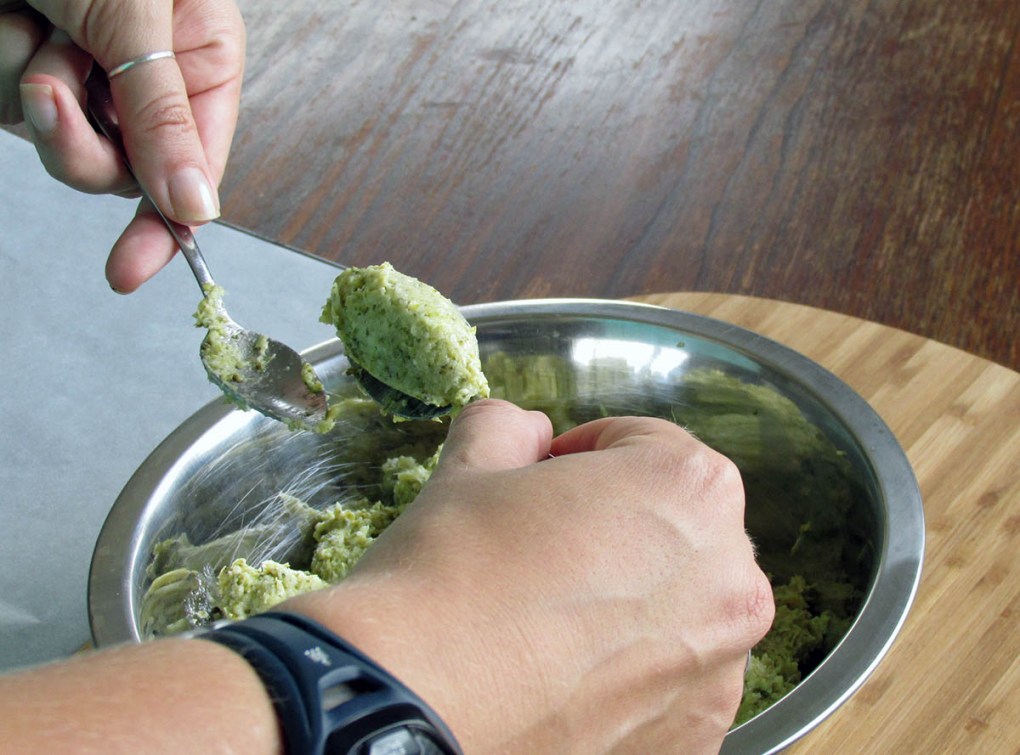
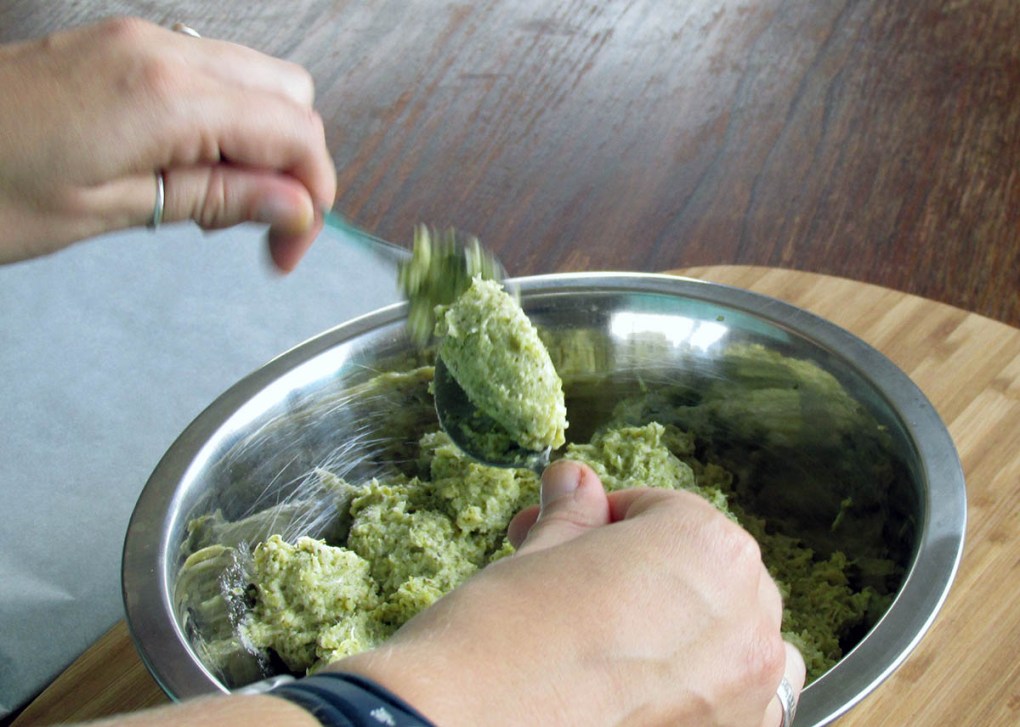
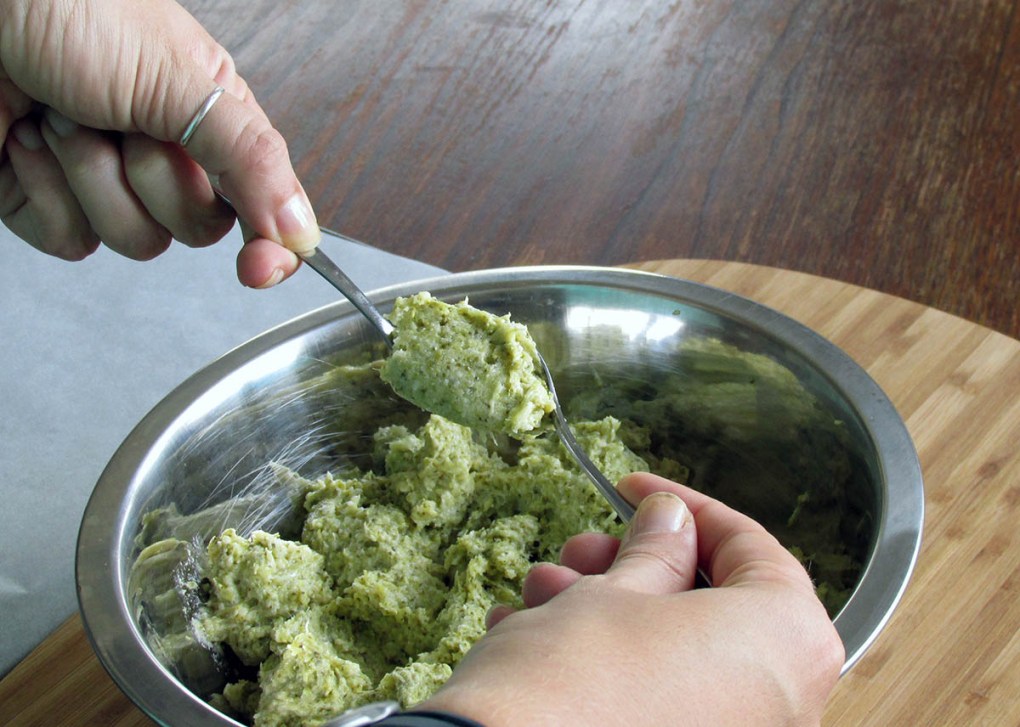
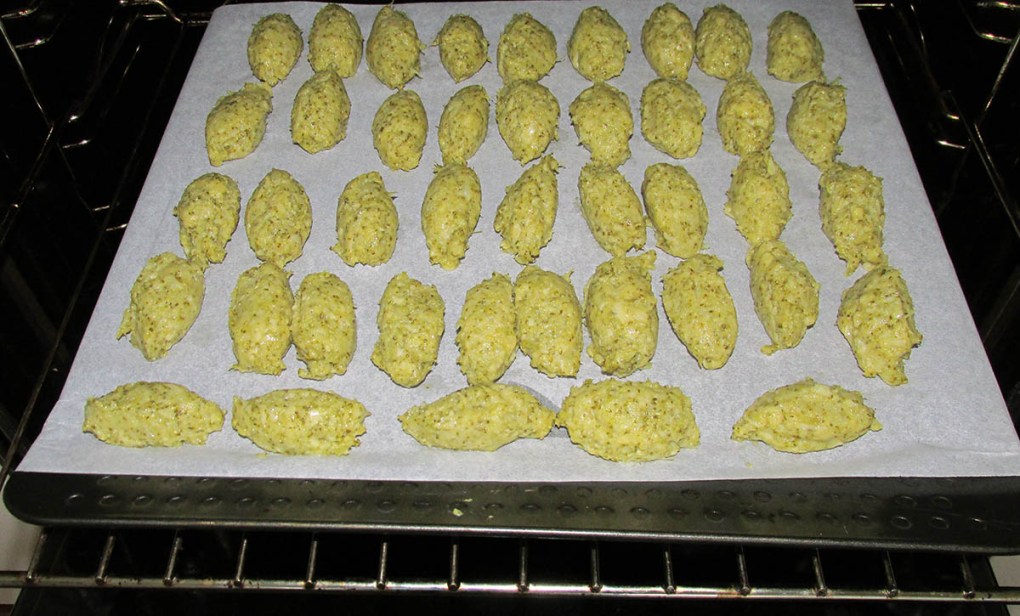
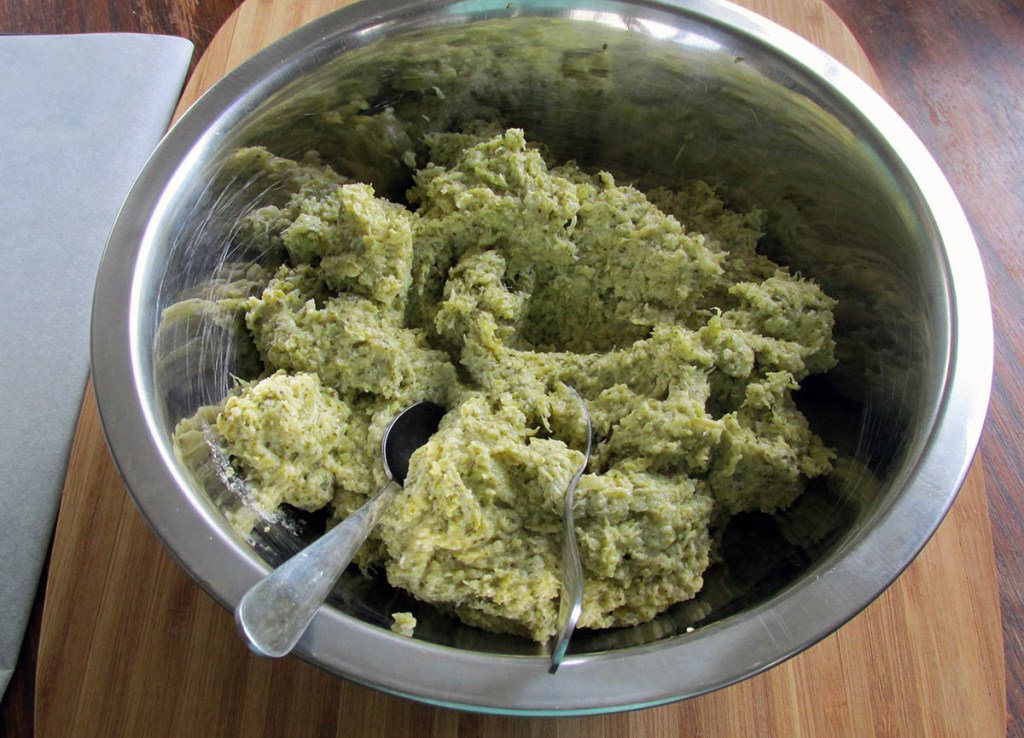
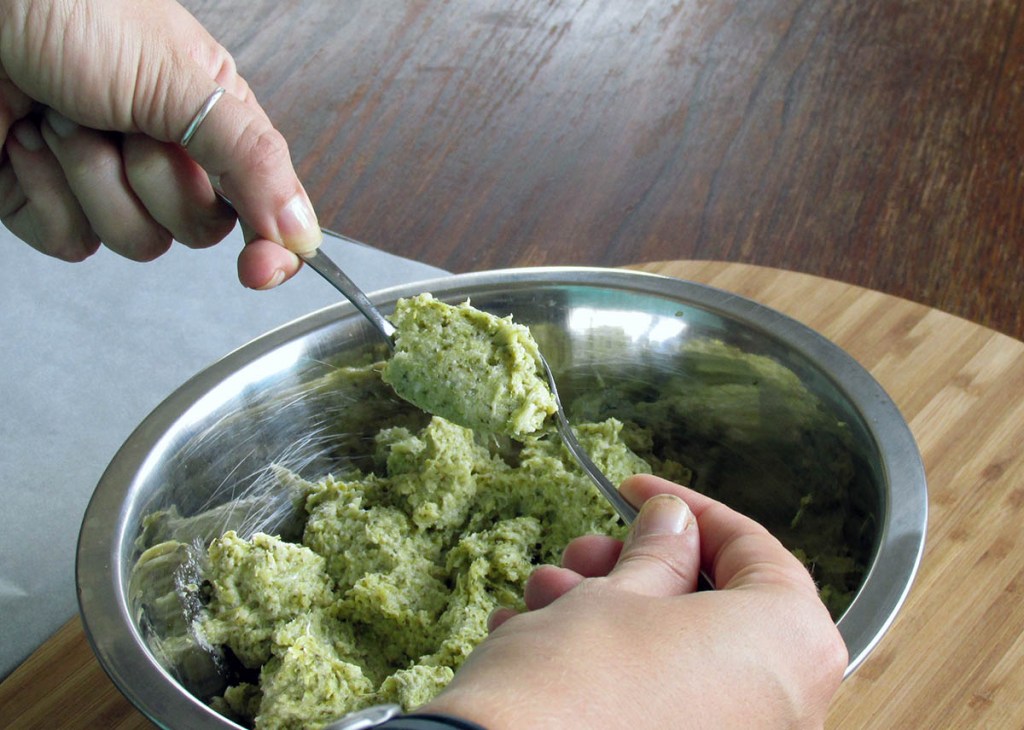
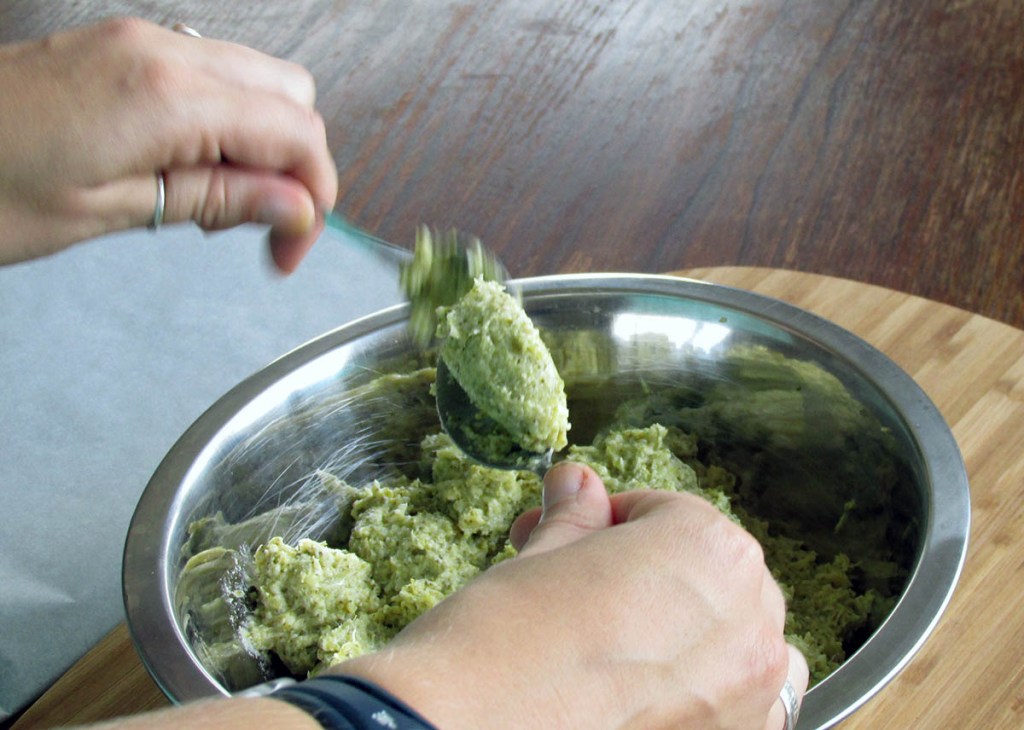
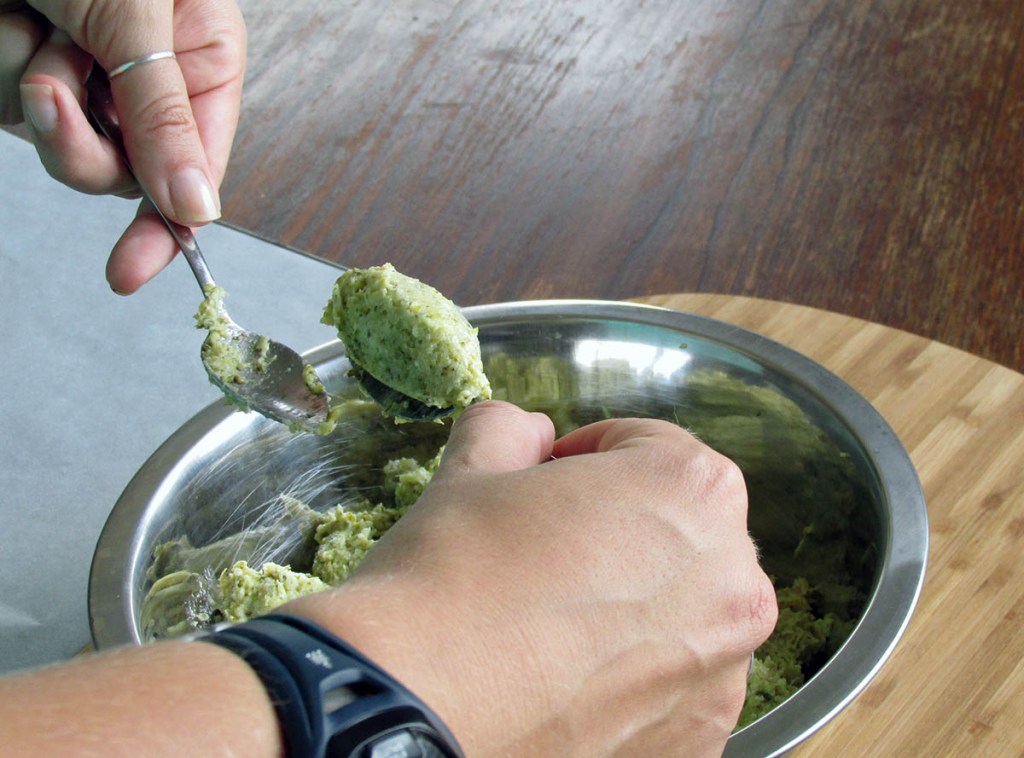
In a medium bowl, combine all the ingredients and season with salt and pepper to taste.With one of the teaspoons scoop up a heaping portion of the mixture.Taking the second spoon, push the portion off the first spoon.Repeat the transfer of the portion from one spoon to the other gently smoothing the mixture into an oval shapeNow you have a quenelle.Place the tots on the baking tray and bake for 15 minutes.Broccoli tots fresh from the oven
These tots last seconds on the plate; truth be told they are a huge hit with everyone. They are a little messy and can take some time to make, but they are worth the effort.
Credit: Cath @ easycleaneats
Ingredients
340g broccoli florets
1 egg
1 egg white
1/2 cup spring onion, finely chopped
2/3 cup cheddar cheese, grated
salt and pepper to taste
Directions
To cook the broccoli florets, steam them over boiling water for 3 minutes.
Set the steamed broccoli to one side to cool slightly.
Chop the steamed broccoli: you want a fine chop consistency.
Preheat the oven to 200 degrees C/ 400 degrees F
Line a baking tray with some baking paper or a silicone liner. or a silicone liner.
In a medium bowl, combine all the ingredients and season with salt and pepper to taste.
There are two ways to make the tots the simple oval or the Quenelle.
Simple oval Simple oval
Take a tablespoon and scoop a heaped spoon portion of the mixture.
Roll the mixture into an oval using your hands.
If the mixture sticks to your hands, you can use a little water to help.
Quenelle
Take two teaspoons.
With one of the teaspoons scoop up a heaping portion of the mixture.
Taking the second spoon, push the portion off the first spoon.
Repeat the transfer of the portion from one spoon to the other gently smoothing the mixture into an oval shape.
Place the tots on the baking tray.
Bake for 15 minutes, turning halfway through.
They are ready when they are golden brown.
Serve and eat while they are hot.
Nutrition
Per Serving: 72 calories; 4 g fat; 2 g carbohydrates; 4 g protein
Equipment
Measuring cups
Scales
Vegetable steamer
Saucepan
Knife
Chopping board
Mixing bowl
Baking tray
Baking paper/silicone liner
Spoons
Fork
Nutritional disclaimer
Nutrition information is provided as an estimate based on the ingredients used and available in my area (New Zealand). The nutritional information is here to help you understand the recipe; I use MyFitnessPal to generate my estimates. For more accurate nutritional information, please use a nutritional calculator with the ingredients in your area.