For a long time, tuna was a staple of a weekend lunch menu; tuna cheese melts were all I could make to satisfy hungry children. While I was happy to provide a high-protein lunch to the kids, I quickly got over eating leftover tuna or munching on tuna melts each week.
Mixing things up
In an effort to make tuna more interesting and easier to eat (every weekend), I came up with these tasty wraps. Anyone who knows me knows I love salad, so what could be better than mixing tuna and salad? Introducing fresh vegetables adds much-needed texture and new flavours to some boring tuna, while the avocado dressing is a great replacement for mayo. A simple solution to a repetitive problem. Now I get to choose when to eat tuna (and it isn’t every weekend), these tuna wraps are always my go-to option.
These lettuce wraps are the best way to eat tuna if you ask me.
Mix the tuna, peppers, carrots, tomatoes, and red onion in the bowl.
Add the avocado dressing.
Mix well.
Place lettuce leaves on a plate.
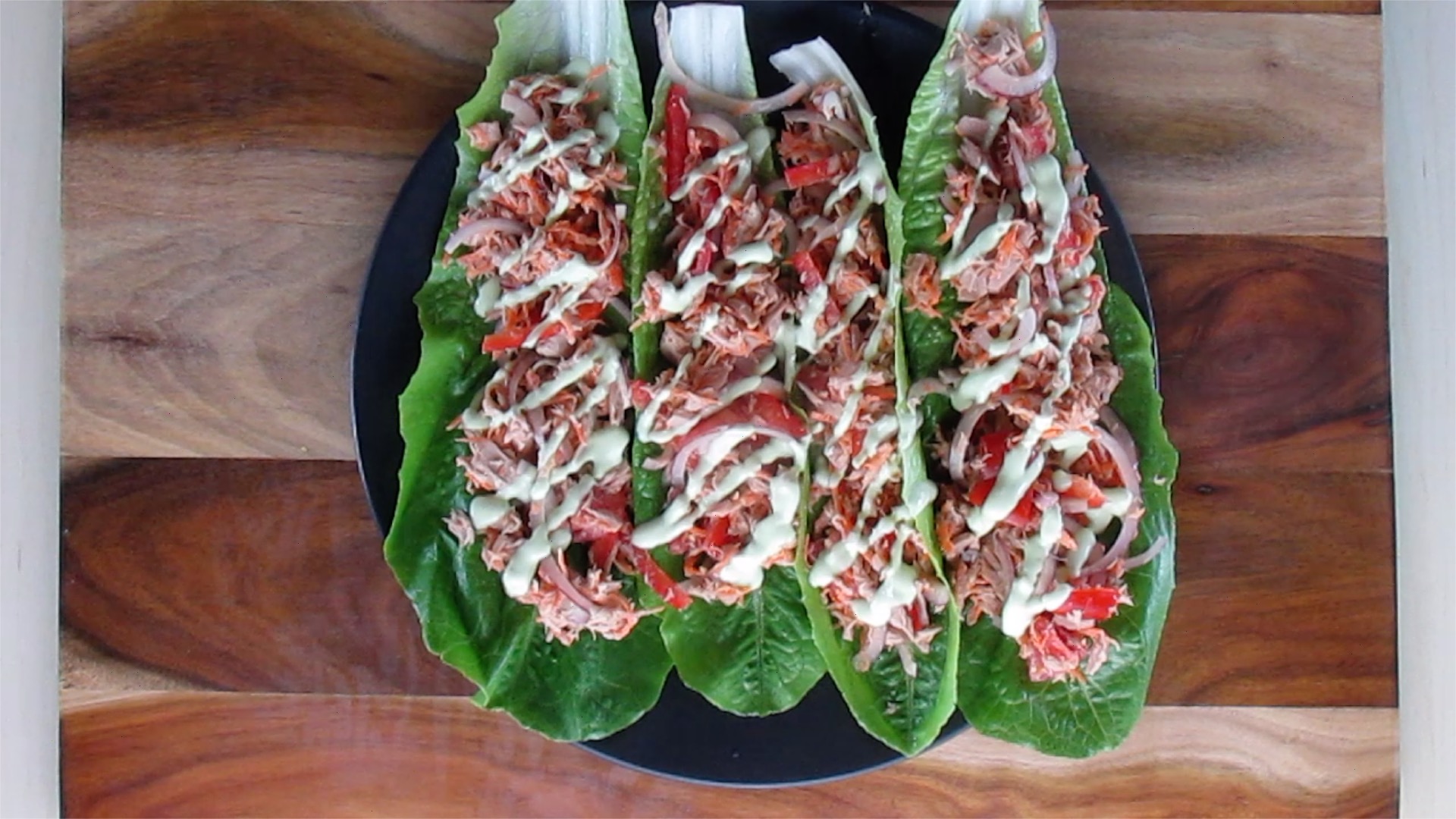
Divide the mixture between the lettuce leaves.
You can drizzle each wrap with a bit more avocado dressing before serving.
Nutrition
Per Serving: 111 calories; 2 g fat; 9 g carbohydrates; 17 g protein
Equipment
Grater
Knife
Chopping board
Fork
Spoon
Mixing bowl
Measuring cups
Measuring spoons
Nutritional disclaimer
Nutrition information is provided as an estimate based on the ingredients used and available in my area (New Zealand). The nutritional information is here to help you understand the recipe; I use MyFitnessPal to generate my estimates. For more accurate nutritional information, please use a nutritional calculator with the ingredients in your area.
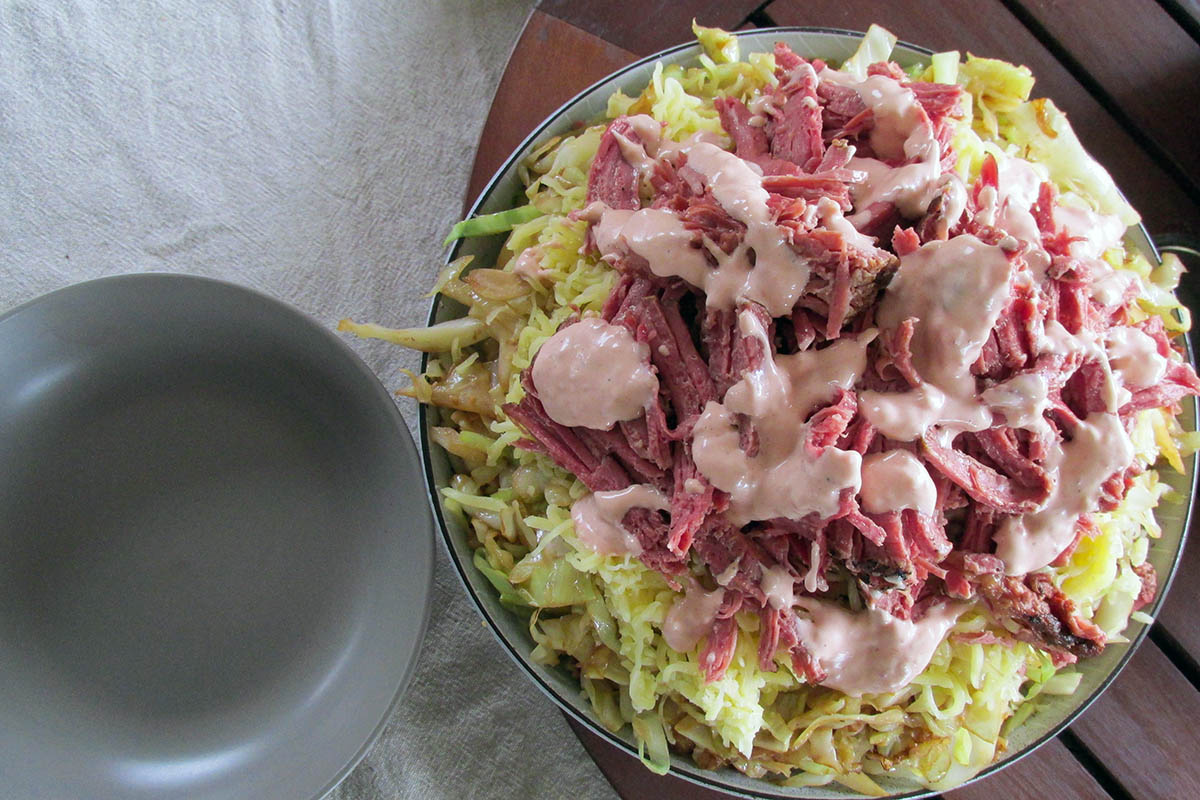
I never had any interest in corned beef when I was younger. I thought of corned beef as something nasty that came in a can and smelled a bit gross. While I still think that the corned beef in a can is gross, I do like a nice chunk of corned beef cooked just right. As with all things, learning how to do something right is a key to success; cooking the meat right is no exception.
A good crust
The first few times I made corned beef, I simply plopped the meat in the pan with some water and boiled it. Boring, I know. I decided to see what would happen if I seared the meat before boiling. The difference in flavour was amazing. I could not believe how much better the corned beef was. I know I shouldn’t be surprised that searing meat makes such a difference, but I was. The simple step adds a depth of flavour to any dish and brings out the best in your meal.
Instant Pot vs Cooker top
A few years ago, I decided to buy an Instant Pot when my old slow cooker died. It was a game-changer for slow cooking, but it changed my life thanks to the pressure cooker function. I remember the 1980s pressure cooker in my Nan’s kitchen with the valve that sounded like a jackhammer when it was time to release the pressure, and it scared the crap out of me. Thankfully, the Instant Pot pressure cooker setting is easy to use and has a beep to let you know when it is ready to release the pressure, not a jackhammer. When it comes to making corned beef now, I always break out the Instant Pot, mainly because it is so easy to use and I get perfectly cooked meat every time. On the rare occasions when my Instant Pot is in use and my corned beef is cooking on the stove, I have found that the cast iron pot is the best for simmering the meat. Whatever option you are going with, just make sure that you have enough water to completely cover the meat to make sure it ends up tender and juicy.
Corned beef
Ingredients
2kg Corned beef
2 bag leaves
12 peppercorns
2 tbsp coconut aminos
Instruction
Preheat a heavy-bottomed or cast-iron frying pan.
Sear all sides of the beef to create a golden crust.
If using an Instant Pot, place all the ingredients in the pot with water up to the minimum water line.
Set the Instant Pot to cook on the pressure cooking setting, on high for 90 minutes.
Allow the pressure to release naturally.
Alternatively
Place the peppercorns, bay leaves, coconut aminos and seared meat in a large stockpot.
Cover the meat with boiling water.
Bring the water to a rolling boil.
Reduce the heat to allow the meat to simmer, and cover the pan gently.
Sear all sides of the beef to create a golden crust.
If using an Instant pot place all of the ingredients in the pot with water up to the no higher than the minimum water line.
Set the Instant pot to cook on the pressure cooking setting, on high for 90 minutes.
Allow the pressure to release naturally.
Alternatively
Place the peppercorns, bay leaves, coconut aminos and seared meat in a large stockpot.
Cover the meat with boiling water.
Bring the water to a rolling boil.
Reduce the heat to allow the meat to gently simmer, cover the pan.
Simmer the meat for 40 mins per 500g of meat.
Once the meat is cooked, remove it from the pan.
Let it rest for 15 minutes before shredding.
Nutrition
Per Serving:196 calories;5 g fat; 2 g carbohydrates; 35 g protein
Equipment
Cast iron frying pan
Tongs
Stockpot with a lid
Nutritional disclaimer
Nutrition information is provided as an estimate based on the ingredients used and available in my area (New Zealand). The nutritional information is here to help you understand the recipe; I use MyFitnessPal to generate my estimates. For more accurate nutritional information, please use a nutritional calculator with the ingredients in your area.
I feel like Taco Tuesday has been a thing for a long time, but it seems to be a new regular feature in people’s lives now (thank you, Lego Movie). #everythingisawesome
Taco Tuesday is a regular feature in my house, mainly because I love tacos, and what could be better after a day in the office and a monster workout?
Extra veggies for the kids
I enjoy using egg wraps with my tacos, and while traditional corn taco shells are great, I sometimes want to increase my vegetable intake. In the past, I was quite creative in sneaking vegetables into my children’s diets. Carrot taco shells were one of my sneaky ways to get kids to eat veggies without complaint, and now they are my go-to method for using up those carrots in the fridge before they start looking sad.
Worth the effort
I will be honest, these taco shells take a little bit of effort; they probably aren’t an easy option for a weeknight, but if you make them on the weekend, they will keep well in the fridge in an airtight container. If you are making them ahead of time, they are easy to re-crisp in the oven or in the trusty air fryer.
Carrot taco shells recipe
Ingredients
200g carrots, cooked and grated
75g cheese, grated
2 eggs
3 tbsp. Oat flour
Peel the carrots and cook them in boiling water for about 10 minutes.
Drain the carrots and let them cool before grating the carrots.
Squeeze out the excess water from the grated carrots, so the taco shells are not too soggy.
Place the carrots into a bowl, add the cheese eggs and flour, and then mix everything together.
Line a baking tray with baking paper or a silicone liner.
Preheat the oven to 200 degrees C/ 390 degrees F
Use an ice cream scoop to portion out the carrot mix onto the lined baking paper, use your fingers to flatten out each portion into a thin disc.
Bake at 200C for 15 minutes or until crispy around the edges.
Allow the discs to cool for a few minutes then gently remove the shells from the baking paper or a silicone liner. If you would like to shape the shells, you can lay them over a bottle or rolling pin.
As the shells cool, they will harden slightly.
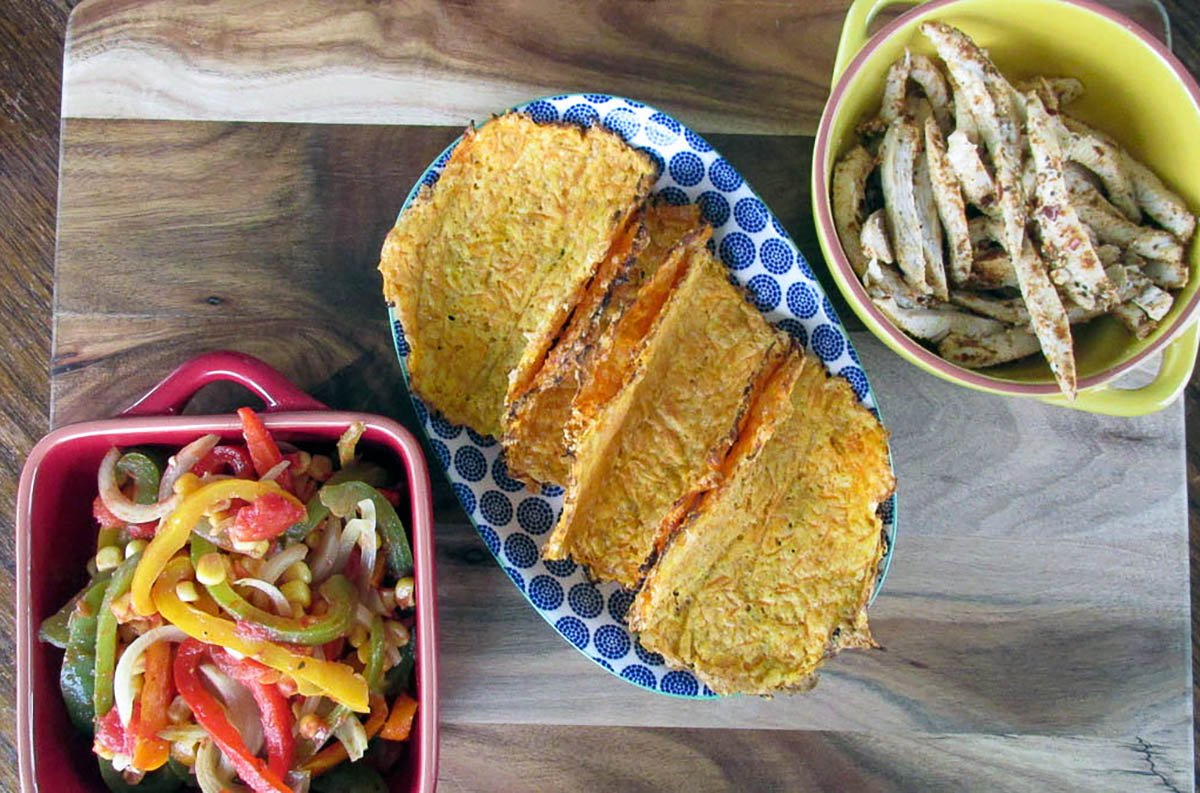
Fill the shells with your choice of taco filling and they are ready to go.
These taco sheels are ideal for a low carb taco Tuesday
Credit: Cath @ easycleaneats
Ingredients
200g carrots, cooked and grated
75g cheese, grated
2 eggs
3 tbsp. Buckwheat flour
Directions
Peel the carrots and cook them in boiling water for about 10 minutes.
Drain the carrots and let them cool before grating them.
Squeeze out the excess water from the grated carrots, so the taco shells are not too soggy.
Place the carrots into a bowl, add the cheese, eggs and flour, and then mix everything together.
Line a baking tray with baking paper or a silicone liner.
Preheat the oven to 200 degrees C/ 390 degrees F
Use an ice cream scoop to portion out the carrot mix onto the lined baking paper, and use your fingers to flatten out each portion into a thin disc.
Bake at 200 °C for 15 minutes or until crispy around the edges.
Allow the discs to cool for a few minutes, then gently remove the shells from the baking paper or a silicone liner. If you want to shape the shells, you can lay them over a bottle or rolling pin.
As the shells cool, they will harden slightly.
Fill the shells with your choice of taco filling, and they are ready to go.
Nutrition
Per Serving: 64 calories; 3.8 g fat; 4.4 g carbohydrates; 3.5 g protein
Equipment
Grater
Knife
Chopping board
Bowl
Baking tray
Spatula
Ice cream scoop
Cooling rack
Nutritional disclaimer
Nutrition information is provided as an estimate based on the ingredients used and available in my area (New Zealand). The nutritional information is here to help you understand the recipe; I use MyFitnessPal to generate my estimates. For more accurate nutritional information, please use a nutritional calculator with the ingredients in your area.
Maintaining a clean eating lifestyle is all about keeping things simple; if it is complicated, you make it harder for yourself. My focus recently has been on creating recipes that can be prepared and cooked quickly on a busy weeknight.
We all struggle to make healthy and tasty meals while keeping on top of everything else in life. This recipe is healthy, delicious and easy to make. You can cook on a single tray in the oven, and it is cooked in under 30 minutes. The preparation takes no more than 20 minutes, involving all the slicing, dicing, and mixing. Each meal is portioned to feed four adults.
Jalapeno burgers
Takeaway alternative
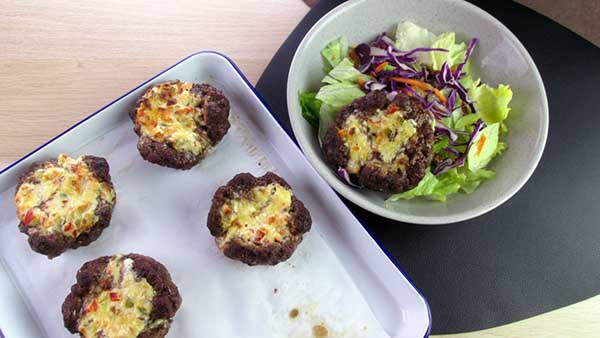
We all love a naughty takeaway, but we can all live without the extra calories and the expanding waistlines. You don’t need to live without your takeaway; swap it out for a delicious and healthier fakeaway. These burgers have quickly become one of my favourite burgers to make. During the many months of COVID lockdown here in Auckland, these burgers were my go-to cheat meal. Even with lockdowns a distant memory, I still break these burgers out when I’m craving something naughty but don’t want all the processed crap that comes from real takeout. The best thing about these burgers is the cheese-filled open top; the filling delivers a light cheese crust with a beautifully creamy and spicy filling.
Jalapeno burger recipe
Jalapeno burger ingredients
Ingredients
1 jalapeno pepper
1 tbsp. yoghurt
4 tbsp. mozzarella cheese, grated
30g Goat cheese
180g minced beef
1 garlic clove, minced
1/2 tbsp. Cumin
1/2 tsp chilli flakes
Sea salt
Ground pepper
Slice jalapeño in half, remove the seeds and finely chop them.
Chopped jalapeno
In a bowl, mix together the yogurt, mozzarella, goat cheese, and jalapeño.
Cheese
Take a small muffin tray and divide the cheese mix between 6 cups of the muffin tray.
Place the muffin tray in the freezer for 15 minutes.
Preheat the oven to 180 degrees C / 360 degrees F
Line a baking tray with baking paper or a silicone liner
Baking tray and silicone liner
While the cheese is chilling, start on the burger mix.
Take a large mixing bowl and add the meat, garlic, cumin, sea salt, and ground pepper.
Beef mince
Mix the meat well and divide it into six portions.
Burger mix divided
Remove the muffin tray from the freezer and remove the cheese mix from the tray.
Take one portion of meat and flatten it out into a pattie.
Add a cheese portion to the centre of the pattie and bring the meat up around the cheese gently.
You should have enough meat to cover most of the cheese; leave a small opening at the top of the burger.
Bake at 180 degrees C / 360 degrees F for 20 minutes.
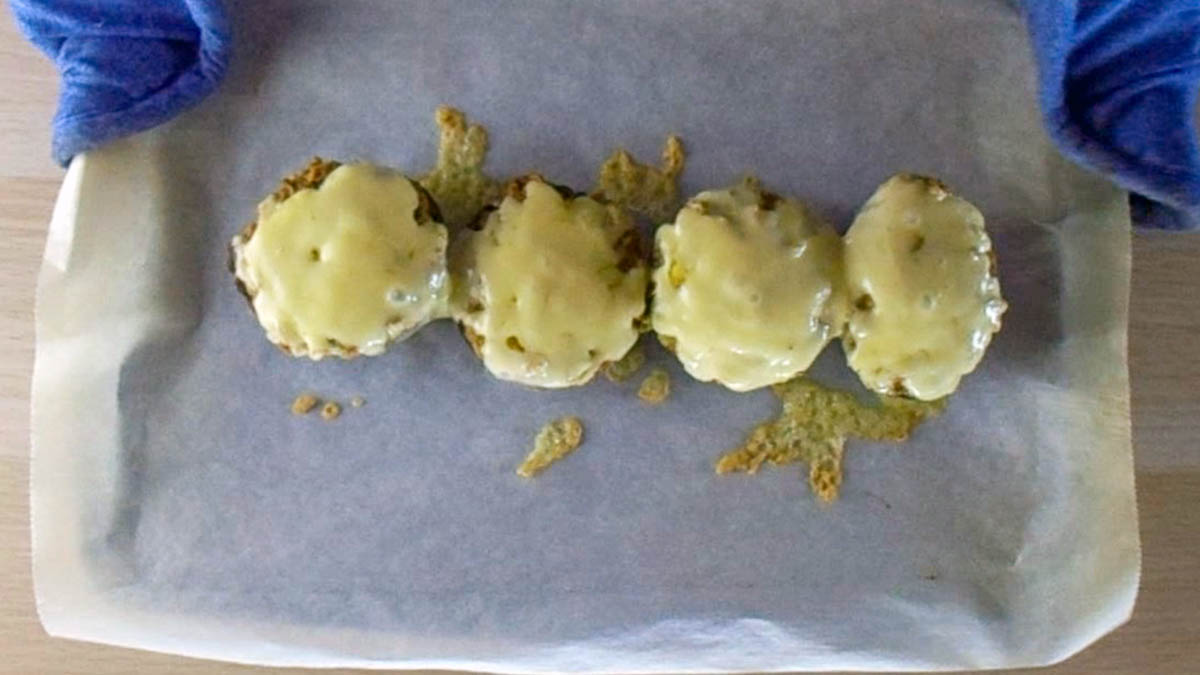
The outside of the burger should be brown, and the cheese is bubbling out the top.
Jalapeno burgers fresh from the oven
Serve on a bed of lettuce or between two quick rounds.
Slice jalapeño in half, remove the seeds and finely chop them.
In a bowl, mix together the yogurt, mozzarella, goat cheese, and jalapeño.
Take a small muffin tray and divide the cheese mix between 6 cups of the muffin tray.
Place the muffin tray in the freezer for 15 minutes.
Preheat the oven to 180 degrees C / 360 degrees F
Line a baking tray with baking paper or a silicone liner
While the cheese is chilling, start on the burger mix.
Take a large mixing bowl and add the meat, garlic, cumin, sea salt, and ground pepper.
Mix the meat well and divide it into six portions.
Remove the muffin tray from the freezer and remove the cheese mix from the tray.
Take one portion of meat and flatten it out into a pattie.
Add a cheese portion to the centre of the pattie and bring the meat up around the cheese gently.
You should have enough meat to cover most of the cheese; leave a small opening at the top of the burger.
Bake at 180 degrees C / 360 degrees F for 20 minutes.
The outside of the burger should be brown, and the cheese is bubbling out the top.
Serve on a bed of lettuce or between two quick rounds.
Nutrition
Per Serving: 158 calories; 8 g fat; 1 g carbohydrates; 19 g protein
Equipment
Knife
Chopping board
Fork
Small mixing bowl
Large mixing bowl
Measuring spoons
Kitchen scale
Silicone muffin pan
Spoon
Baking tray
Baking paper or silicone liner
Nutritional disclaimer
Nutrition information is provided as an estimate based on the ingredients used and available in my area (New Zealand). The nutritional information is here to help you understand the recipe; I use MyFitnessPal to generate my estimates. For more accurate nutritional information, please use a nutritional calculator with the ingredients in your area.
It’s time to break out the BBQ down here in the Southern Hemisphere, which means lots of burgers being made in the sunshine. I’m not looking to add all the carbs that go with the beef burgers, so I’ve been whipping up quick bread with a twist.
Avocadoabundance
Whenever avocados are in season, I try to make the most of them. We all know that avocados have a small window of perfect ripeness, and they all hit that point simultaneously. So as not to waste them, I buy and then freeze the avocado pulp. To make my quick break a little more interesting, I’ve used some avocado pulp to make my burger buns extra. If you have fresh avocados, they also work for this recipe. If you use frozen avocado pulp, make sure it is completely thawed before folding it into the mix.
Burger buns recipe
Ingredients
4 egg whites
2 avocados
4 tbsp. buckwheat flour
1/4 tsp. cream of tartar
1/4 tsp. baking soda
Instructions
Preheat oven to 160 degrees C/ 320 degrees F.
Line a baking tray with baking paper or a silicone liner.
In a large mixing bowl, whisk the egg whites for 30 seconds using an electric whisk or stand mixer.
Add the cream of tartar and keep whisking on high speed until stiff peaks form.
Place the avocado flesh into a food processor, and blend until you get a smooth puree.
Add the avocado puree to the egg whites.
Add the buckwheat flour and baking soda to the bowl with the egg whites.
Use a spatula to combine the ingredients together; fold the ingredients together, don’t stir them.
You want a smooth, fluffy batter.
Divide the batter into 12 rounds on the baking tray.
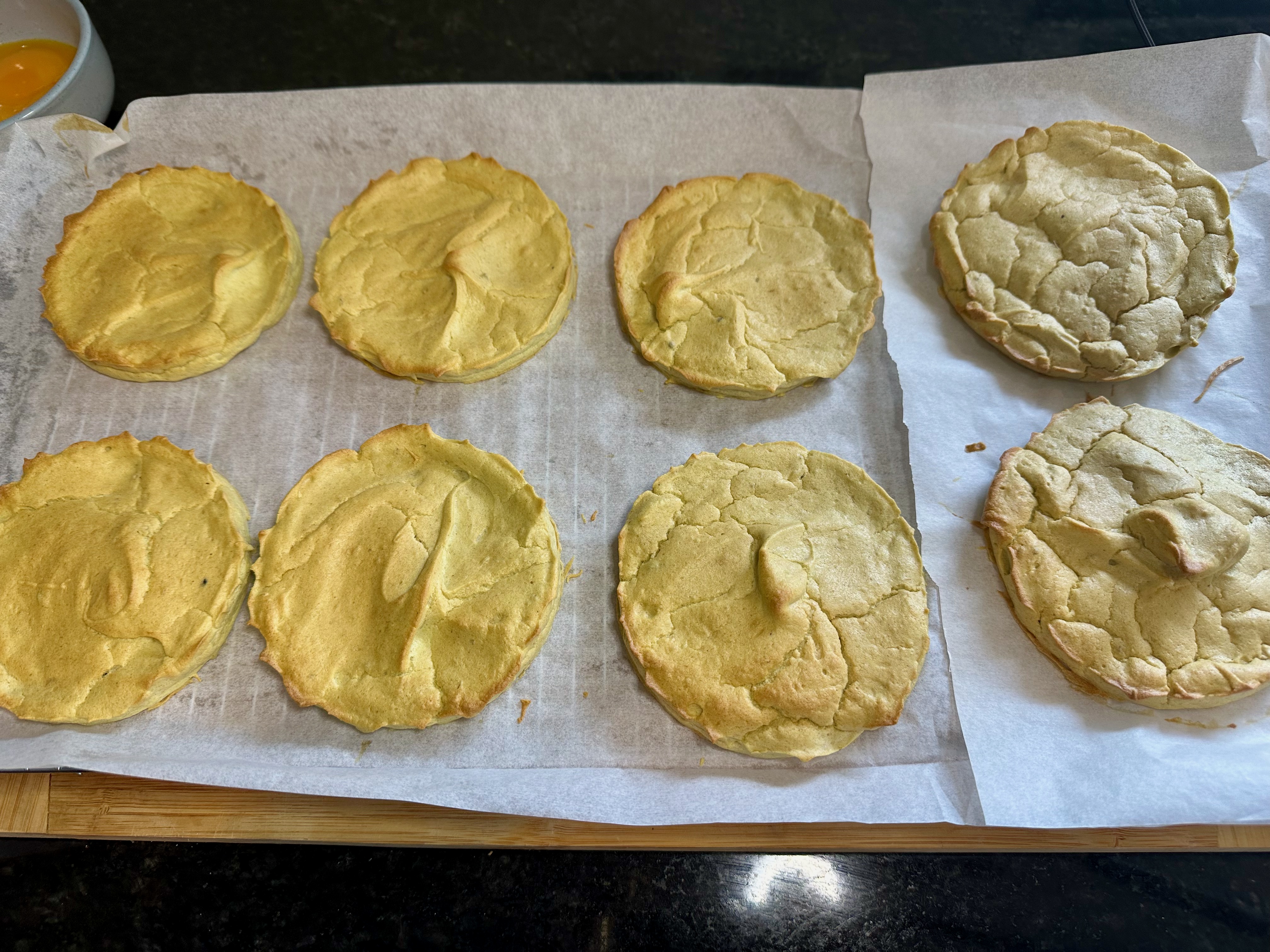
Bake the buns for 15 – 20 minutes or until the edges are slightly golden.
Remove the buns from the oven and transfer the buns on the baking paper to a cooling rack.
Let the buns cool for 10 minutes before filling them up with burgers.
Remove the buns from the oven and transfer the buns on the baking paper to a cooling rack.
Let the buns cool for 10 minutes before filling them up with burgers.
Line a baking tray with baking paper or a silicone liner.
In a large mixing bowl, whisk the egg whites for 30 seconds using an electric whisk or stand mixer.
Add the cream of tartar and keep whisking on high speed until stiff peaks form.
Place the avocado flesh into a food processor, and blend until you get a smooth puree.
Add the avocado puree to the egg whites.
Add the buckwheat flour and baking soda to the bowl with the egg whites.
Use a spatula to combine the ingredients together; fold the ingredients together, don’t stir them.
You want a smooth, fluffy batter.
Divide the batter into 12 rounds on the baking tray.
Bake the buns for 15 – 20 minutes or until the edges are slightly golden.
Remove the buns from the oven and transfer the buns on the baking paper to a cooling rack.
Let the buns cool for 10 minutes before filling them up with burgers.
Nutrition
Per Serving: calories; 4g fat; 4g carbohydrates; 2g protein
Equipment
Baking tray
Whisk
Food processor
Spatula
Mixing bowl
Cooling rack
Nutritional disclaimer
Nutrition information is provided as an estimate based on the ingredients used and available in my area (New Zealand). The nutritional information is here to help you understand the recipe; I use MyFitnessPal to generate my estimates. For more accurate nutritional information, please use a nutritional calculator with the ingredients in your area.
I’ve been revisiting recipes that have been some of my old-school recipes and favourites that were staples when I got started eating clean. I first posted this recipe in 2015; at that time, my step kids were fussy, vegetables had to be hidden and disguised, and there was no potential for intense flavours or spice.
As the kids grew, my recipes changed organically to meet their palates and preferences. I’ve updated this recipe because of that, but fear not; the original recipe suitable for kids and less developed palates is at the bottom of the post.
Hot lasagne fresh from the oven
Clean eating take of a classic
This was one of the first meals I made with a pasta alternative; much like replacing pasta with zoodles/coodles. I was always game to sneak some extra vegetables into the family meals, but this is one of the few meals I don’t need to hide the vegetables at all. The popular opinion of the kids back then was that this lasagne was better than one made with traditional pasta. I can’t say I disagree. As times have changed and this lasagne recipe is no longer entirely consumed in one sitting, it has become one of my favourite freezer meals. I can either make it in bulk and portion it out to enjoy some comfort food when needed or have a tray in the freezer for when I have company over.
Secret to success
The secret to a good lasagna is the depth of flavour. Flavour isn’t instant; it takes time and some effort. When I’m making lasagna, I tend to make the meat sauce the day before to let the herbs get to know the meat and sauce, mingle, and start the flavour party. The longer you leave the meat and herbs to party, the better your lasagna will taste.
Pasta free lasagne recipe
Lasagne ingredients
Ingredients
500g minced beef
1 onion finely diced
2 celery sticks, finely chopped
1 can tomatoes, chopped
2 garlic cloves minced
1 tsp. basil
1 tsp. oregano
1 tbsp. red chilli flakes
1 tbsp. coconut oil
4 carrots cut into ribbons
2 cups cheese, grated
250g cottage cheese
Instructions
Add the coconut oil to a stockpot over medium heat.
Add the onion and cook until the onion starts to soften.
Add the onion to a stockpot and cook until the onion starts to soften
Add the garlic, basil, chilli and oregano to the pan.
Add the garlic, basil and oregano to the panCook until the onion is softening
Add the beef mince to the pan and cook the beef until it browns.
Add the beef mince to the panCook the beef until it browns
Add the chopped tomatoes to the pan along with the chopped celery.
Add the celery Add the chopped tomatoes to the pan
Simmer the mixture for 10 minutes, then turn off the heat.
Simmer the mixture for 10 minutes then turn off the heat
While the meat and sauce are simmering, take a baking dish and ensure you have enough carrot ribbons to build your lasagne layers.
When the meat simmers, you can start to layer the lasagne.
Start with a carrot ribbons layer at the baking dish’s bottom.
Start with a layer of carrot ribbons at the bottom of the baking dish.
Next, add half the meat and sauce to create a layer in the baking dish.
Next add a half of the meat and sauce to create a layer in the baking dish.Create a layer in the baking dish.
Add another layer of carrot ribbons on top of the meat.
Next, add half of the cottage cheese and spread it across the dish, then top it with half the grated cheese.
Next add half of the cottage cheeseTop with half the cheese
Top with half the cheese, and another layer of carrot ribbons.
Repeat the layers with meat, carrot ribbons, cottage cheese and grated cheese.
If you can leave the lasagna overnight before baking it, the longer you leave it, the better it will taste.
Bake the lasagne at 180 degrees C/ 350 degrees F for 30 minutes.
Remove the lasagne from the oven when the cheese is brown and bubbly.
Bake the lasagne at 180 degrees C/ 350 degrees F for 30 minutes
Let the lasagne rest for 5 minutes before slicing and serving.
Let the lasagne rest for 5 minutes before slicing and serving
Add the coconut oil to a stockpot over medium heat.
Add the onion and cook until the onion starts to soften.
Add the garlic, basil, chilli and oregano to the pan.
Add the beef mince to the pan and cook the beef until it browns.
Add the chopped tomatoes to the pan along with the chopped celery.
Simmer the mixture for 10 minutes, then turn off the heat.
While the meat and sauce are simmering, take a baking dish and ensure you have enough carrot ribbons to build your lasagne layers.
When the meat simmers, you can start to layer the lasagne.
Start with a carrot ribbons layer at the baking dish’s bottom.
Next, add half the meat and sauce to create a layer in the baking dish.
Add another layer of carrot ribbons on top of the meat.
Next, add half of the cottage cheese and spread it across the dish, then top it with half the grated cheese.
Top with half the cheese, and another layer of carrot ribbons.
Repeat the layers with meat, carrot ribbons, cottage cheese and grated cheese.
If you can leave the lasagna overnight before baking it, the longer you leave it, the better it will taste.
Bake the lasagne at 180 degrees C/ 350 degrees F for 30 minutes.
Remove the lasagne from the oven when the cheese is brown and bubbly.
Let the lasagne rest for 5 minutes before slicing and serving.
Nutrition
Per Serving: 350 calories; 25.7 g fat; 8.2 g carbohydrates; 21.7 g protein
Equipment
Stockpot
Wooden spoon
Vegetable peeler
Knife
Grater
Chopping board
Baking dish
Nutritional disclaimer
Nutrition information is provided as an estimate based on the ingredients used and available in my area (New Zealand). The nutritional information is here to help you understand the recipe; I use MyFitnessPal to generate my estimates. For more accurate nutritional information, please use a nutritional calculator with the ingredients in your area.
Pasta free lasagne – kid friendly recipe
Ingredients
500g minced beef
1 courgette diced
1 onion finely diced
1 red pepper diced
1 can tomatoes
2 garlic cloves minced
1 tsp. basil
1 tsp. oregano
1 tbsp. coconut oil
2 courgettes cut into ribbons
2 carrots cut into ribbons
2 cups cheese, grated
Instructions
In a stockpot heat the coconut oil, garlic, onion basil and oregano over a medium heat, cook until the onion is soft.
Add the beef mince and cook off until browned.
Pour in the tomatoes along with the diced vegetables to the meat and cook for 10 minutes.
In a baking dish create a layer of carrot ribbons to cover the bottom add a layer of meat then cover with a layer of courgette ribbons, top with cheese.
Repeat until you reach the top of the baking dish, top the final layer with cheese.
If you can leave the lasagne overnight before you bake it, the longer you leave it the better it will taste.
Bake the lasagne at 180 degrees C/ 350 degrees F for 30 minutes.
When the cheese is brown and bubbly remove the lasagne from the oven.
Let the lasagne rest for 5 minutes before slicing and serving.
Sushi is one of the most popular options for lunch, and the sushi roll is, without doubt, one of the most recognisable forms. One of the best things about sushi is its versatility; you can have any filling you want and even have your sushi without rice. That is right, no rice sushi.
Swap the carbs for protein
The best approach I have found when making no-rice sushi is swapping the rice for protein. For this recipe, I have swapped out the rice for cooked chicken, but it can also work with tuna, salmon, pork, or eggs. All you need to do is make sure the protein is mixed with something like mayo that makes it sticky enough to hold the sushi roll together. I love to add some seasoning to the protein to help add some flavour and a little kick.
Variety is the spice of life
The beauty of this recipe is that you can add anything you want (within reason) to the sushi as a filling. I love to mix things up to have a mix of vegetables that are crisp, crunchy and soft, so each bite is interesting to eat and packed with flavour.
Mix the chicken, chicken seasoning and mayo in a bowl to form a thick paste.
Take the sushi mat and place it on a clean flat surface.
Take a sheet of nori, and put the nori sheet smooth side down.
Take the filling of choice and spread it out on the nori sheet.
The mixture should be spread evenly, but not to the edge of the sheet at one end.
Take the additional fillings (vegetables, cheese, etc.) and lay them out on top of the spread-out filling.
Lay out the fillings in lines starting near the edge of the nori sheet.
Each filling should have its own line with a space between the next line.
Have the sushi mat in front of you with the edge without filling furthest away from you.
10.Lift the edge of the mat up and use the mat to roll the edge of the nori over the first line of filling.
Make sure that the fillings are sticking together.
Tuck the nori into the roll and use the mat to continue rolling and tucking the nori; remove the mat from the roll as you go.
Move slowly so that the sushi roll is even.
Roll the sushi roll backwards and forward to seal it and keep it tight for cutting.
Let the sushi roll sit for a minute to make cutting easier.
Cut the roll into segments with a sharp, wet knife.
Serve and eat immediately.
Nutrition
Per Serving: 85 calories; 5g fat; 3g carbohydrates; 7g protein
Equipment
Sushi rolling mat
Spatula
Spoon
Mixing bowl
Nutritional disclaimer
Nutrition information is provided as an estimate based on the ingredients used and available in my area (New Zealand). The nutritional information is here to help you understand the recipe; I use MyFitnessPal to generate my estimates. For more accurate nutritional information, please use a nutritional calculator with the ingredients in your area.
I love salad, it is sad, but true. For a long time, if I suggested salad for dinner, it was met with grumbles, groans, and complaints. Nowadays, I have the freedom to eat salad as often as I want, and I’ll be honest, I eat it a lot. In my book, salad is something to get excited about; it is an amazingly fresh meal full of endless possibilities, not limp lettuce, sad dressing and soggy tomatoes. I love to create salads that taste amazing and look great.
Taco style salad
More spicy flavours
While I find it hard to say no to tacos, I sometimes want the flavour of tacos without so many carbs. This salad is my compromise; it is a taco in a bowl. This salad delivers on the flavour of tacos, but with a tasty and creamy dressing that brings everything together. It is easy to make, and the recipe is enough to feed a hungry family and leave you with some leftovers. If you don’t need quite so much food, it is easy to half the ingredients to make 5 servings rather than 10.
Taco style salad
Taco style salad ingredients
Ingredients
6 cups cos lettuce, chopped
6 cups chicken, cooked and cubed
1 can corn
1 can black beans
2 tomatoes, diced
1 avocado, diced
1/2 red onion, diced
3/4 cup cheddar cheese, grated
1 cup tortilla chips, crushed
1 handful fresh coriander, chopped
1/2 cup plain yogurt
3 tbsp. avocado oil
2 tsp. honey
2 tsp. apple cider vinegar
1 tsp. garlic, minced
1 lime, juiced
1/2 jalapeño, finely diced
2 tsp. taco seasoning
Instructions
Mix the lettuce, corn, beans, tomatoes, avocado, onion and cheese in a large bowl.
Take a large bowl.Add the lettuce and chicken to the bowl.Add the corn and beans.Add the tomatoes and avocado.Add the red onion.Mix well.
Set the bowl to one side.
In another bowl, whisk together the yoghurt, oil, honey, apple cider vinegar, garlic, lime juice, jalapeño, and taco seasoning.
Take the ingredients for the dressingAdd the ingredients to a bowl.Add the ingredients to a bowl.Add the jalapenos and whisk.
When you are ready to serve the salad, add the dressing to the bowl with the salad.
Add the dressing.
Toss the salad to coat everything with the dressing.
Mix well.
Top the salad with the crushed chips and coriander to serve.
Sometimes want the flavour of tacos without so many carbs. This salad is my compromise; it is a taco in a bowl.
Credit: Cath @ easycleaneats
Ingredients
6 cups cos lettuce, chopped
6 cups chicken, cooked and cubed
1 can corn
1 can black beans
2 tomatoes, diced
1 avocado, diced
1/2 red onion, diced
3/4 cup cheddar cheese, grated
1 cup tortilla chips, crushed
1 handful fresh coriander, chopped
1/2 cup plain yogurt
3 tbsp. avocado oil
2 tsp. honey
2 tsp. apple cider vinegar
1 tsp. garlic, minced
1 lime, juiced
1/2 jalapeño, finely diced
2 tsp. taco seasoning
Directions
Mix the lettuce, corn, beans, tomatoes, avocado, onion and cheese in a large bowl.
Set the bowl to one side.
In another bowl, whisk together the yoghurt, oil, honey, apple cider vinegar, garlic, lime juice, jalapeño, and taco seasoning.
When you are ready to serve the salad, add the dressing to the bowl with the salad.
Toss the salad to coat everything with the dressing.
Top the salad with the crushed chips and coriander to serve.
Nutrition
Per Serving: 287 calories; 12 g fat; 18 g carbohydrates; 26 g protein.
Equipment
Chopping board
Knife
Large mixing bowl
Small mixing bowl
Whisk
Spoon
Measuring cups
Measuring spoons
Scales
Nutritional disclaimer
Nutrition information is provided as an estimate based on the ingredients used and available in my area (New Zealand). The nutritional information is here to help you understand the recipe; I use MyFitnessPal to generate my estimates. For more accurate nutritional information, please use a nutritional calculator with the ingredients in your area.
If you are like me and you try to avoid mass-produced processed foods, the best option is to make your own. When you make your own, you control which ingredients you use and how much or how sweet you want it to be. Once you have a go at making your own and realise how easy it is, you will never go back to store-bought again.
Updating as we go
Early in 2021, I relocated and started updating my website; I’ve been making changes and improving everything as I go. This recipe is one of the many things I’ve tried to improve.
Fancy a fakeaway
We all love a naughty takeaway, but we can all live without the extra calories and the expanding waistlines. You don’t need to live without your takeaway; swap it out for a delicious, healthier fakeaway. Fettuccine Alfredo was one of my favourite takeaway pasta dishes back in the day. As much as I would love the carb-filled dinner after a long day and a hard workout, it is never worth the carb coma afterwards. A while ago, I started experimenting to perfect my Alfredo sauce, which I could quickly whip up to pour over a bowl of coodles and generous chicken. It is ideal as a healthier takeaway option and keeps in the fridge for a few days.
Alfredo sauce recipe
Ingredients
1/4 cup butter
1 cup heavy cream
1 garlic clove, crushed
1 1/2 cups Parmesan cheese, grated
1/4 cup parsley, chopped
Instructions
Melt butter in a medium saucepan over medium-low heat.
Add cream and simmer for 5 minutes.
Add the garlic and cheese and whisk quickly, heating through.
Melt butter in a medium saucepan over medium-low heat.
Add cream and simmer for 5 minutes.
Add the garlic and cheese and whisk quickly, heating through.
Stir in parsley and serve.
Nutrition
Per Serving: 230 calories; 21 g fat; 3.5 g carbohydrates; 5.4 g protein
Equipment
Measuring cups
Knife
Chopping board
Saucepan
Spatula
Grater
Nutritional disclaimer
Nutrition information is provided as an estimate based on the ingredients used and available in my area (New Zealand). The nutritional information is here to help you understand the recipe; I use MyFitnessPal to generate my estimates. For more accurate nutritional information, please use a nutritional calculator with the ingredients in your area.
Last weekend, I gave myself a treat for Easter and made myself a kick-ass roast dinner. I’m not a lover of chocolate, but I wanted something nice to enjoy over the long weekend. After braving the supermarket, seriously, I never get over the mad panic when the supermarket is closed for one day. I managed to get everything I needed for slow-roasted leg of lamb with all the fixings and didn’t lose my mind in the process.
Fall apart perfect meat
For me, the perfectly roasted leg of lamb falls off the bone and melts in your mouth. In my experience, the best way to get meat that falls apart perfectly is to cook it low and slow. This recipe is a foolproof way to cook a leg of lamb perfectly, and it takes minimal effort, which is also perfect. The bonus of cooking lamb this way is that you also have everything you need to make a rich gravy to go with your meat.
Cook once, eat twice
In my sad little life, if I can cook once and get a couple of meals out of it, I’m winning. This recipe is a great option for cooking once and eating many times.
Slow roast leg of lamb recipe
Ingredients
1.5-2kg Leg of Lamb
1 carrot, roughly chopped
1 onion, roughly chopped
2 celery stalks, roughly chopped
1 sweet potato, roughly chopped
2 garlic cloves minced
3 tsp. rosemary
500ml water
Instructions
Preheat the oven to 200 degrees C/ 400 degrees F.
Take a large roasting tin and lightly grease it.
Lay the chopped vegetables out at the bottom of the tray.
Pour the water into the roasting tin.
Place the leg of lamb on top of the vegetables.
Rub the lamb with the garlic and rosemary.
Cover the tin with baking paper and then foil, ensuring the roasting tin is completely covered to keep the moisture in.
Put the roasting tin into the preheated oven.
Cook for 30 minutes at 200 degrees C/ 400 degrees F.
Reduce the heat to 120 degrees C/ 250 degrees F and cook for 6 to 8 hours, depending on the weight of the lamb.
Check the meat after 6 to 8 hours. If the lamb is falling off the bone, take it out and let it rest.
Remove the vegetables from the tray and use the remaining liquid to make gravy.
Lay the chopped vegetables out at the bottom of the tray.
Pour the water into the roasting tin.
Place the leg of lamb on top of the vegetables.
Rub the lamb with the garlic and rosemary.
Cover the roasting tin with baking paper and then foil, ensuring it is completely covered to keep the moisture in.
Put the roasting tin into the preheated oven.
Cook for 30 minutes at 200 degrees C/ 400 degrees F.
Reduce the heat to 120 degrees C/ 250 degrees F and cook for 6 to 8 hours, depending on the weight of the lamb.
Check the meat after 6 to 8 hours. If the lamb is falling off the bone, take it out and let it rest.
Remove the vegetables from the tray and use the remaining liquid to make gravy.
Nutrition
Per Serving: 181 calories; 11.8g fat; 5.8g carbohydrates; 15.2g protein
Equipment
Measuring spoons
Measuring jug
Knife
Chopping board
Roasting tin
Baking paper
Aluminium foil
Nutritional disclaimer
Nutrition information is provided as an estimate based on the ingredients used and available in my area (New Zealand). The nutritional information is here to help you understand the recipe; I use MyFitnessPal to generate my estimates. For more accurate nutritional information, please use a nutritional calculator with the ingredients in your area.