It’s another one of those moments; it could be madness or genius, turning the salad roll inside out and removing the need for an actual wrap, no wheat or extra carbs. Stick with me; I promise it not only works, but it’s also a fantastic little lunch that will make everyone happy.
No cooking required
I do love a lunch that doesn’t need any cooking. This recipe doesn’t need any cooking at all; just a little bit of time to cut your veggies into sticks and then roll them. They are so easy to make that it is ridiculous. The beauty of this recipe is the flexibility around the fillings. If you want to add something different, you can; take something out, of course, you can. If the mood strikes, you can even dress the salad leaves before you use them.
Salad roll-ups
Salad roll-up ingredients
Ingredients
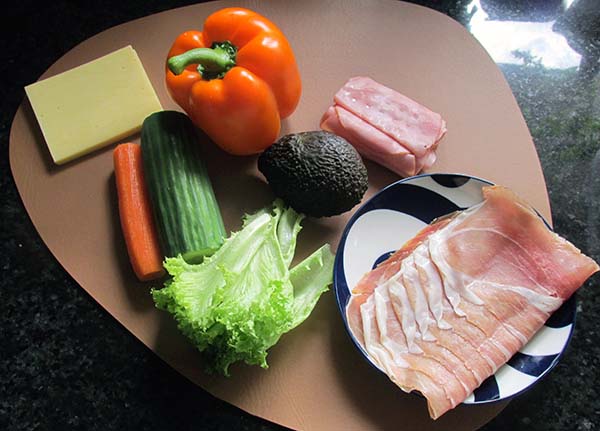
450g sliced meats – prosciutto or salami or ham
3 cups salad leaves
4 cheese slices, cut into sticks
¼ cucumber, cut into sticks
1 carrot, cut into sticks,
½ avocado, cut into slices,
½ pepper, cut into sticks
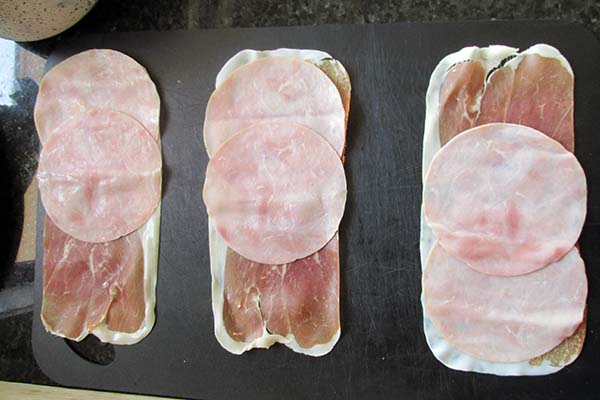
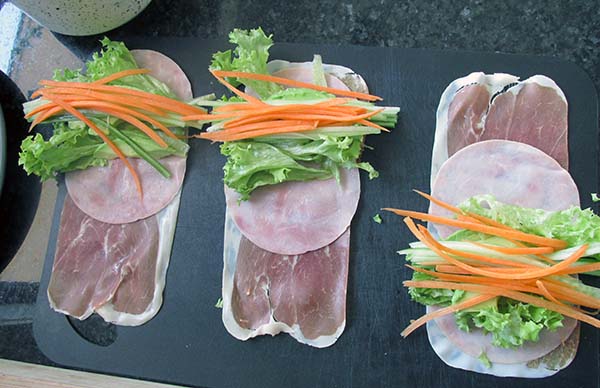
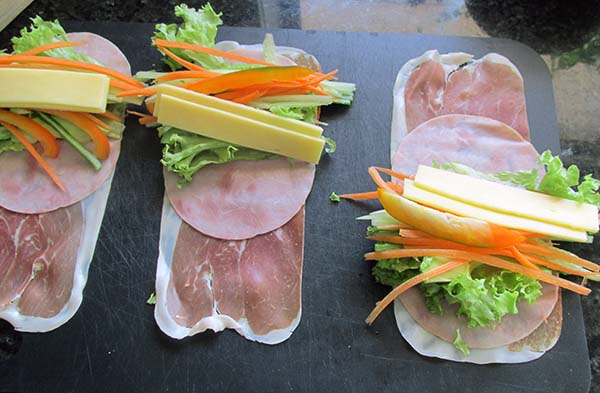
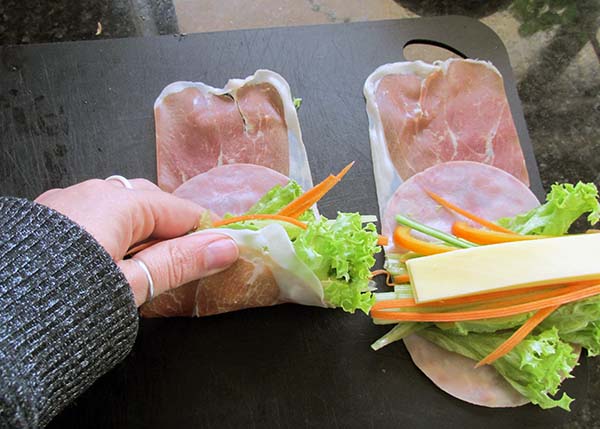
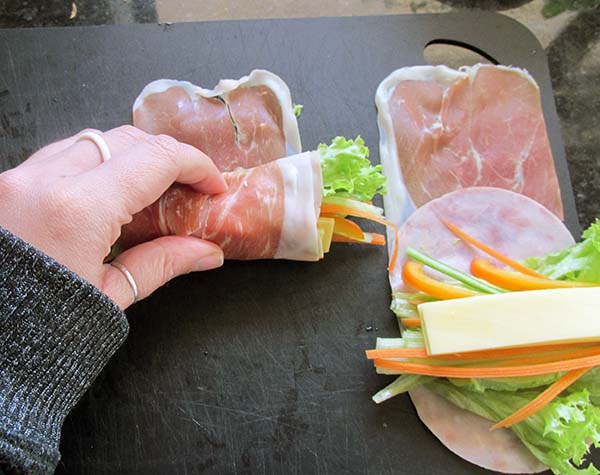
Slice the vegetables.Lay the meat on a chopping board.Add the lettuce to the meat.Add the sliced vegetables.Add the cheese.Fold the end of the meat over the vegetables.Roll the meat up.Enjoy
I do love a lunch that doesn't need any cooking. This recipe doesn't need any cooking at all, just a little bit of time to cut your veggies into sticks and then the rolling. They are so easy to make it is ridiculous.
Credit: Cath @ easycleaneats
Ingredients
450g sliced meats prosciutto or salami or ham
3 cups salad leaves
4 cheese slices, cut into sticks
1/4 cucumber, cut into sticks
1 carrot, cut into sticks,
1/2 avocado, cut into slices,
1/2 pepper, cut into sticks
Directions
Take a clean chopping board and lay out a few slices of meat.
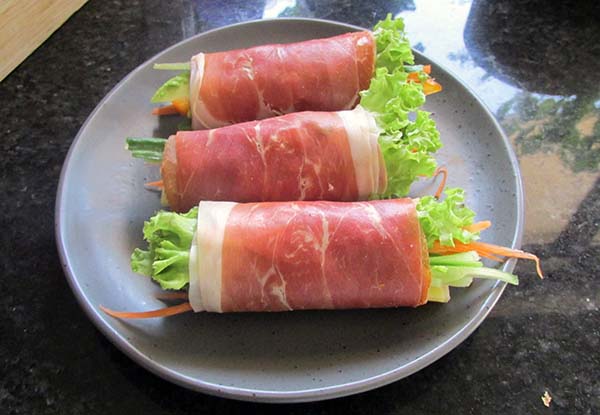
At one end place some of the salad leaves, pepper sticks, cucumber sticks, carrot sticks, cheese sticks and avocado slices.
Starting at the end with the salad roll the meat up to create a roll.
Some meats will hold together; others may need a toothpick to hold the roll together.
Serve.
Nutrition
Per Serving: 186 calories; 10 g fat; 14 g carbohydrates; 9 g protein.
Nutritional disclaimer
Nutrition information is provided as an estimate based on the ingredients used and available in my area (New Zealand). The nutritional information is here to help you understand the recipe; I use MyFitnessPal to generate my estimates. For more accurate nutritional information, please use a nutritional calculator with the ingredients in your area.
Early in 2021, I relocated and started updating my website; I’ve been making changes and improving everything as I go. This recipe is one of the many things I’ve tried to improve.
A meaty treat for dinner
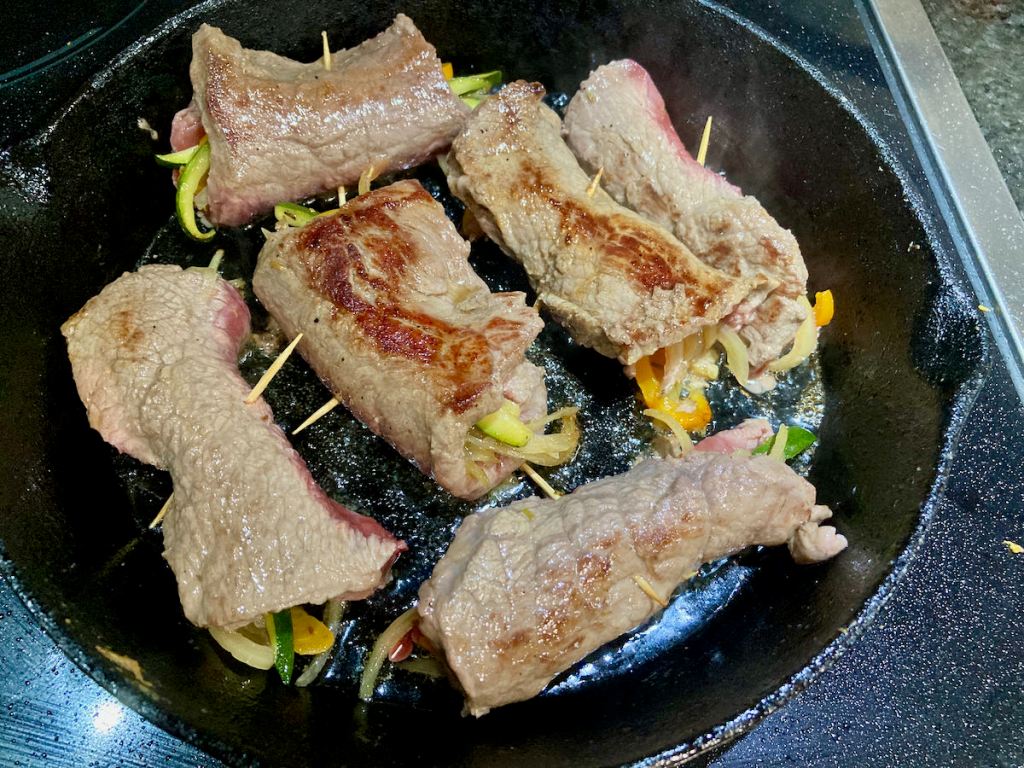
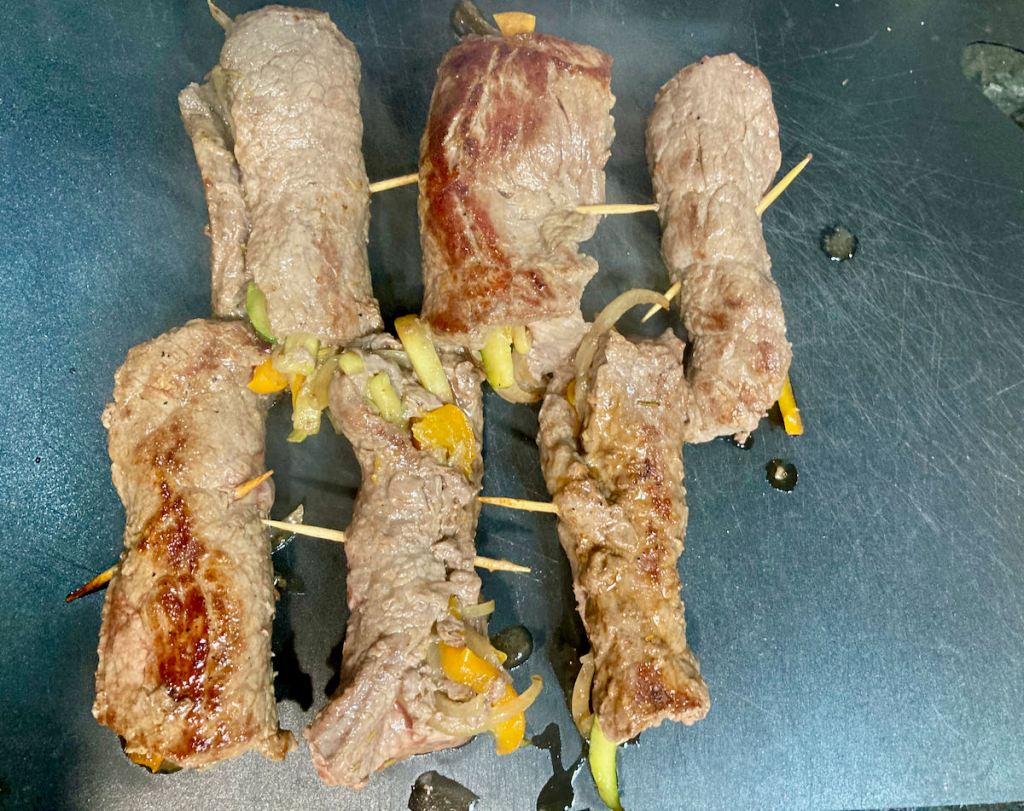
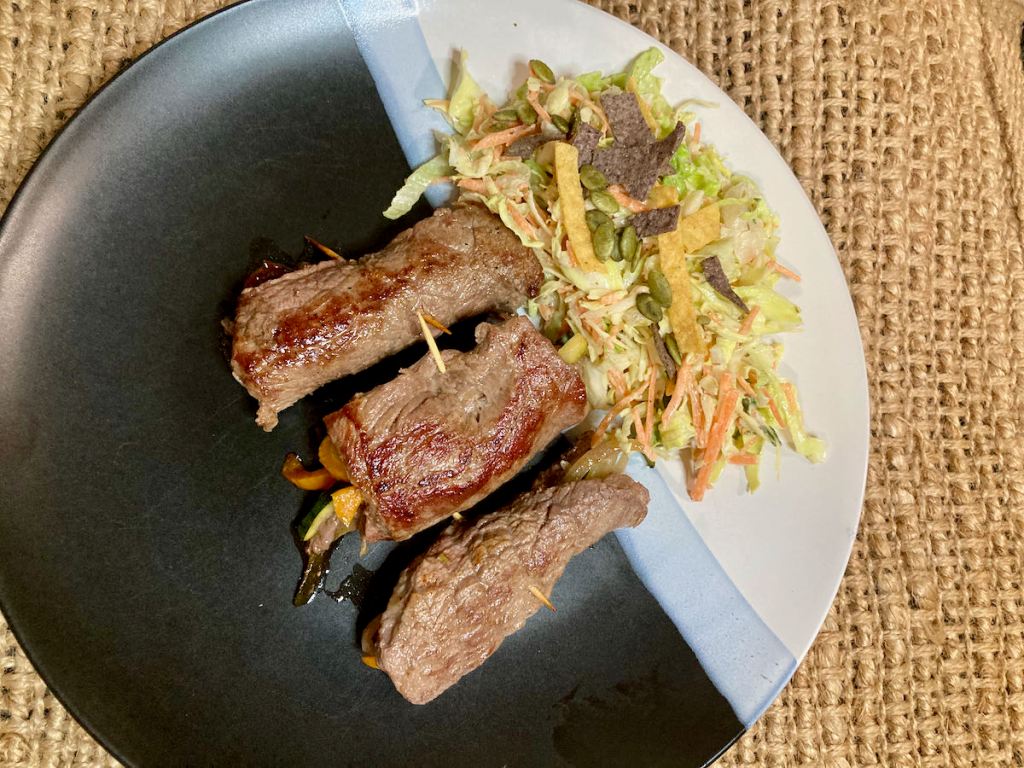
I love any food wrapped in meat, and steak wraps are definitely the best way to go. I am turning the traditional wrap inside out with this recipe. Who needs a grain-based wrap when you can use meat as the wrap?
These steak wraps are delicious and so easy to make. You can make these wraps ahead of time and just cook them minutes before you serve them
Tender is best
When making steak wraps, remember that you need a tender cut of meat. I like to use sirloin, but if you can’t get sirloin, it isn’t the end of the world. If you find yourself with a tougher cut, break out the meat hammer to give the meat a good bash to tenderise it. The key to getting these wraps right is having the meat thinly sliced so that it cooks quickly without becoming chewy. I like to cut my steak a little thicker and then use the meat tenderiser on the flat side to thin the meat out a little.
Steak wraps recipe
Ingredients
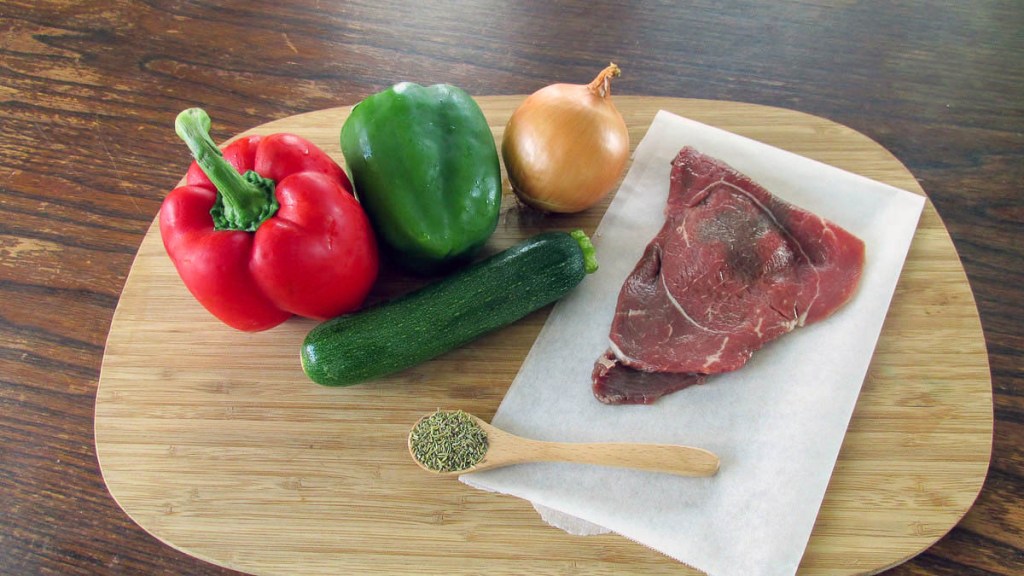
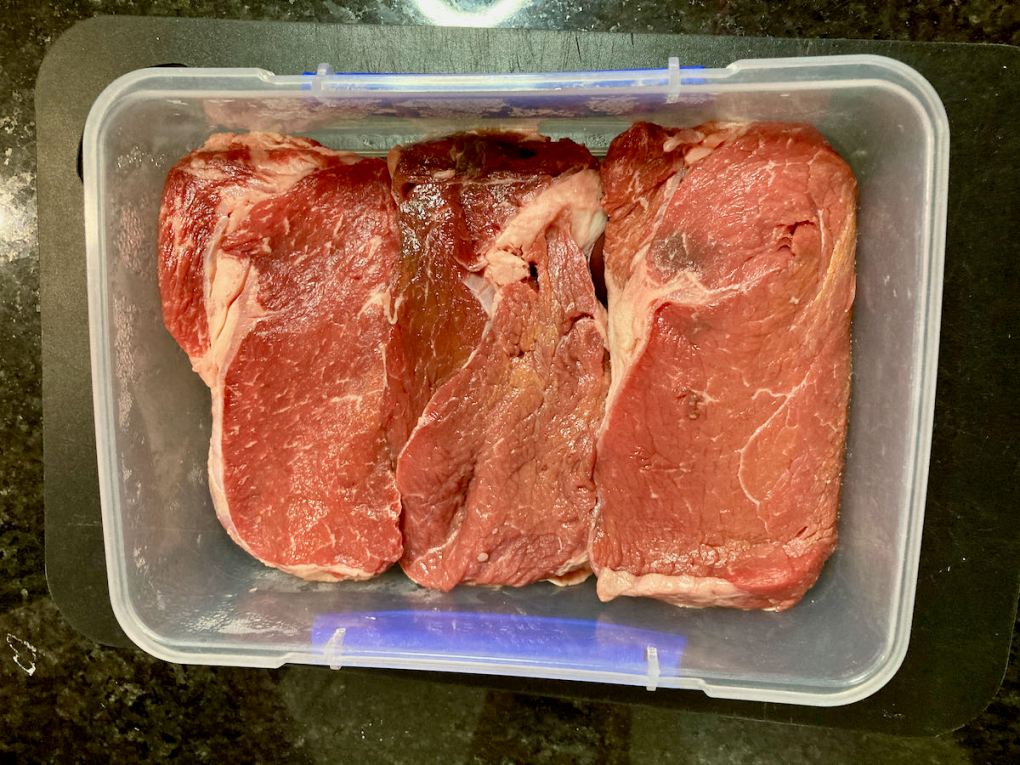
8 sirloin or flank steaks thin slices
Olive oil
Salt and pepper
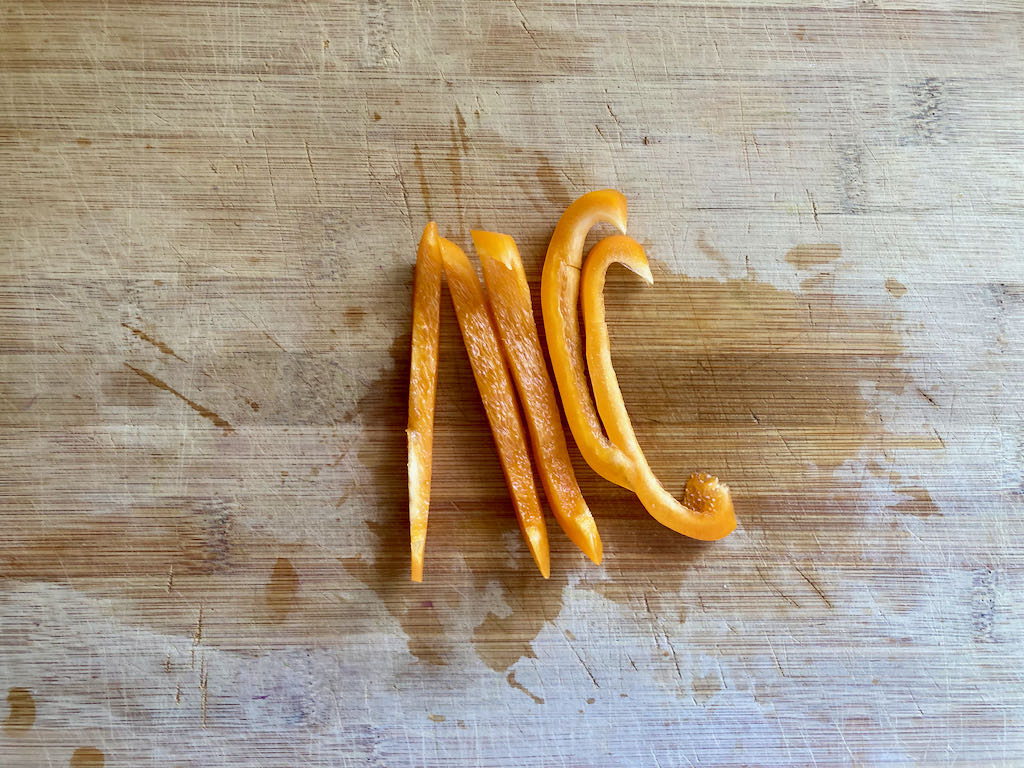
2 peppers, sliced into thin strips
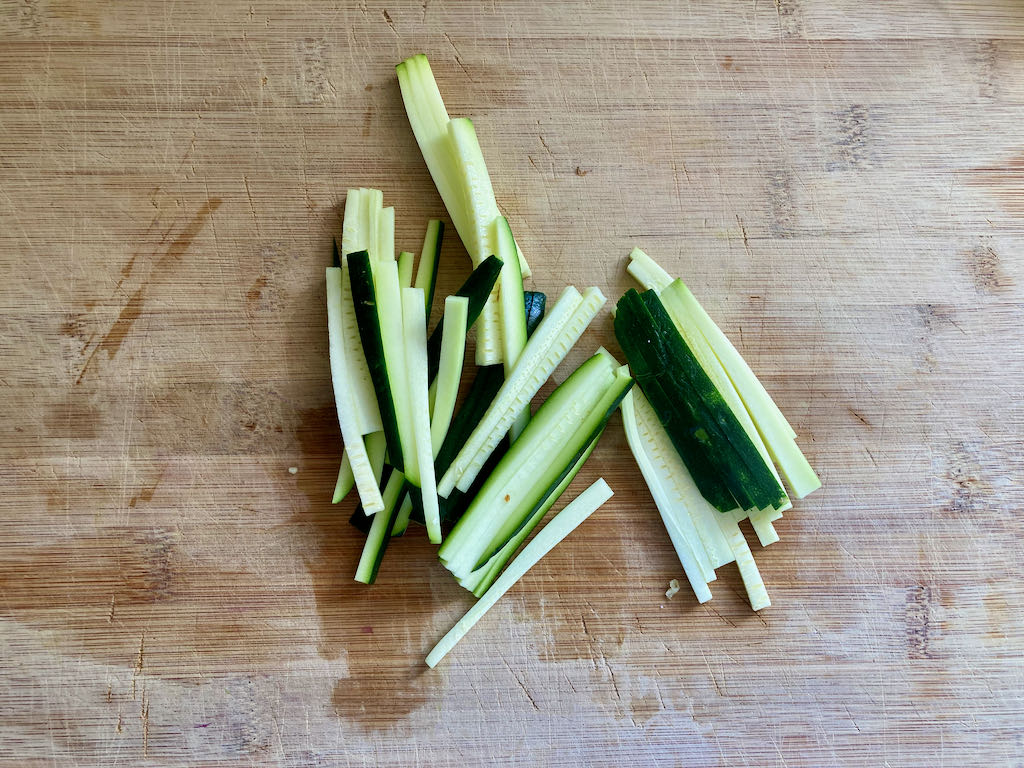
1 courgette, sliced into thin strips
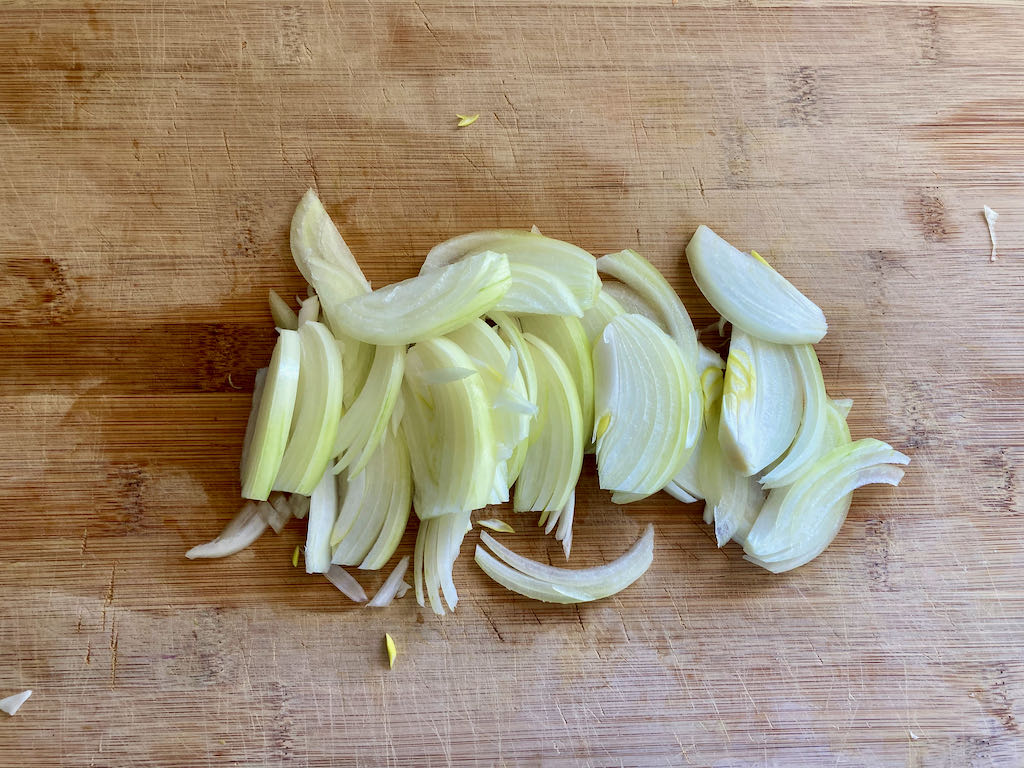
1 onion, halved and then thinly
1 tbsp. rosemary
Instructions
Rub each side of the steaks with some olive oil and season.
Heat a frying pan over a medium heat with a little oil.
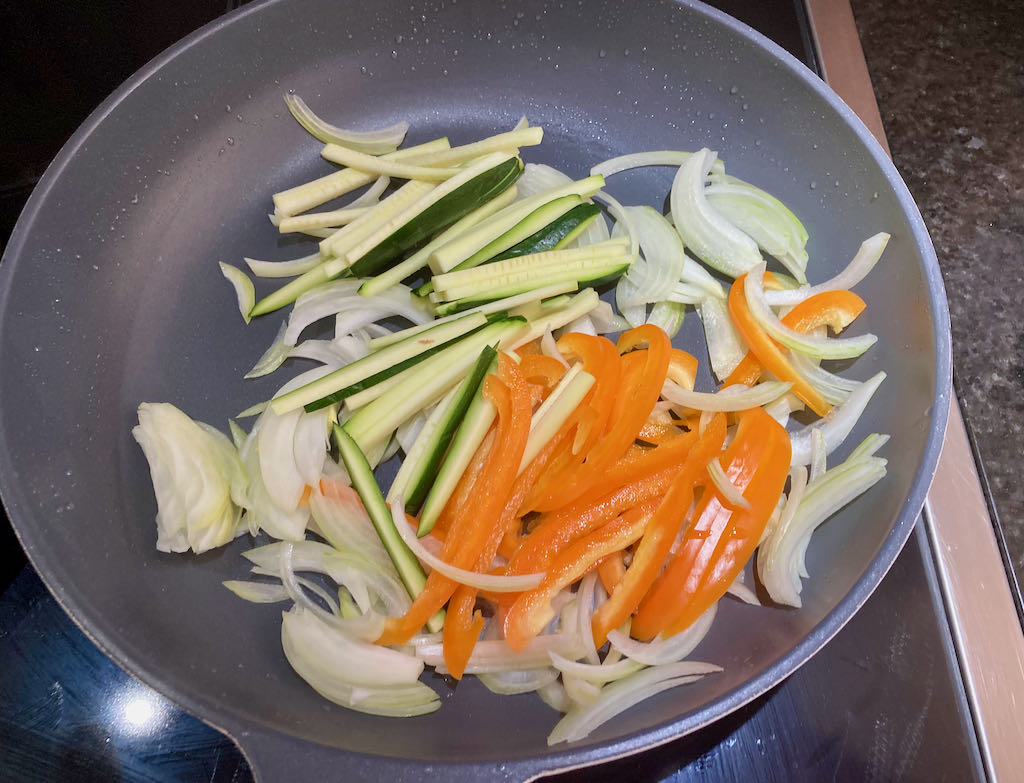
Fry off the vegetables and rosemary until they are tender.
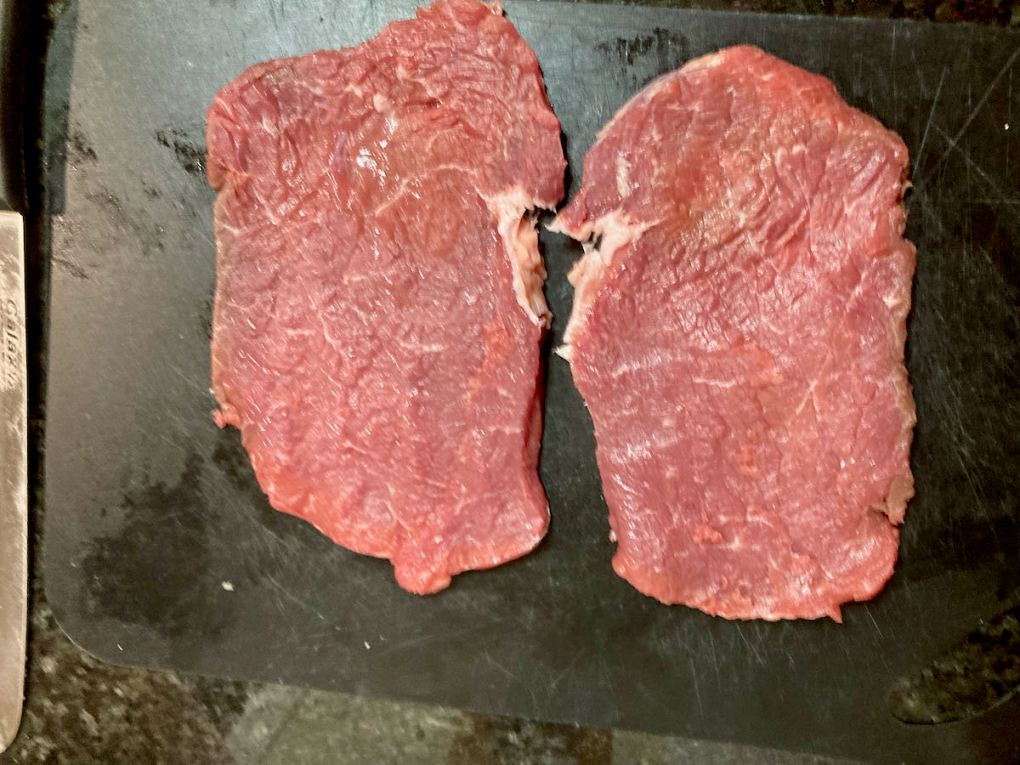
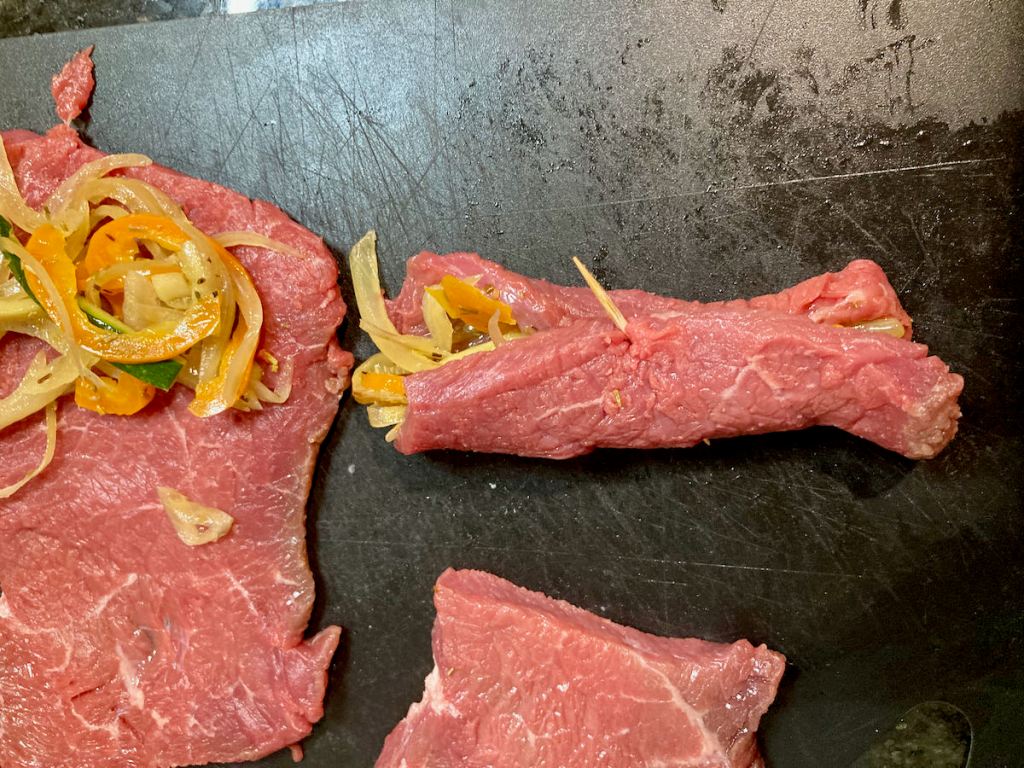
Place the steak pieces on a chopping board.
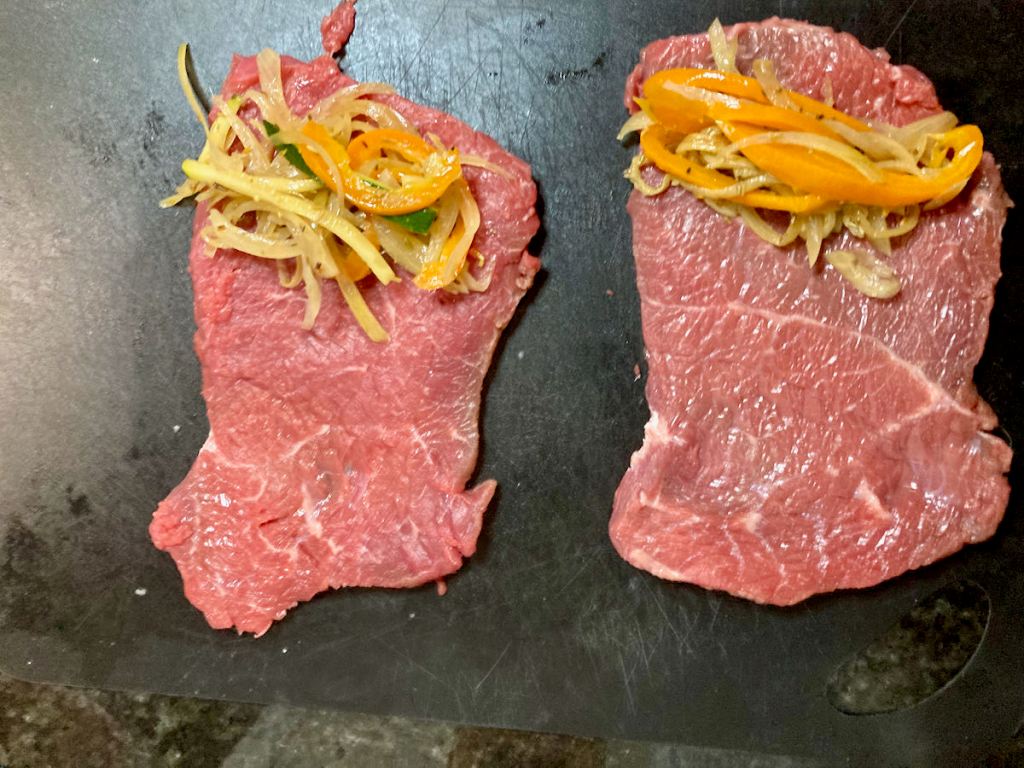
In the centre of each steak place a few vegetables vertically.
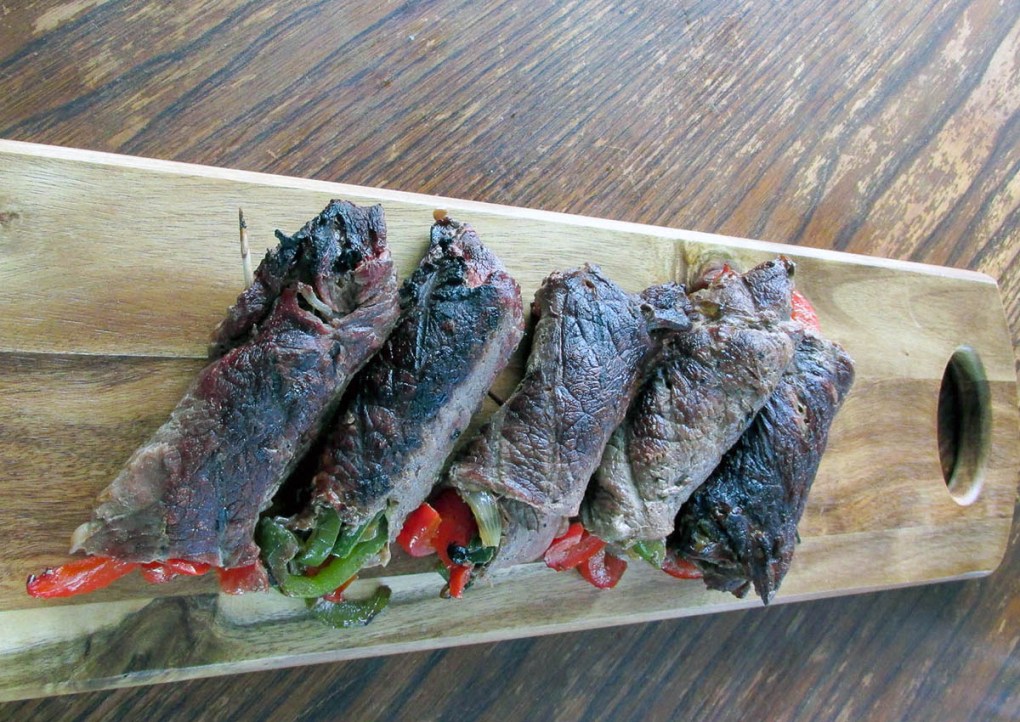
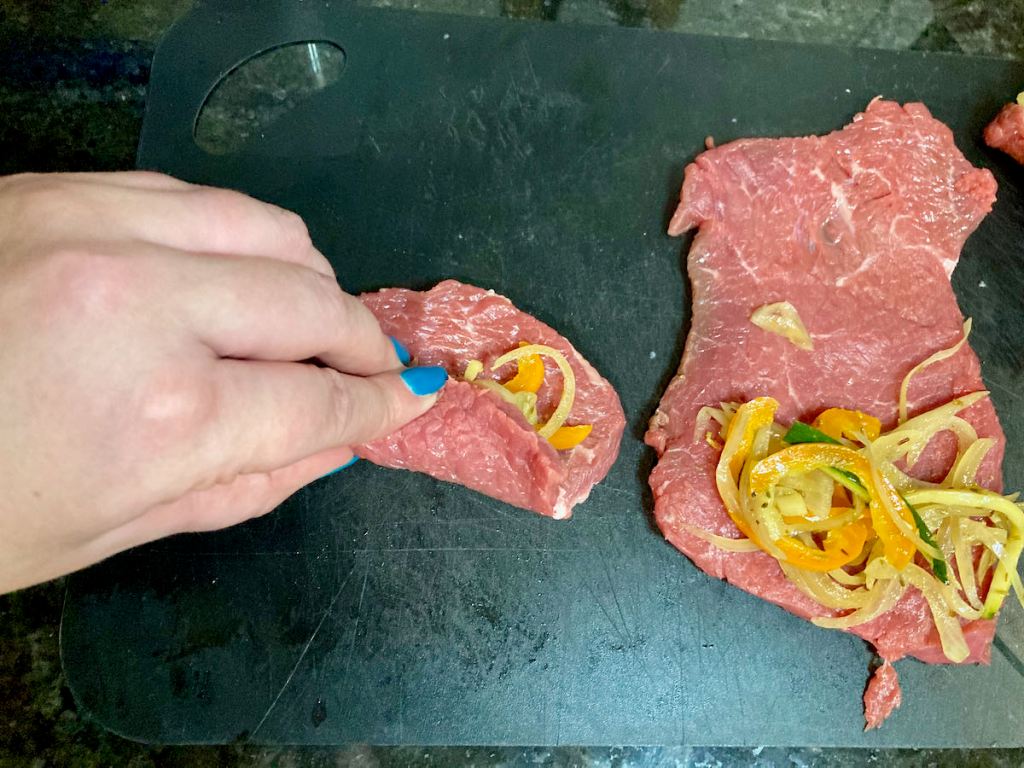
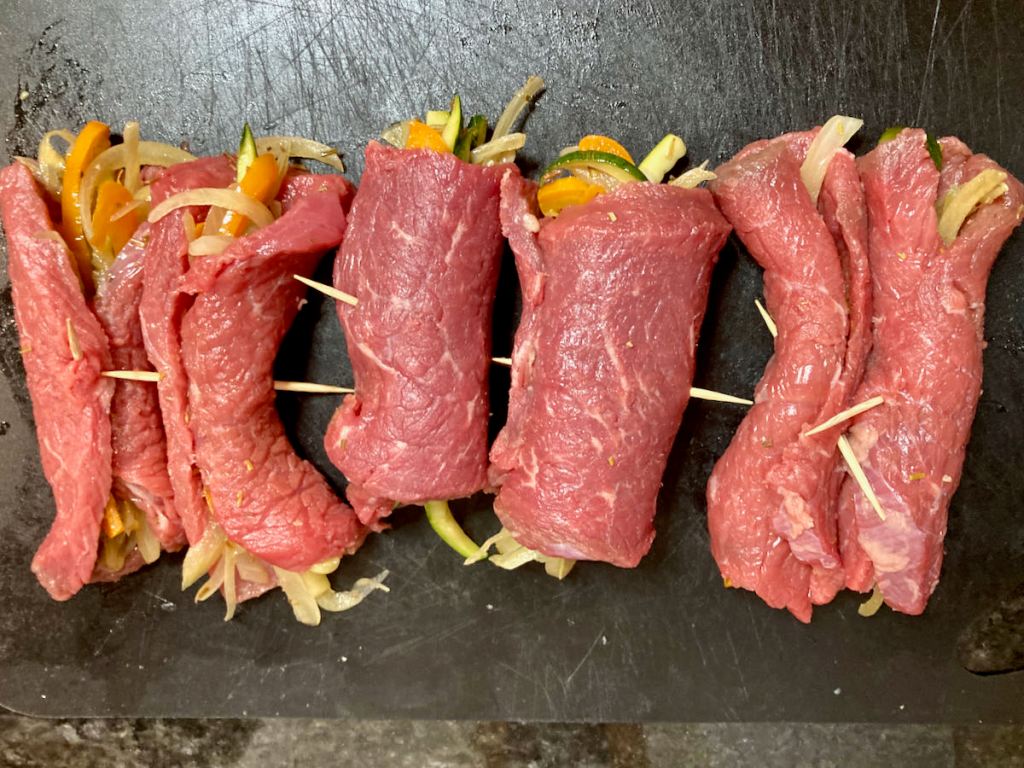
Roll the vegetables up in the steak.
Take a toothpick and use it to secure the end of the steak.
Repeat with the remaining steak and vegetables.
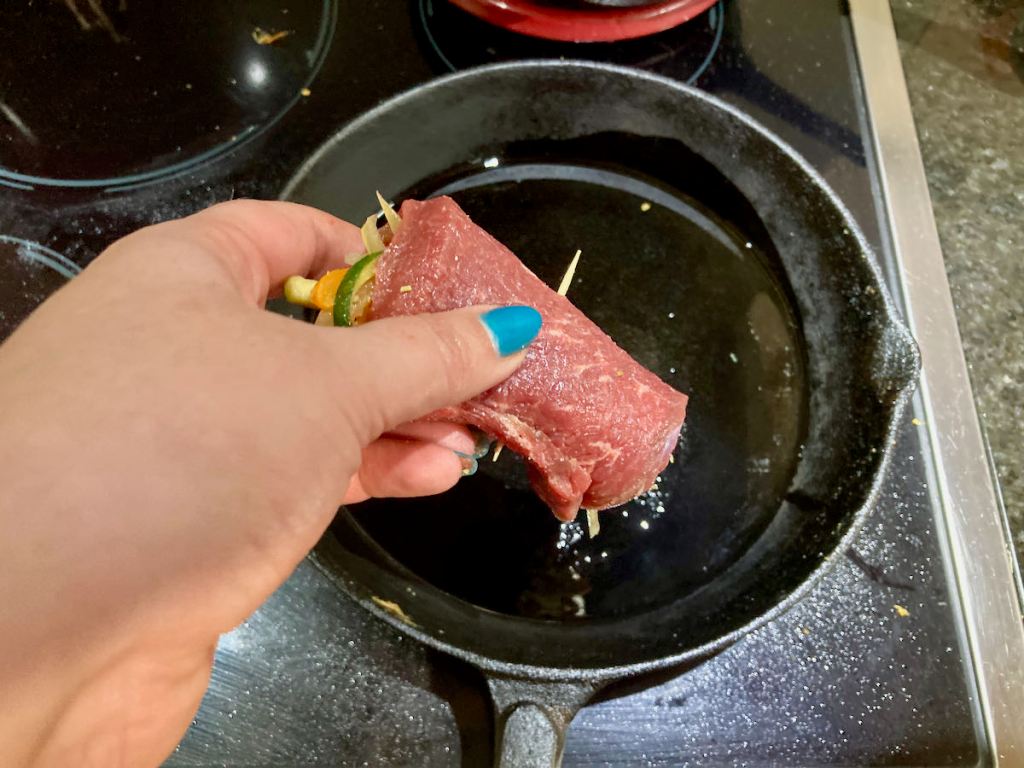
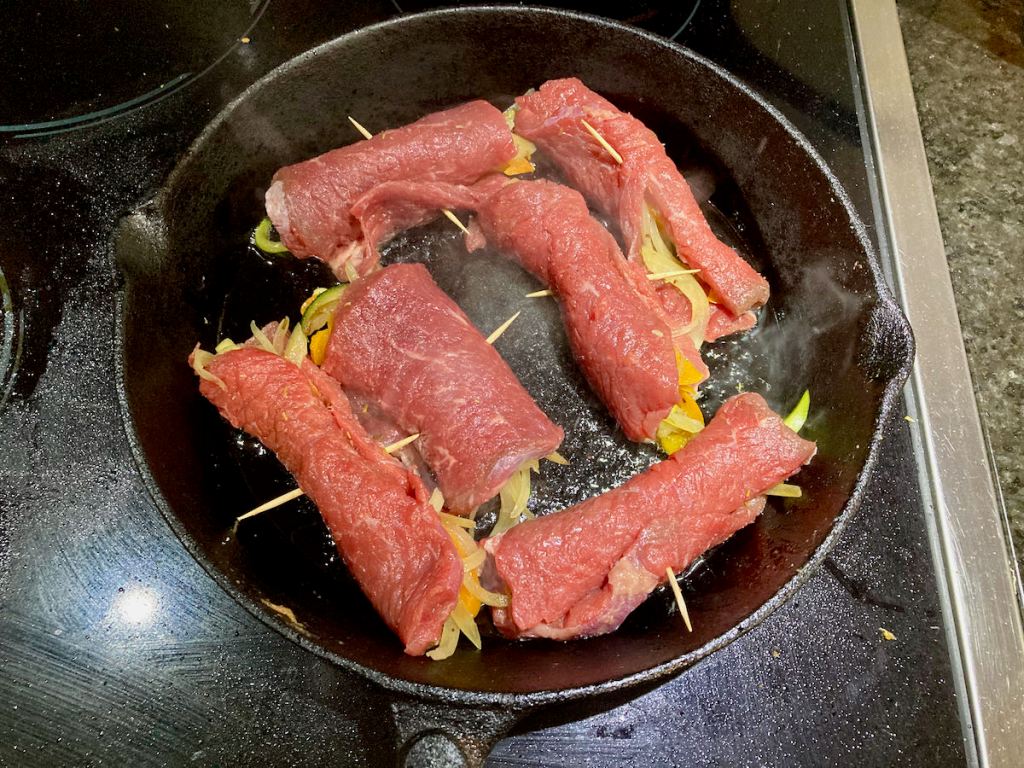
Preheat a grill pan or BBQ on high heat.
Cook each wrap for 2 minutes per side, less if you prefer your steak rear.
Rub each side of the steaks with some olive oil and season.
Heat a frying pan over a medium heat with a little oil.
Fry off the vegetables and rosemary until they are tender.
Place the steak pieces on a chopping board.
In the centre of each steak place a few vegetables vertically.
Roll the vegetables up in the steak.
Take a toothpick and use it to secure the end of the steak.
Repeat with the remaining steak and vegetables.
Preheat a grill pan or BBQ on high heat.
Cook each wrap for 2 minutes per side, less if you prefer your steak rear.
Serve hot.
Nutrition
Per Serving: 226 calories; 13g fat; 6g carbohydrates; 21g protein
Equipment
Knife
Chopping board
Frying pan/cast iron pan/bbq
Tongs
Toothpick
Nutritional disclaimer
Nutrition information is provided as an estimate based on the ingredients used and available in my area (New Zealand). The nutritional information is here to help you understand the recipe; I use MyFitnessPal to generate my estimates. For more accurate nutritional information, please use a nutritional calculator with the ingredients in your area.
Last Christmas, I spent some quality time with friends playing Unstable Unicorns, Settlers of Catan and Exploding Kittens. To go with all of the fun games, there were a lot of drinks and good food to keep us going. One of my favourite dishes was the trusty Reuben bowl. It is always a crowd pleaser, and on long, hot summer days, it is perfect for grazing between fun activities.
Switching up the traditional Reuben
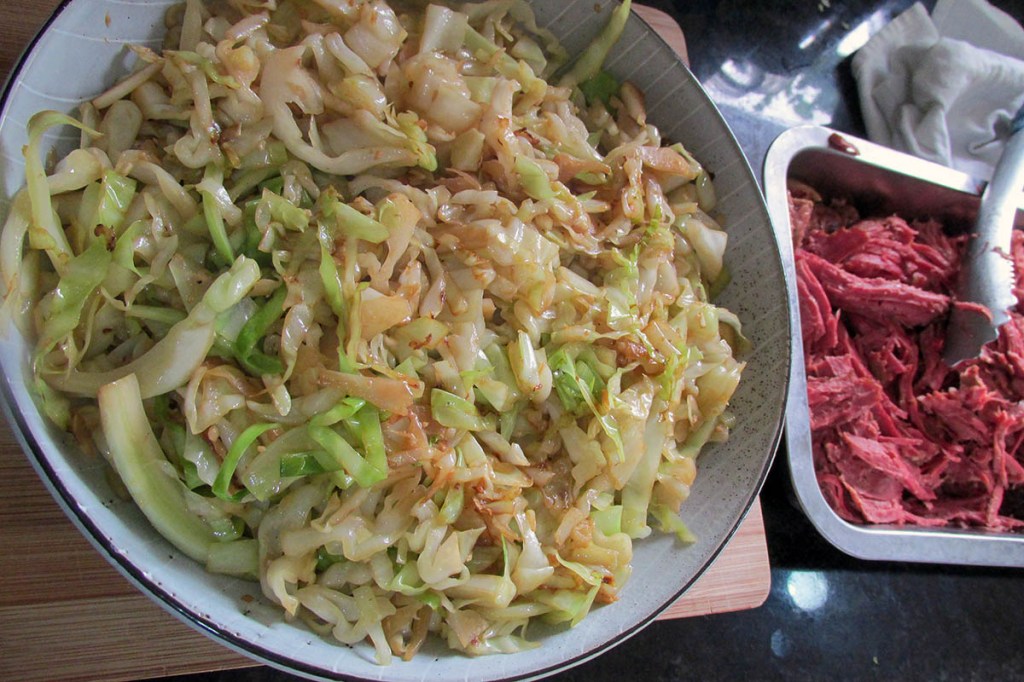
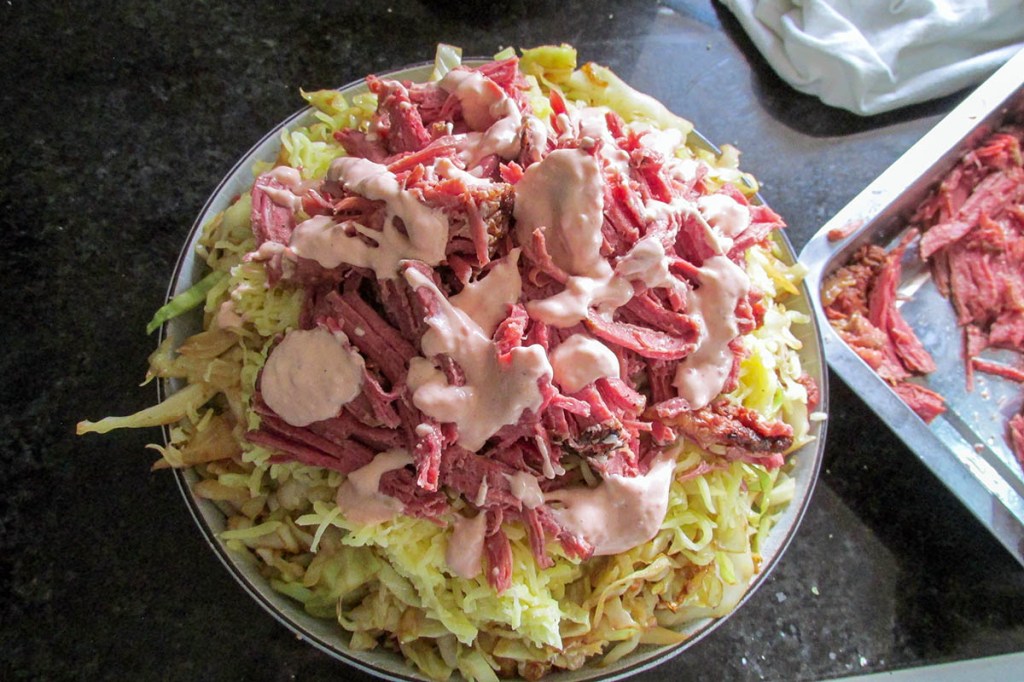
I’m a big fan of the Reuben sandwich, the combination of pastrami, sauerkraut and dressing is always a winner in my book. While I love the traditional flavours, I swear there is something wrong with my brain; it always looks for ways to adapt recipes to make them more interesting or change them up in some way. This recipe is an excellent example of my brain doing what it does best. My corned beef has a great crust and flavour, thanks to the seared outside and brine. It is a worthy replacement for pastrami and is much easier to get than brisket. To switch out sauerkraut was easy. I know from experience that corned beef and cabbage go together perfectly, so that was a no-brainer. The challenge was finding a flavour that could replace the tang of the sauerkraut without overpowering the corned beef. It took a few tries before I landed on sesame seed oil; it may appear to be an odd flavour to go with, but trust me, it works. The sesame seed oil adds a rich, nutty flavour to the cabbage that complements the other flavours without being overpowering. While this recipe doesn’t look anything like the traditional Reuben, I promise that if you give it a try, you won’t be disappointed.
Reuben bowl recipe
Ingredients
1kg corned beef, cooked
1 head cabbage, cut into strips
3 tbsp. Sesame oil
salt and pepper
2 garlic cloves, minced
250g mozzarella cheese
3/4 cup thousand Island dressing
Instructions
Cook your corned beef, you can check out my recipe for corned beef.
Take a large pot and place it over a medium heat.
Heat a little of the sesame oil and sauté the cabbage in batches with some of the garlic.
Take care not to burn the garlic while the cabbage is cooking.
Season the cabbage as it is cooking.
Place the sautéed cabbage in a large bowl and sprinkle over half of the cheese.
Spread the corned beef on top of the cabbage and top with the remaining cheese.
Heat a little of the sesame oil and sauté the cabbage in batches with some of the garlic.
Take care not to burn the garlic while the cabbage is cooking.
Season the cabbage as it is cooking.
Place the sautéed cabbage in a large bowl and sprinkle over half of the cheese.
Spread the corned beef on top of the cabbage and top with the remaining cheese.
Drizzle with dressing, then serve.
Nutrition
Per Serving: 424 calories; 19g fat; 20g carbohydrates; 26g protein
Equipment
Knife
Chopping board
Measuring cups
Measuring spoons
Kitchen scale
Large pan
Tongs
Nutritional disclaimer
Nutrition information is provided as an estimate based on the ingredients used and available in my area (New Zealand). The nutritional information is here to help you understand the recipe; I use MyFitnessPal to generate my estimates. For more accurate nutritional information, please use a nutritional calculator with the ingredients in your area.
Early in 2021, I relocated and started updating my website; I’ve been making changes and improving everything as I go. This recipe is one of the many things I’ve tried to improve.
Simple and fancy looking
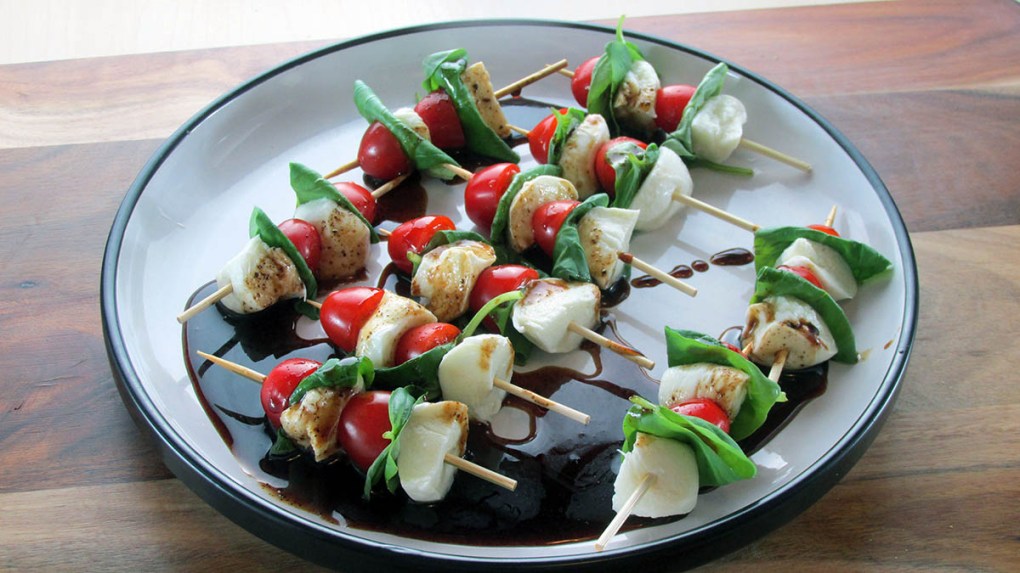
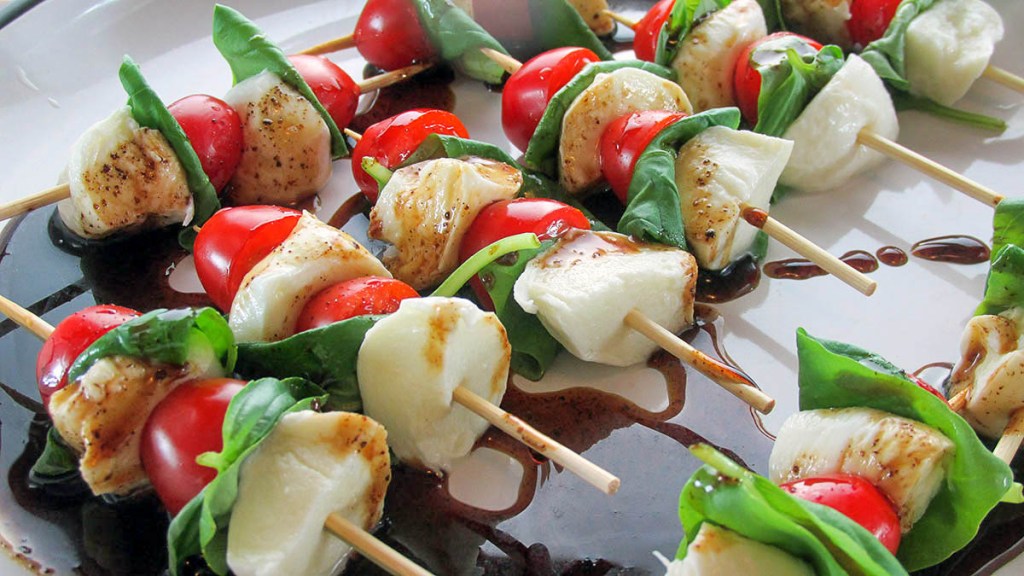
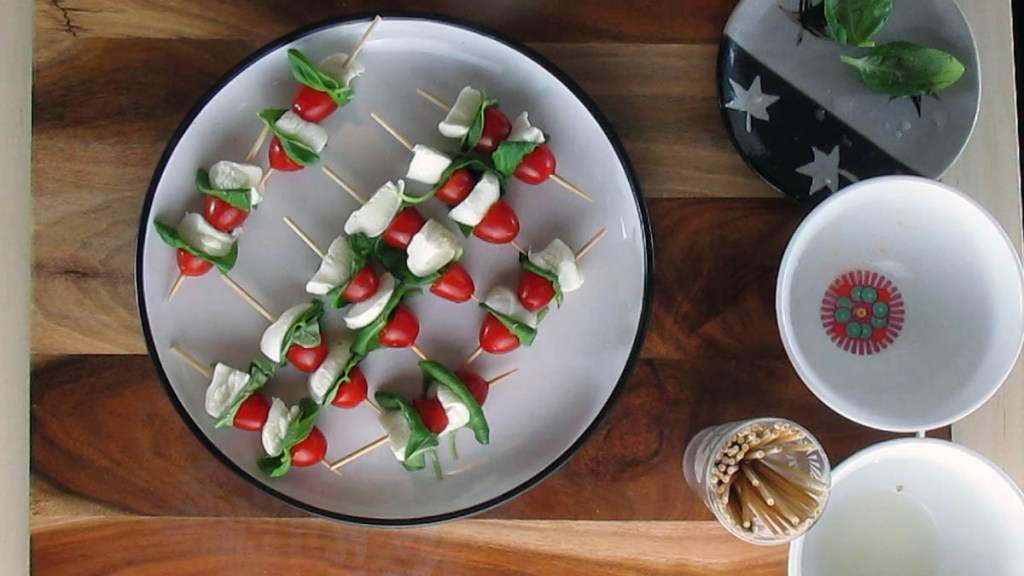
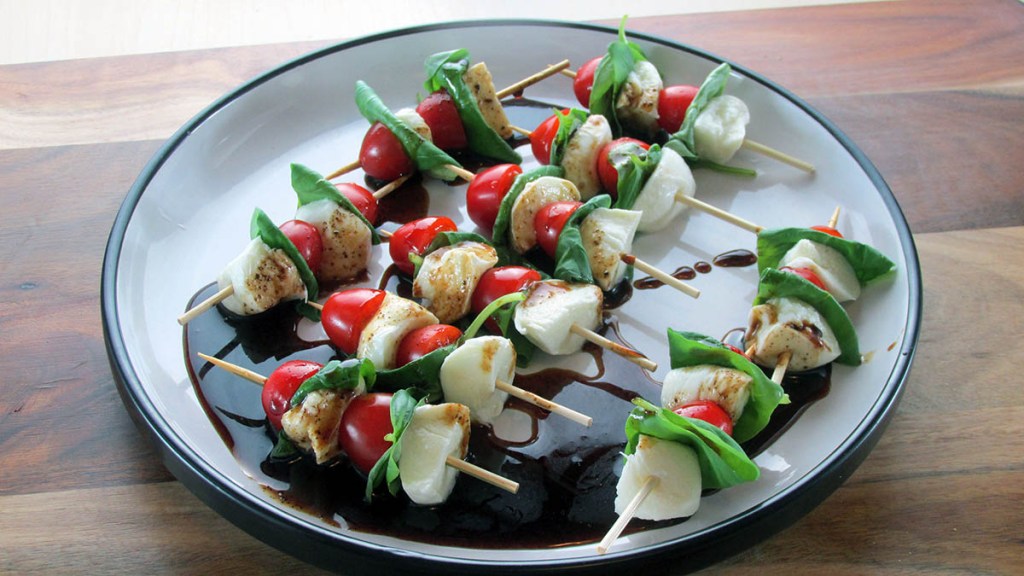
Who doesn’t love something that looks fancy, tastes delicious, and is so simple to make that you could leave the kids to make it? I know that I do. These caprese skewers are one of the easiest recipes ever, and they always gather compliments when I make them. No cooking is needed; you need some chopping and skewers, and you are good to go. Did I mention how cool they look on the plate?
Ideal for company
I first made these skewers for a UFC pay-per-view event when I was hanging out with friends. Making food for fights isn’t as easy as you might think. You spend half the day with your eyes glued to the action and afraid to look at what you are eating because you know you will miss that knockout shot. The main appeal of these skewers is that they are finger food, and you don’t need to take your eyes off the fights while you eat them. Grab, munch and repeat. The first time I made them, the plate was cleared in a single round, which usually means they are a hit. They have been on the menu for pay-per-view parties ever since.
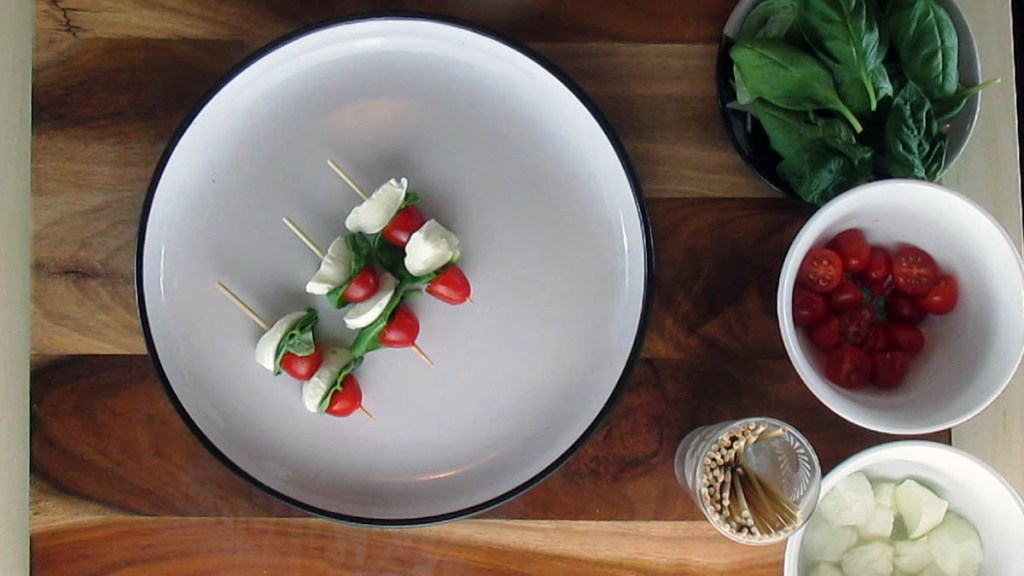
Take a mini skewer and thread on a piece of mozzarella, then a basil leaf and a piece of tomato, repeat to fill up the skewer.
Repeat with the remaining ingredients.
Lay out the skewers and drizzle them with the balsamic glaze before serving.
Nutrition
Per Serving: 50 calories; 2.6g fat; 3.2g carbohydrates; 3g protein
Equipment
Knife
Chopping board
Skewers
Plate
Nutritional disclaimer
Nutrition information is provided as an estimate based on the ingredients used and available in my area (New Zealand). The nutritional information is here to help you understand the recipe; I use MyFitnessPal to generate my estimates. For more accurate nutritional information, please use a nutritional calculator with the ingredients in your area.
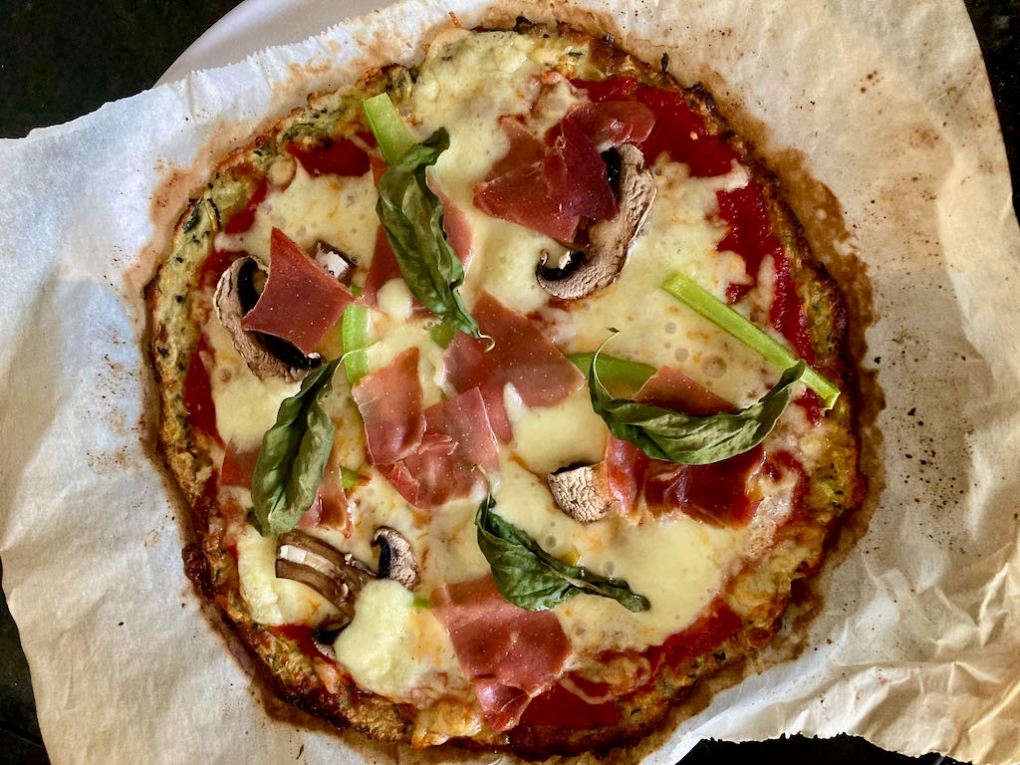
Yes, yes, I do, but I won’t be eating any of the tasty pizza available from your local pizzeria. I think I’ll go for the low-carb, tummy-friendly option of courgette pizza crust. There is nothing better than getting a sneaky treat without having to deal with that horrible, bloated, and sick feeling.
Eat more it is good for you!
To make this recipe as healthy as possible, I have packed in heaps of courgettes. The eggs help bring up the protein content, which is a nice bonus.
Courgette can be soggy
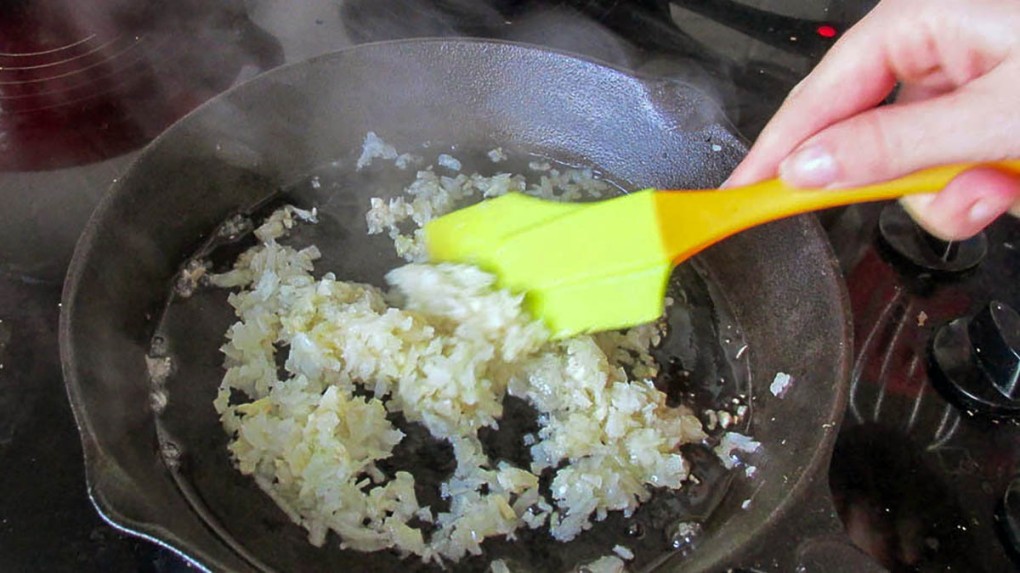
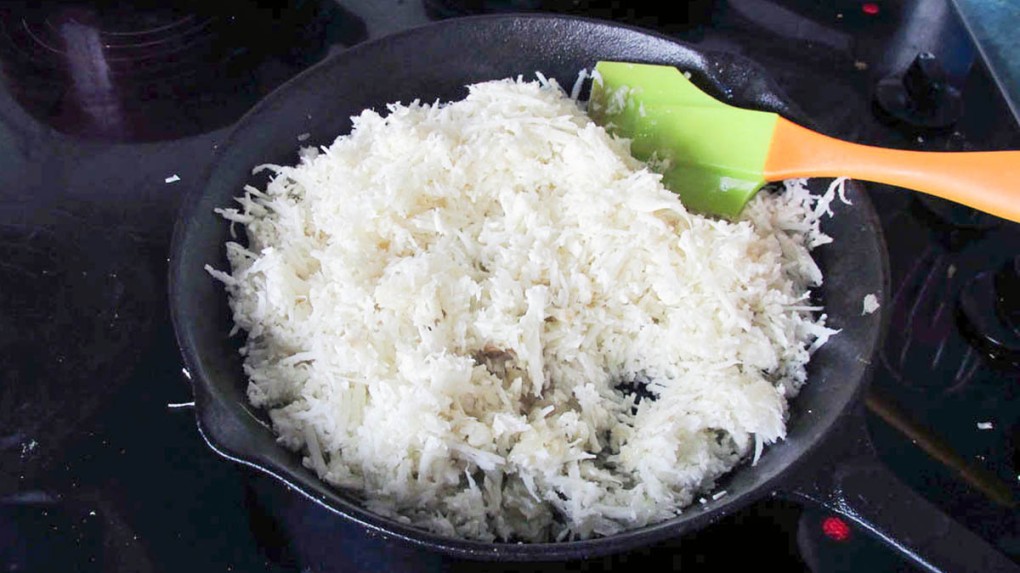
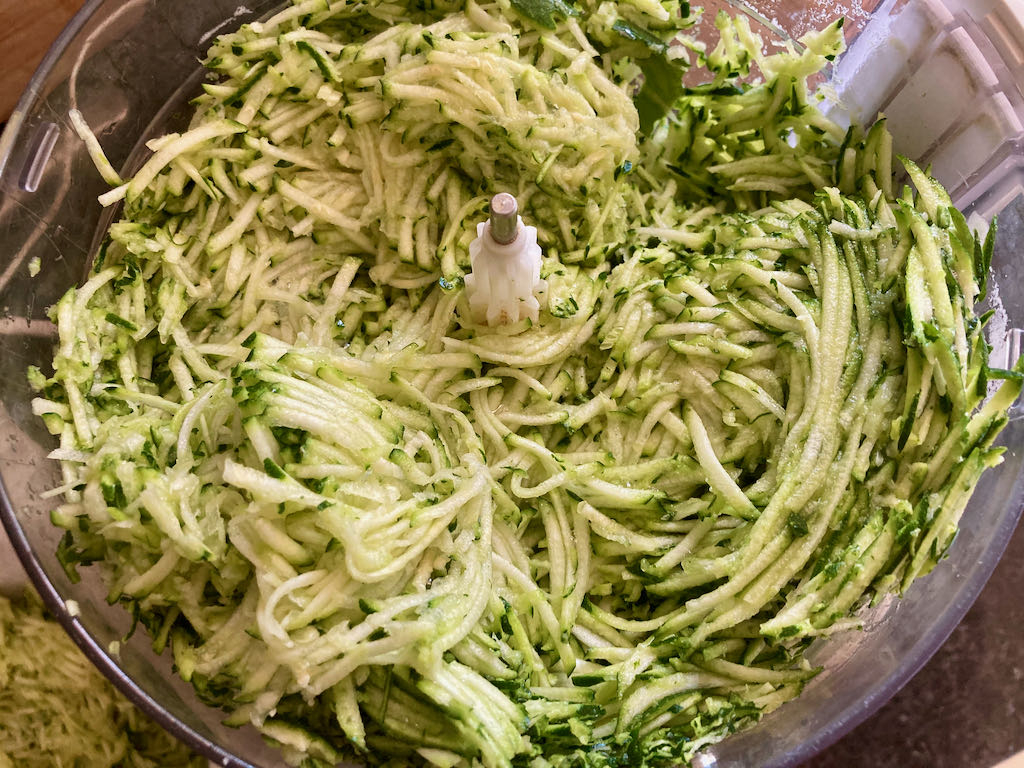
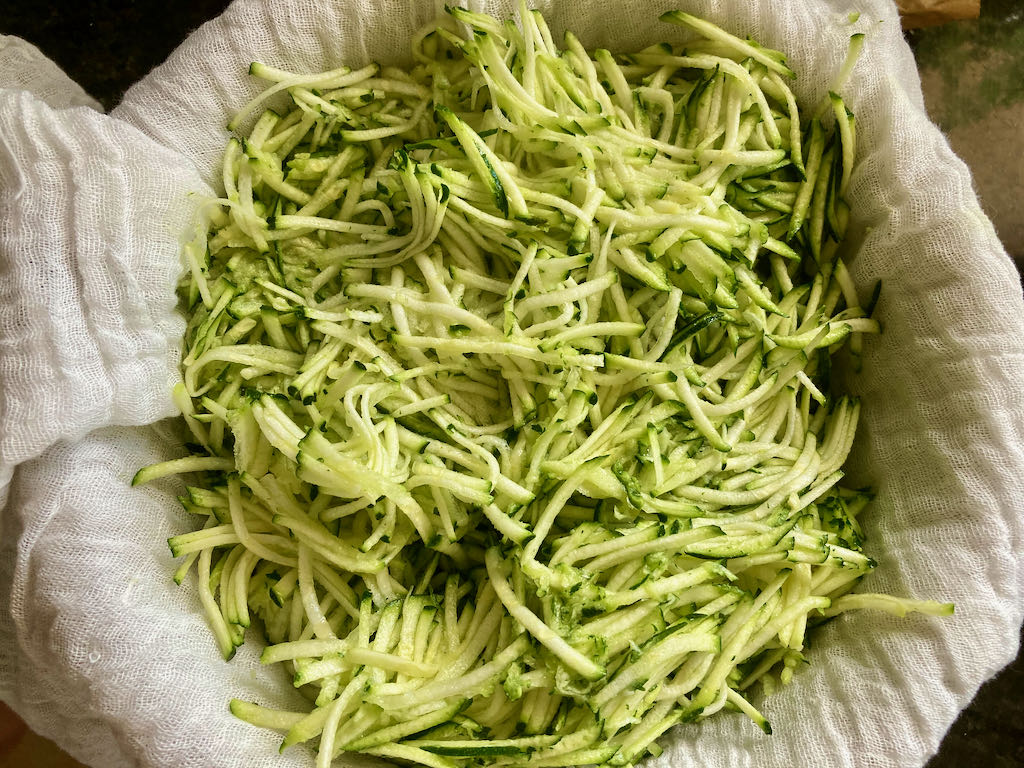
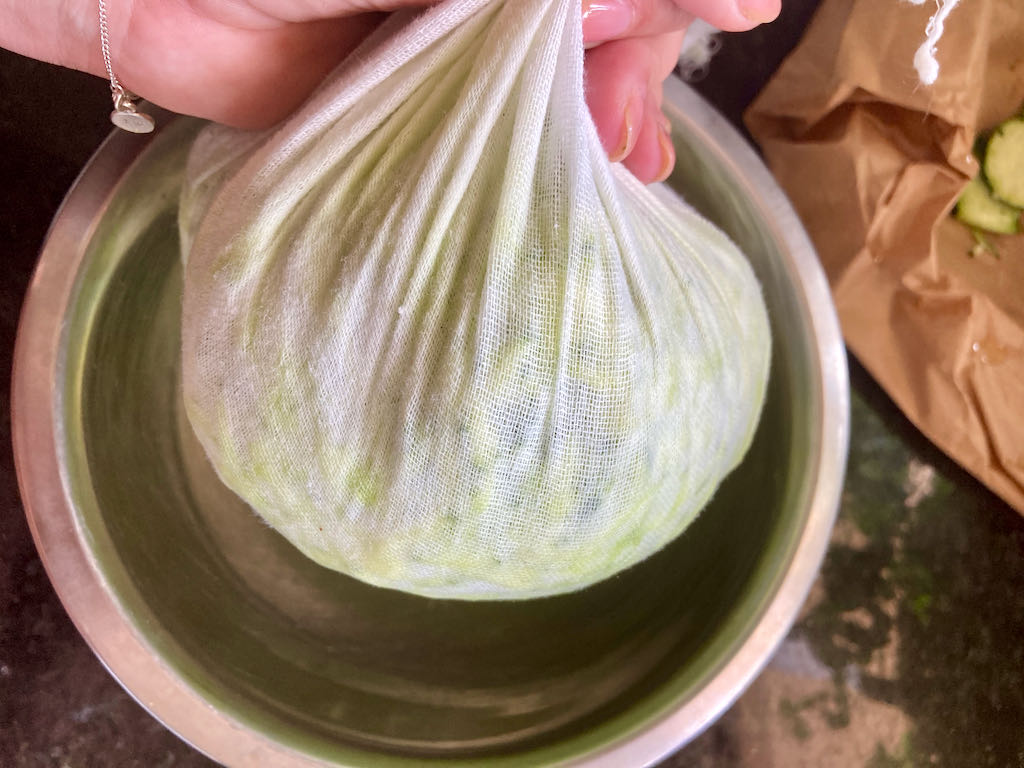
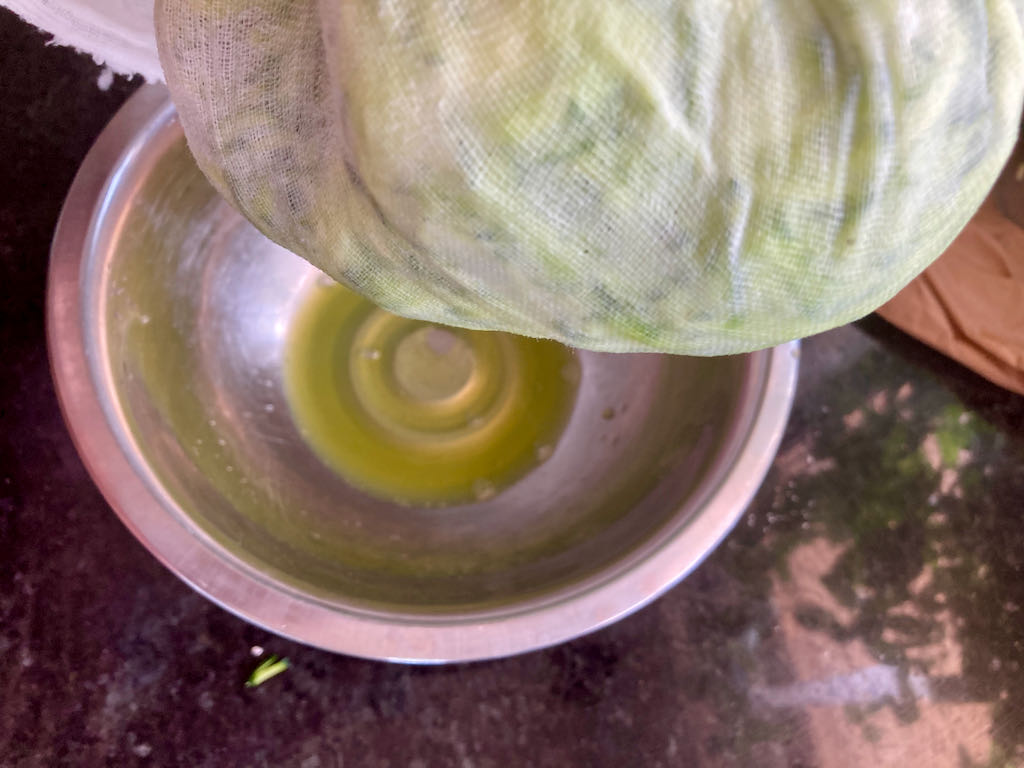
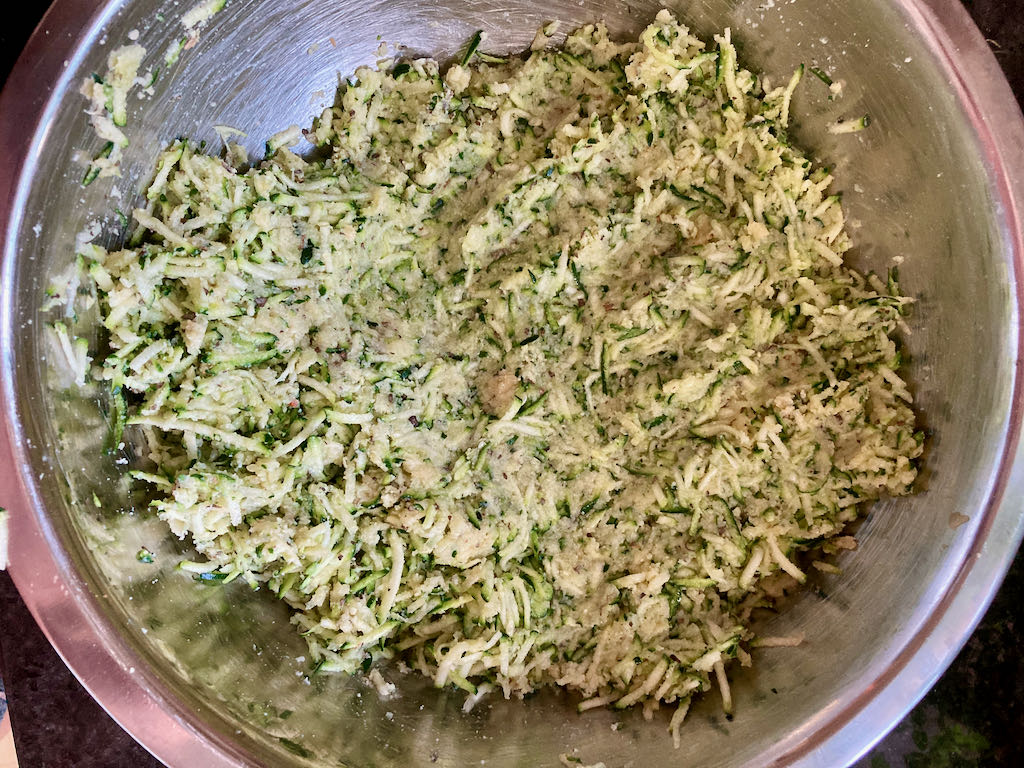
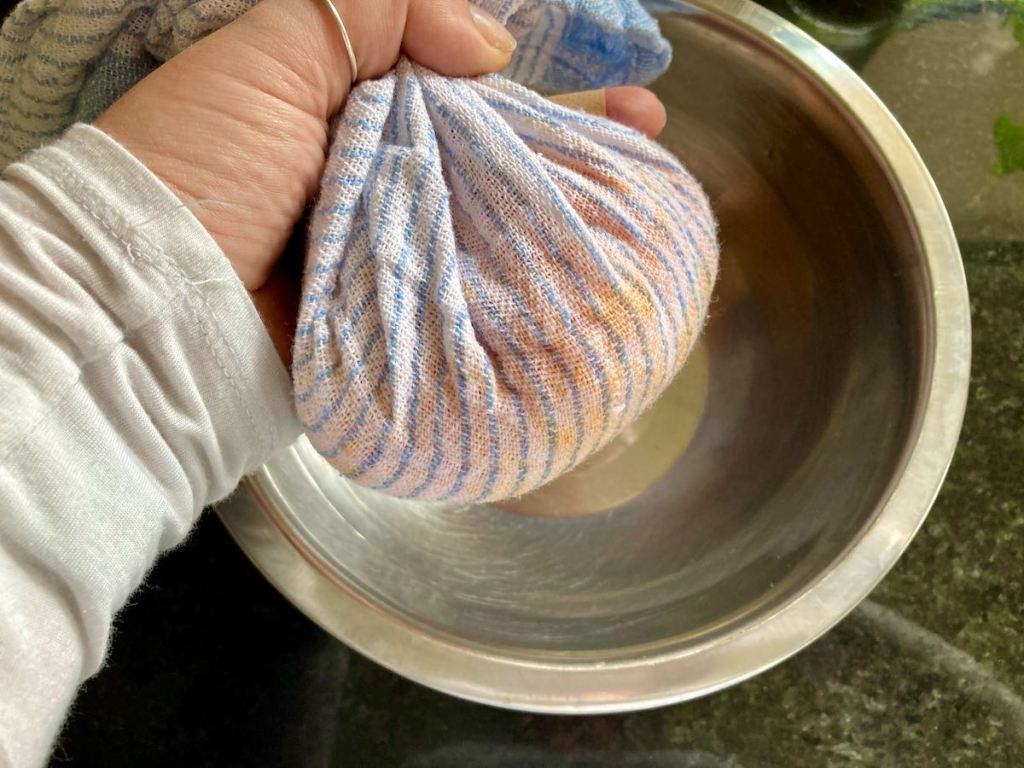
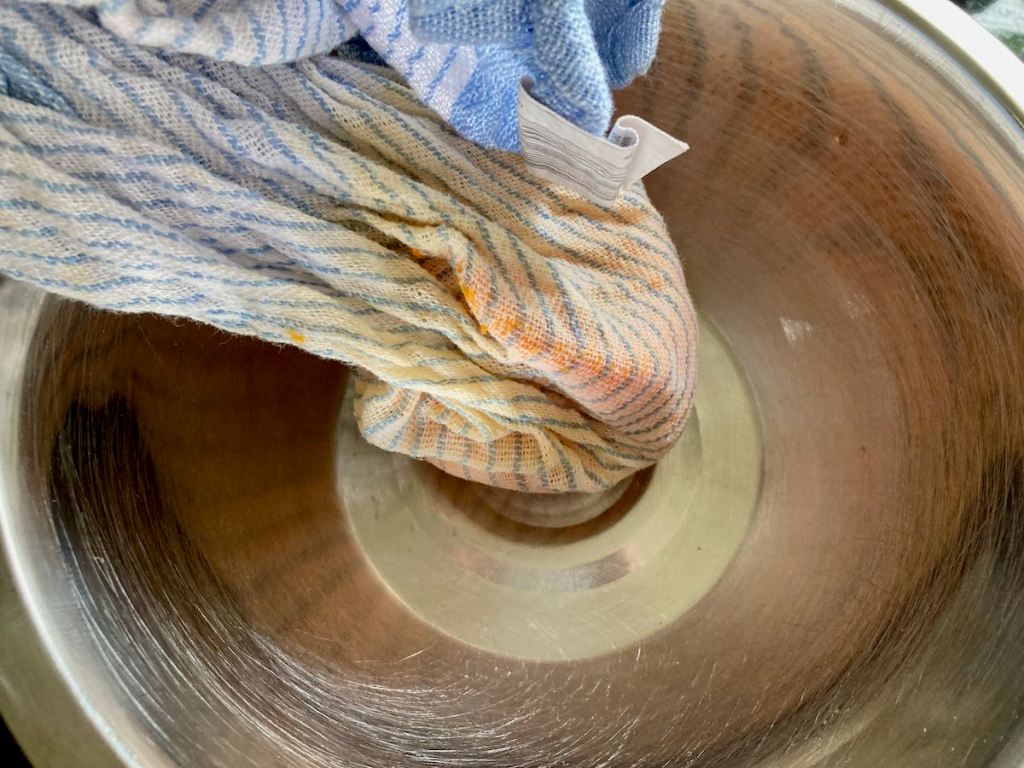
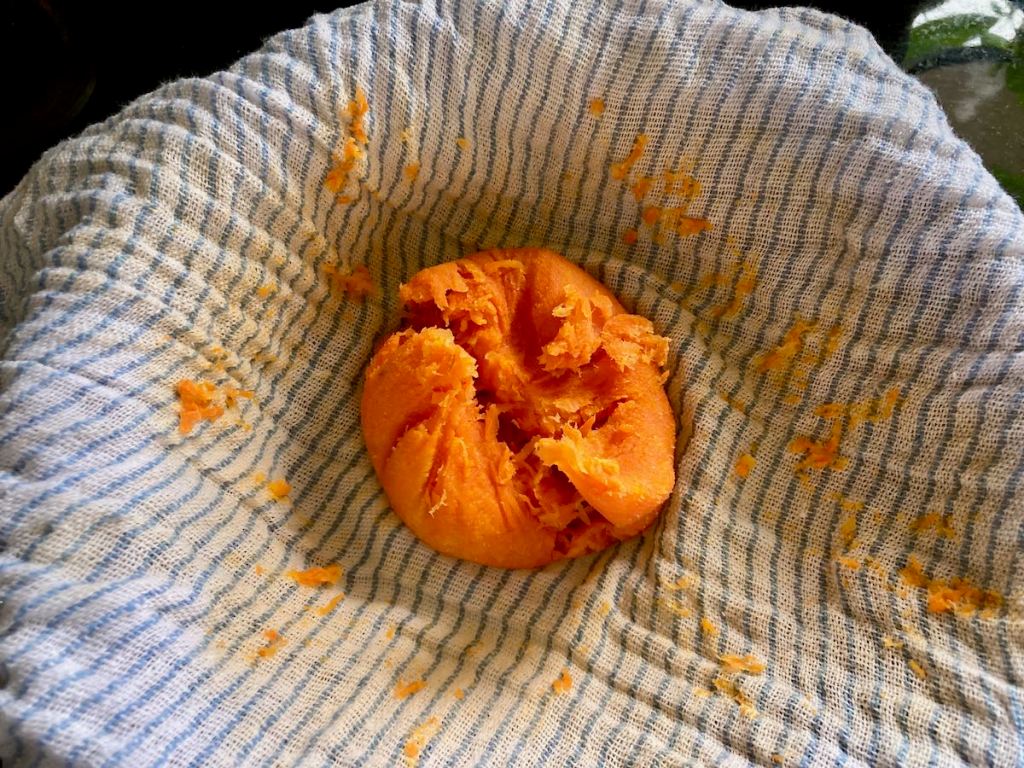
When working with courgettes in this kind of recipe, it is crucial to remove as much moisture as possible. If you can wring the crap out of your courgettes, you don’t end up with a sloppy meal. To get the liquid out, I like to finely grate the courgette into a clean kitchen cloth. Next, create a ball and squeeze it as hard as possible. I like to squeeze in batches to ensure I don’t miss any liquid that’s still hanging around. This means you end up with a dry base that will bind together and give you a crisper pizza base.
Homemade pizza sauce
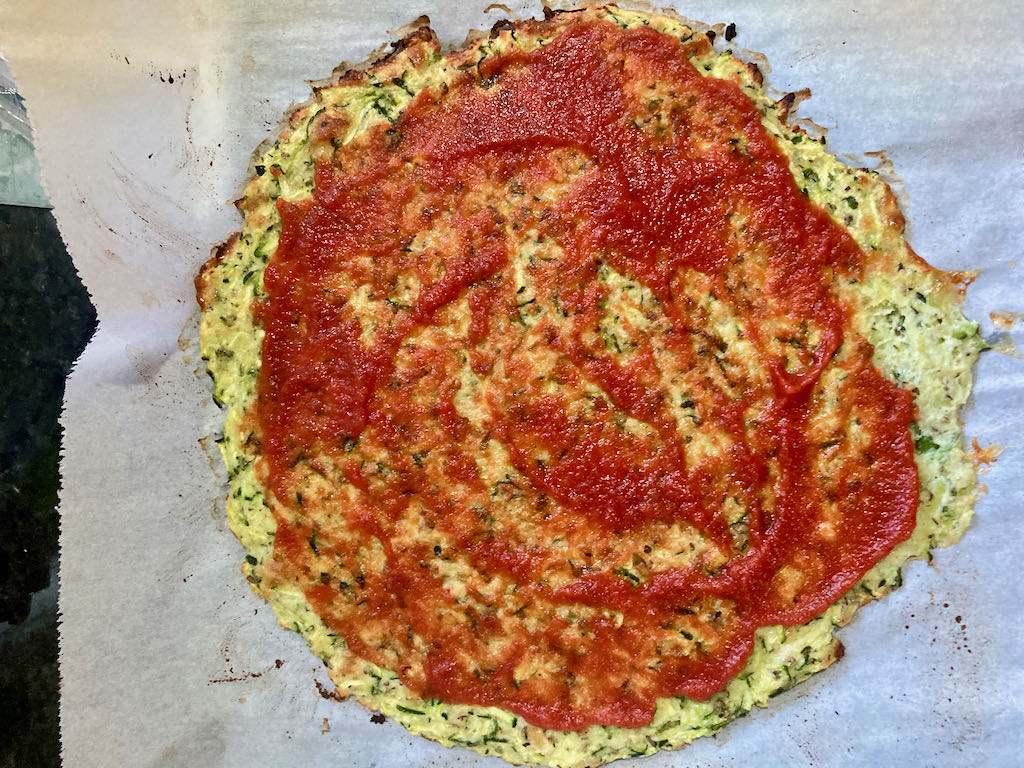
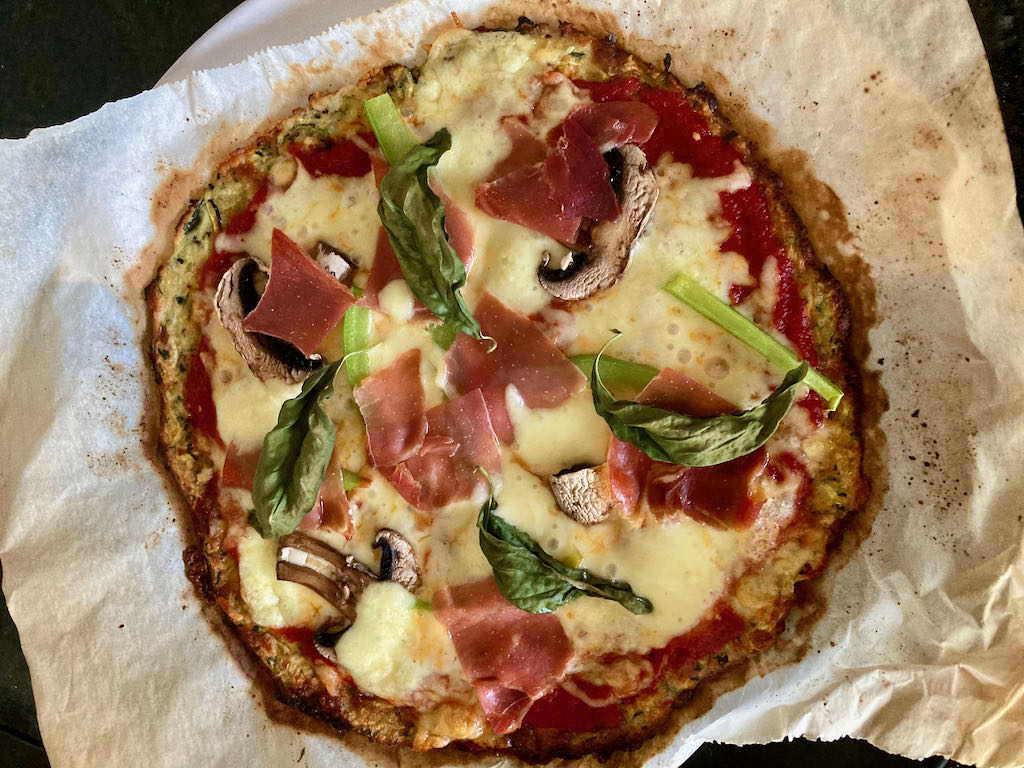
To complement this tasty pizza base, I like to use my homemade pizza sauce, topped with some fresh basil from the garden, which makes this the perfect pizza.
If you have a pizza stone put it in the oven while it preheats.
If you do not have a pizza stone put a baking tray in the oven to heat up.
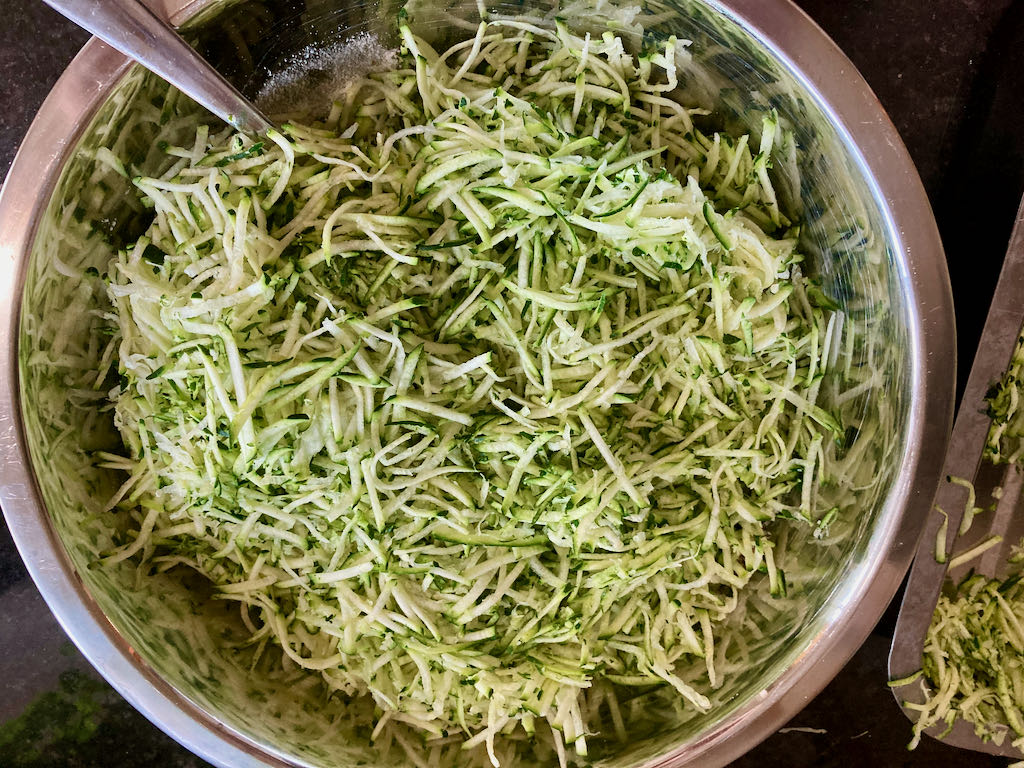
Grate the courgette and press it to remove any excess liquid, I like to use a clean cotton dishtowel.
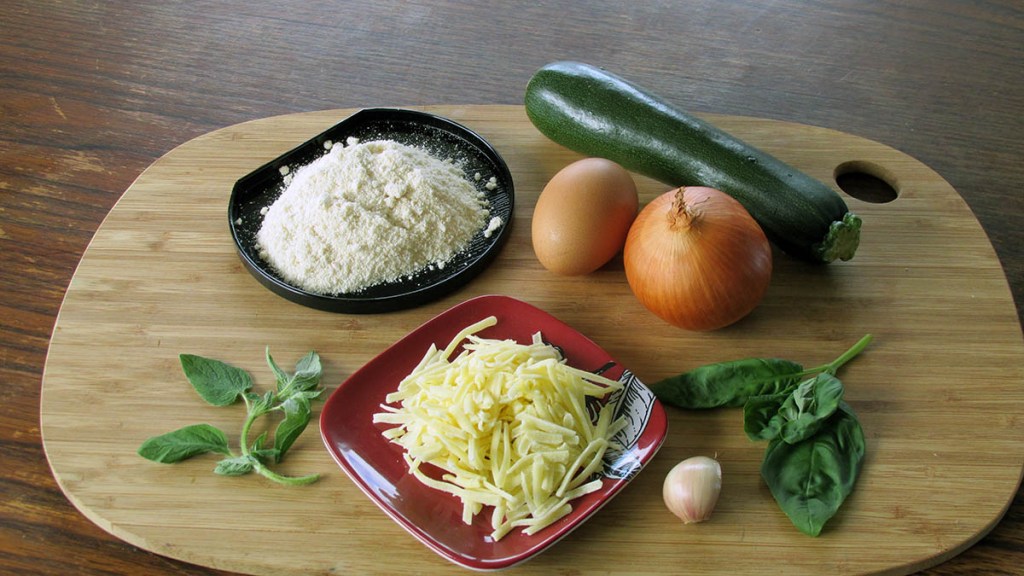
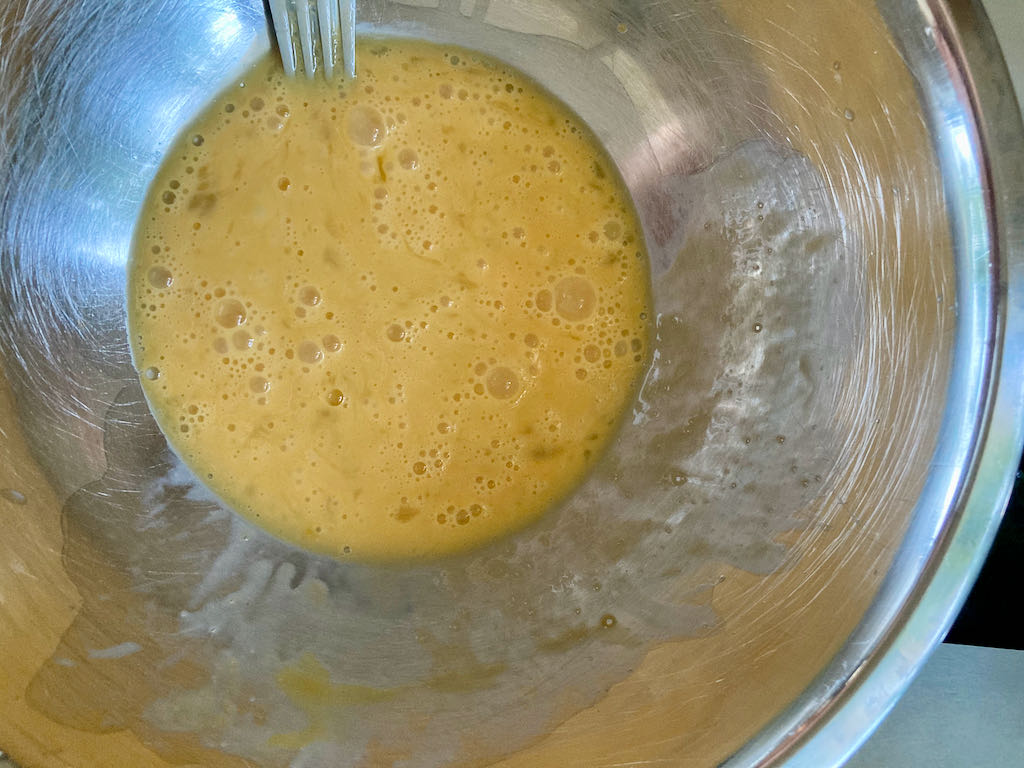
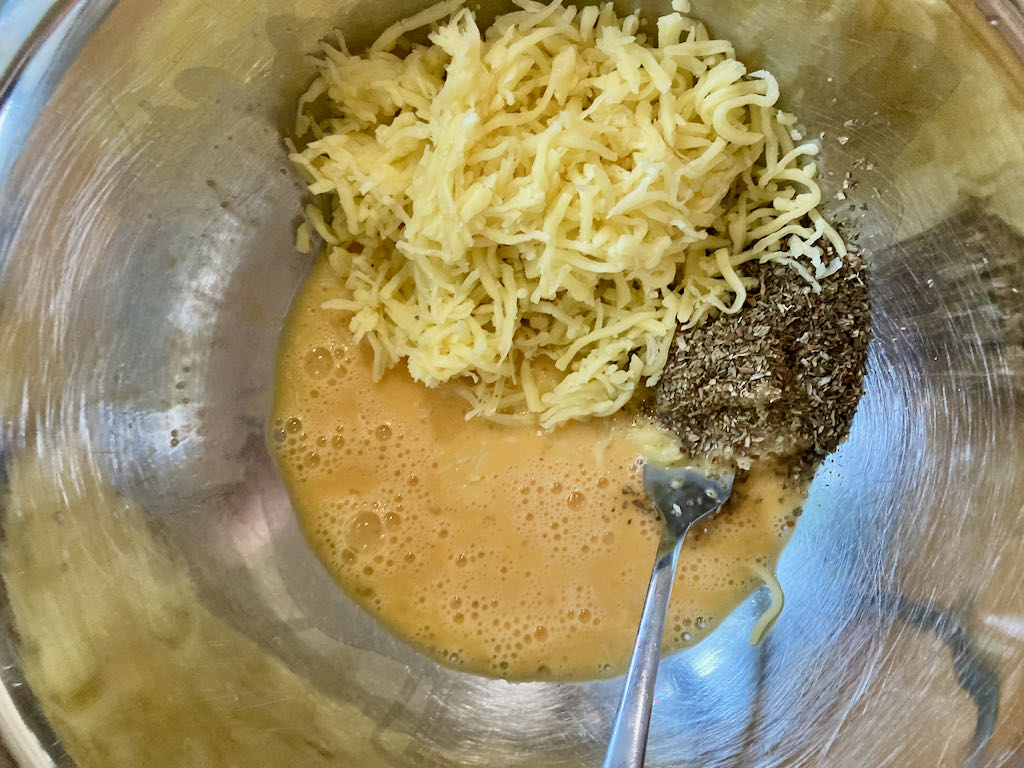
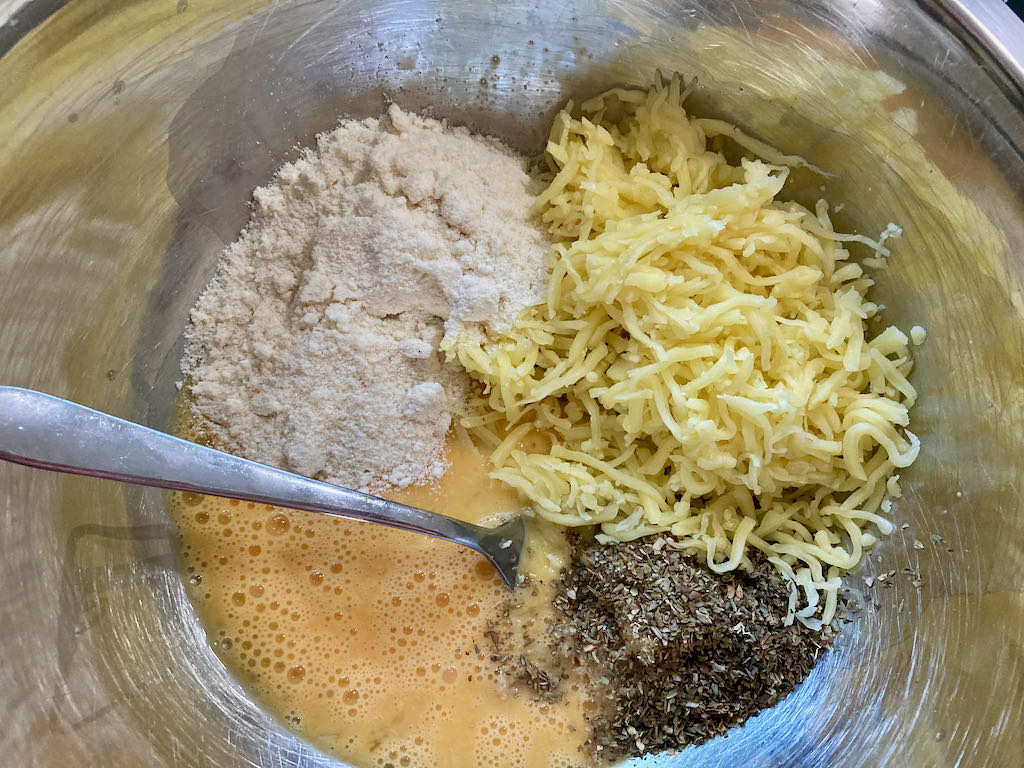
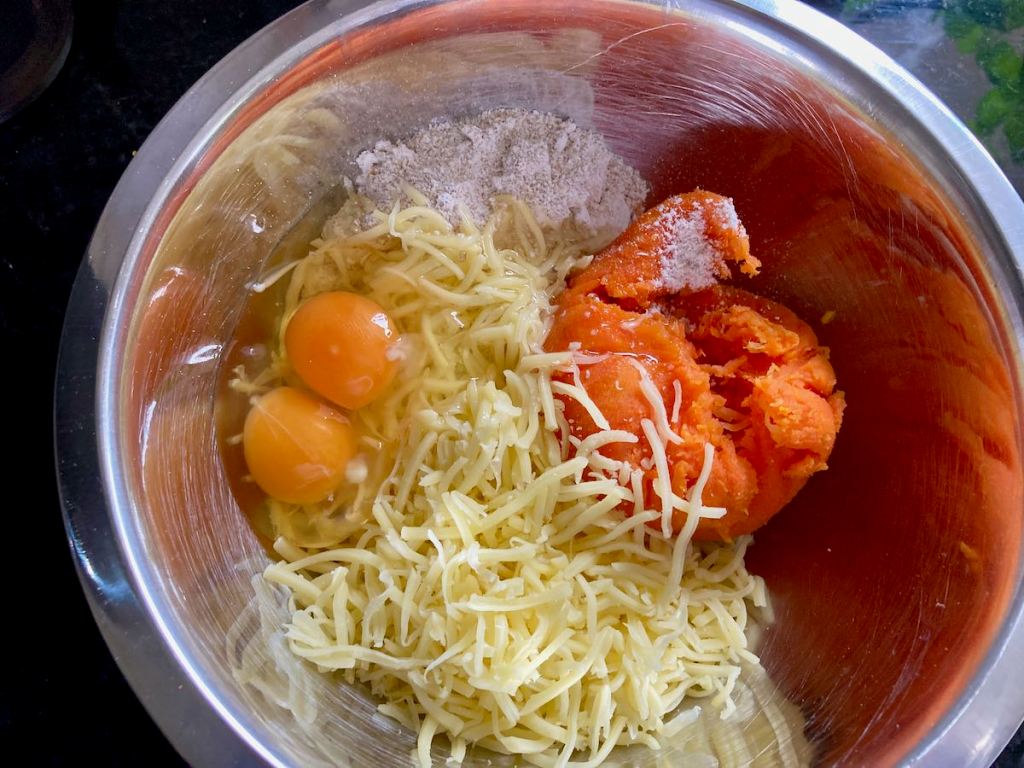
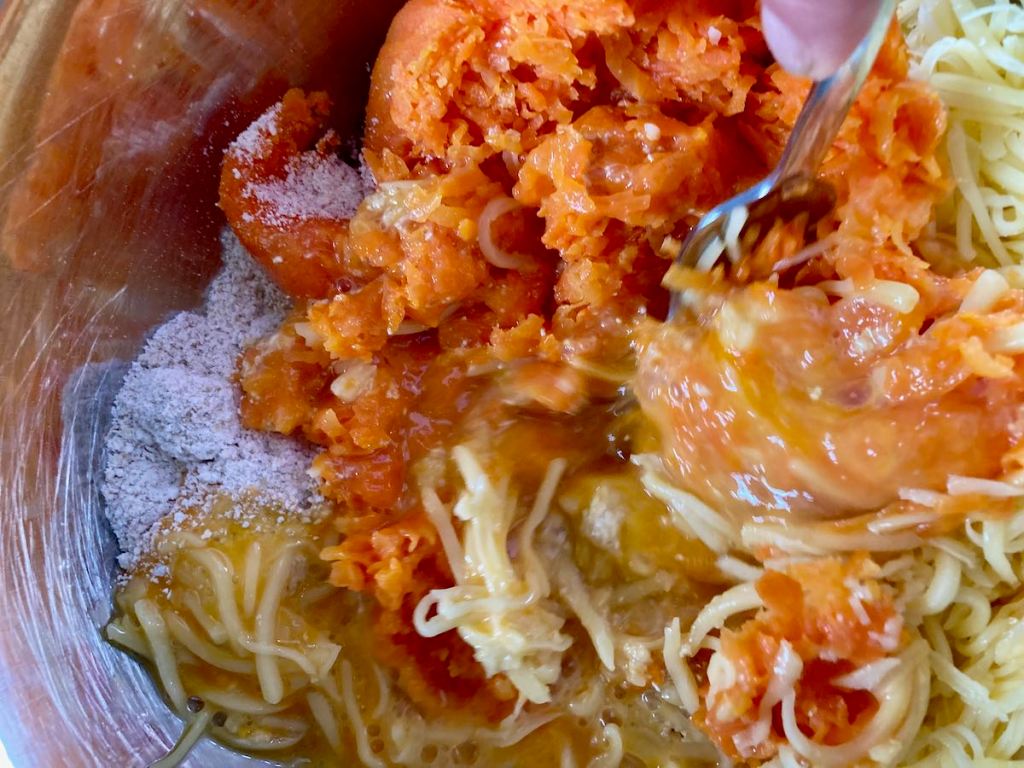
In a large bowl, combine the courgette with the cheese, flour, garlic, oregano, basil, eggs, and salt.
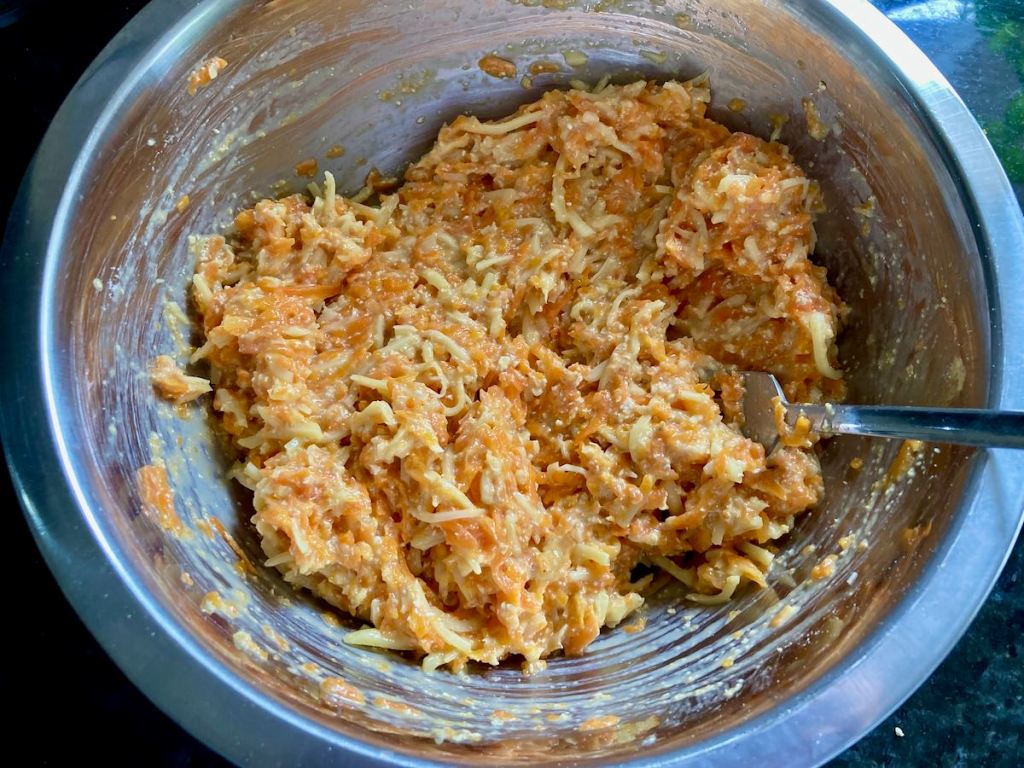
Mix everything together with your hands; make sure it is evenly combined.
Cut a piece of baking paper that fits onto your pizza stone or baking tray.
Put the baking paper onto a chopping board so that it is easy to transfer the pizza crust to the oven.
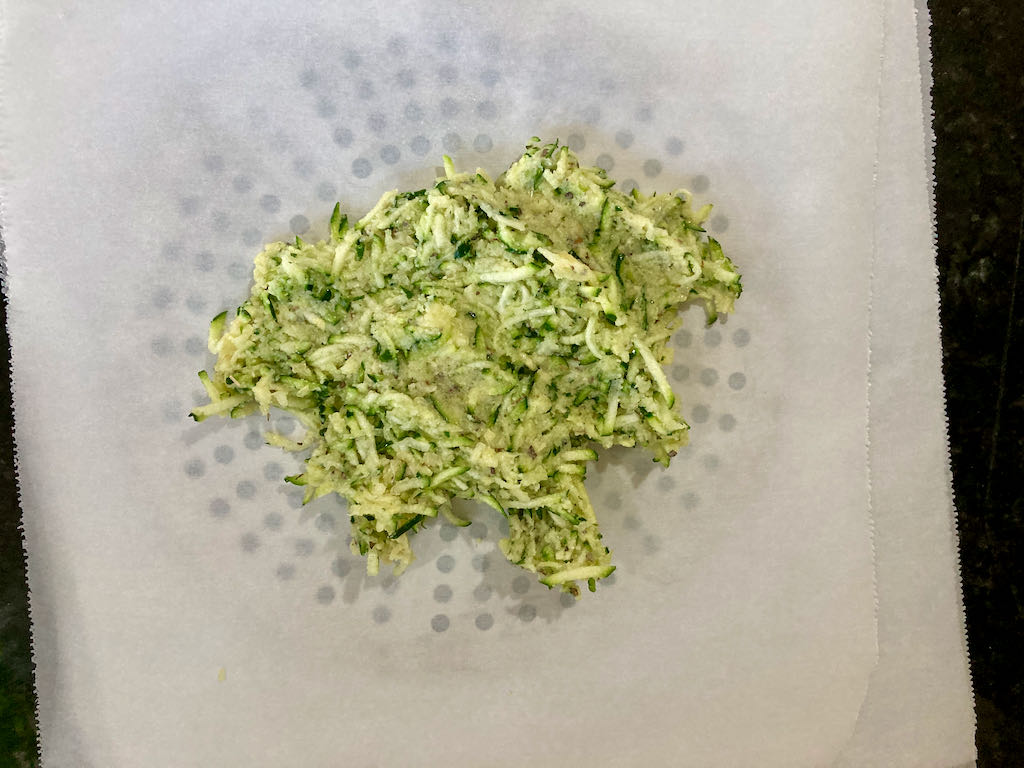
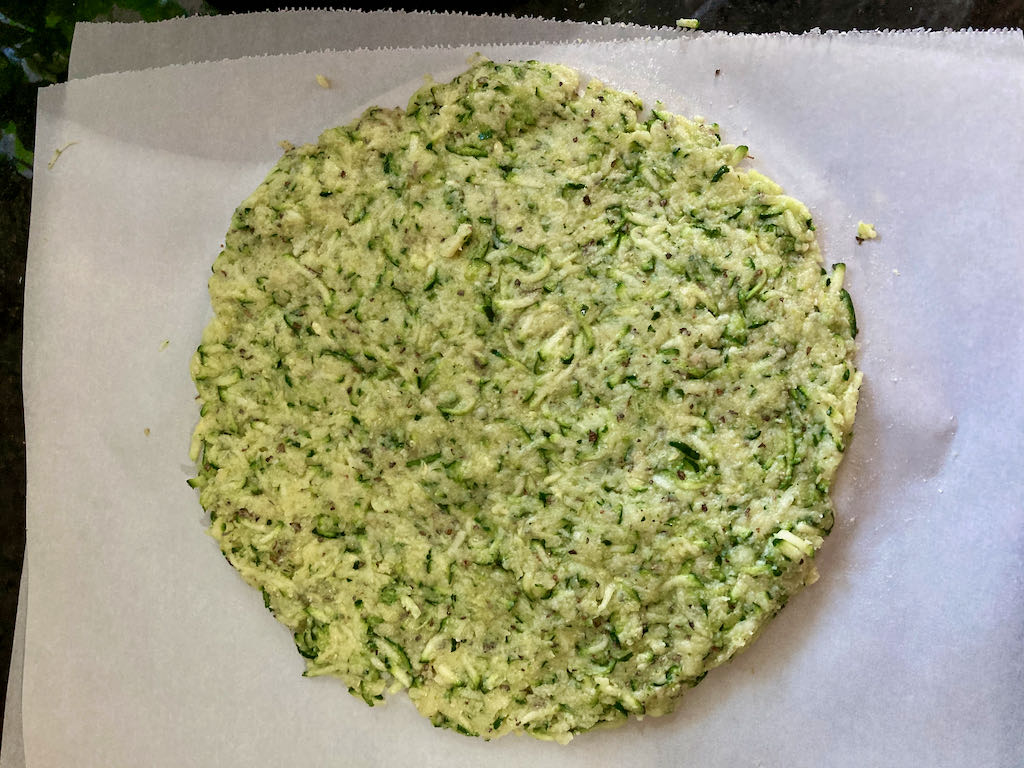
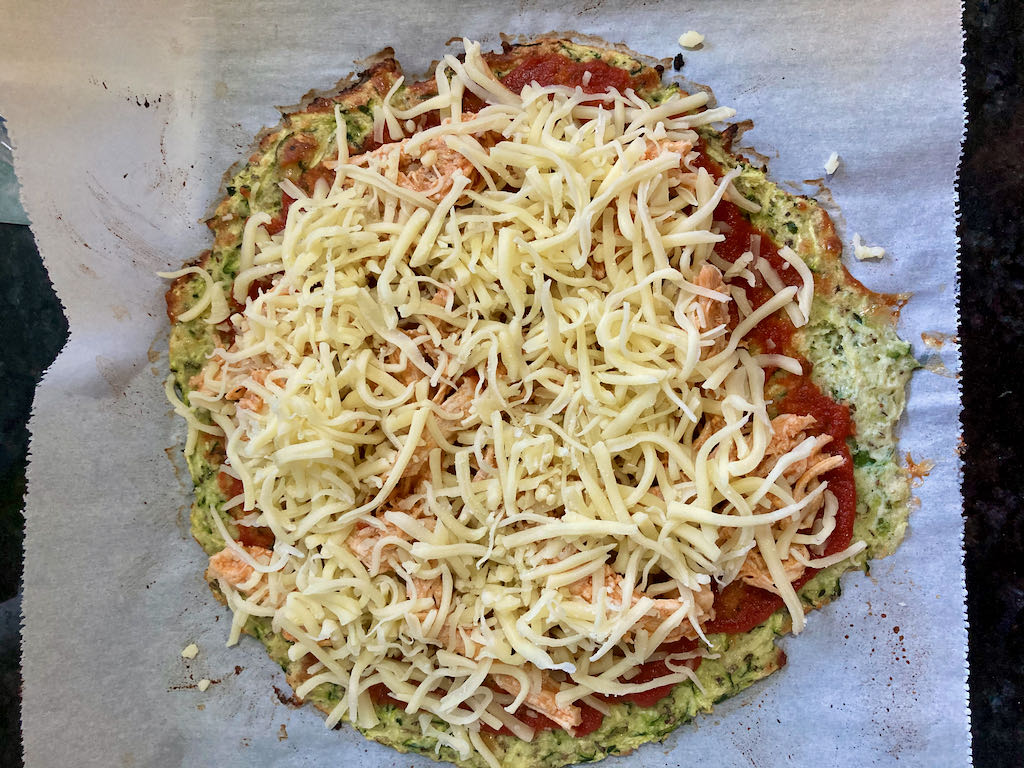
Lay out your pizza dough mix onto the baking paper or a silicone liner.
Use your fingers to spread it out; you should spread it out to a thickness of about 1 cm.
Transfer your pizza crust on the baking paper to the preheated pizza stone/baking tray.
Bake until the crust starts to brown, usually between 8 15 minutes, it will depend on your oven.
Once cooked take the pizza out of the oven, be sure to leave it on the baking paper when you take it out of the oven.
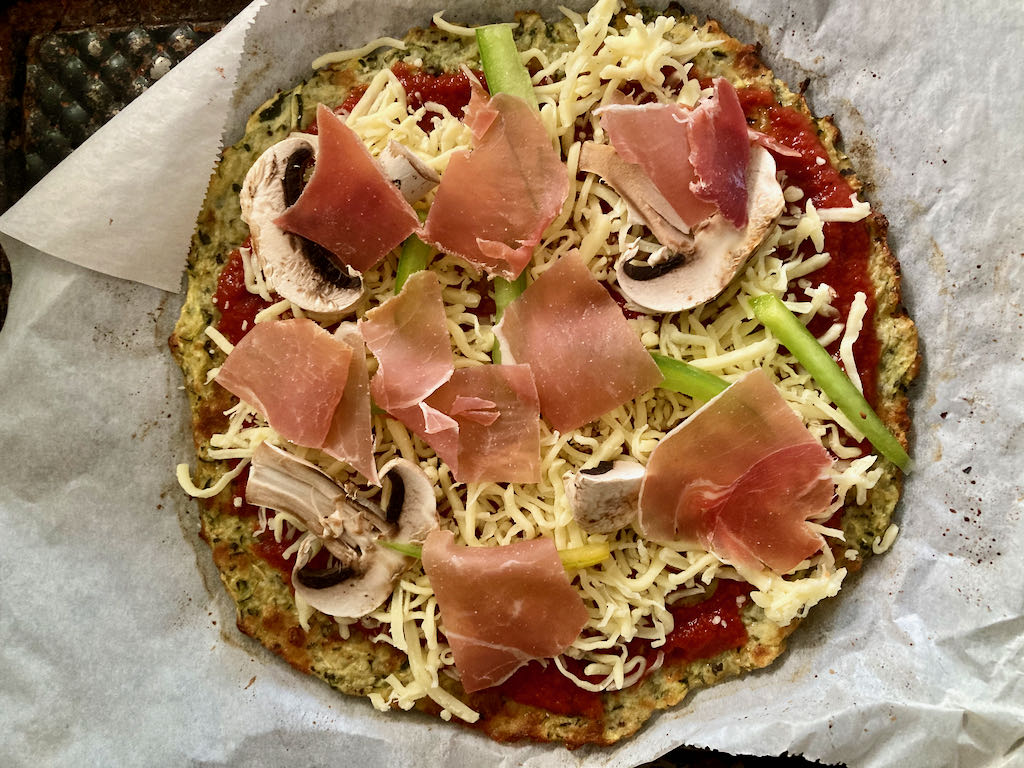
Top your pizza then put it back into the oven and bake for about 5 minutes.
Nutrition
Per Serving: 277 calories; 26 g fat; 27 g carbohydrates; 16 g protein
Equipment
Grater
Kitchen cloth/ dishtowel
Bowl
Spoon
Pizza stone/baking tray
Measuring cups
Measuring spoons
Kitchen towel
Baking paper or a silicone liner
Macros
The macros as for the pizza base only not for any toppings
Nutritional disclaimer
Nutrition information is provided as an estimate based on the ingredients used and available in my area (New Zealand). The nutritional information is here to help you understand the recipe; I use MyFitnessPal to generate my estimates. For more accurate nutritional information, please use a nutritional calculator with the ingredients in your area.
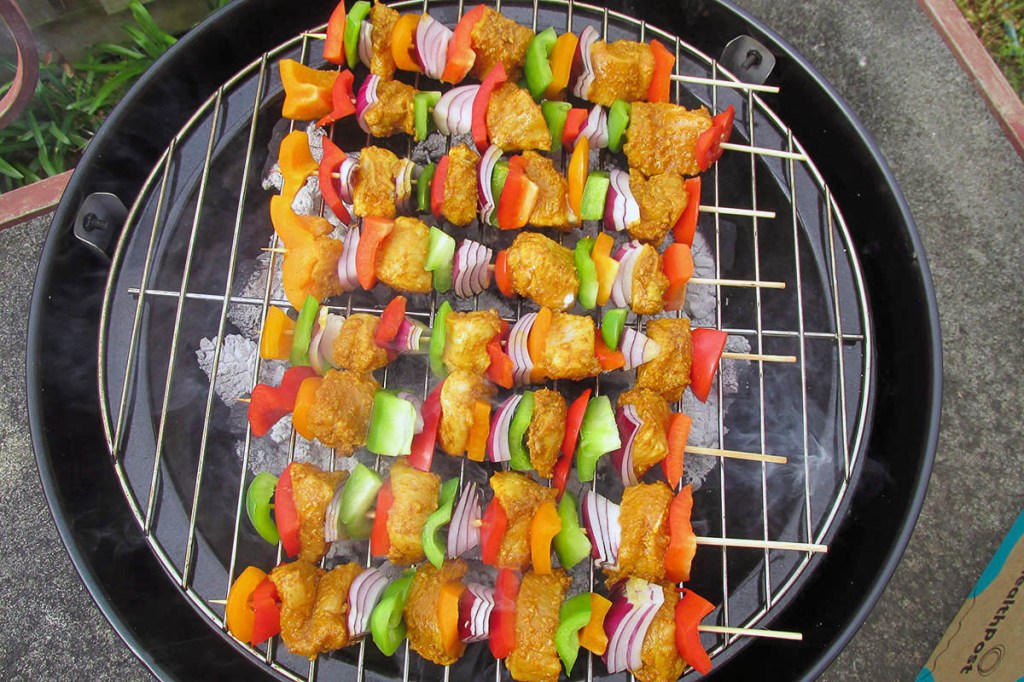
The weather has been warming up, and I want to spend more of my time outside enjoying the beauty New Zealand has to offer. When the weather warms up, I want to spend less time hanging out in a hot kitchen; what an excellent excuse to get the BBQ cleaned and fired up. I love cooking over real flames, and the added flavours from cooking over charcoal are hard to beat.
Fire + spicy + meat = awesome!
Op shop inspiration
I bought a backyard BBQ cookbook a few years back on a trip to the Op Shop up in Whangarei. I loved that it was a Man’s cookbook, all about Manly cooking over an open flame without the womenfolk getting in the way. The recipes are all simple and don’t have heaps of prep. They are designed to let the good ingredients and smoke do all the work. While I found the idea of manly cooking requiring no women other than to bring out beers highly amusing, the cooking style and simplicity of the recipes felt like a good fit for me; easy and clean. While skimming through the cookbook, I found the good old chicken and veg skewer recipe, and it got me thinking: Could you make the standard meat and veg skewer better? Yes, you can, or I wouldn’t be posting this recipe.
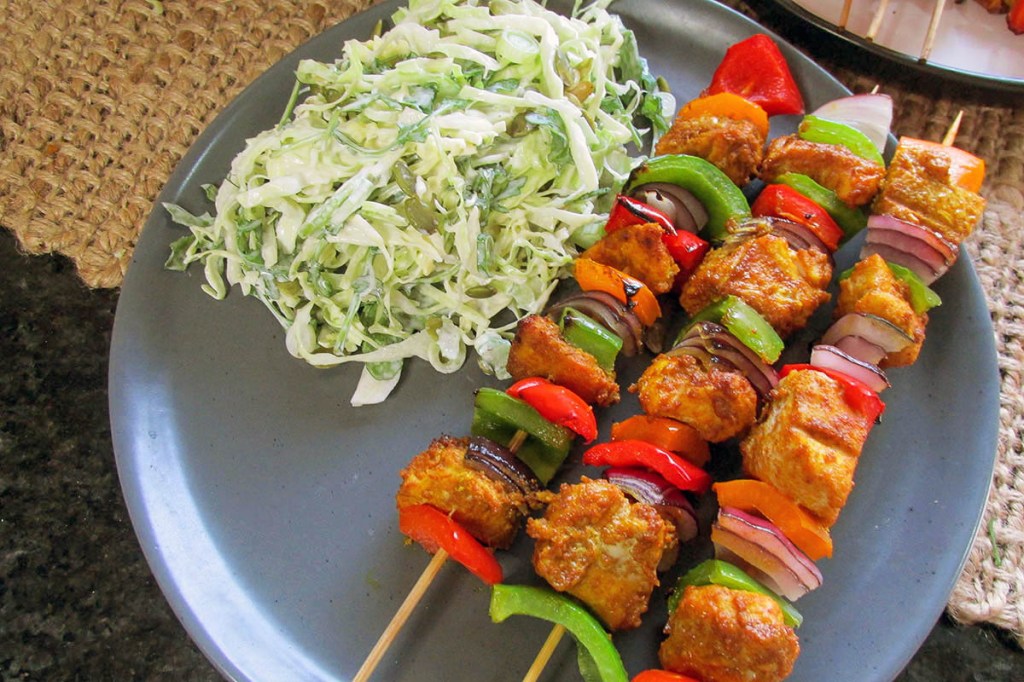
Tandoori skewers
My backyard BBQ cookbook got me thinking about other foods that use smoke and flames to add more flavour to the food; the answer was reasonably obvious: tandoori. While the tandoor is made of clay and doesn’t use charcoal, the principles are the same- smoke, flames, and meat give you amazing flavours. I always have a jar of tandoori-style spice mix in my pantry to add a bit of extra spice to dinner when needed. I decided to combine BBQ and Indian inspired flavours to deliver something spicy and new for dinner.
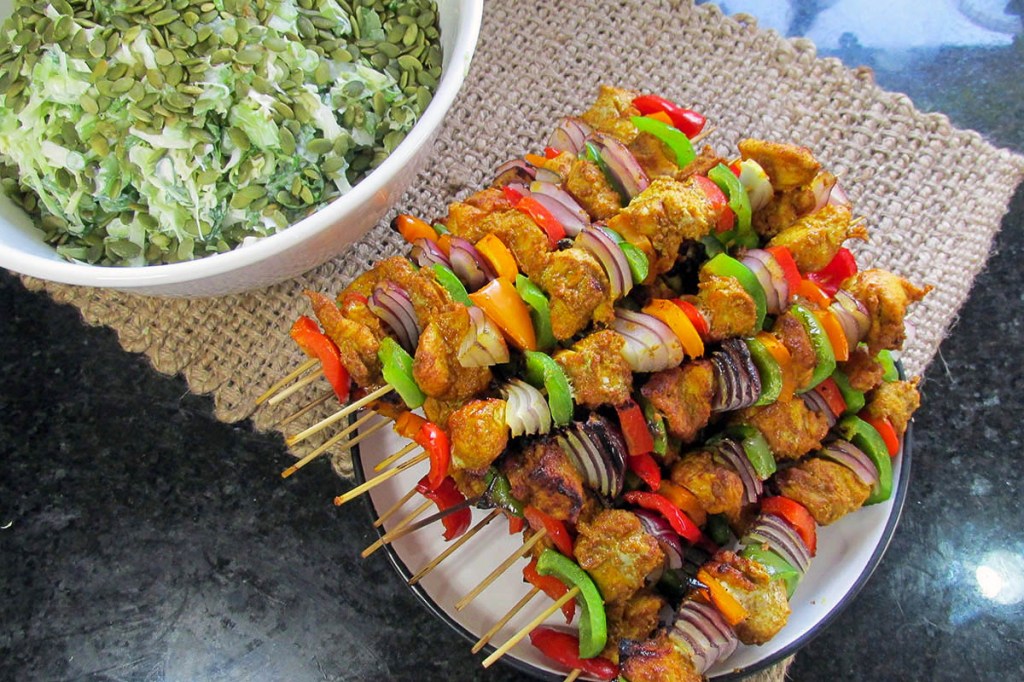
Tandoori chicken skewers
Not to hot
While I have nothing against the gas BBQ, I prefer the charcoal BBQ results. Charcoal BBQS take longer to set up and start cooking with, but once they are up and running, they are straightforward to use and can look after themselves and cook your food without too much effort from you. I am not a BBQ expert, but I know what works well for my cooking style and the recipes I have created or used. For this recipe, I set my BBQ up for indirect heat and put the skewers on to cook once all the charcoal had burned and was white. The BBQ internal temperature was around 300 degrees C or 600 degrees F, meaning the meat and veggies were cooked in minutes. Getting the temperature right before you put your food on the BBQ is key. If you put the food on when the BBQ is too hot, you end up with meat that is burned on the outside and raw in the middle. This is dangerous when you are cooking chicken.
Tandoori chicken skewers recipe
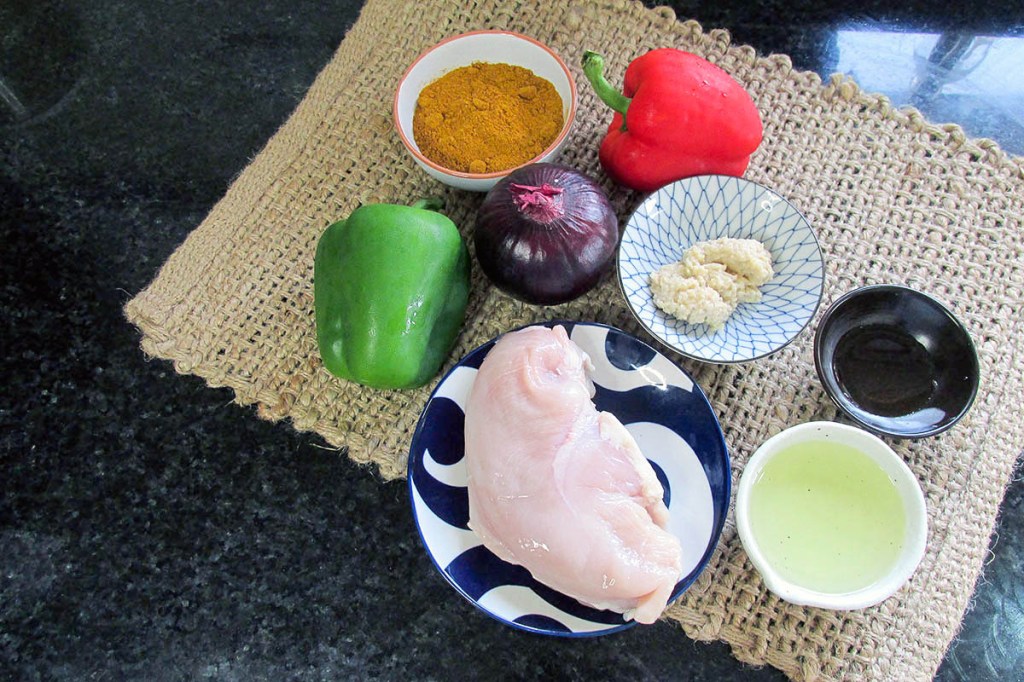
Tandoori chicken skewers ingredients
Ingredients
1/3 cup tandoori spice powder
1 tbsp lime juice
2 garlic cloves, crushed
3 chicken breast, cubed
1/2 green pepper, cubed
1/2 red pepper, cubed
1 red onion, cubed-quartered, then halved
1/2 cup olive oil
salt and pepper
Instructions
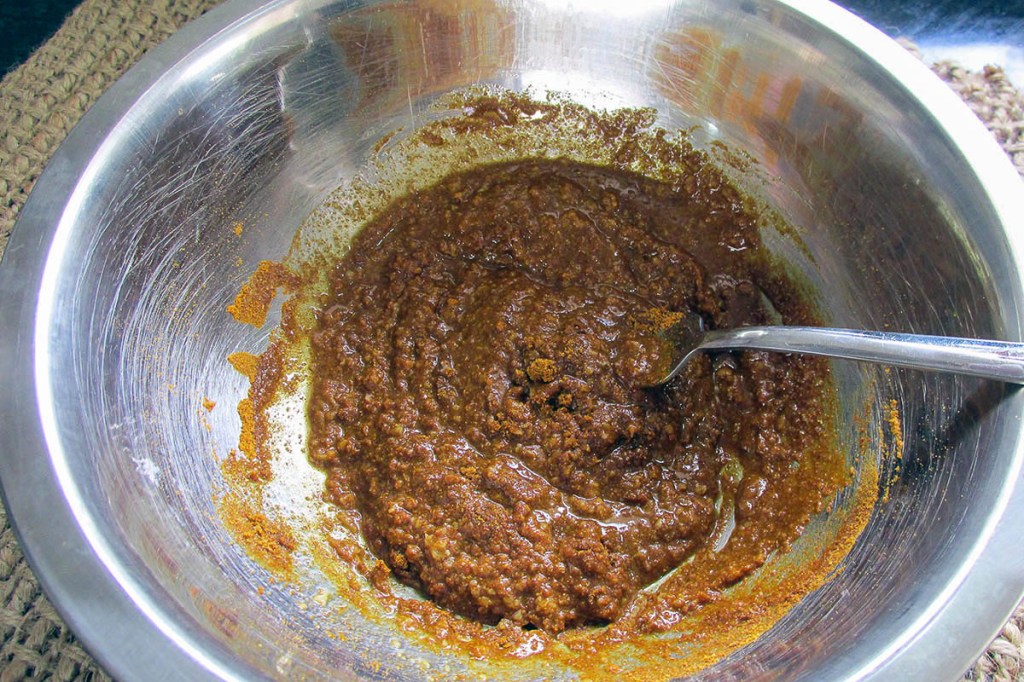
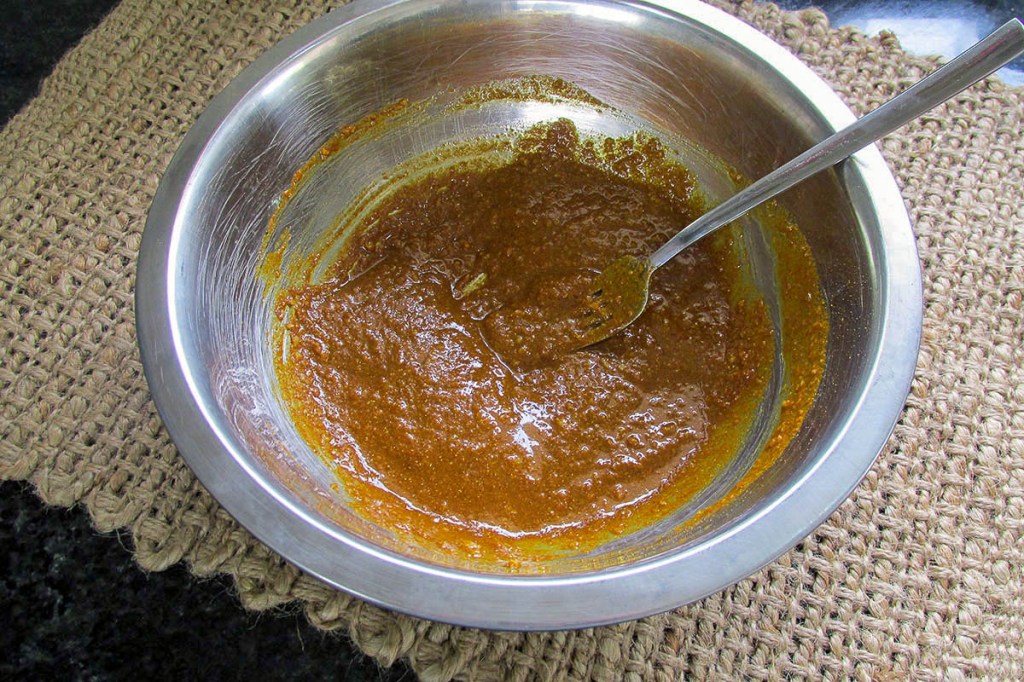
Mix together the garlic, olive oil, salt, pepper, lime juice, and tandoori spice powder in a bowl.
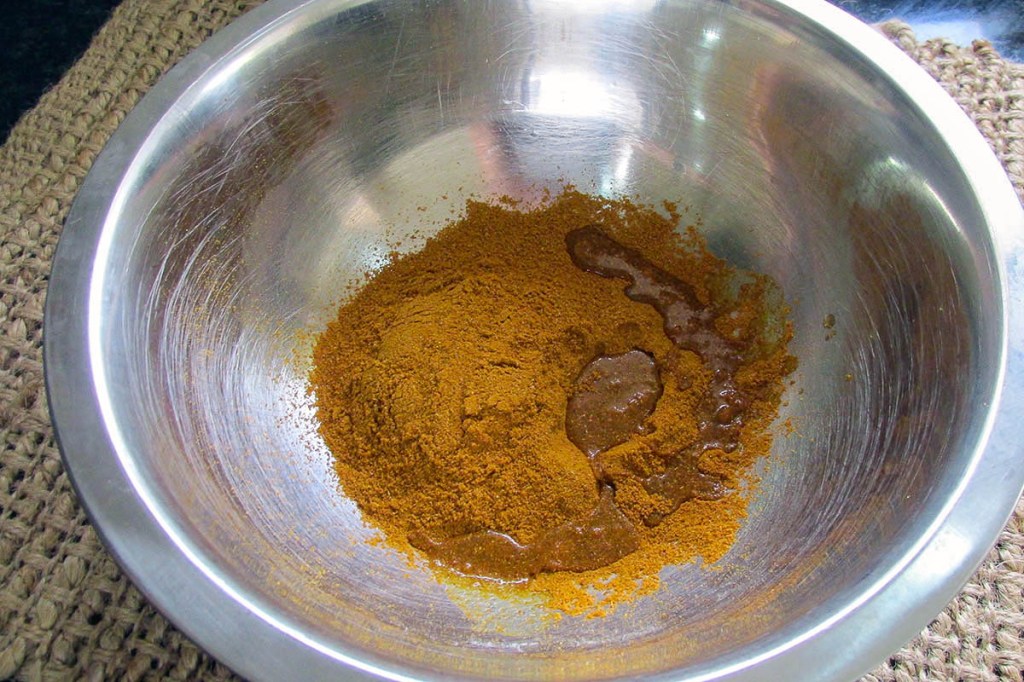
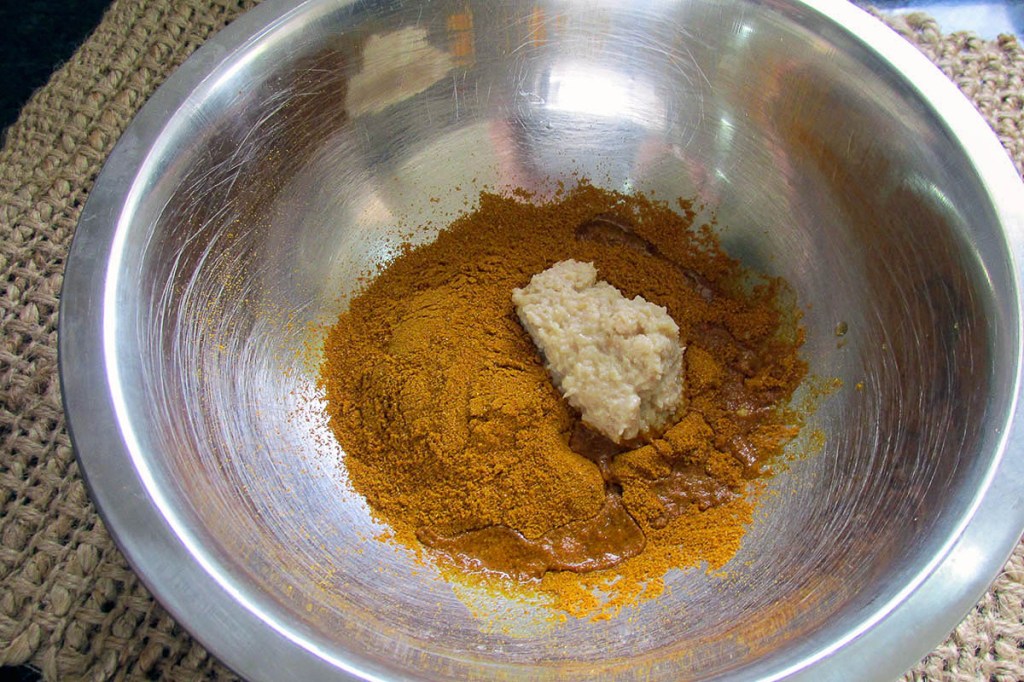
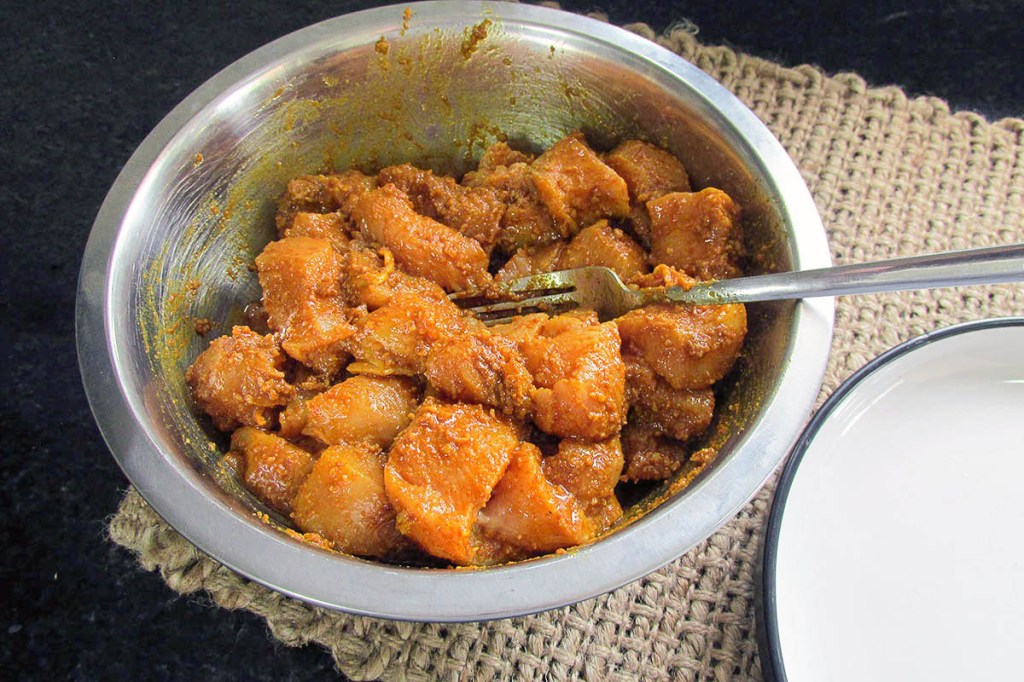
Place the tandoori spice powder in a large bowl.Add the lime juice.Add the garlic and oil a little at a time.Mix well.When you have added all the oil you will have a smooth paste.
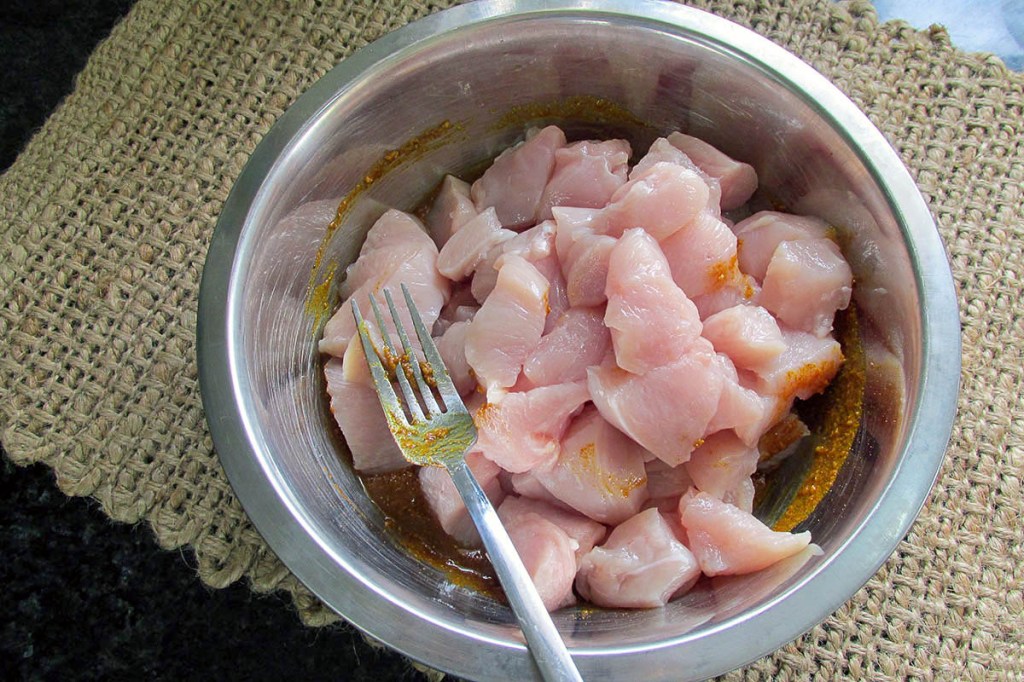
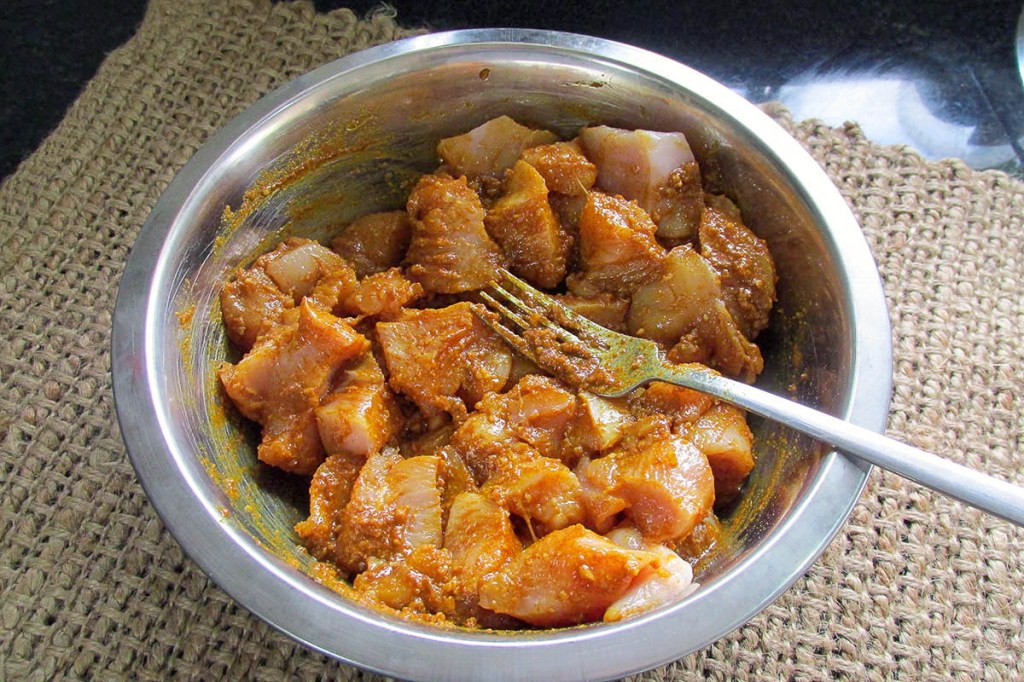
Add the chicken to the bowl with the tandoori paste, mix to coat the chicken.
Ad the chicken to the paste.Mix well.Make sure that chicken is fully coatedGet the vegetables and chicken together to start building the skewers
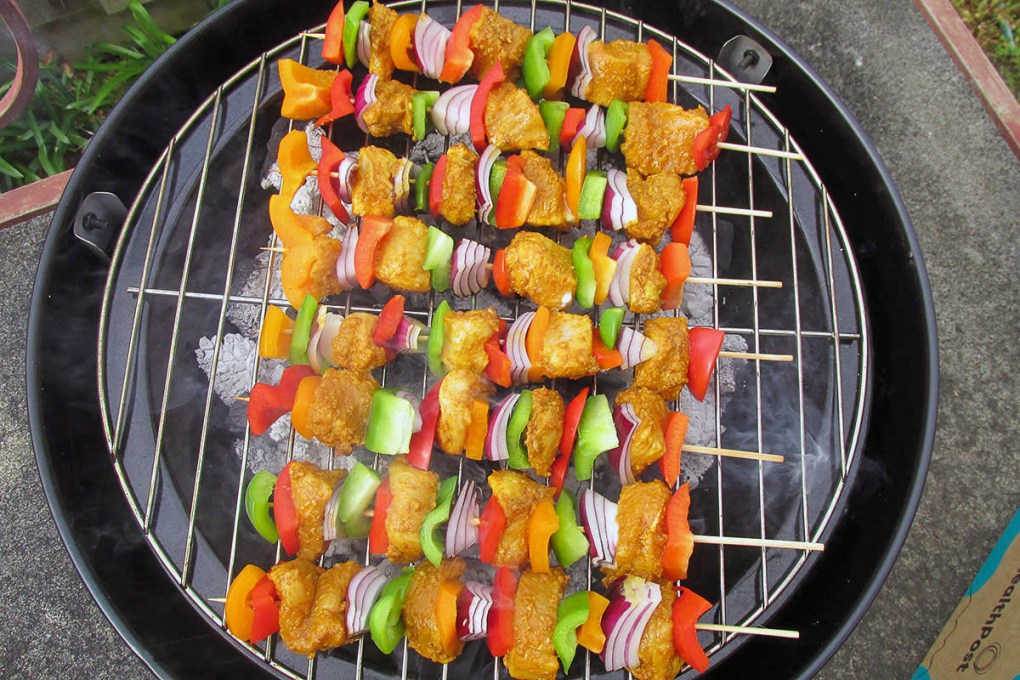
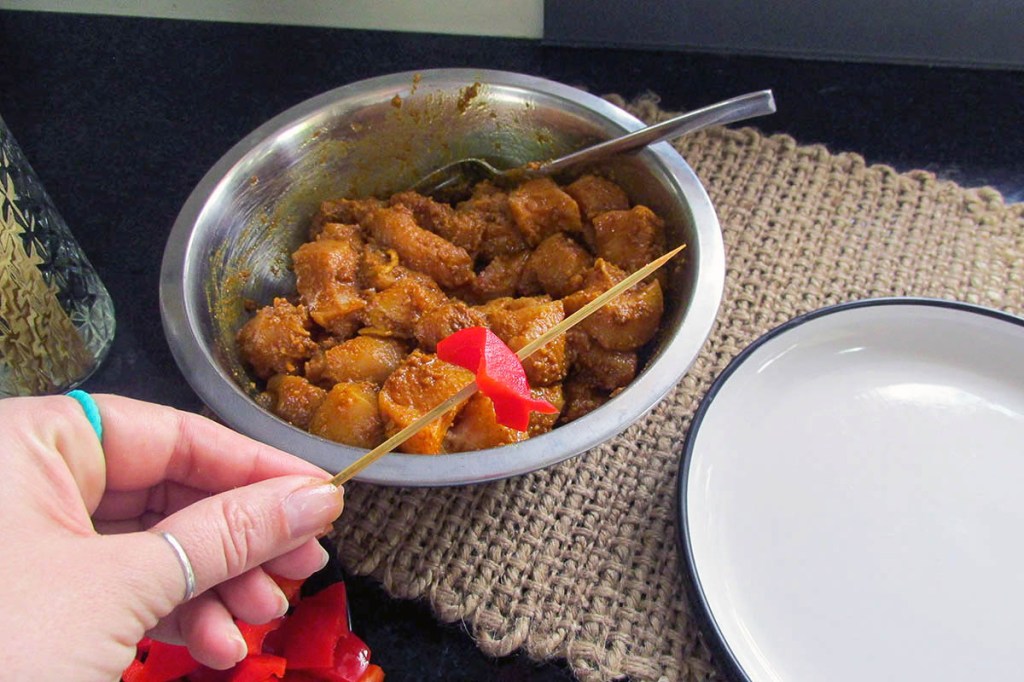
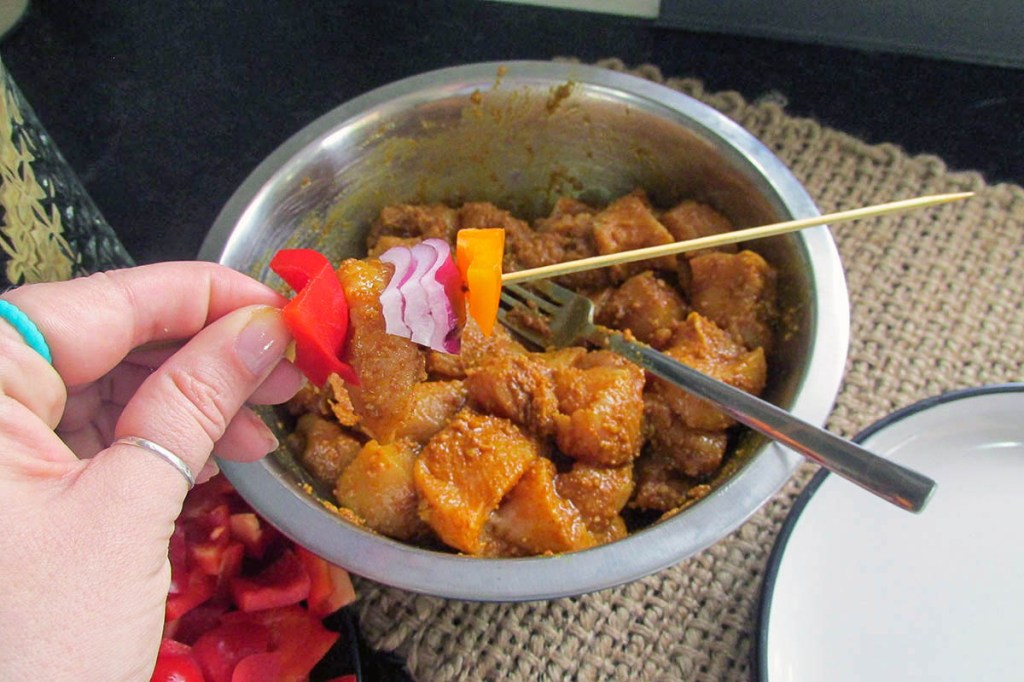
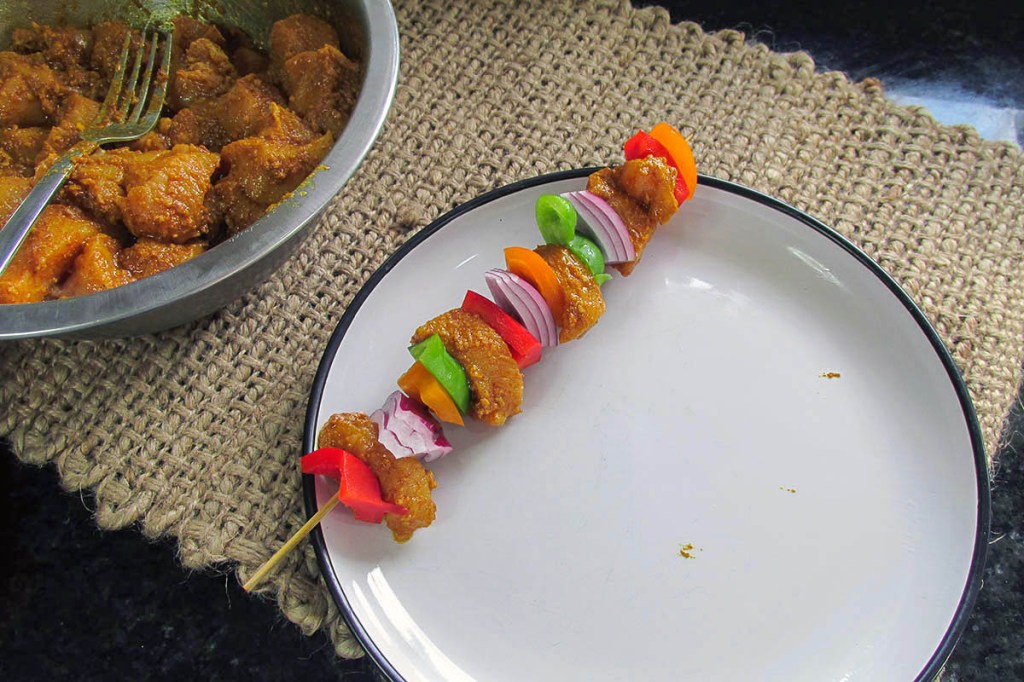
Thread the chicken, onion, pepper and peppers onto soaked bamboo skewers.
Thread the chicken, onion, pepper and peppers onto soaked bamboo skewers. Keep adding chicken, onion and peppers to the skewerRepeat with the remaining vegetables and chicken
Brush the extra paste onto the skewers.
Cook the skewers on an oiled BBQ or in a chargrill pan, turning occasionally.
The chicken should be cooked through in about 10 minutes.
Mix the garlic, olive oil, salt, pepper, lime juice, and tandoori paste in a bowl.
Add the chicken to the bowl with the tandoori paste and mix to coat the chicken.
Thread the chicken, onion, pepper and peppers onto soaked bamboo skewers.
Brush the extra paste onto the skewers.
Cook the skewers on an oiled BBQ or in a chargrill pan, turning occasionally.
The chicken should be cooked through in about 10 minutes.
Nutrition
Per Serving: calories; g fat; g carbohydrates; g protein
Equipment
Knife
Chopping board
Mixing bowl
Measuring spoons
Measuring cups
Fork
Spoon
Wooden skewers
Nutritional disclaimer
Nutrition information is provided as an estimate based on the ingredients used and available in my area (New Zealand). The nutritional information is here to help you understand the recipe; I use MyFitnessPal to generate my estimates. For more accurate nutritional information, please use a nutritional calculator with the ingredients in your area.
For a long time, tuna was a staple of a weekend lunch menu; tuna cheese melts were all I could make to satisfy hungry children. While I was happy to provide a high-protein lunch to the kids, I quickly got over eating leftover tuna or munching on tuna melts each week.
Mixing things up
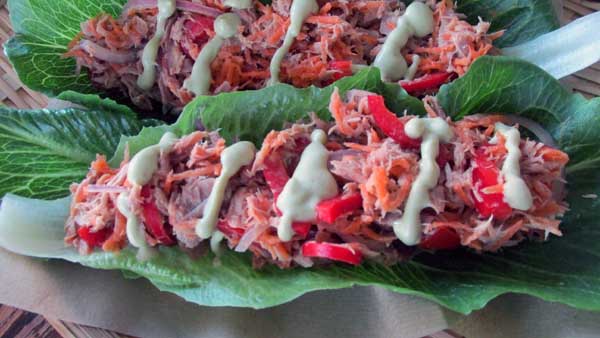
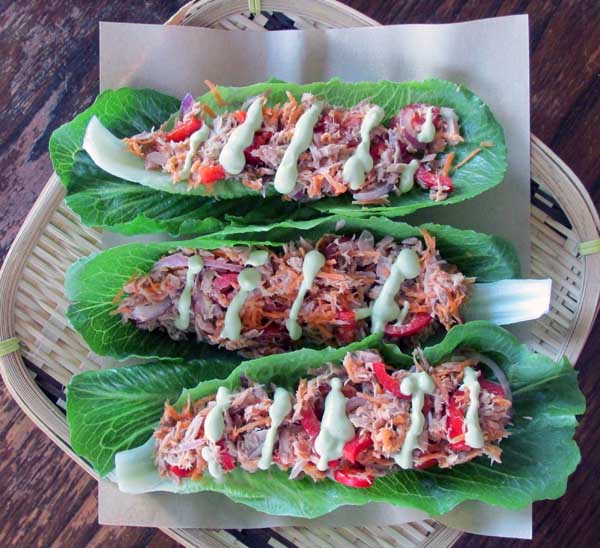
In an effort to make tuna more interesting and easier to eat (every weekend), I came up with these tasty wraps. Anyone who knows me knows I love salad, so what could be better than mixing tuna and salad? Introducing fresh vegetables adds much-needed texture and new flavours to some boring tuna, while the avocado dressing is a great replacement for mayo. A simple solution to a repetitive problem. Now I get to choose when to eat tuna (and it isn’t every weekend), these tuna wraps are always my go-to option.
These lettuce wraps are the best way to eat tuna if you ask me.
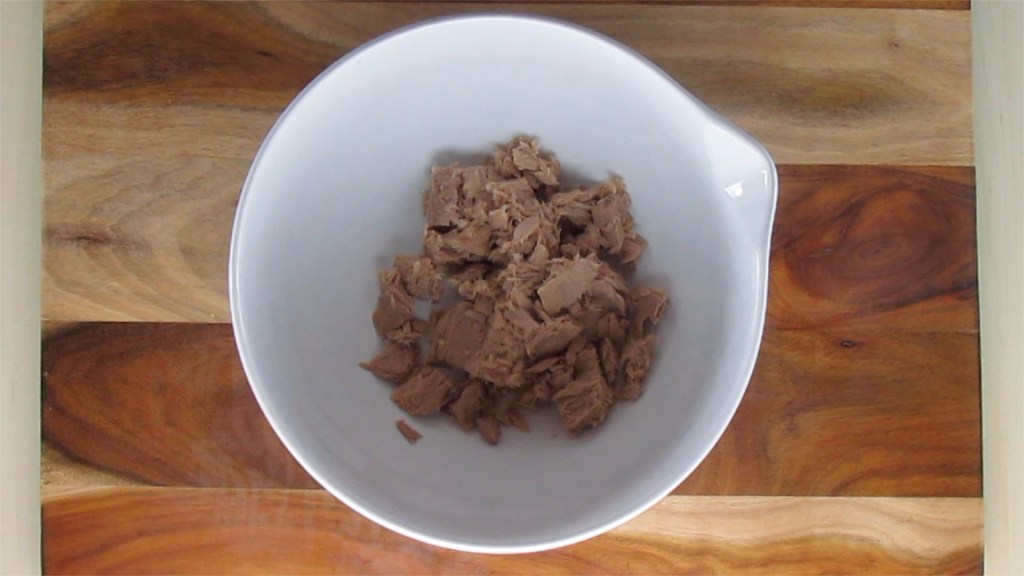
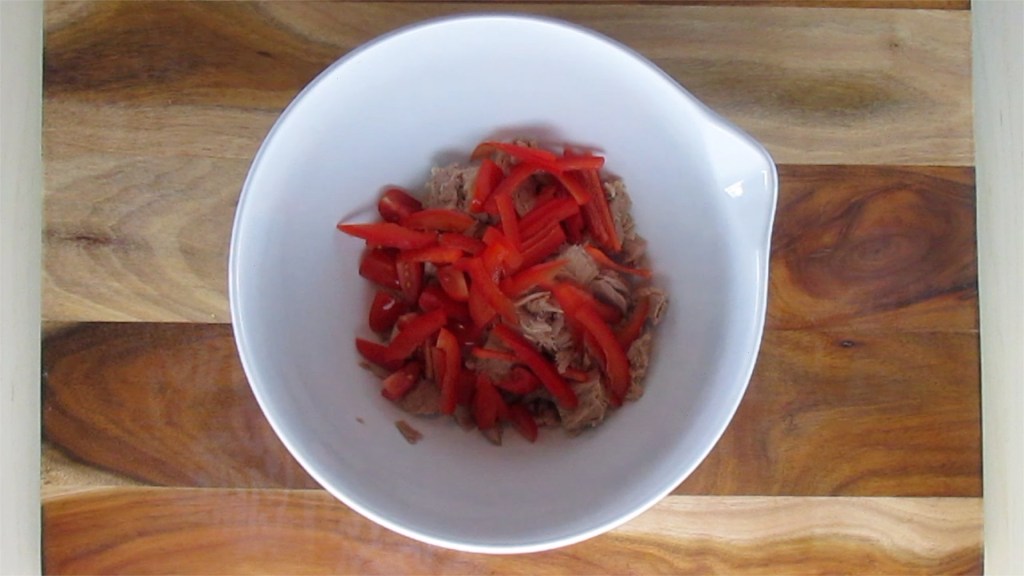
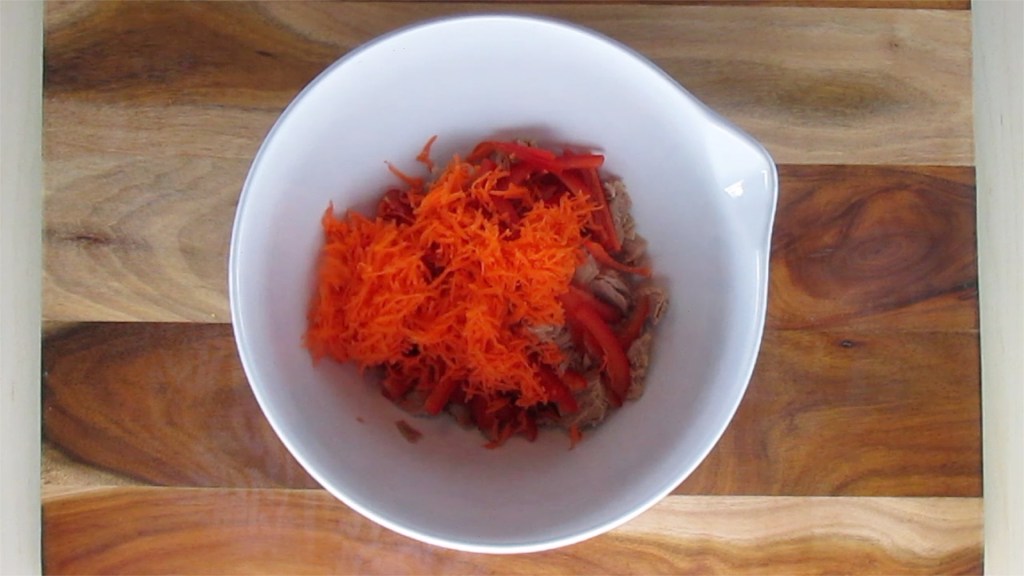
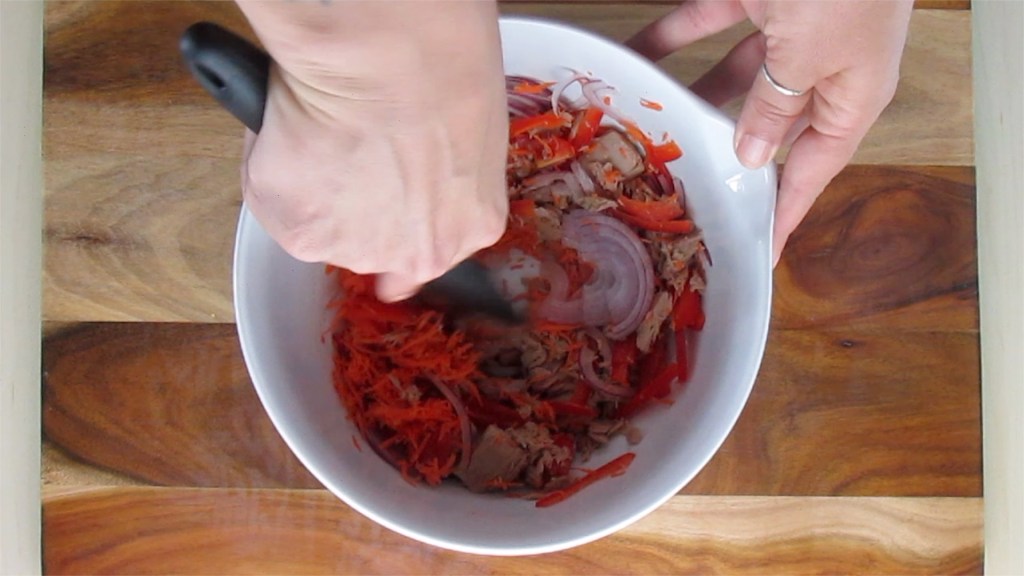
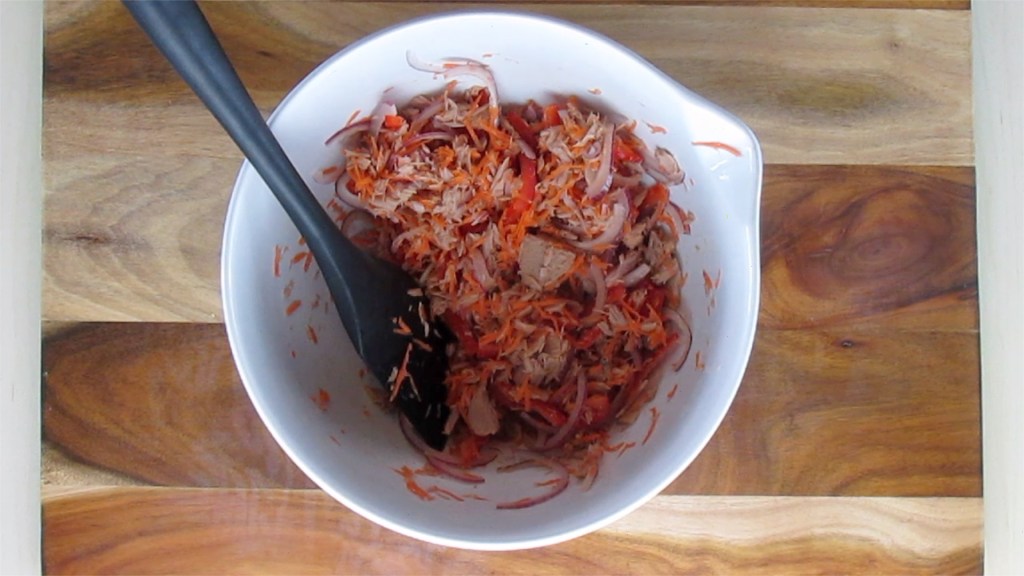
Mix the tuna, peppers, carrots, tomatoes, and red onion in the bowl.
Add the avocado dressing.
Mix well.
Place lettuce leaves on a plate.
Divide the mixture between the lettuce leaves.
You can drizzle each wrap with a bit more avocado dressing before serving.
Nutrition
Per Serving: 111 calories; 2 g fat; 9 g carbohydrates; 17 g protein
Equipment
Grater
Knife
Chopping board
Fork
Spoon
Mixing bowl
Measuring cups
Measuring spoons
Nutritional disclaimer
Nutrition information is provided as an estimate based on the ingredients used and available in my area (New Zealand). The nutritional information is here to help you understand the recipe; I use MyFitnessPal to generate my estimates. For more accurate nutritional information, please use a nutritional calculator with the ingredients in your area.
Early in 2021, I relocated and started updating my website; I’ve been making changes and improving everything as I go. This recipe is one of the many things I’ve tried to improve.
Something fresh
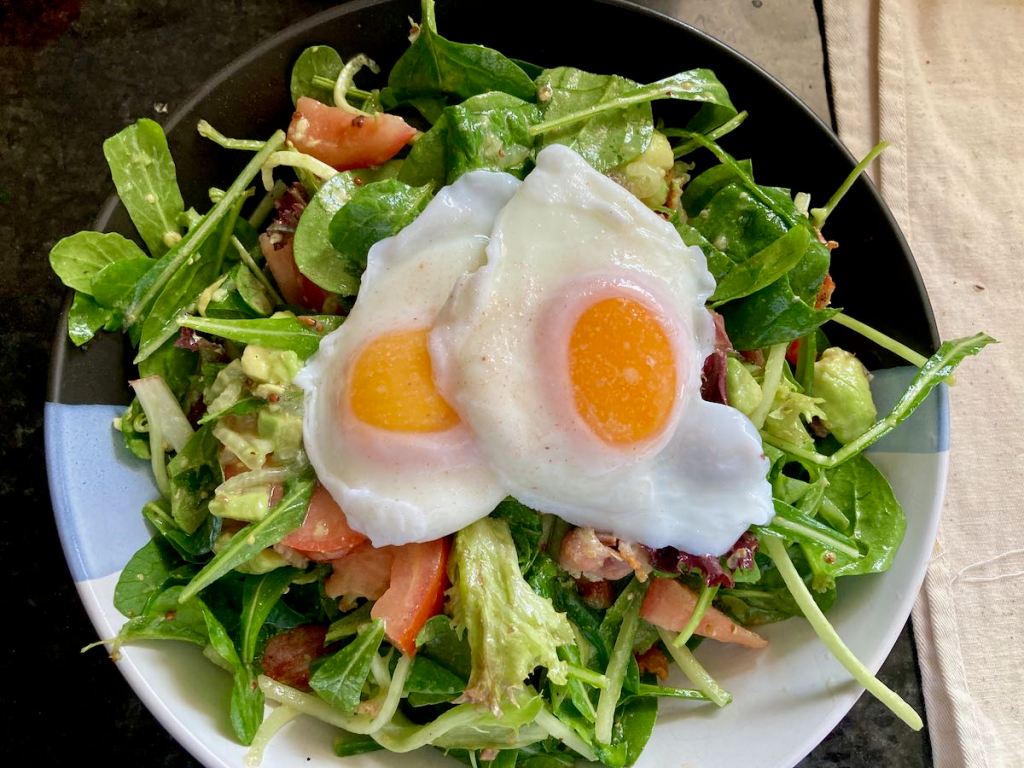
I love salad—sad but true. I could probably eat salad for every meal and never get bored. Breakfast salads are a great option when you want something a little different to start your day. This breakfast is clean, easy, and a cool take on cooked breakfast. The recipe is enough to feed two hungry people, so you can scale it to suit your needs.
Friday morning treat breakfast
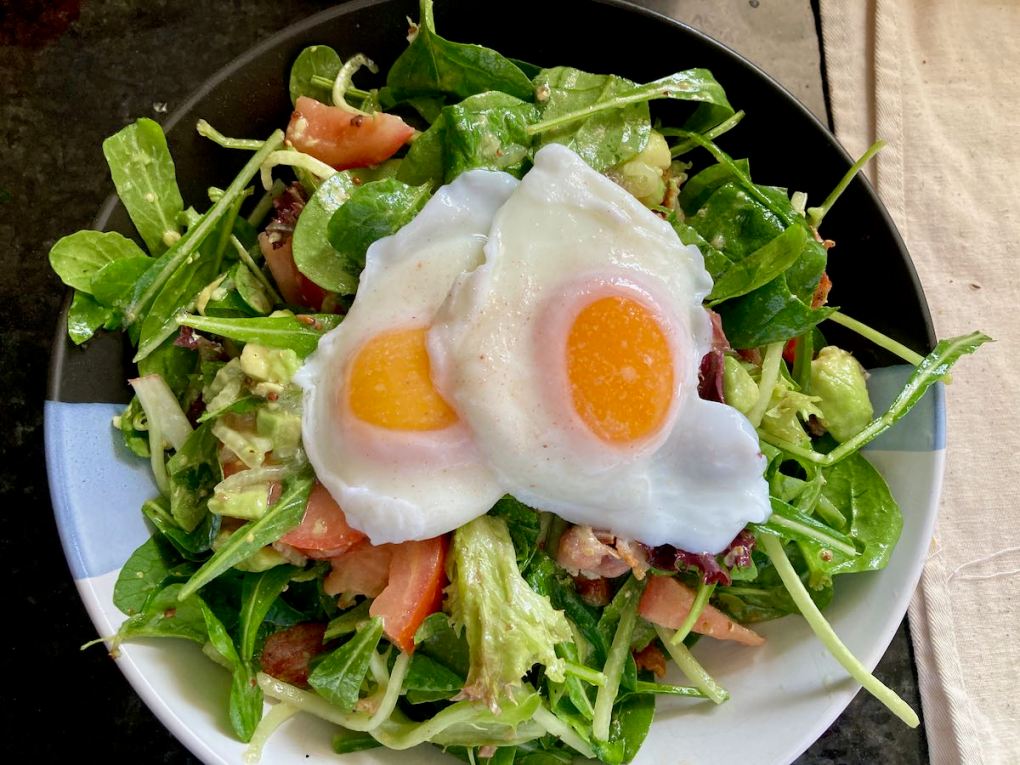
This morning, I started work later than usual, which meant I had an opportunity to make myself a nice breakfast. A breakfast salad with coffee would be enough to set me up for the day. Perfectly poached eggs with bacon and fresh salad were just what I needed.
Breakfast salad recipe
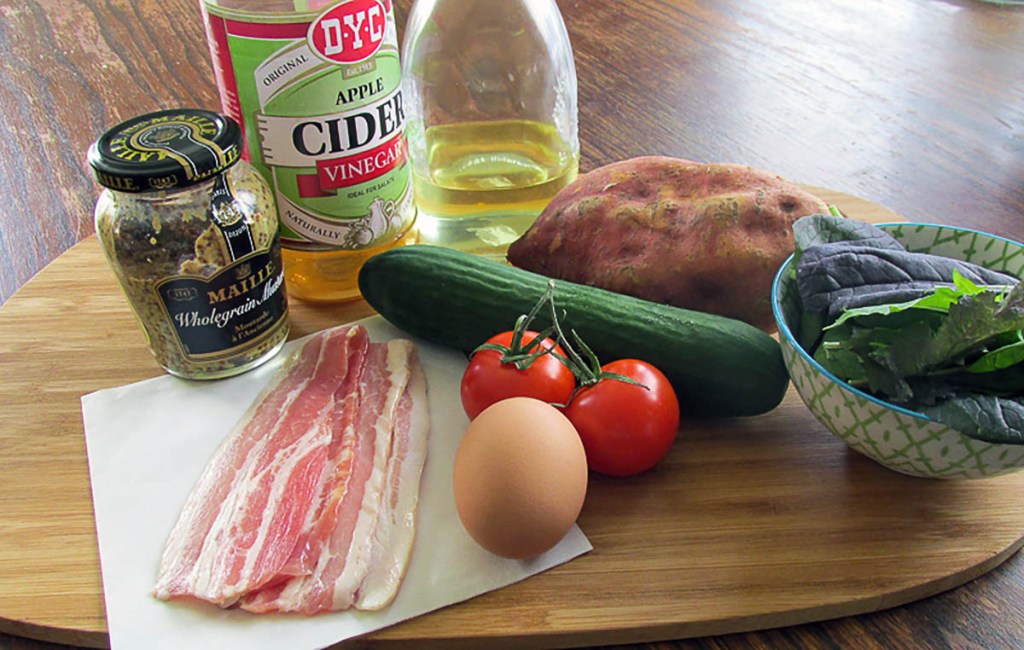
Ingredients
4 eggs
4 bacon rashers
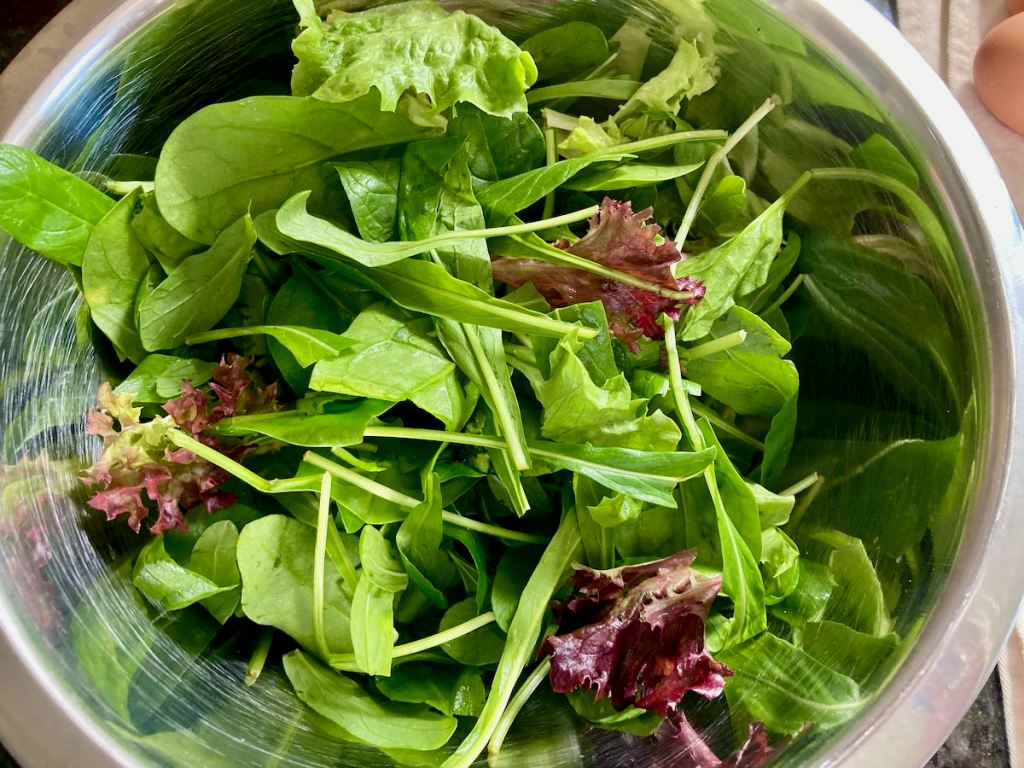
2 handfuls mixed leaves
1 cucumber, julienne
1 avocado, cubed
10 cherry tomatoes, halved
1 handful of sweet potato strips
1 tsp. Dijon mustard
4 tbsp. olive oil
1 tbsp. apple cider vinegar
Instructions
Over medium heat in a frying pan, cook off the bacon until it is crisp, then set to one side to cool.
Once the bacon has cooled, cut it into thin strips.
In the same frying pan, add some oil and fry off the sweet potato pieces until they are crisp, then drain on some kitchen paper.
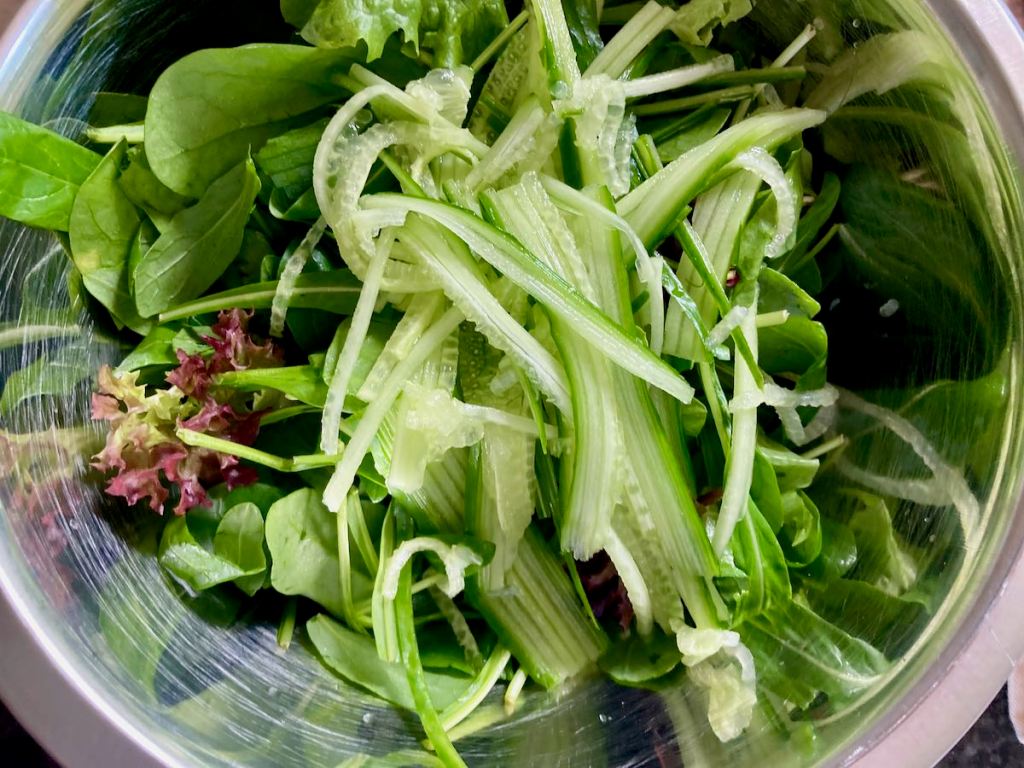
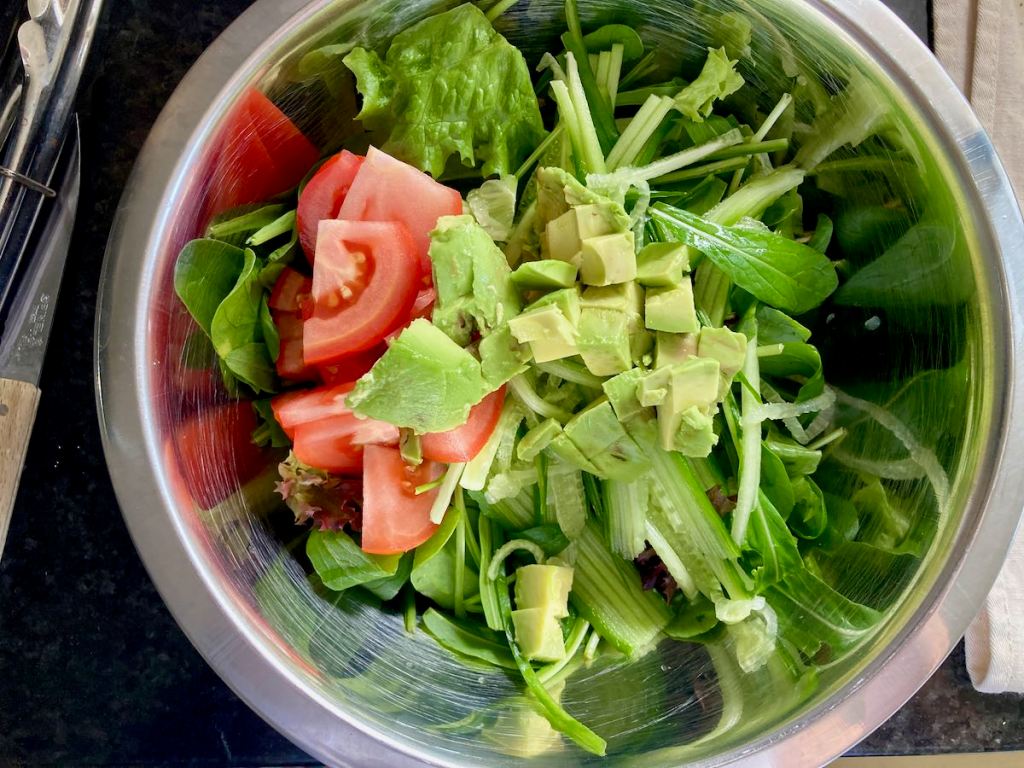
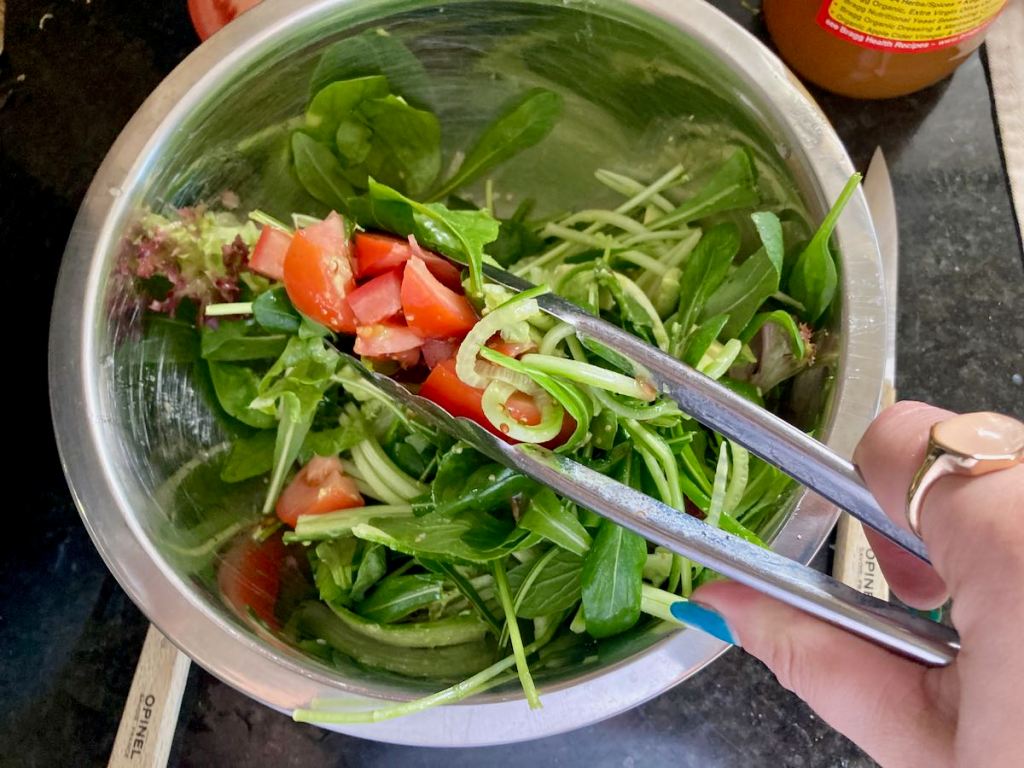
Combine the cucumber, leaves, avocado, and tomatoes in a large mixing bowl.
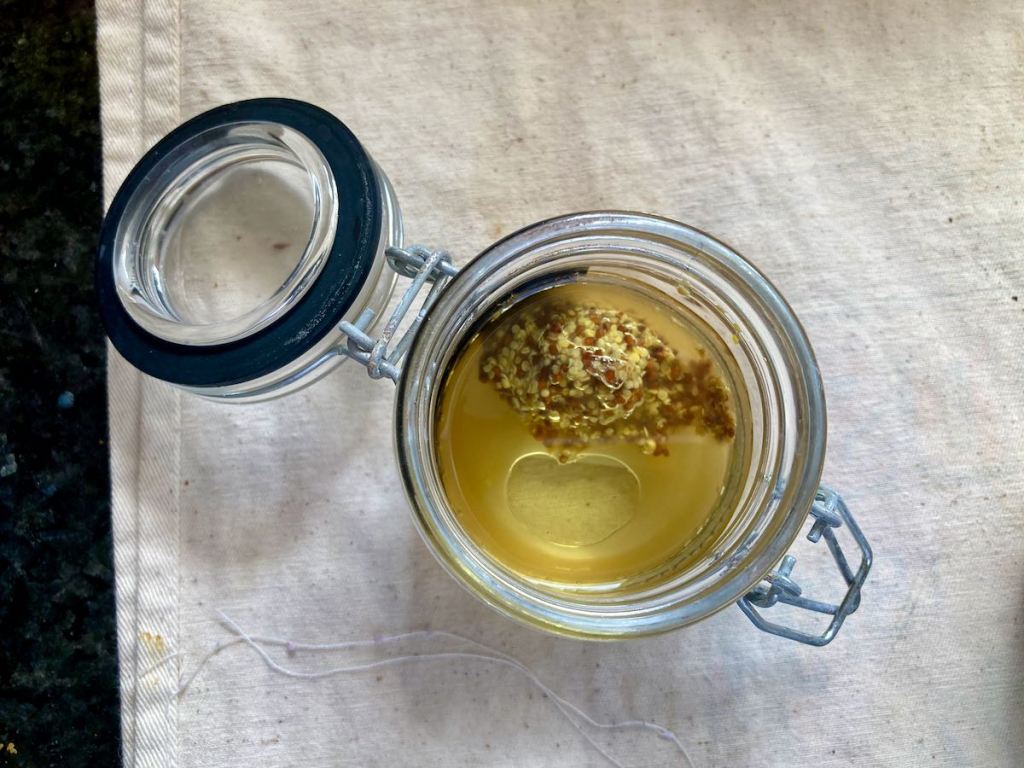
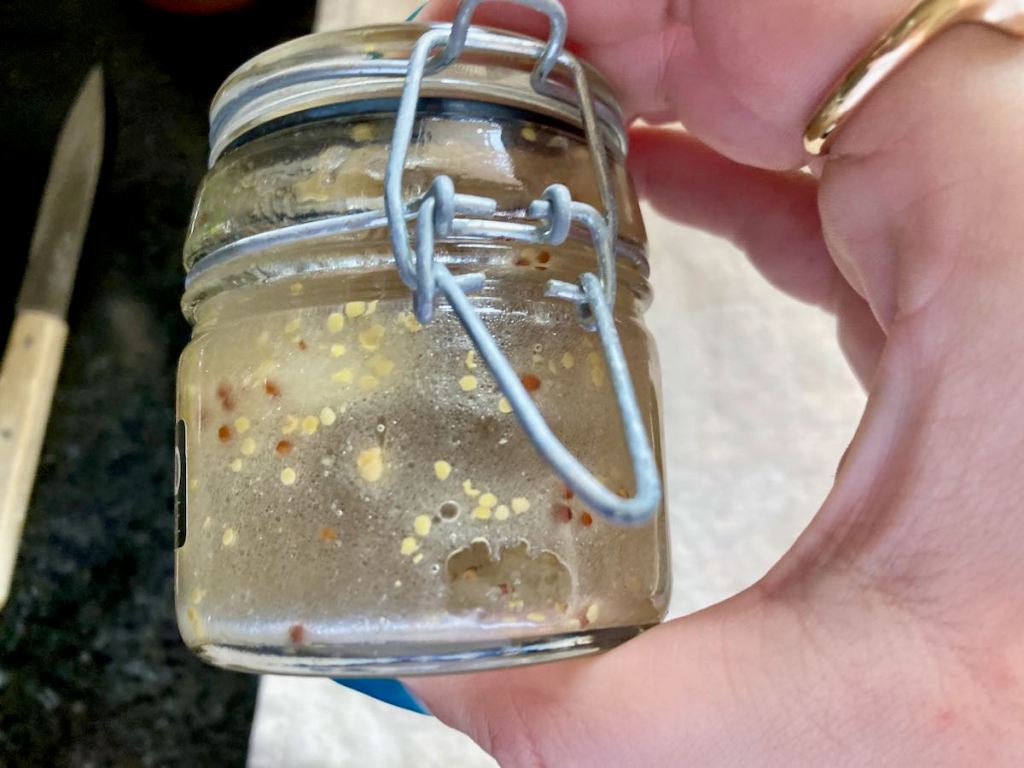
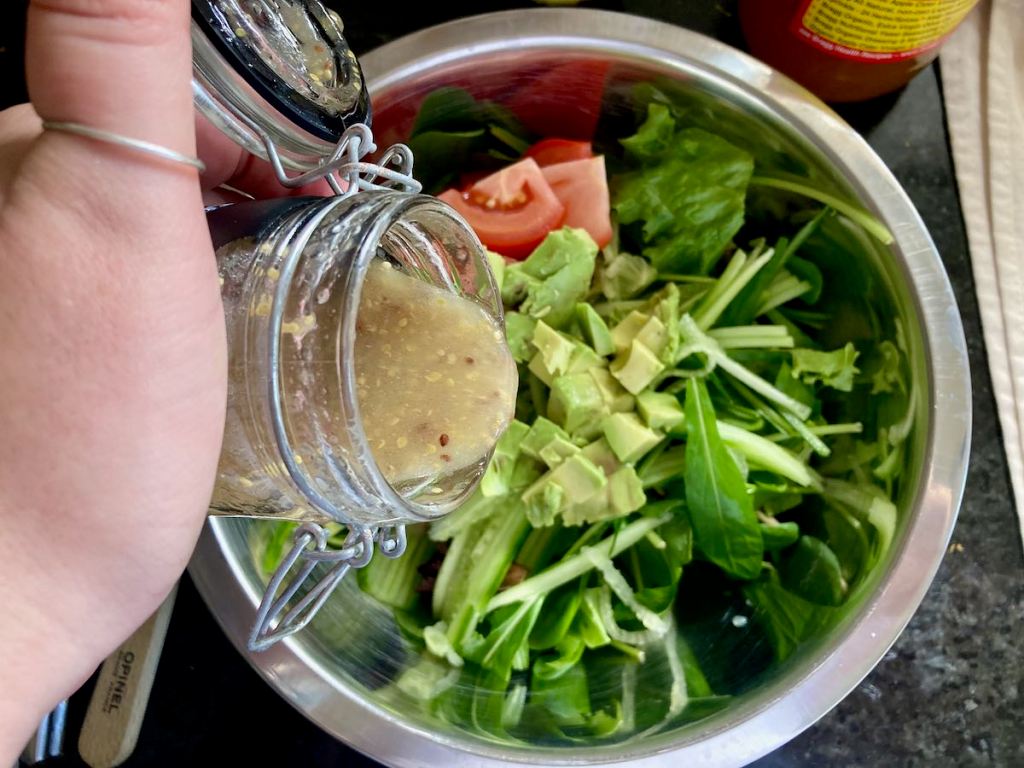
Mix the mustard, oil, and vinegar in a jar, then pour over the salad.
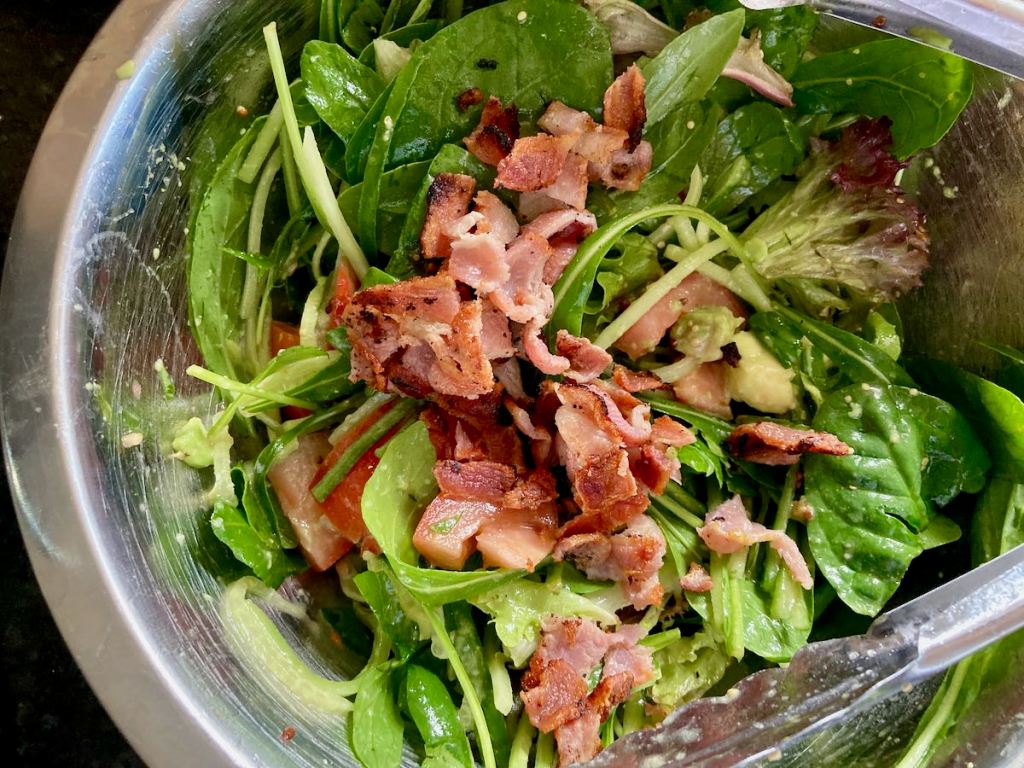
Mix the salad, ensure the dressing covers everything, and then mix in the bacon.
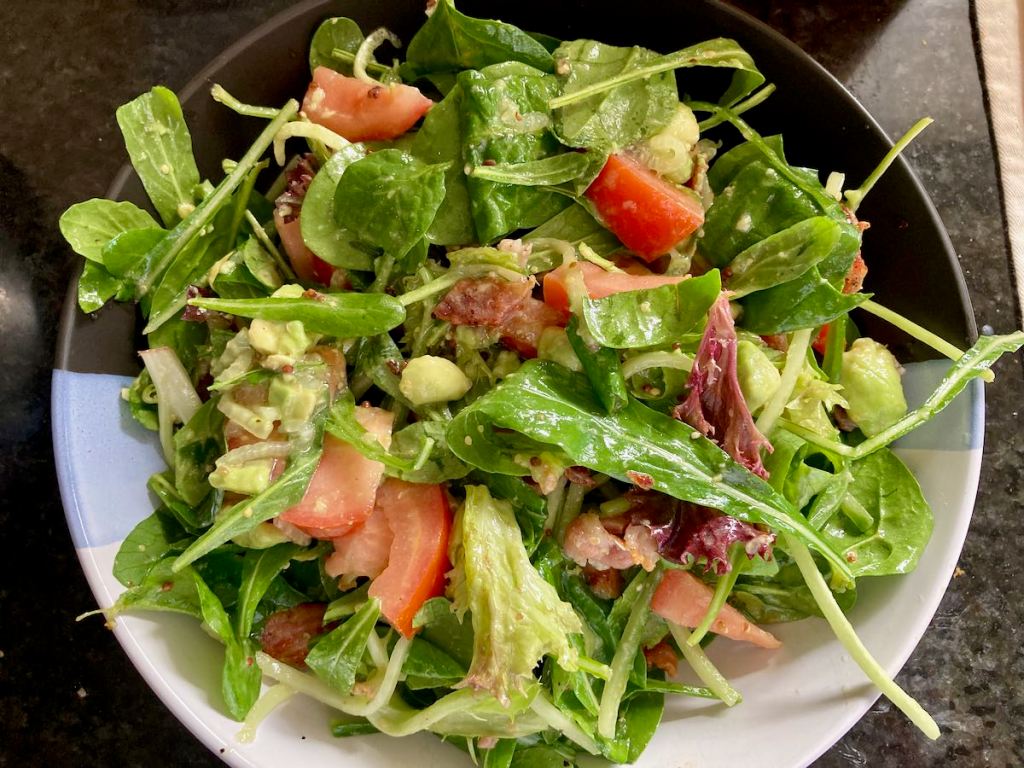
Divide the salad between two plates.
While mixing the salad, boil a pan of water, ready to poach the eggs.
Once boiling, reduce the heat and crack in the eggs.
When the egg whites have set, remove the eggs from the water and place them on the salad.
Over medium heat in a frying pan, cook off the bacon until it is crisp, then set to one side to cool.
Once the bacon has cooled, cut it into thin strips.
In the same frying pan, add some oil and fry off the sweet potato pieces until they are crisp, then drain on some kitchen paper.
Combine the cucumber, leaves, avocado, and tomatoes in a large mixing bowl.
Mix the mustard, oil, and vinegar in a jar, then pour over the salad.
Mix the salad, ensure the dressing covers everything, and then mix in the bacon.
Divide the salad between two plates.
While mixing the salad, boil a pan of water, ready to poach the eggs.
Once boiling, reduce the heat and crack in the eggs.
When the egg whites have set, remove the eggs from the water and place them on the salad.
Finish the salad with the sweet potato strips.
Nutrition
Per Serving:560 calories;49 g fat; 14g carbohydrates; 24g protein
Equipment
Frying pan x2
Knife
Chopping board
Mixing bowl
Tongs
Slotted spoon
Nutritional disclaimer
Nutrition information is provided as an estimate based on the ingredients used and available in my area (New Zealand). The nutritional information is here to help you understand the recipe; I use MyFitnessPal to generate my estimates. For more accurate nutritional information, please use a nutritional calculator with the ingredients in your area.
I feel like Taco Tuesday has been a thing for a long time, but it seems to be a new regular feature in people’s lives now (thank you, Lego Movie). #everythingisawesome
Taco Tuesday is a regular feature in my house, mainly because I love tacos, and what could be better after a day in the office and a monster workout?
Extra veggies for the kids
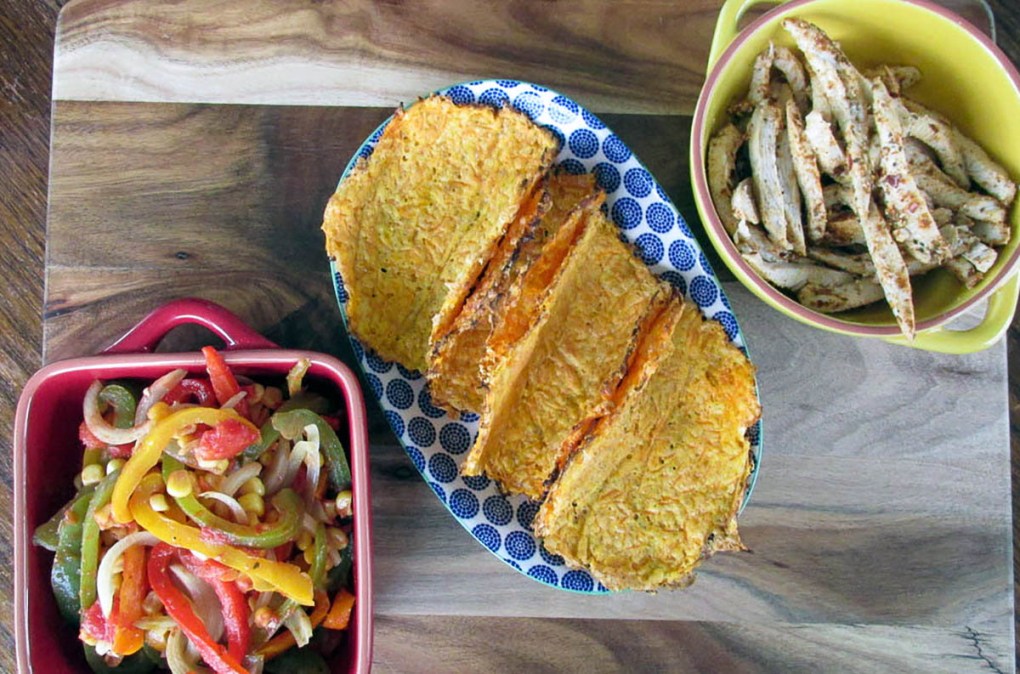
I enjoy using egg wraps with my tacos, and while traditional corn taco shells are great, I sometimes want to increase my vegetable intake. In the past, I was quite creative in sneaking vegetables into my children’s diets. Carrot taco shells were one of my sneaky ways to get kids to eat veggies without complaint, and now they are my go-to method for using up those carrots in the fridge before they start looking sad.
Worth the effort
I will be honest, these taco shells take a little bit of effort; they probably aren’t an easy option for a weeknight, but if you make them on the weekend, they will keep well in the fridge in an airtight container. If you are making them ahead of time, they are easy to re-crisp in the oven or in the trusty air fryer.
Carrot taco shells recipe
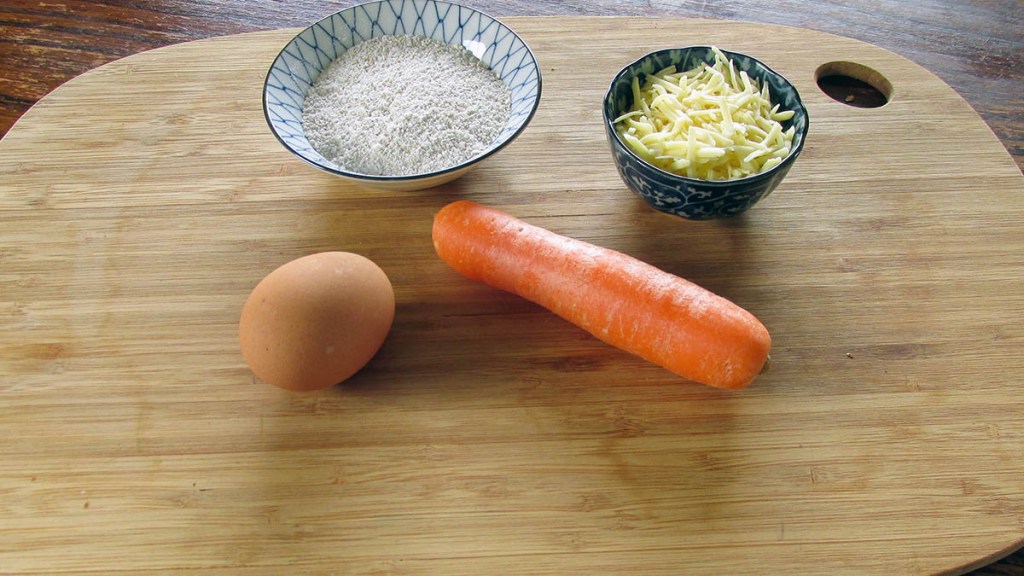
Ingredients
200g carrots, cooked and grated
75g cheese, grated
2 eggs
3 tbsp. Oat flour
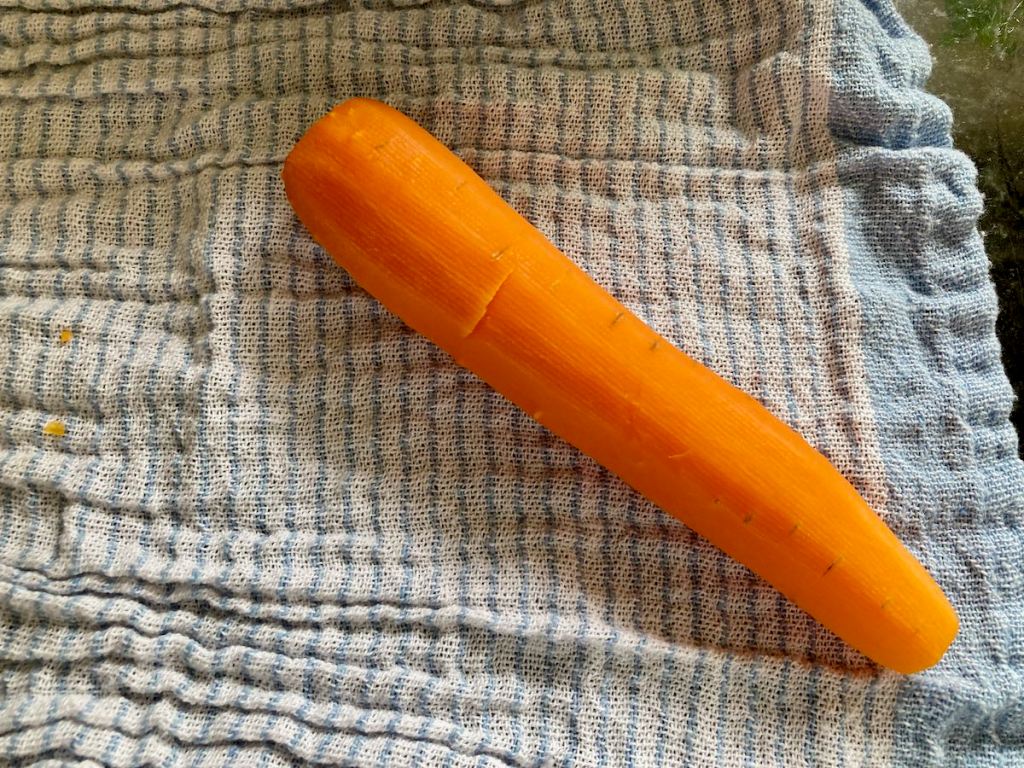
Peel the carrots and cook them in boiling water for about 10 minutes.
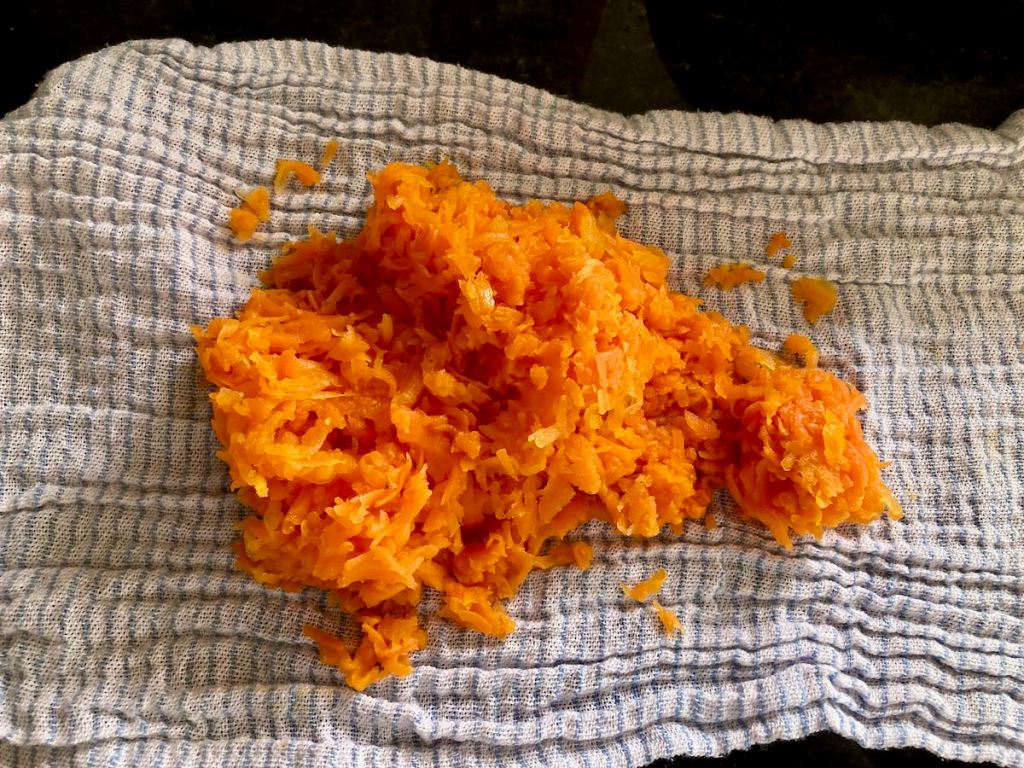
Drain the carrots and let them cool before grating the carrots.
Squeeze out the excess water from the grated carrots, so the taco shells are not too soggy.
Place the carrots into a bowl, add the cheese eggs and flour, and then mix everything together.
Line a baking tray with baking paper or a silicone liner.
Preheat the oven to 200 degrees C/ 390 degrees F
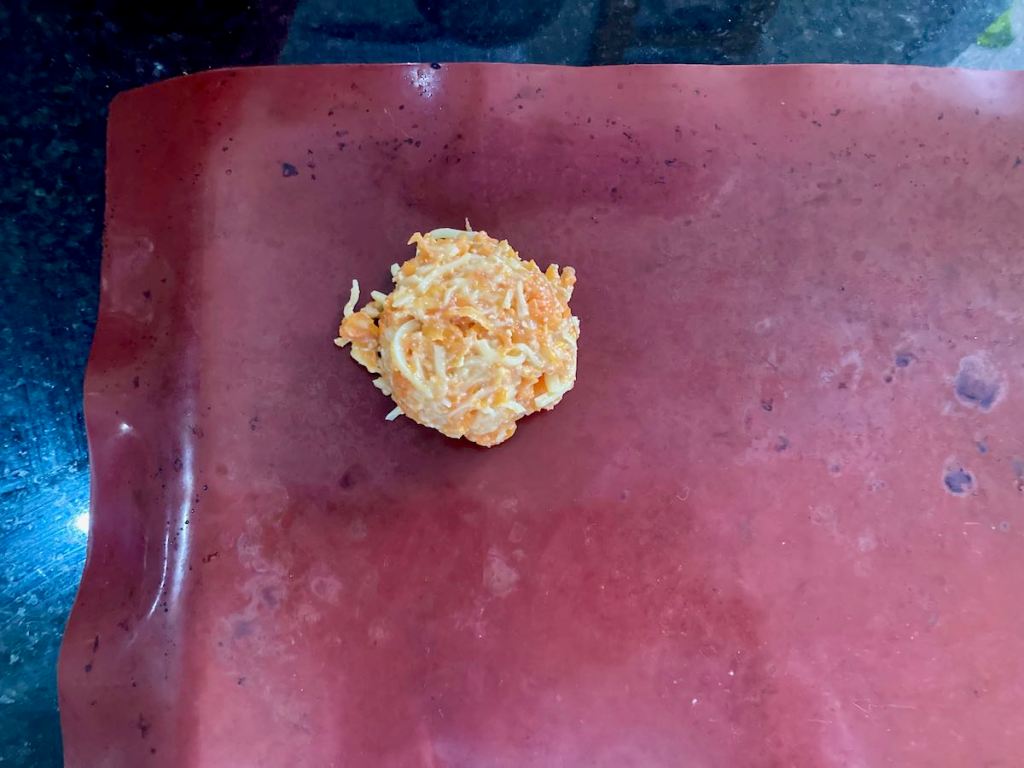
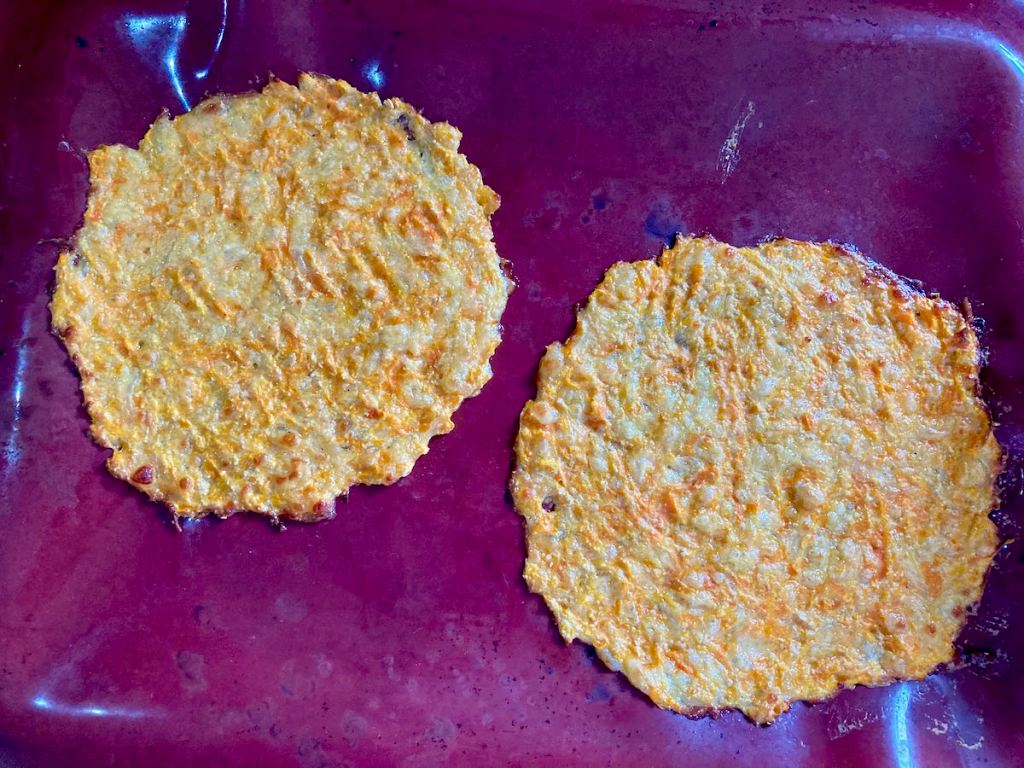
Use an ice cream scoop to portion out the carrot mix onto the lined baking paper, use your fingers to flatten out each portion into a thin disc.
Bake at 200C for 15 minutes or until crispy around the edges.
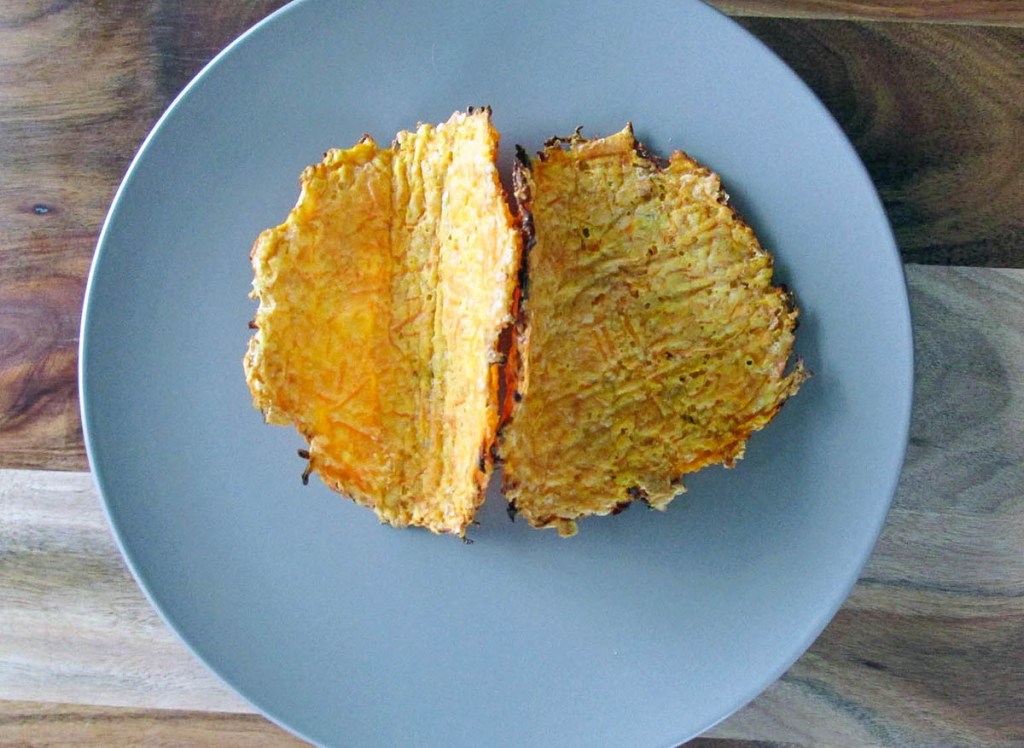
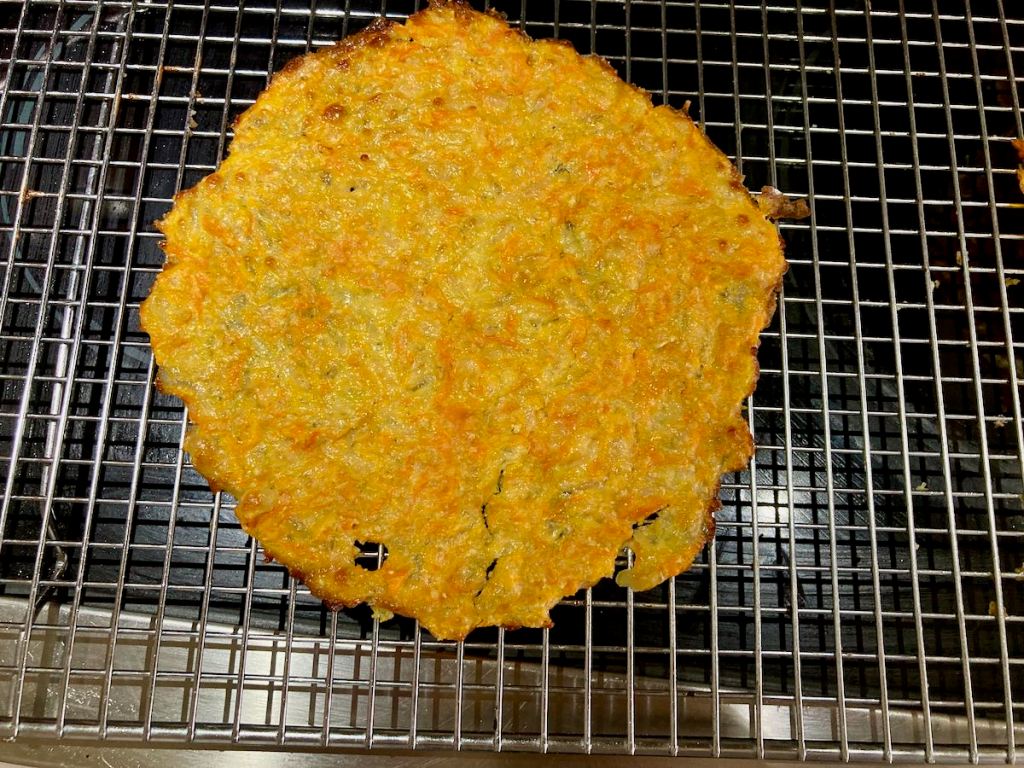
Allow the discs to cool for a few minutes then gently remove the shells from the baking paper or a silicone liner. If you would like to shape the shells, you can lay them over a bottle or rolling pin.
As the shells cool, they will harden slightly.
Fill the shells with your choice of taco filling and they are ready to go.
These taco sheels are ideal for a low carb taco Tuesday
Credit: Cath @ easycleaneats
Ingredients
200g carrots, cooked and grated
75g cheese, grated
2 eggs
3 tbsp. Buckwheat flour
Directions
Peel the carrots and cook them in boiling water for about 10 minutes.
Drain the carrots and let them cool before grating them.
Squeeze out the excess water from the grated carrots, so the taco shells are not too soggy.
Place the carrots into a bowl, add the cheese, eggs and flour, and then mix everything together.
Line a baking tray with baking paper or a silicone liner.
Preheat the oven to 200 degrees C/ 390 degrees F
Use an ice cream scoop to portion out the carrot mix onto the lined baking paper, and use your fingers to flatten out each portion into a thin disc.
Bake at 200 °C for 15 minutes or until crispy around the edges.
Allow the discs to cool for a few minutes, then gently remove the shells from the baking paper or a silicone liner. If you want to shape the shells, you can lay them over a bottle or rolling pin.
As the shells cool, they will harden slightly.
Fill the shells with your choice of taco filling, and they are ready to go.
Nutrition
Per Serving: 64 calories; 3.8 g fat; 4.4 g carbohydrates; 3.5 g protein
Equipment
Grater
Knife
Chopping board
Bowl
Baking tray
Spatula
Ice cream scoop
Cooling rack
Nutritional disclaimer
Nutrition information is provided as an estimate based on the ingredients used and available in my area (New Zealand). The nutritional information is here to help you understand the recipe; I use MyFitnessPal to generate my estimates. For more accurate nutritional information, please use a nutritional calculator with the ingredients in your area.
I’ve been revisiting recipes that have been some of my old-school recipes and favourites that were staples when I got started eating clean. I first posted this recipe in 2015; at that time, my step kids were fussy, vegetables had to be hidden and disguised, and there was no potential for intense flavours or spice.
As the kids grew, my recipes changed organically to meet their palates and preferences. I’ve updated this recipe because of that, but fear not; the original recipe suitable for kids and less developed palates is at the bottom of the post.
Hot lasagne fresh from the oven
Clean eating take of a classic
This was one of the first meals I made with a pasta alternative; much like replacing pasta with zoodles/coodles. I was always game to sneak some extra vegetables into the family meals, but this is one of the few meals I don’t need to hide the vegetables at all. The popular opinion of the kids back then was that this lasagne was better than one made with traditional pasta. I can’t say I disagree. As times have changed and this lasagne recipe is no longer entirely consumed in one sitting, it has become one of my favourite freezer meals. I can either make it in bulk and portion it out to enjoy some comfort food when needed or have a tray in the freezer for when I have company over.
Secret to success
The secret to a good lasagna is the depth of flavour. Flavour isn’t instant; it takes time and some effort. When I’m making lasagna, I tend to make the meat sauce the day before to let the herbs get to know the meat and sauce, mingle, and start the flavour party. The longer you leave the meat and herbs to party, the better your lasagna will taste.
Pasta free lasagne recipe
Lasagne ingredients
Ingredients
500g minced beef
1 onion finely diced
2 celery sticks, finely chopped
1 can tomatoes, chopped
2 garlic cloves minced
1 tsp. basil
1 tsp. oregano
1 tbsp. red chilli flakes
1 tbsp. coconut oil
4 carrots cut into ribbons
2 cups cheese, grated
250g cottage cheese
Instructions
Add the coconut oil to a stockpot over medium heat.
Add the onion and cook until the onion starts to soften.
Add the onion to a stockpot and cook until the onion starts to soften
Add the garlic, basil, chilli and oregano to the pan.
Add the garlic, basil and oregano to the panCook until the onion is softening
Add the beef mince to the pan and cook the beef until it browns.
Add the beef mince to the panCook the beef until it browns
Add the chopped tomatoes to the pan along with the chopped celery.
Add the celery Add the chopped tomatoes to the pan
Simmer the mixture for 10 minutes, then turn off the heat.
Simmer the mixture for 10 minutes then turn off the heat
While the meat and sauce are simmering, take a baking dish and ensure you have enough carrot ribbons to build your lasagne layers.
When the meat simmers, you can start to layer the lasagne.
Start with a carrot ribbons layer at the baking dish’s bottom.
Start with a layer of carrot ribbons at the bottom of the baking dish.
Next, add half the meat and sauce to create a layer in the baking dish.
Next add a half of the meat and sauce to create a layer in the baking dish.Create a layer in the baking dish.
Add another layer of carrot ribbons on top of the meat.
Next, add half of the cottage cheese and spread it across the dish, then top it with half the grated cheese.
Next add half of the cottage cheeseTop with half the cheese
Top with half the cheese, and another layer of carrot ribbons.
Repeat the layers with meat, carrot ribbons, cottage cheese and grated cheese.
If you can leave the lasagna overnight before baking it, the longer you leave it, the better it will taste.
Bake the lasagne at 180 degrees C/ 350 degrees F for 30 minutes.
Remove the lasagne from the oven when the cheese is brown and bubbly.
Bake the lasagne at 180 degrees C/ 350 degrees F for 30 minutes
Let the lasagne rest for 5 minutes before slicing and serving.
Let the lasagne rest for 5 minutes before slicing and serving
Add the coconut oil to a stockpot over medium heat.
Add the onion and cook until the onion starts to soften.
Add the garlic, basil, chilli and oregano to the pan.
Add the beef mince to the pan and cook the beef until it browns.
Add the chopped tomatoes to the pan along with the chopped celery.
Simmer the mixture for 10 minutes, then turn off the heat.
While the meat and sauce are simmering, take a baking dish and ensure you have enough carrot ribbons to build your lasagne layers.
When the meat simmers, you can start to layer the lasagne.
Start with a carrot ribbons layer at the baking dish’s bottom.
Next, add half the meat and sauce to create a layer in the baking dish.
Add another layer of carrot ribbons on top of the meat.
Next, add half of the cottage cheese and spread it across the dish, then top it with half the grated cheese.
Top with half the cheese, and another layer of carrot ribbons.
Repeat the layers with meat, carrot ribbons, cottage cheese and grated cheese.
If you can leave the lasagna overnight before baking it, the longer you leave it, the better it will taste.
Bake the lasagne at 180 degrees C/ 350 degrees F for 30 minutes.
Remove the lasagne from the oven when the cheese is brown and bubbly.
Let the lasagne rest for 5 minutes before slicing and serving.
Nutrition
Per Serving: 350 calories; 25.7 g fat; 8.2 g carbohydrates; 21.7 g protein
Equipment
Stockpot
Wooden spoon
Vegetable peeler
Knife
Grater
Chopping board
Baking dish
Nutritional disclaimer
Nutrition information is provided as an estimate based on the ingredients used and available in my area (New Zealand). The nutritional information is here to help you understand the recipe; I use MyFitnessPal to generate my estimates. For more accurate nutritional information, please use a nutritional calculator with the ingredients in your area.
Pasta free lasagne – kid friendly recipe
Ingredients
500g minced beef
1 courgette diced
1 onion finely diced
1 red pepper diced
1 can tomatoes
2 garlic cloves minced
1 tsp. basil
1 tsp. oregano
1 tbsp. coconut oil
2 courgettes cut into ribbons
2 carrots cut into ribbons
2 cups cheese, grated
Instructions
In a stockpot heat the coconut oil, garlic, onion basil and oregano over a medium heat, cook until the onion is soft.
Add the beef mince and cook off until browned.
Pour in the tomatoes along with the diced vegetables to the meat and cook for 10 minutes.
In a baking dish create a layer of carrot ribbons to cover the bottom add a layer of meat then cover with a layer of courgette ribbons, top with cheese.
Repeat until you reach the top of the baking dish, top the final layer with cheese.
If you can leave the lasagne overnight before you bake it, the longer you leave it the better it will taste.
Bake the lasagne at 180 degrees C/ 350 degrees F for 30 minutes.
When the cheese is brown and bubbly remove the lasagne from the oven.
Let the lasagne rest for 5 minutes before slicing and serving.