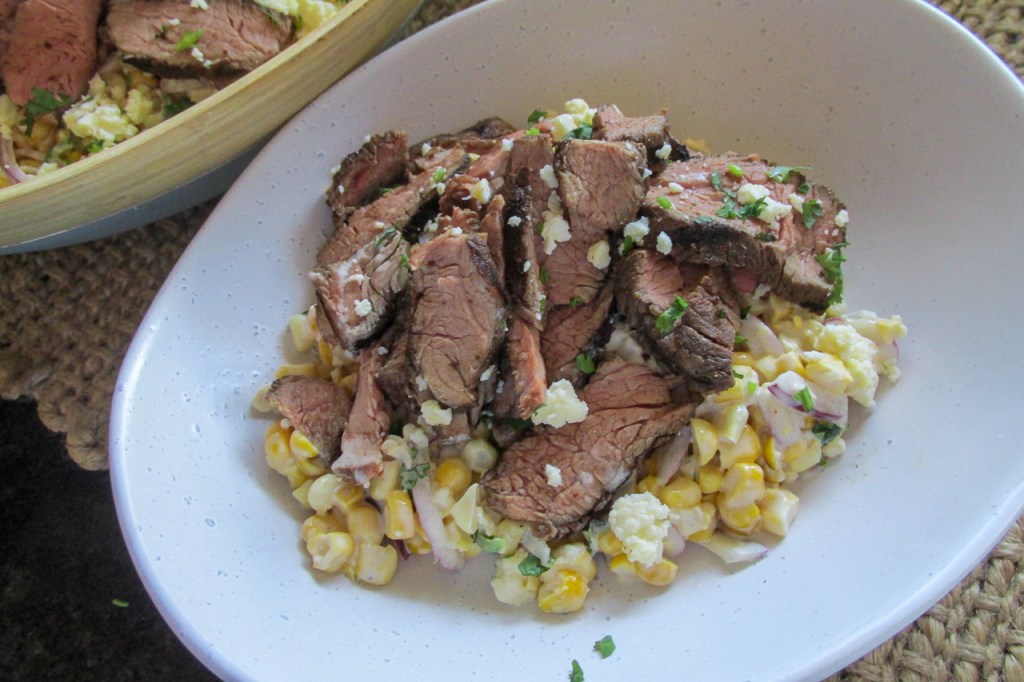
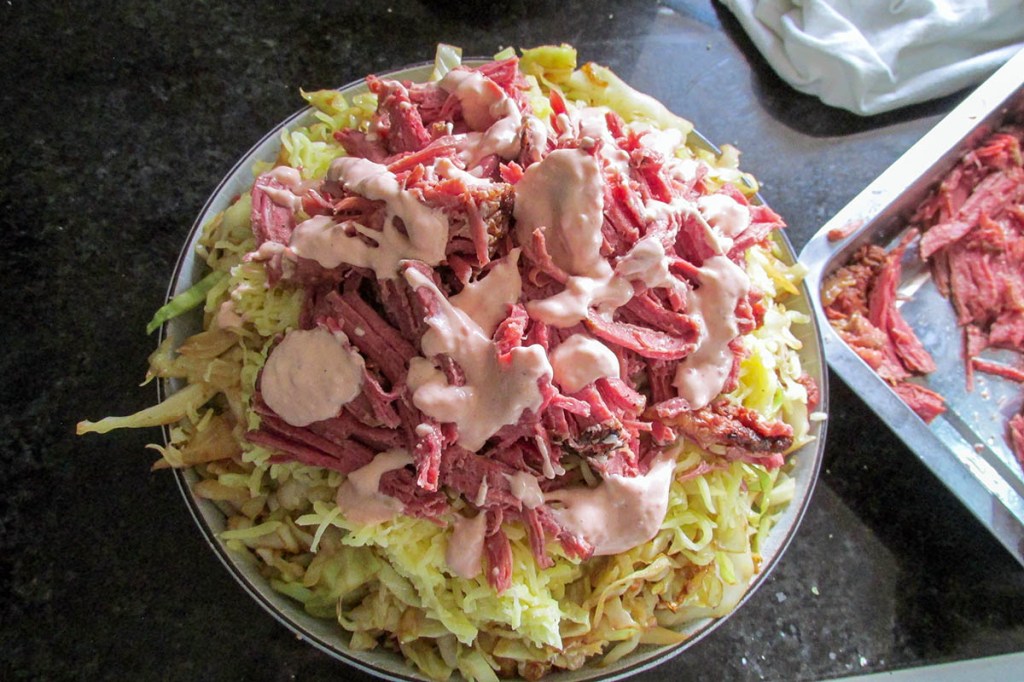
Last Christmas, I spent some quality time with friends playing Unstable Unicorns, Settlers of Catan and Exploding Kittens. To go with all of the fun games, there were a lot of drinks and good food to keep us going. One of my favourite dishes was the trusty Reuben bowl. It is always a crowd pleaser, and on long, hot summer days, it is perfect for grazing between fun activities.
Switching up the traditional Reuben
I’m a big fan of the Reuben sandwich, the combination of pastrami, sauerkraut and dressing is always a winner in my book. While I love the traditional flavours, I swear there is something wrong with my brain; it always looks for ways to adapt recipes to make them more interesting or change them up in some way. This recipe is an excellent example of my brain doing what it does best. My corned beef has a great crust and flavour, thanks to the seared outside and brine. It is a worthy replacement for pastrami and is much easier to get than brisket. To switch out sauerkraut was easy. I know from experience that corned beef and cabbage go together perfectly, so that was a no-brainer. The challenge was finding a flavour that could replace the tang of the sauerkraut without overpowering the corned beef. It took a few tries before I landed on sesame seed oil; it may appear to be an odd flavour to go with, but trust me, it works. The sesame seed oil adds a rich, nutty flavour to the cabbage that complements the other flavours without being overpowering. While this recipe doesn’t look anything like the traditional Reuben, I promise that if you give it a try, you won’t be disappointed.
Reuben bowl recipe
Ingredients
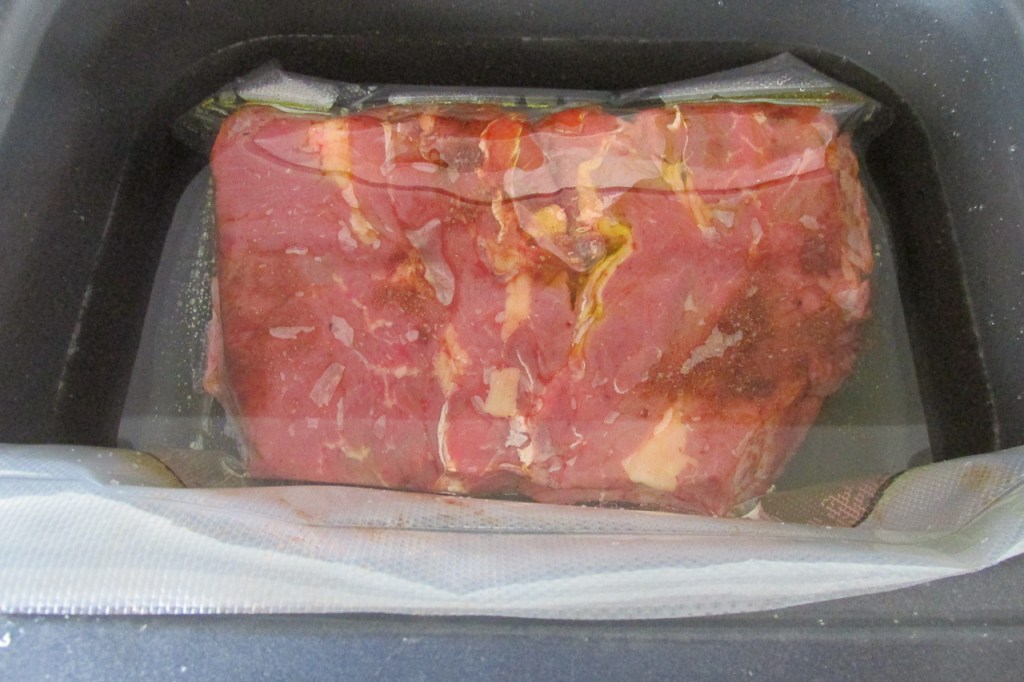
1kg corned beef, cooked
1 head cabbage, cut into strips
3 tbsp. Sesame oil
salt and pepper
2 garlic cloves, minced
250g mozzarella cheese
3/4 cup thousand Island dressing
Instructions
Cook your corned beef, you can check out my recipe for corned beef.
Take a large pot and place it over a medium heat.
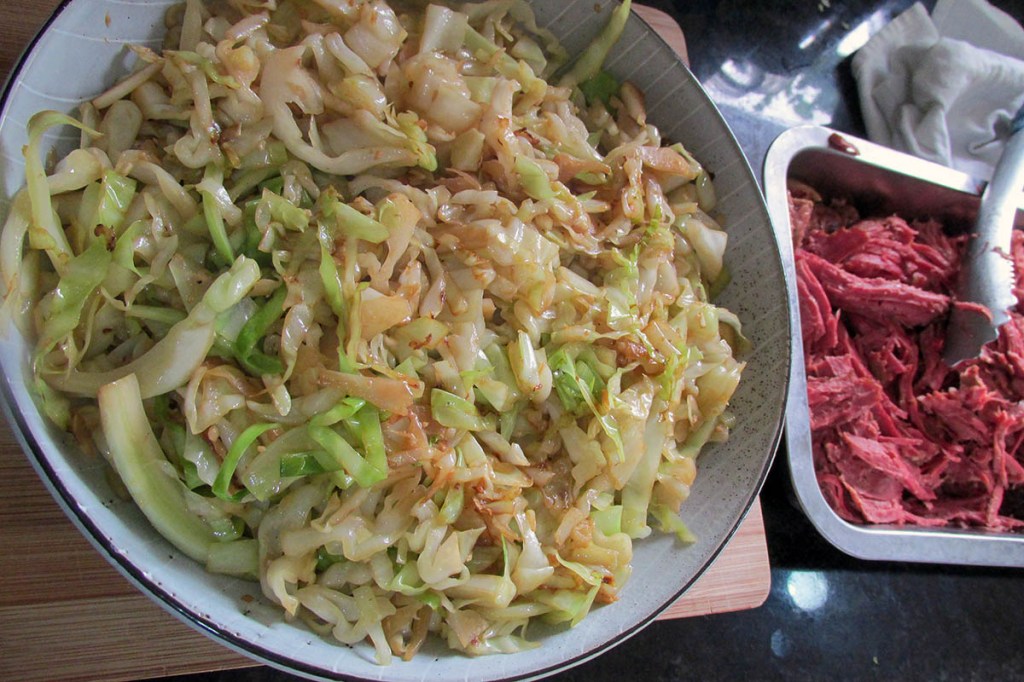
Heat a little of the sesame oil and sauté the cabbage in batches with some of the garlic.
Take care not to burn the garlic while the cabbage is cooking.
Season the cabbage as it is cooking.
Place the sautéed cabbage in a large bowl and sprinkle over half of the cheese.
Spread the corned beef on top of the cabbage and top with the remaining cheese.
Heat a little of the sesame oil and sauté the cabbage in batches with some of the garlic.
Take care not to burn the garlic while the cabbage is cooking.
Season the cabbage as it is cooking.
Place the sautéed cabbage in a large bowl and sprinkle over half of the cheese.
Spread the corned beef on top of the cabbage and top with the remaining cheese.
Drizzle with dressing, then serve.
Nutrition
Per Serving: 424 calories; 19g fat; 20g carbohydrates; 26g protein
Equipment
Knife
Chopping board
Measuring cups
Measuring spoons
Kitchen scale
Large pan
Tongs
Nutritional disclaimer
Nutrition information is provided as an estimate based on the ingredients used and available in my area (New Zealand). The nutritional information is here to help you understand the recipe; I use MyFitnessPal to generate my estimates. For more accurate nutritional information, please use a nutritional calculator with the ingredients in your area.
I am one of those unfortunate people who are allergic to not only peanuts but also tree nuts. When it comes to food options, not having nuts on the menu can be challenging at times and frustrating at others. There are so many foods I would love to try or eat regularly, but will never get the chance, thanks to nuts. Not eating nuts doesn’t have to be the end of the world; there are always replacements and alternatives that mean you can have a nut-free option. This recipe is my attempt to create a nut-free version of a usually nut-packed recipe.
Crackers are back on the menu
Crackers and cheese, oh, how I had missed thee. For a long time, crackers were off the menu because the wheat flour and sugar didn’t agree with my system. I wanted to find a suitable replacement that didn’t taste like cardboard.
Perfect cracker
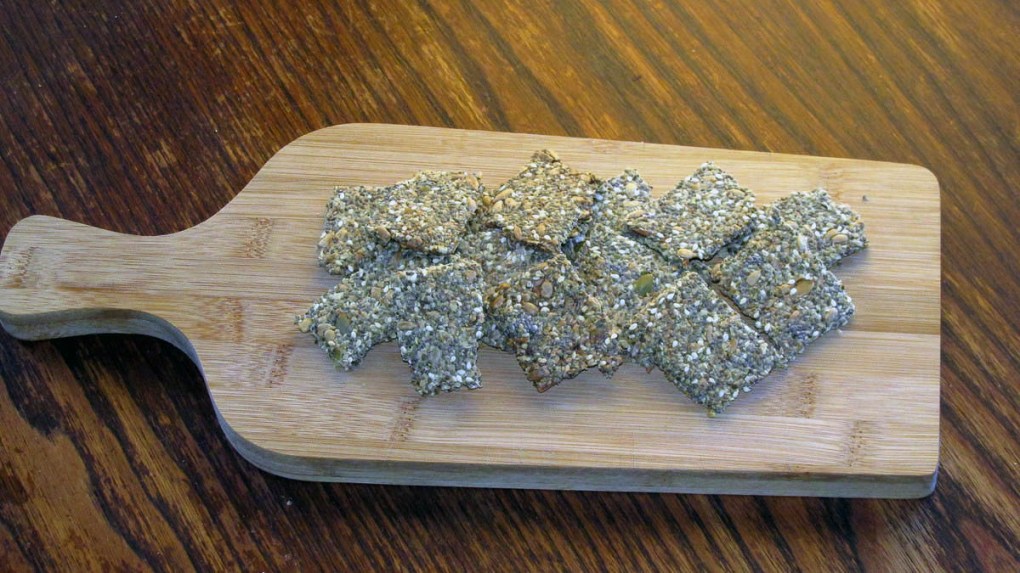
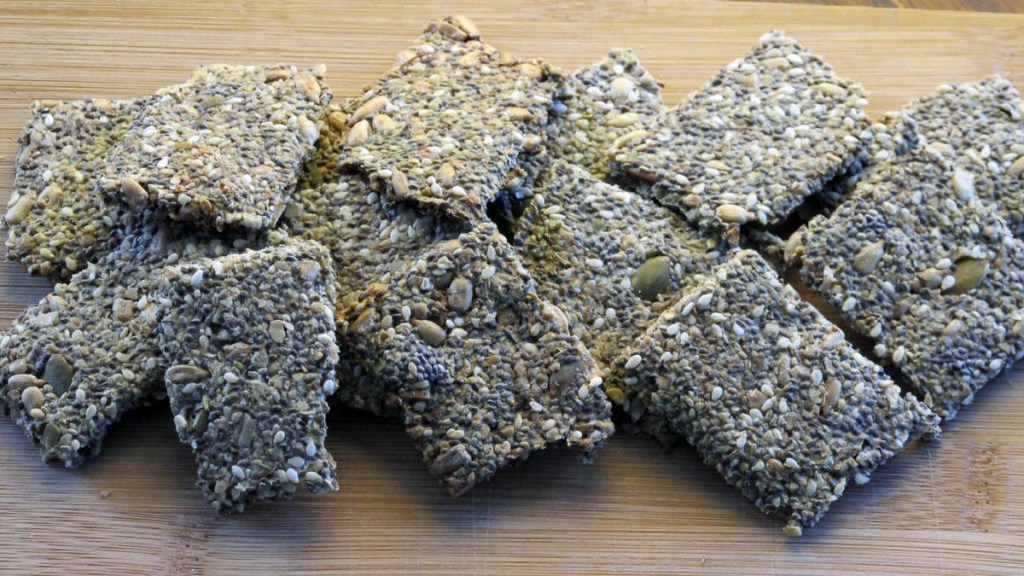
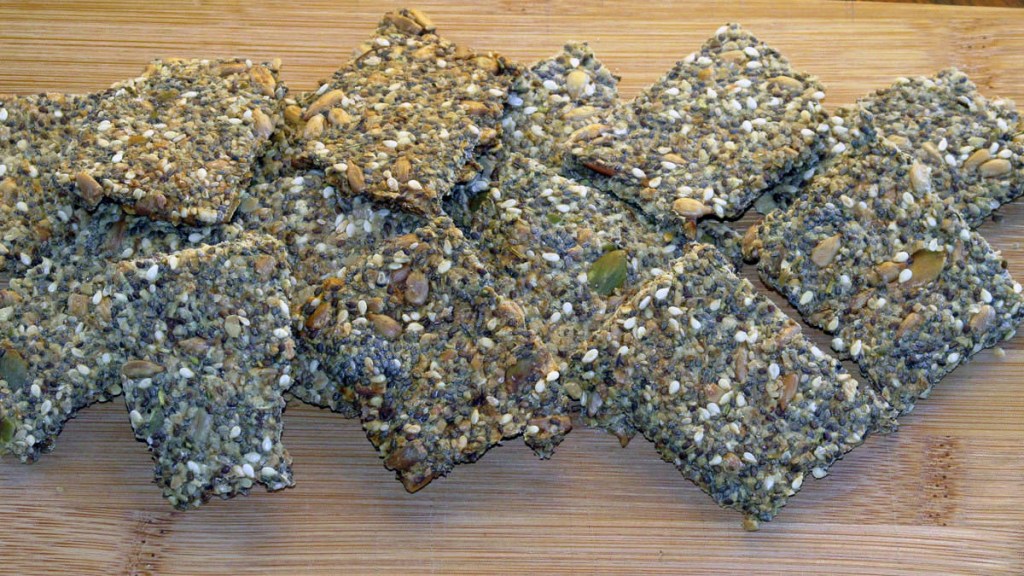
After a little trial and error, I came up with these nut-free crackers that are family-friendly and guilt-free. There are no fillers or gums in these crackers; the water and chia seeds bind everything together without ending up with soggy crackers. The recipe below creates plain and unflavoured crackers; they are an excellent starting point to add any flavour you want.
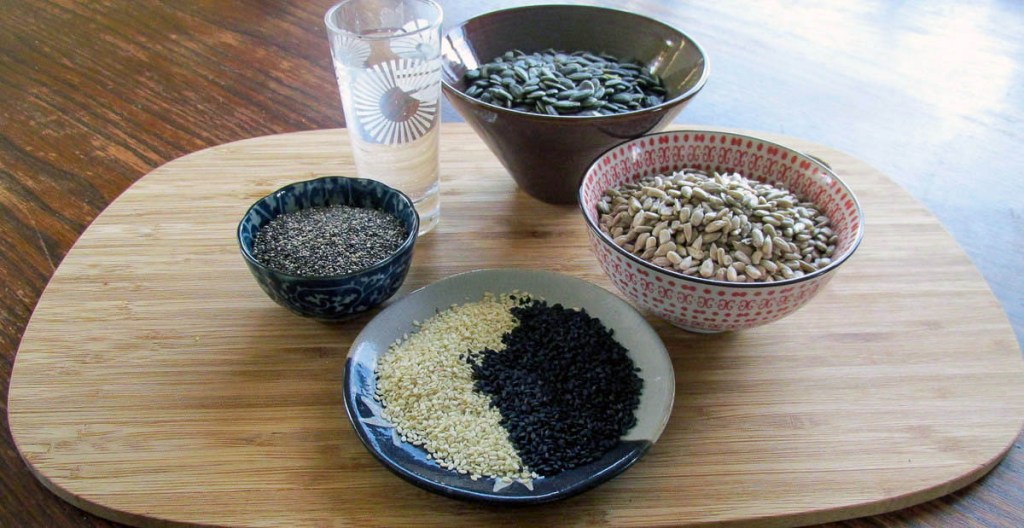
In a bowl, mix chia seeds with water and let them sit for 10 minutes. The chia seeds will then soak up the water and become sticky.
In a food processor, blend half of the sunflower seeds and pumpkin seeds until they are ground to a powder consistency.
Transfer the ground seeds to a bowl.
Add the remaining seeds to the bowl along with any seasoning and mix well.
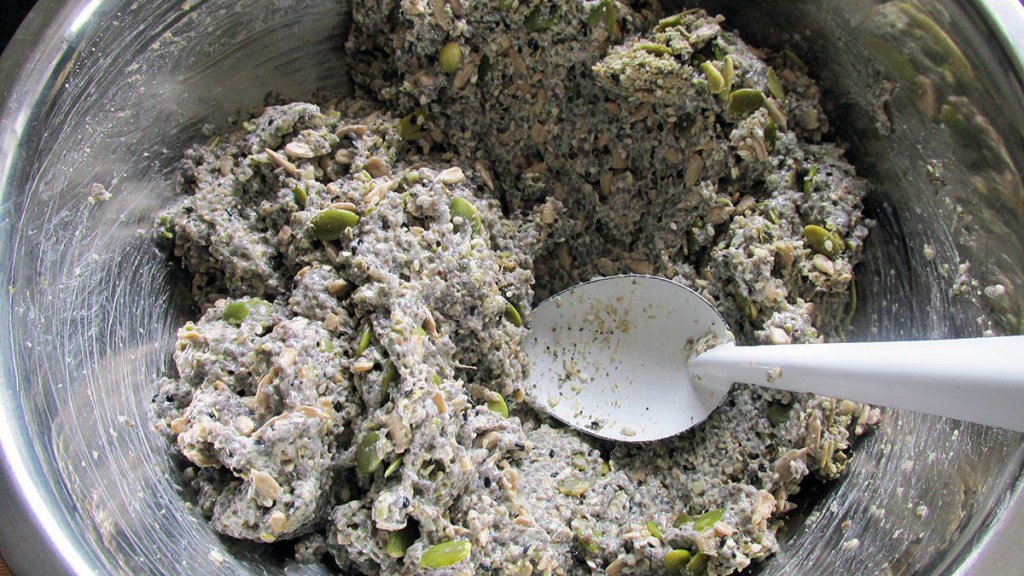
Add the chia seed mix to the bowl and make sure it is well combined.
Preheat the oven to 170 degrees C/ 330 degrees F.
Line a baking tray with baking paper or a silicone liner and spread the seed mix over the tray.
The mix should be thin but without holes.
Use a knife to score marks in the mix, making it easier to break into crackers later.
Bake for 1 hour at 170 degrees C/ 330 degrees F.
When the crackers are completely dry and a light golden colour, take them out of the oven.
Allow the crackers to cool for a few minutes before breaking them along the score marks.
Allow the crackers to cool completely before serving or storing.
Nutrition
Per Serving:50 calories; 4g fat; 2g carbohydrates; 2g protein
Try this with
Cheese
Dips
Equipment
Small mixing bowl
Large mixing bowl
Food processor or spice mill
Spatula
Baking tray
Baking paper or silicone liner
Nutritional disclaimer
Nutrition information is provided as an estimate based on the ingredients used and available in my area (New Zealand). The nutritional information is here to help you understand the recipe; I use MyFitnessPal to generate my estimates. For more accurate nutritional information, please use a nutritional calculator with the ingredients in your area.
For a long time on a weekend, when I asked the question, ‘What do you want for lunch?’ The answer was ‘Do we have any tuna?’. I won’t go into how much I dislike it when people answer a question with a question. Let’s focus on the recurring request for tuna every weekend. Every week, the same request is made for a tuna cheese melt. I don’t have any issues providing tuna for lunch; I get bored with the leftover tuna in the fridge and don’t want to eat it. Life is too short to eat that much tuna.
How to make tuna interesting
I find tinned tuna very difficult to eat on its own. I know it is good for me, but it is so boring! I looked for an alternative to the standard tuna melt to make tuna more interesting. I came up with these avocado tuna melts.
Two birds with one grill
I figured that if I had the grill on to make tuna melts on bread for kids, there would be no downside to having a different kind of tuna melt myself. A quick rummage in the fridge later, and the avocado tuna melt was born. Avocado is the perfect ingredient that makes the tuna less dull and adds a creamy texture that stands up to the grill’s heat.
If you want to use up those uneaten bits of tuna or that can in the pantry, give these melts a go.
Avocado tuna melt recipe
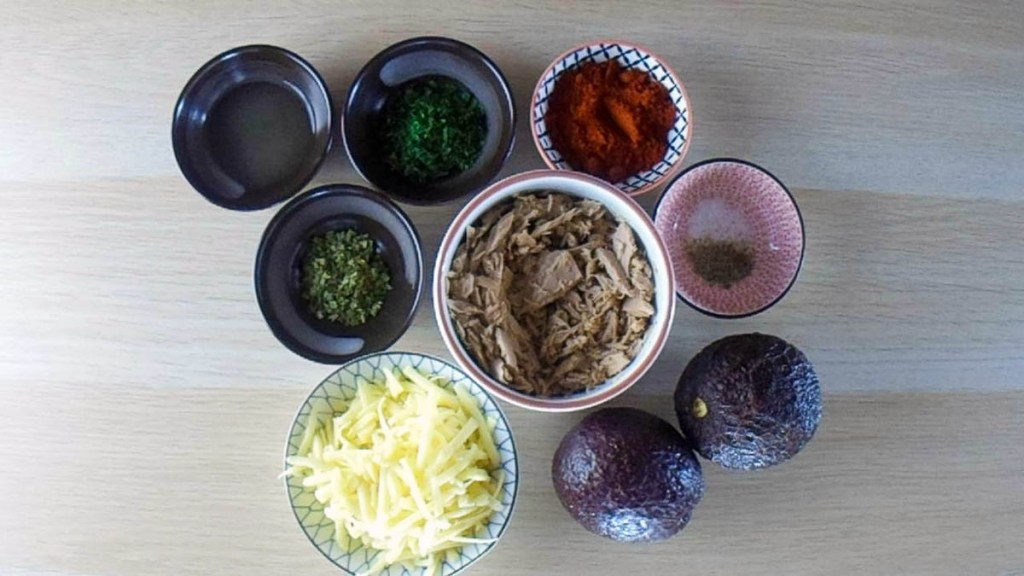
Avocado tuna melts ingredients
Ingredients
1 avocado
2 cans of tuna
2 tbsp. Parsley, chopped
1 tbsp. Lemon juice
1/2 tsp. smoked paprika
1/4 tsp. salt
1/4 tsp. black pepper
1/4 cup gruyere cheese, grated
2 tbsp. Chives, chopped
Instructions
Preheat the grill on the highest setting.
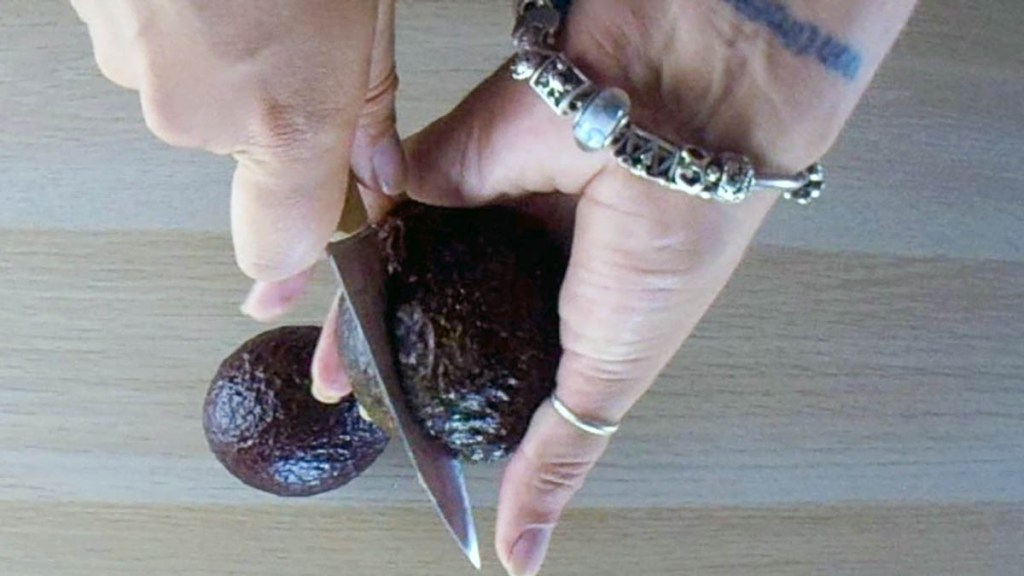
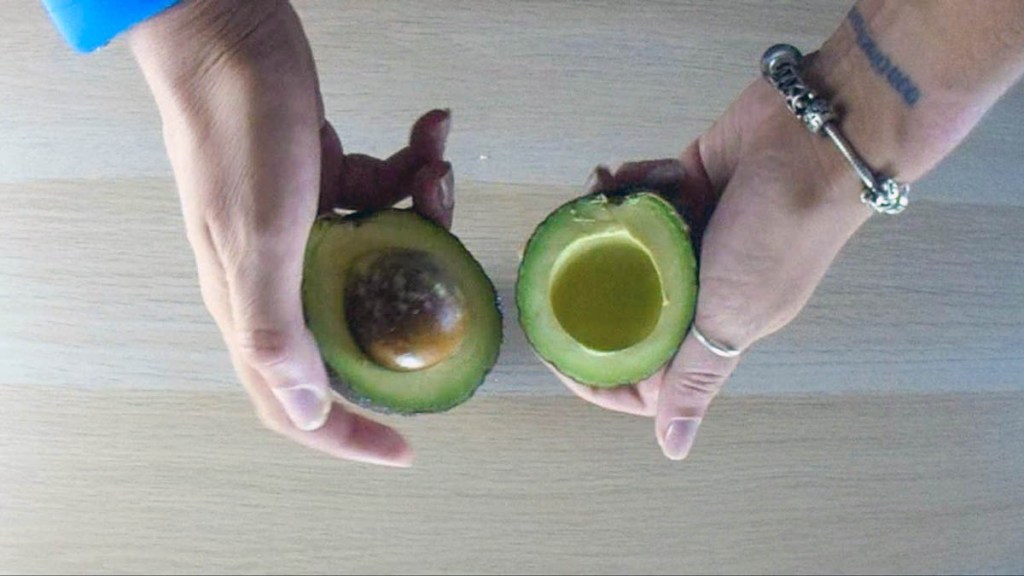
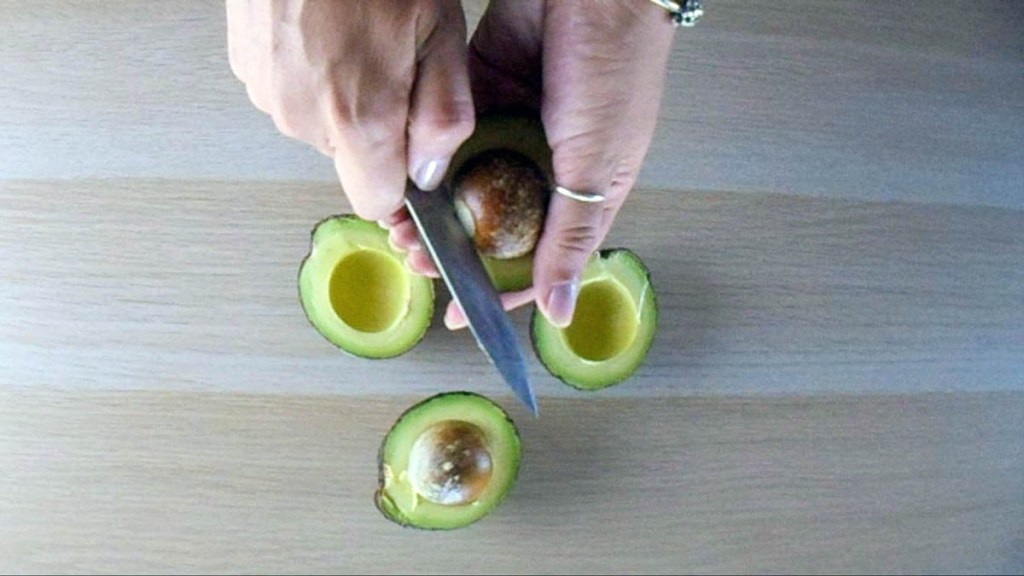
Cut the avocado in half lengthwise and remove the pit.
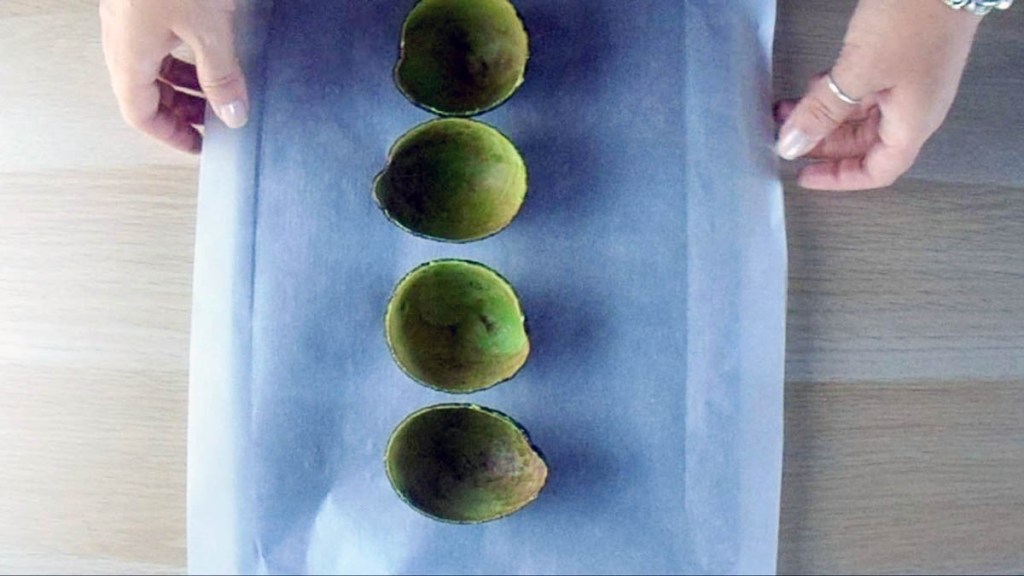
Cut the avocado in half lengthwise Cut the avocado in half lengthwise Remove the pit
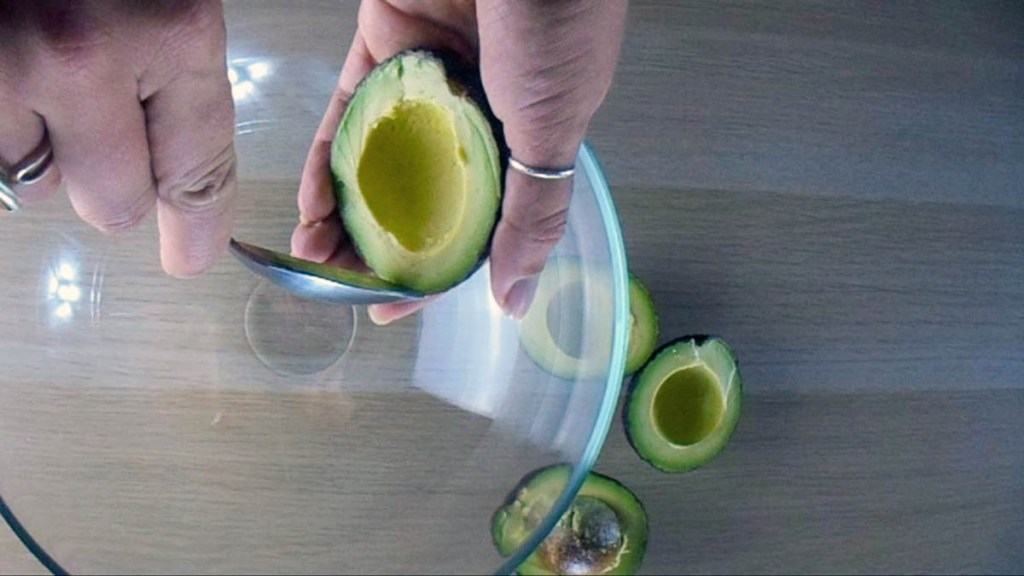
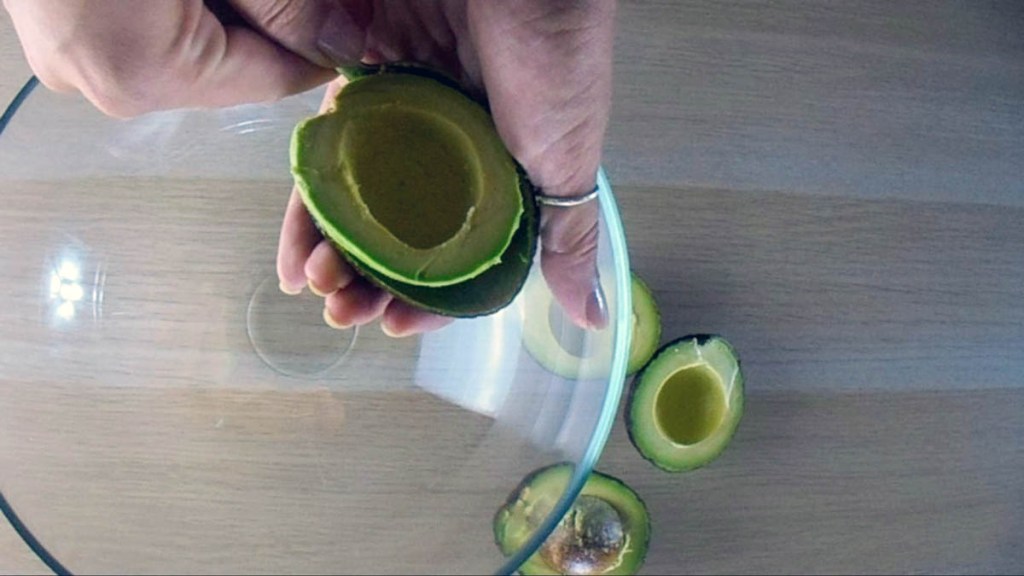
Scoop out the avocado flesh into a large mixing bowl.
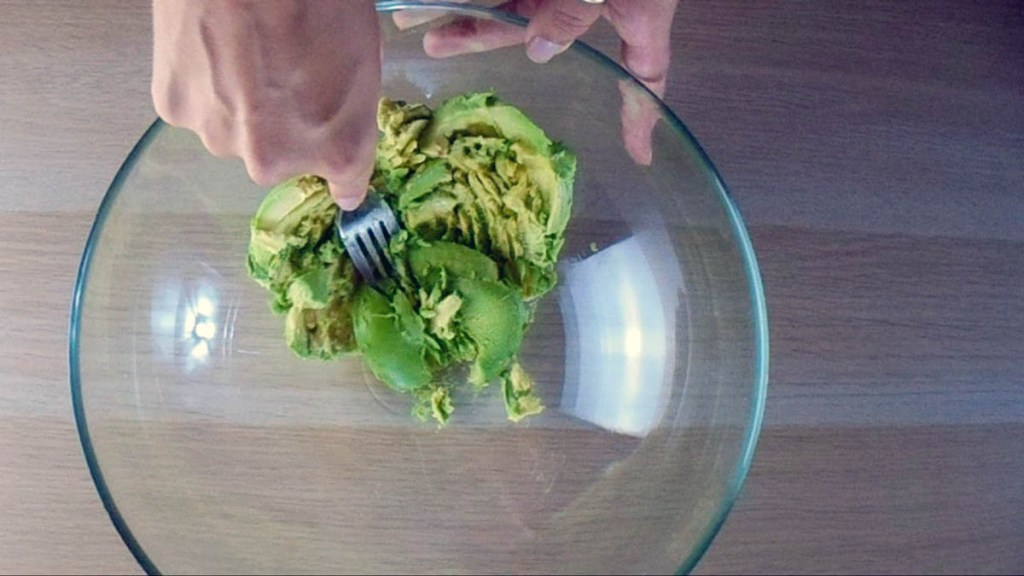
Scoop out the avocado fleshScoop out the avocado flesh into a large mixing bowl.
Put the avocado skins on a lined baking tray.
Mash the avocado with a fork.
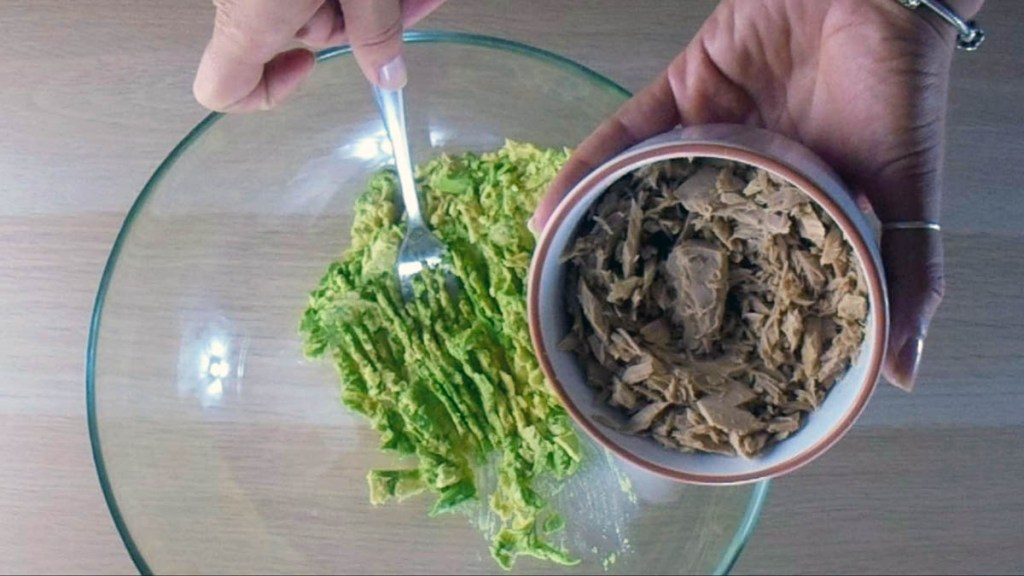
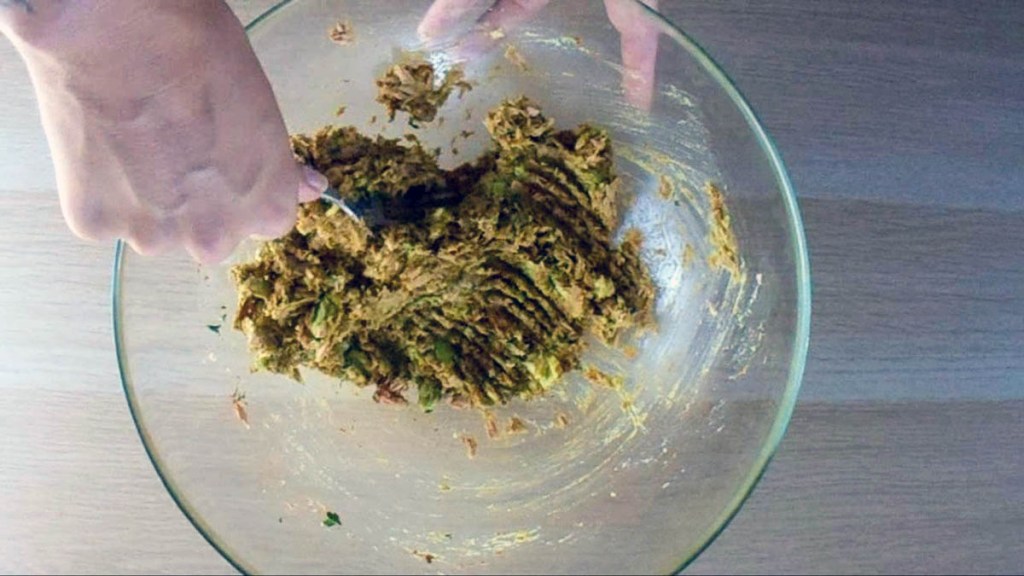
Add the tuna to the avocado and mix.
In a bowl, add the parsley, lemon juice, paprika, salt, and pepper.
In a the bowl add the parsley, lemon juice, paprika, salt, and pepper.
Mix well.
Mix well
Add the tuna avocado mix back into the avocado skin.
Add the tuna avocado mix back into the avocado skin then bake
Grill for 5 minutes so that the tuna and avocado start to colour.
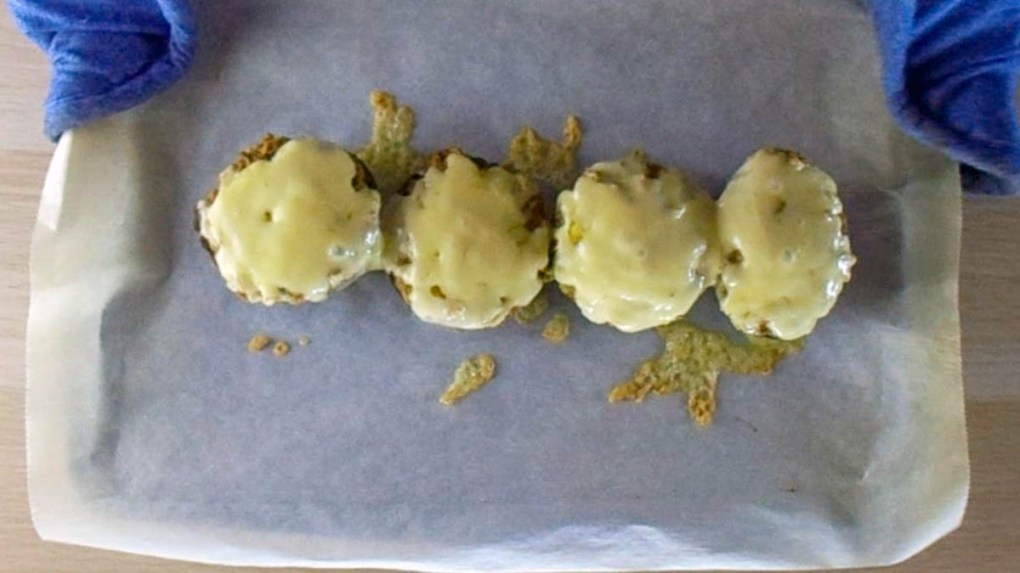
Top the tuna mix with the cheese and grill again to melt the cheese.
Top the tuna mix with the cheese and grill again to melt the cheese. Melt the cheese.
Avocado is the perfect ingredient that makes the tuna boring, adds a creamy texture that stands up to the heat of the grill.
Credit: Cath @ easycleaneats
Ingredients
1 avocado
2 cans of tuna
2 tbsp. Parsley, chopped
1 tbsp. Lemon juice
1/2 tsp. smoked paprika
1/4 tsp. salt
1/4 tsp. black pepper
1/4 cup gruyere cheese, grated
2 tbsp. Chives, chopped
Directions
Preheat the grill on the highest setting.
Cut the avocado in half lengthwise and remove the pit.
Scoop out the avocado flesh and coarsely chop it.
In a bowl, mix together the avocado, tuna, parsley, lemon juice, paprika, salt, and pepper.
Add the tuna avocado mix back into the avocado skin.
Grill for 5 minutes so that the tuna and avocado start to colour.
Top the tuna mix with the cheese and grill again to melt the cheese.
Garnish with chopped chives and serve.
Nutrition
Per Serving: 240 calories; 17 g fat; 8 g carbohydrates; 17 g protein
Equipment
Knife
Chopping board
Mixing bowl
Spoon
Fork
Baking tray
Measuring cups
Measuring spoons
Nutritional disclaimer
Nutrition information is provided as an estimate based on the ingredients used and available in my area (New Zealand). The nutritional information is here to help you understand the recipe; I use MyFitnessPal to generate my estimates. For more accurate nutritional information, please use a nutritional calculator with the ingredients in your area.
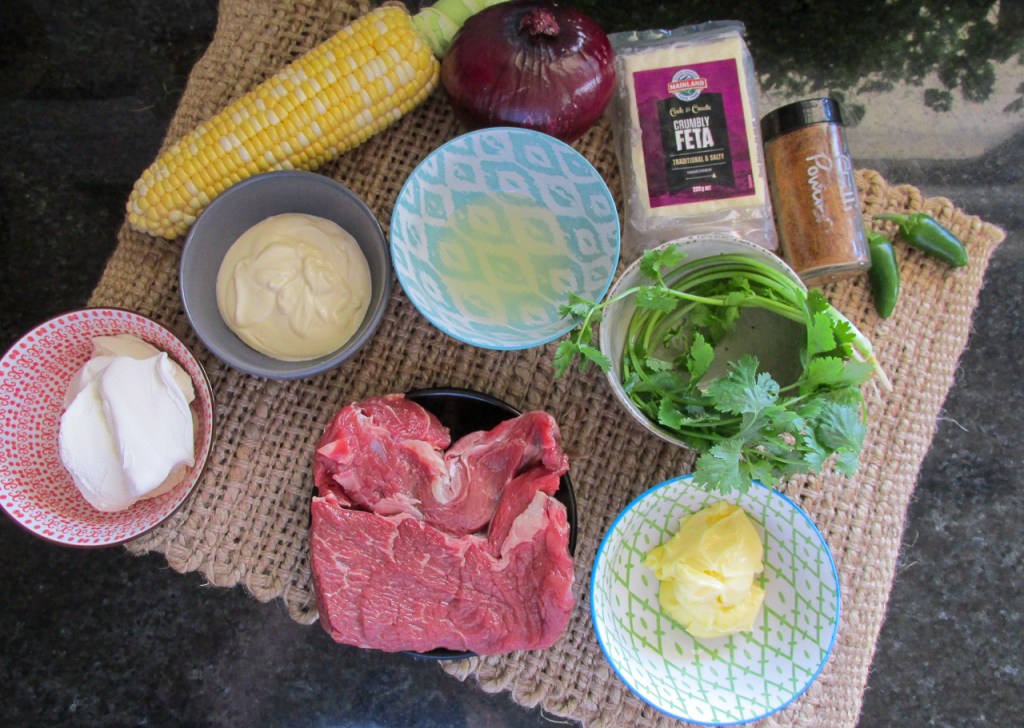
The weather has been warming up, and I want to spend more of my time outside enjoying the beauty New Zealand has to offer. When the weather warms up, I want to spend less time hanging out in a hot kitchen; what an excellent excuse to get the BBQ cleaned and fired up. I love cooking over real flames, and the added flavours from cooking over charcoal are hard to beat.
Fire + spicy + meat = awesome!
Op shop inspiration
I bought a backyard BBQ cookbook a few years back on a trip to the Op Shop up in Whangarei. I loved that it was a Man’s cookbook, all about Manly cooking over an open flame without the womenfolk getting in the way. The recipes are all simple and don’t have heaps of prep. They are designed to let the good ingredients and smoke do all the work. While I found the idea of manly cooking requiring no women other than to bring out beers highly amusing, the cooking style and simplicity of the recipes felt like a good fit for me; easy and clean. While skimming through the cookbook, I found the good old chicken and veg skewer recipe, and it got me thinking: Could you make the standard meat and veg skewer better? Yes, you can, or I wouldn’t be posting this recipe.
Tandoori skewers
My backyard BBQ cookbook got me thinking about other foods that use smoke and flames to add more flavour to the food; the answer was reasonably obvious: tandoori. While the tandoor is made of clay and doesn’t use charcoal, the principles are the same- smoke, flames, and meat give you amazing flavours. I always have a jar of tandoori-style spice mix in my pantry to add a bit of extra spice to dinner when needed. I decided to combine BBQ and Indian inspired flavours to deliver something spicy and new for dinner.
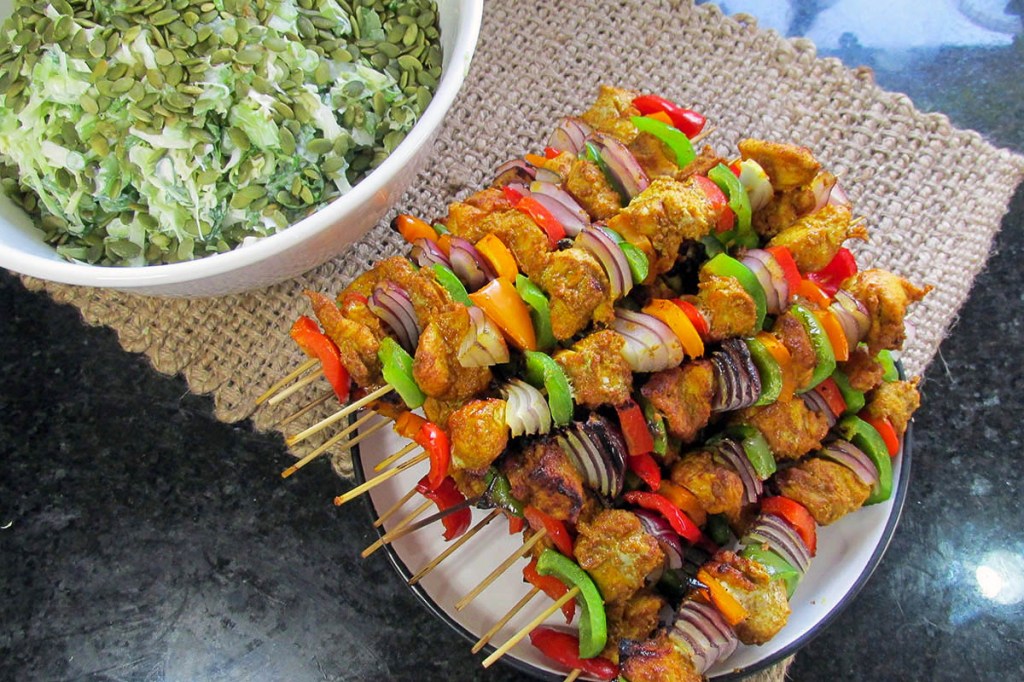
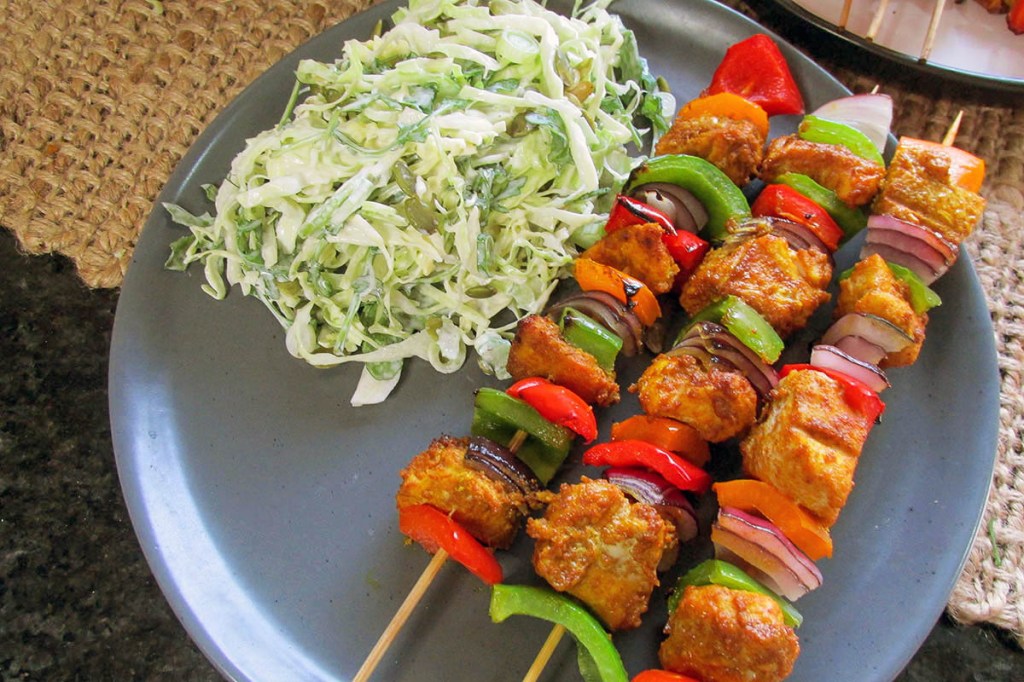
Tandoori chicken skewers
Not to hot
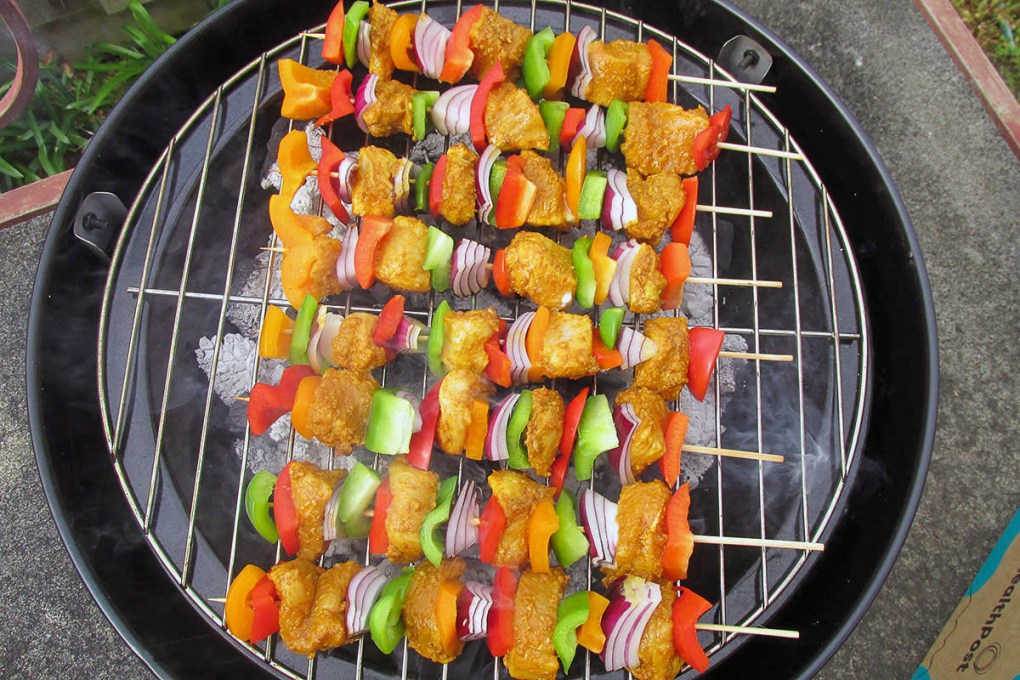
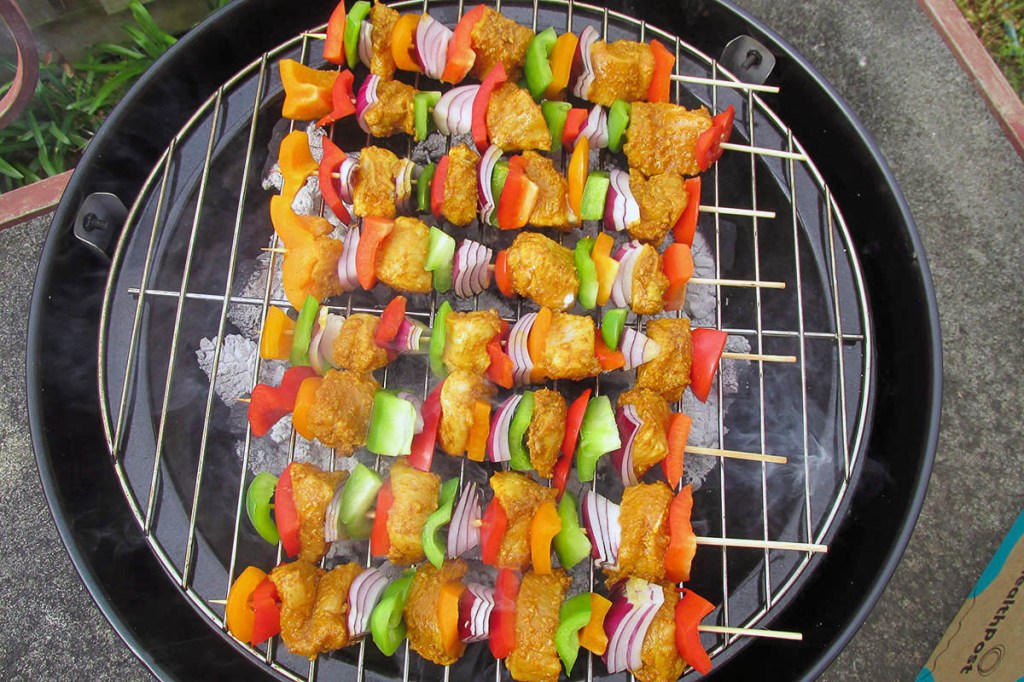
While I have nothing against the gas BBQ, I prefer the charcoal BBQ results. Charcoal BBQS take longer to set up and start cooking with, but once they are up and running, they are straightforward to use and can look after themselves and cook your food without too much effort from you. I am not a BBQ expert, but I know what works well for my cooking style and the recipes I have created or used. For this recipe, I set my BBQ up for indirect heat and put the skewers on to cook once all the charcoal had burned and was white. The BBQ internal temperature was around 300 degrees C or 600 degrees F, meaning the meat and veggies were cooked in minutes. Getting the temperature right before you put your food on the BBQ is key. If you put the food on when the BBQ is too hot, you end up with meat that is burned on the outside and raw in the middle. This is dangerous when you are cooking chicken.
Tandoori chicken skewers recipe
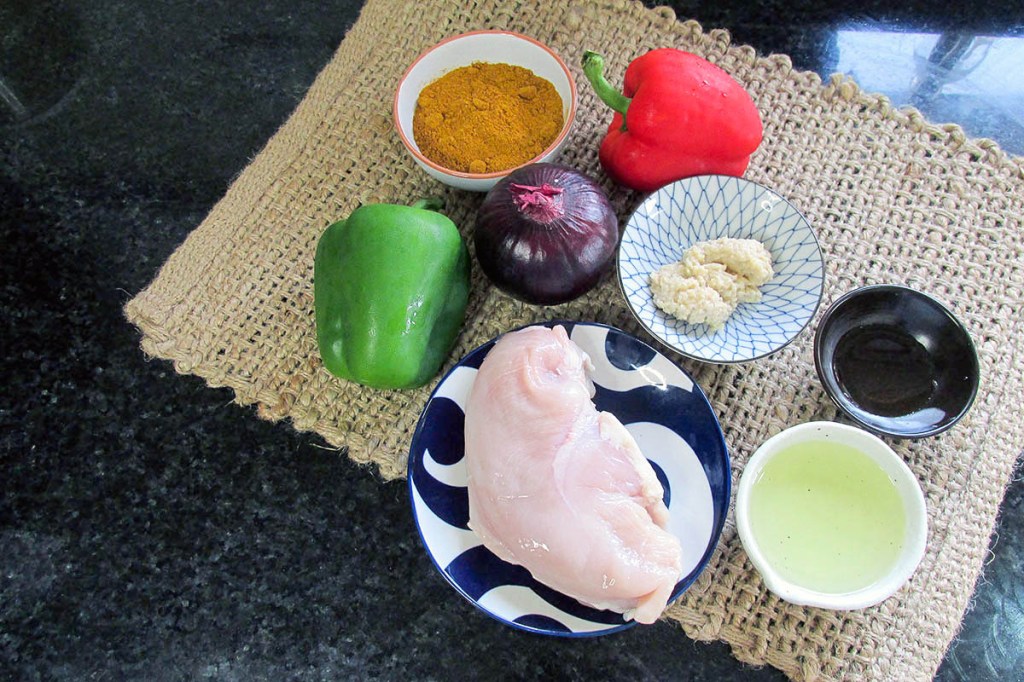
Tandoori chicken skewers ingredients
Ingredients
1/3 cup tandoori spice powder
1 tbsp lime juice
2 garlic cloves, crushed
3 chicken breast, cubed
1/2 green pepper, cubed
1/2 red pepper, cubed
1 red onion, cubed-quartered, then halved
1/2 cup olive oil
salt and pepper
Instructions
Mix together the garlic, olive oil, salt, pepper, lime juice, and tandoori spice powder in a bowl.
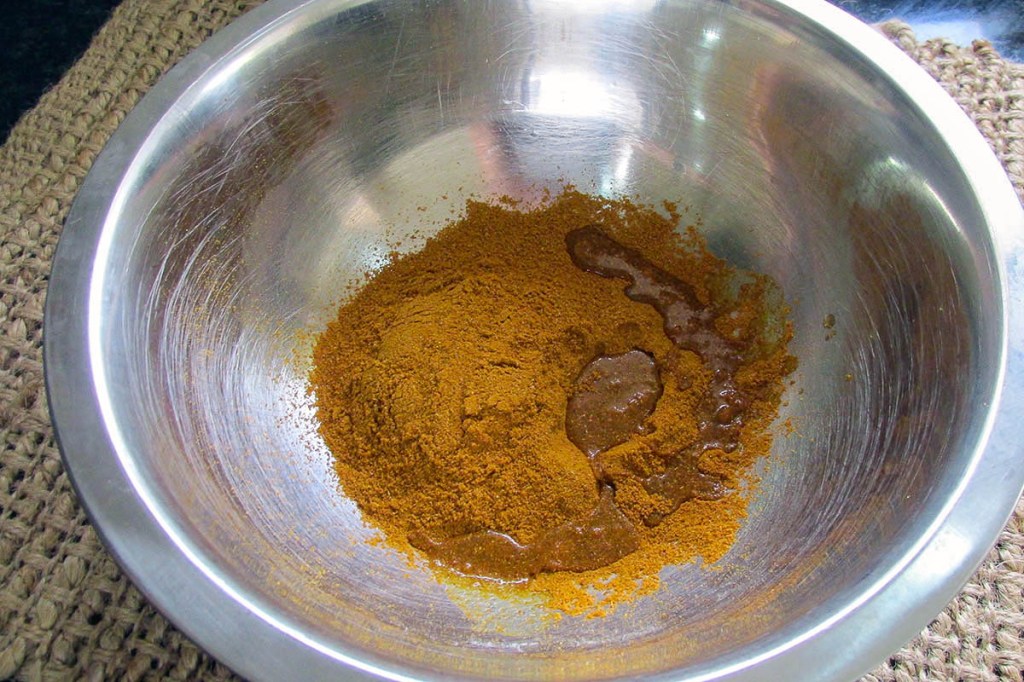
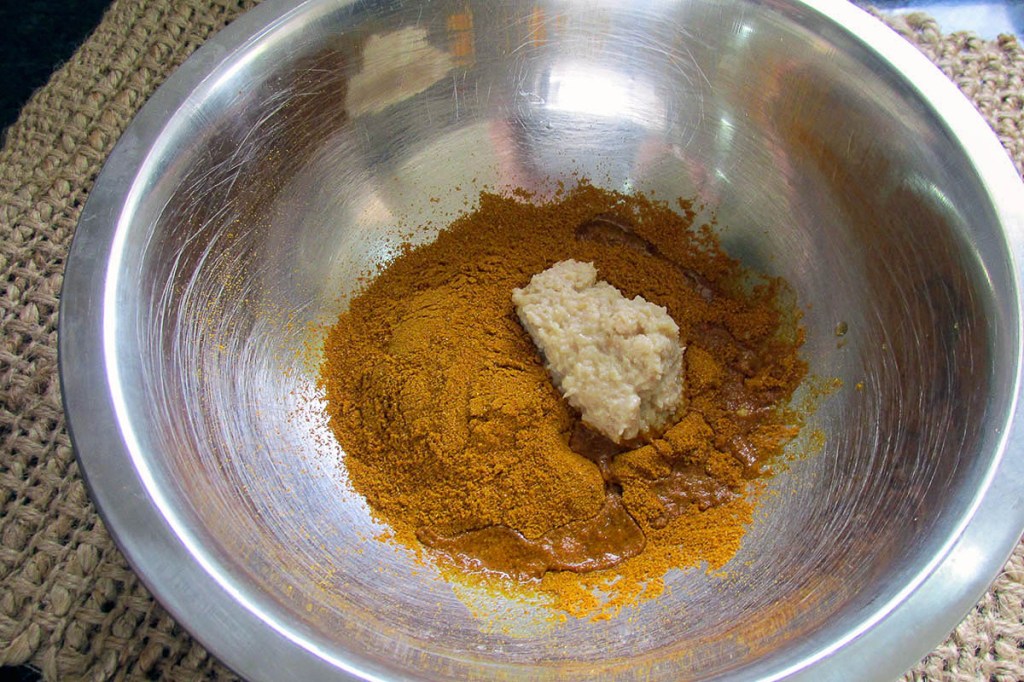
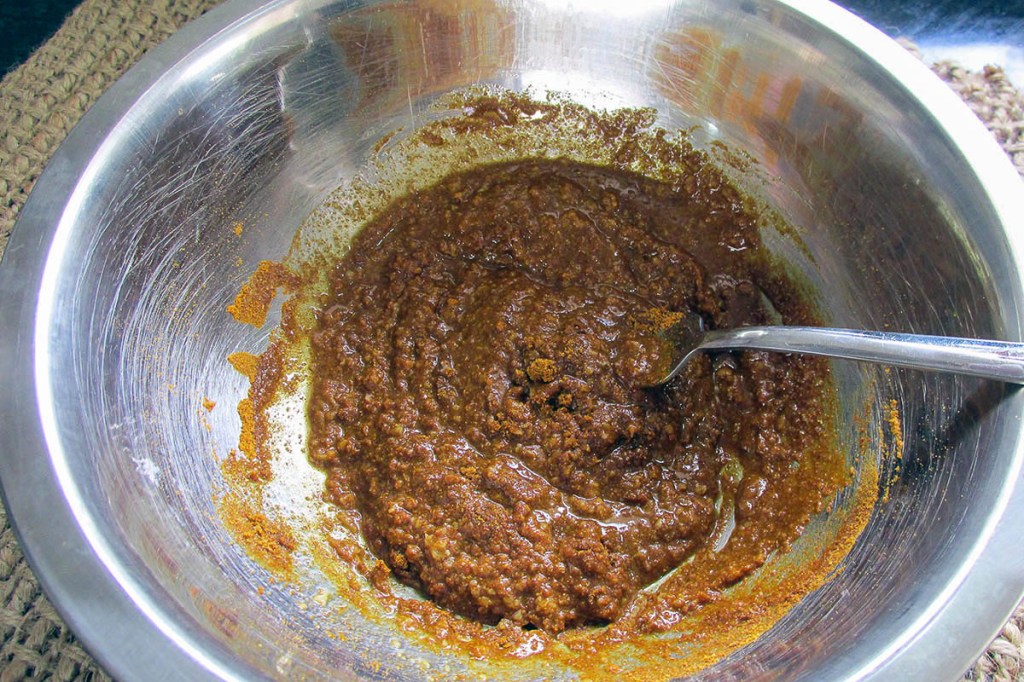
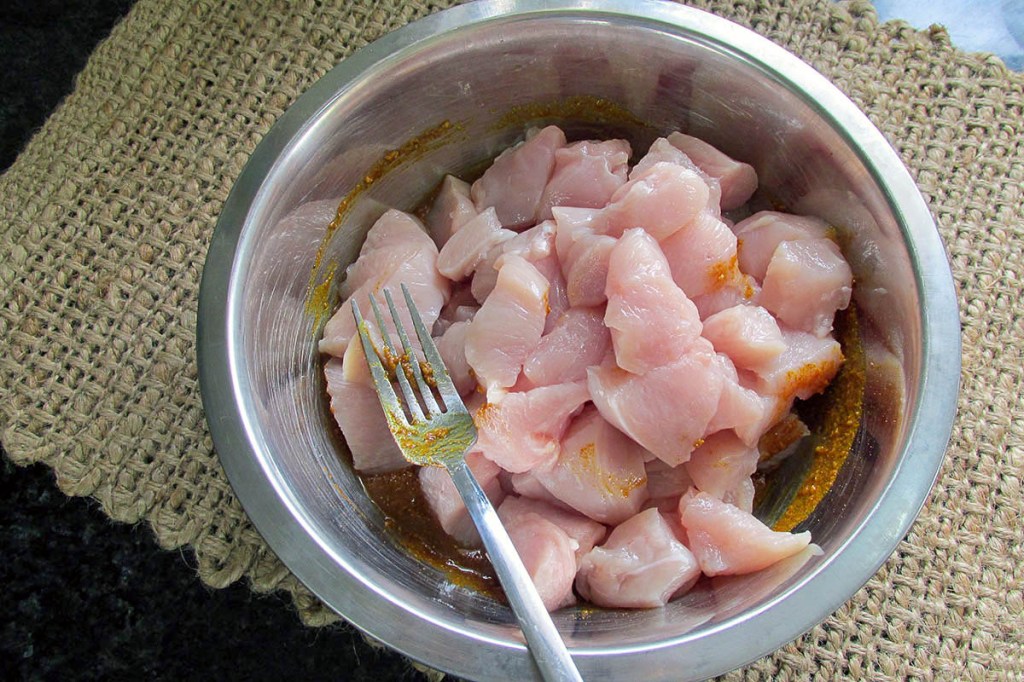
Place the tandoori spice powder in a large bowl.Add the lime juice.Add the garlic and oil a little at a time.Mix well.When you have added all the oil you will have a smooth paste.
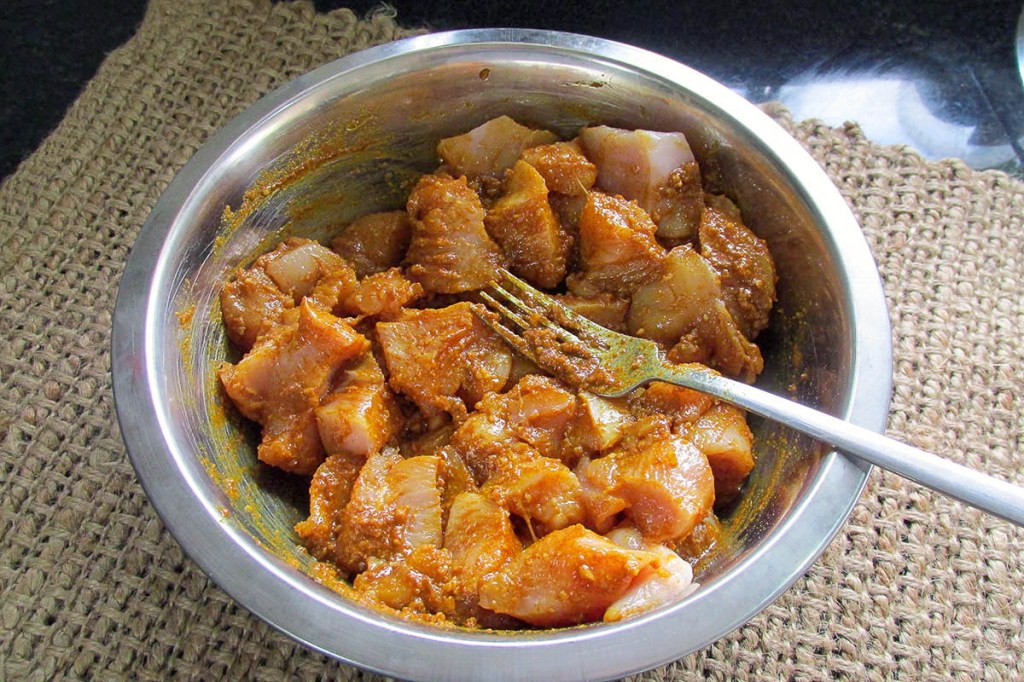
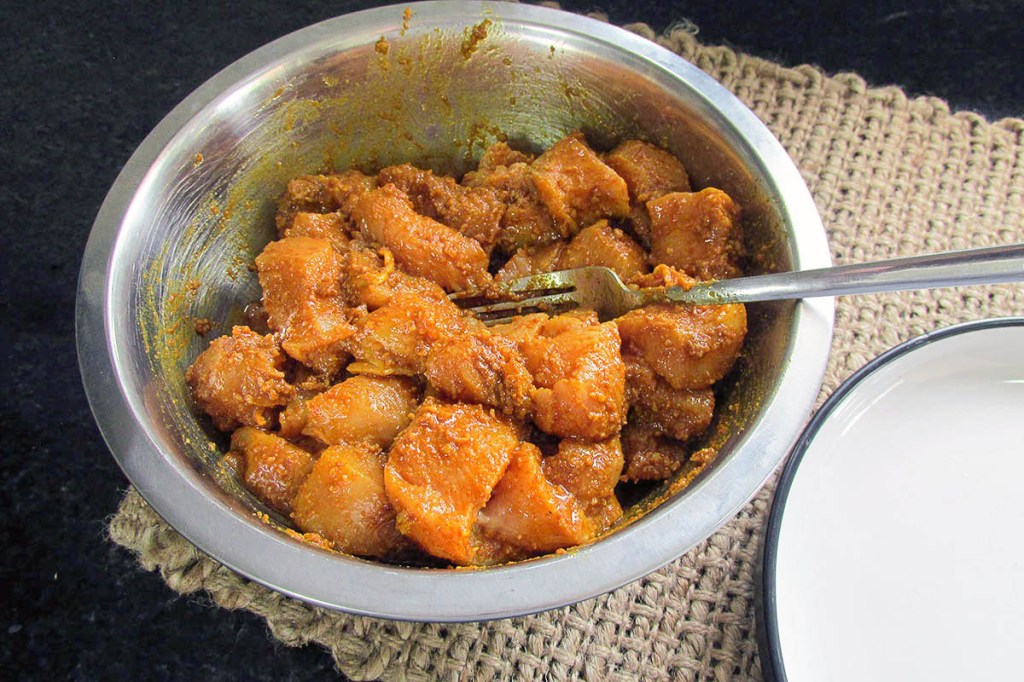
Add the chicken to the bowl with the tandoori paste, mix to coat the chicken.
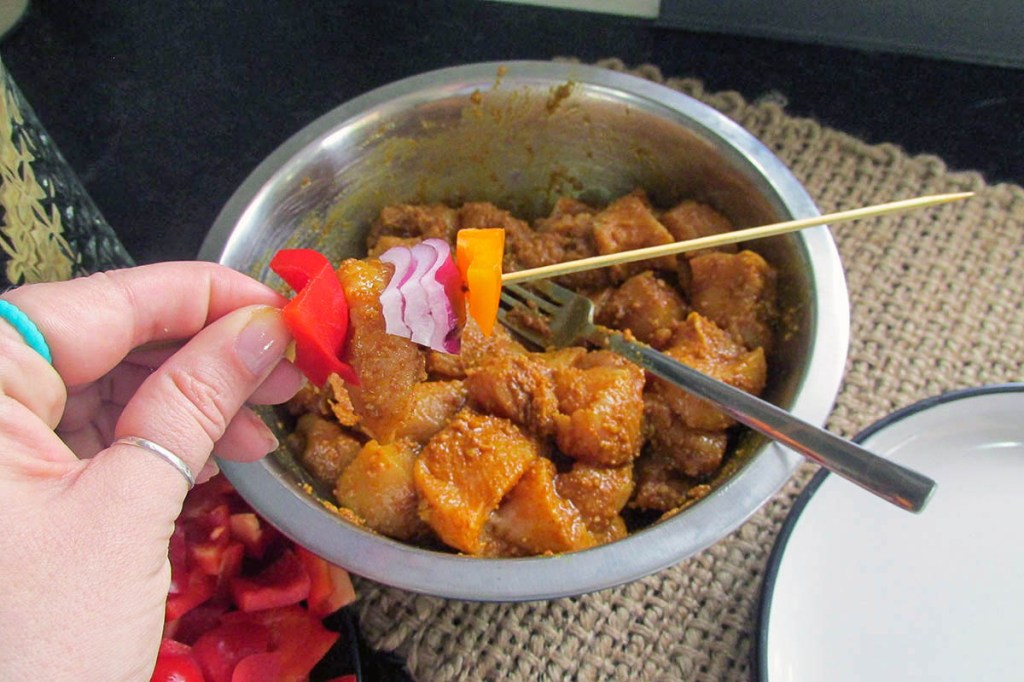
Ad the chicken to the paste.Mix well.Make sure that chicken is fully coatedGet the vegetables and chicken together to start building the skewers
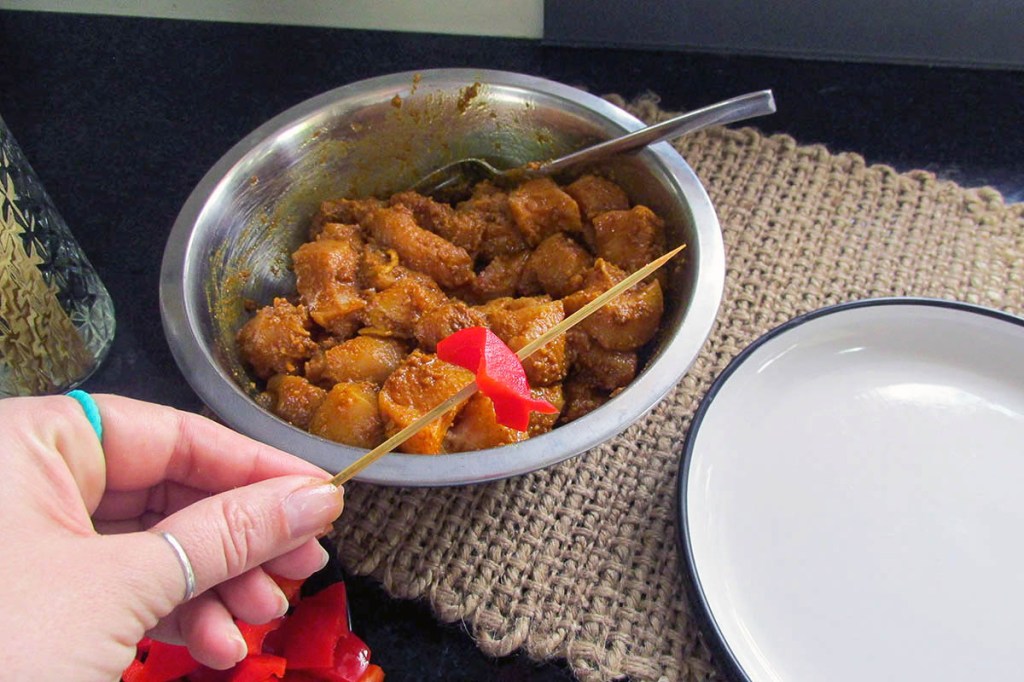
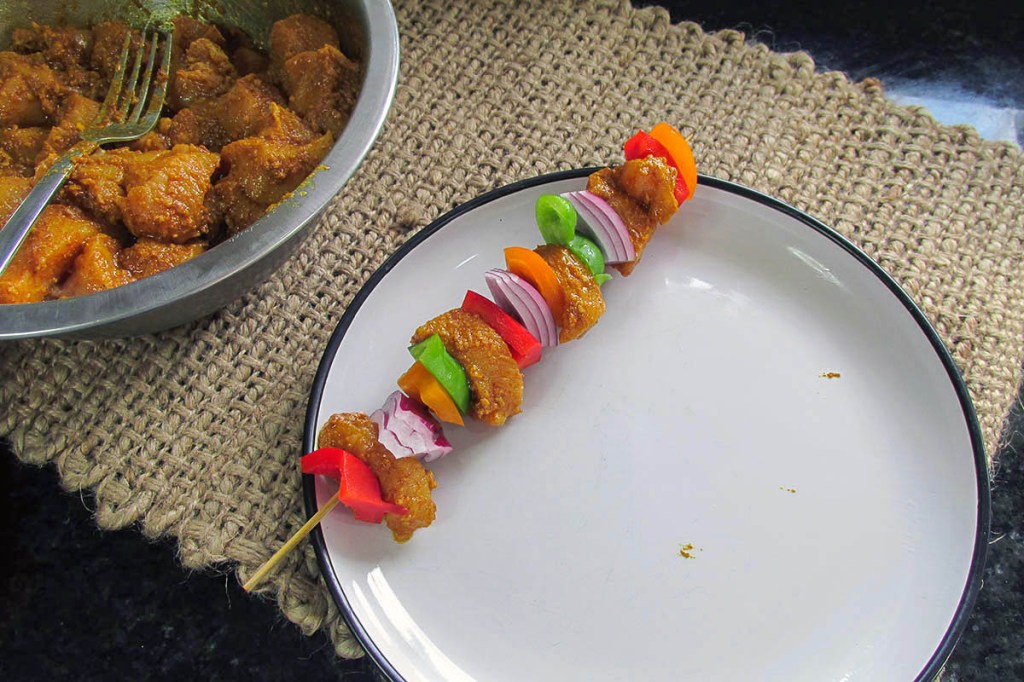
Thread the chicken, onion, pepper and peppers onto soaked bamboo skewers.
Thread the chicken, onion, pepper and peppers onto soaked bamboo skewers. Keep adding chicken, onion and peppers to the skewerRepeat with the remaining vegetables and chicken
Brush the extra paste onto the skewers.
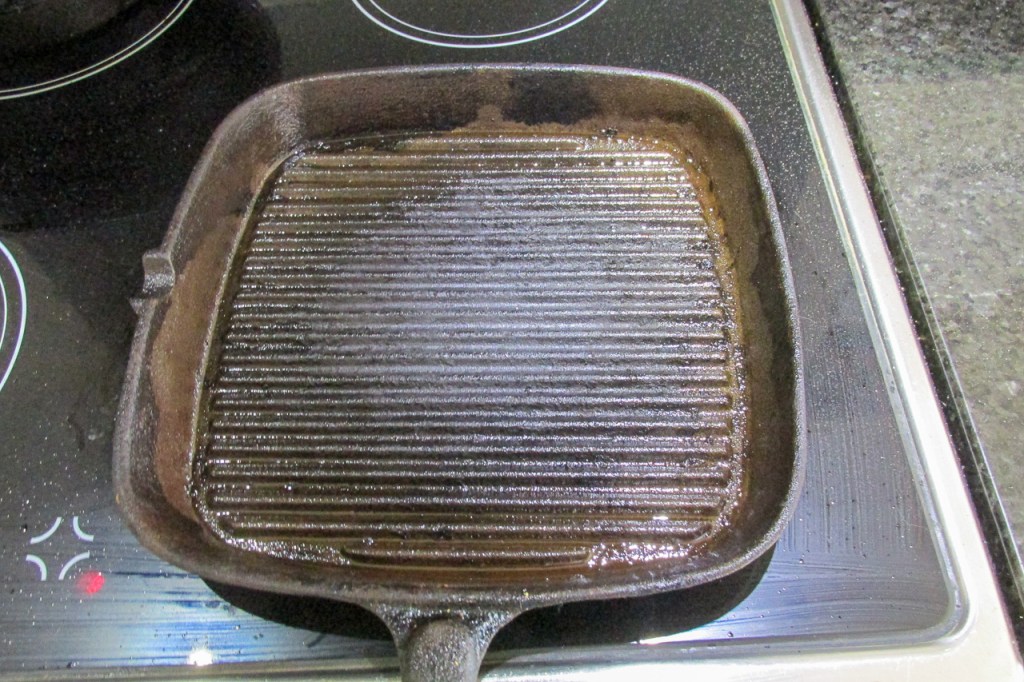
Cook the skewers on an oiled BBQ or in a chargrill pan, turning occasionally.
The chicken should be cooked through in about 10 minutes.
Mix the garlic, olive oil, salt, pepper, lime juice, and tandoori paste in a bowl.
Add the chicken to the bowl with the tandoori paste and mix to coat the chicken.
Thread the chicken, onion, pepper and peppers onto soaked bamboo skewers.
Brush the extra paste onto the skewers.
Cook the skewers on an oiled BBQ or in a chargrill pan, turning occasionally.
The chicken should be cooked through in about 10 minutes.
Nutrition
Per Serving: calories; g fat; g carbohydrates; g protein
Equipment
Knife
Chopping board
Mixing bowl
Measuring spoons
Measuring cups
Fork
Spoon
Wooden skewers
Nutritional disclaimer
Nutrition information is provided as an estimate based on the ingredients used and available in my area (New Zealand). The nutritional information is here to help you understand the recipe; I use MyFitnessPal to generate my estimates. For more accurate nutritional information, please use a nutritional calculator with the ingredients in your area.
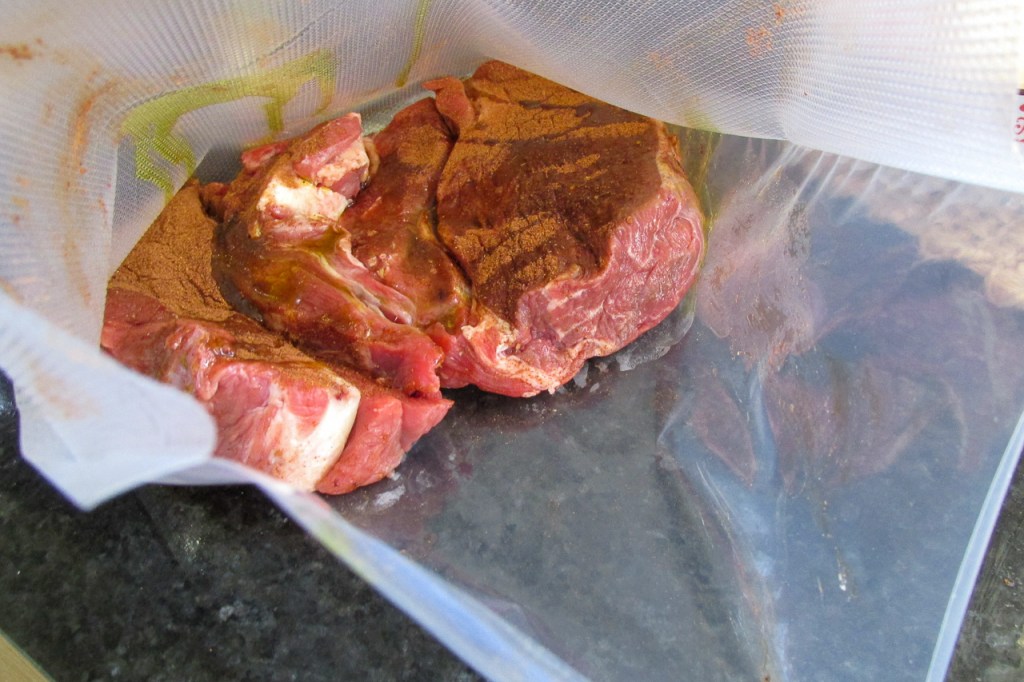
I never had any interest in corned beef when I was younger. I thought of corned beef as something nasty that came in a can and smelled a bit gross. While I still think that the corned beef in a can is gross, I do like a nice chunk of corned beef cooked just right. As with all things, learning how to do something right is a key to success; cooking the meat right is no exception.
A good crust
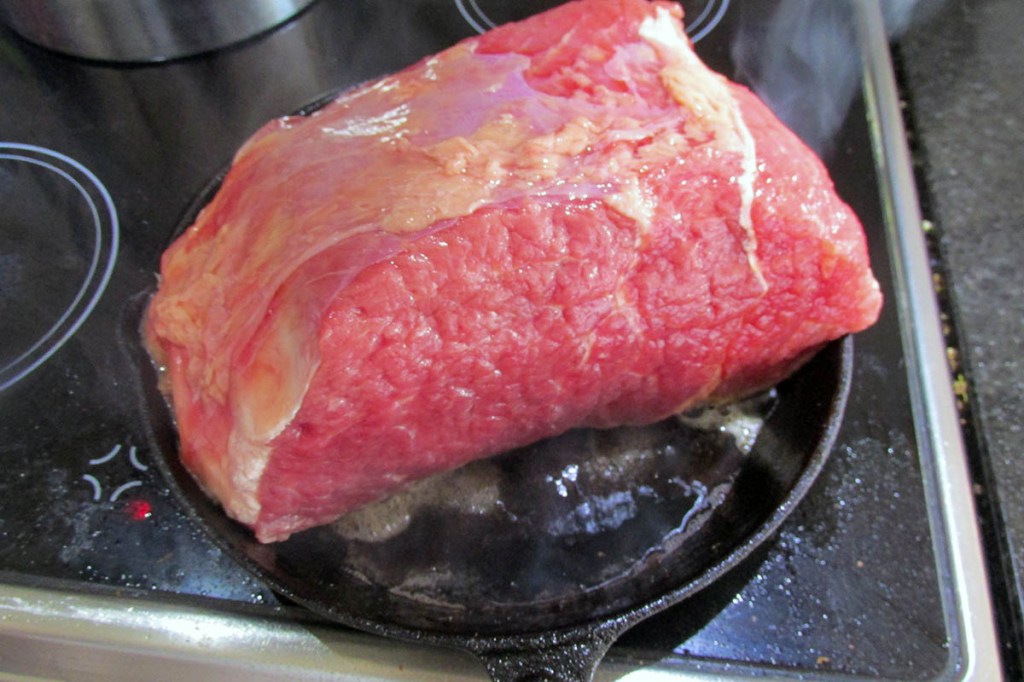
The first few times I made corned beef, I simply plopped the meat in the pan with some water and boiled it. Boring, I know. I decided to see what would happen if I seared the meat before boiling. The difference in flavour was amazing. I could not believe how much better the corned beef was. I know I shouldn’t be surprised that searing meat makes such a difference, but I was. The simple step adds a depth of flavour to any dish and brings out the best in your meal.
Instant Pot vs Cooker top
A few years ago, I decided to buy an Instant Pot when my old slow cooker died. It was a game-changer for slow cooking, but it changed my life thanks to the pressure cooker function. I remember the 1980s pressure cooker in my Nan’s kitchen with the valve that sounded like a jackhammer when it was time to release the pressure, and it scared the crap out of me. Thankfully, the Instant Pot pressure cooker setting is easy to use and has a beep to let you know when it is ready to release the pressure, not a jackhammer. When it comes to making corned beef now, I always break out the Instant Pot, mainly because it is so easy to use and I get perfectly cooked meat every time. On the rare occasions when my Instant Pot is in use and my corned beef is cooking on the stove, I have found that the cast iron pot is the best for simmering the meat. Whatever option you are going with, just make sure that you have enough water to completely cover the meat to make sure it ends up tender and juicy.
Corned beef
Ingredients
2kg Corned beef
2 bag leaves
12 peppercorns
2 tbsp coconut aminos
Instruction
Preheat a heavy-bottomed or cast-iron frying pan.
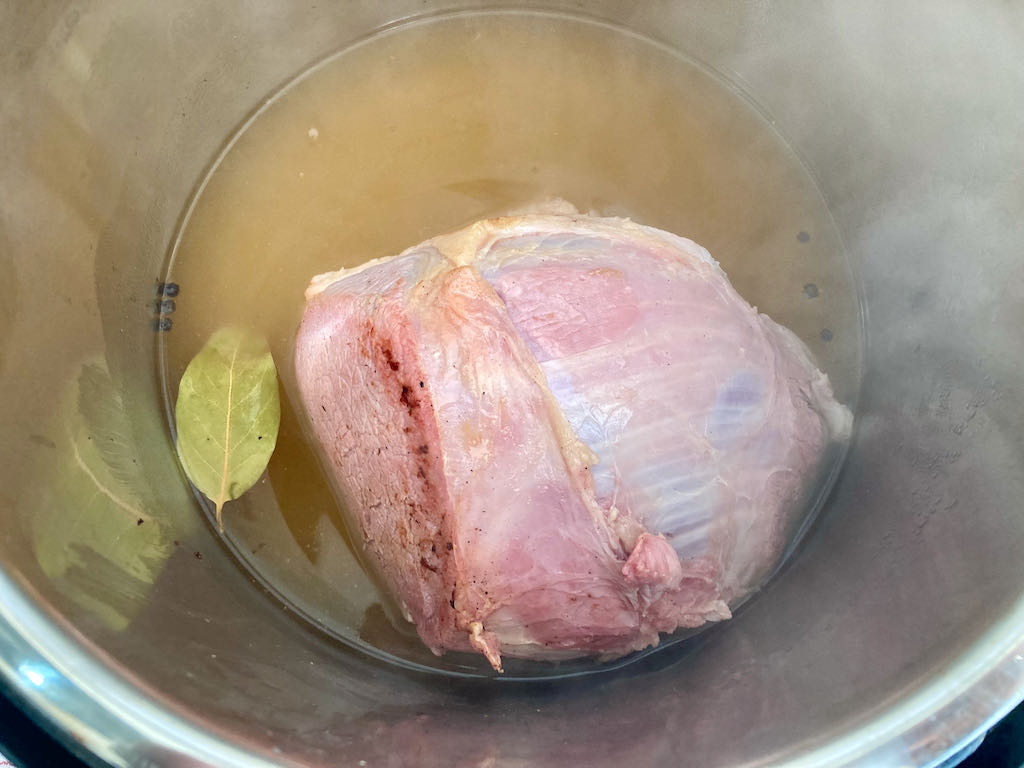
Sear all sides of the beef to create a golden crust.
If using an Instant Pot, place all the ingredients in the pot with water up to the minimum water line.
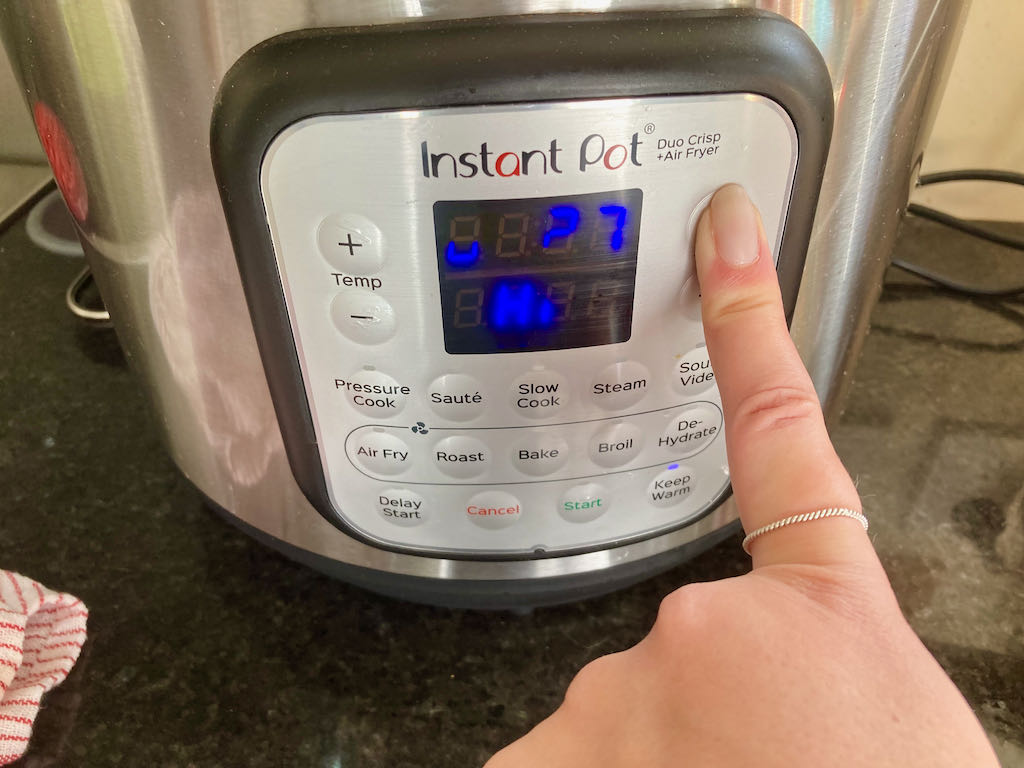
Set the Instant Pot to cook on the pressure cooking setting, on high for 90 minutes.
Allow the pressure to release naturally.
Alternatively
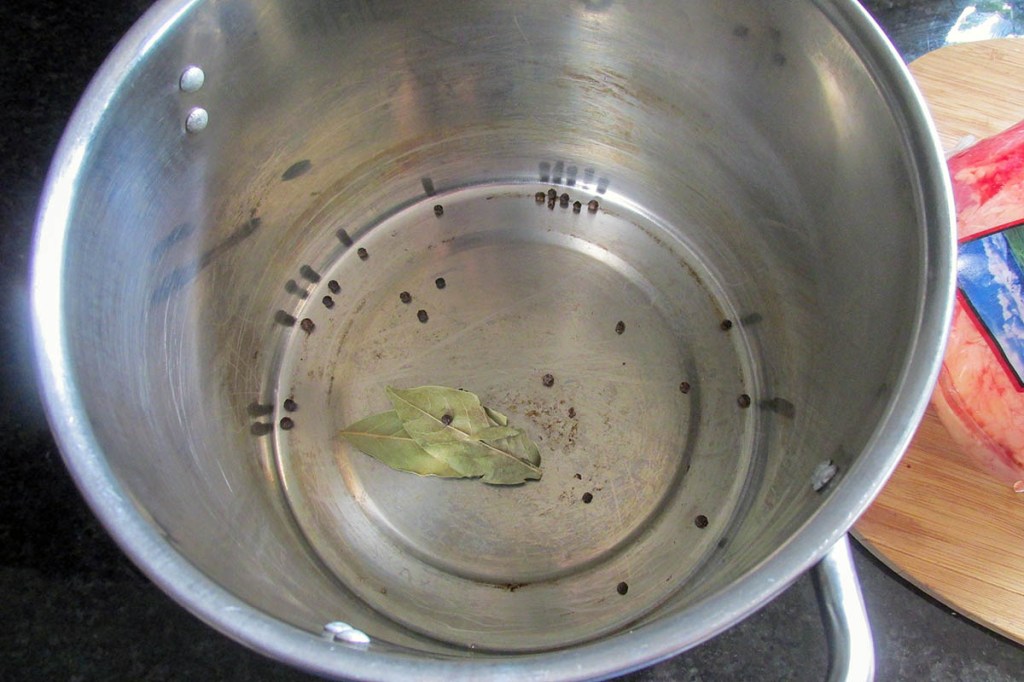
Place the peppercorns, bay leaves, coconut aminos and seared meat in a large stockpot.
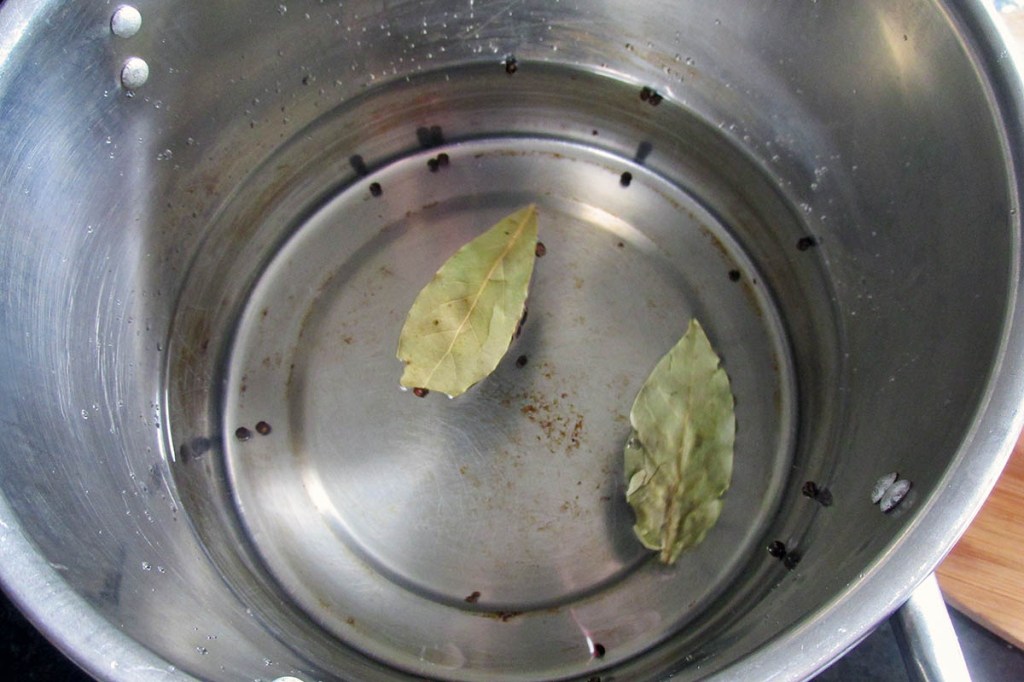
Cover the meat with boiling water.
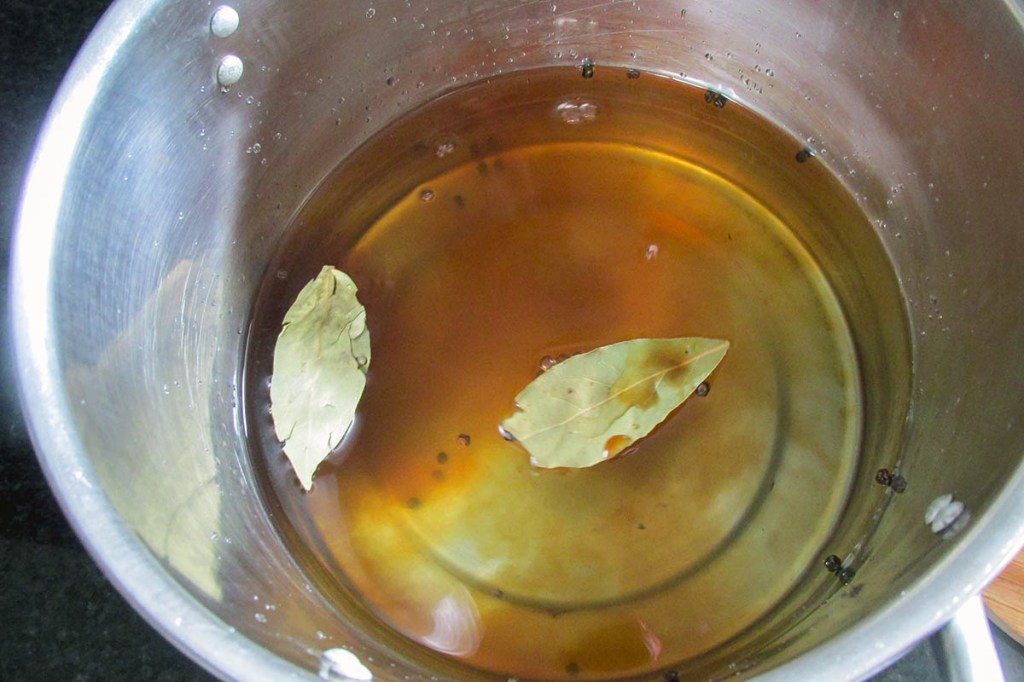
Bring the water to a rolling boil.
Reduce the heat to allow the meat to simmer, and cover the pan gently.
Sear all sides of the beef to create a golden crust.
If using an Instant pot place all of the ingredients in the pot with water up to the no higher than the minimum water line.
Set the Instant pot to cook on the pressure cooking setting, on high for 90 minutes.
Allow the pressure to release naturally.
Alternatively
Place the peppercorns, bay leaves, coconut aminos and seared meat in a large stockpot.
Cover the meat with boiling water.
Bring the water to a rolling boil.
Reduce the heat to allow the meat to gently simmer, cover the pan.
Simmer the meat for 40 mins per 500g of meat.
Once the meat is cooked, remove it from the pan.
Let it rest for 15 minutes before shredding.
Nutrition
Per Serving:196 calories;5 g fat; 2 g carbohydrates; 35 g protein
Equipment
Cast iron frying pan
Tongs
Stockpot with a lid
Nutritional disclaimer
Nutrition information is provided as an estimate based on the ingredients used and available in my area (New Zealand). The nutritional information is here to help you understand the recipe; I use MyFitnessPal to generate my estimates. For more accurate nutritional information, please use a nutritional calculator with the ingredients in your area.
Early in 2021, I relocated and started updating my website; I’ve been making changes and improving everything as I go. This recipe is one of the many things I’ve tried to improve.
Something fresh
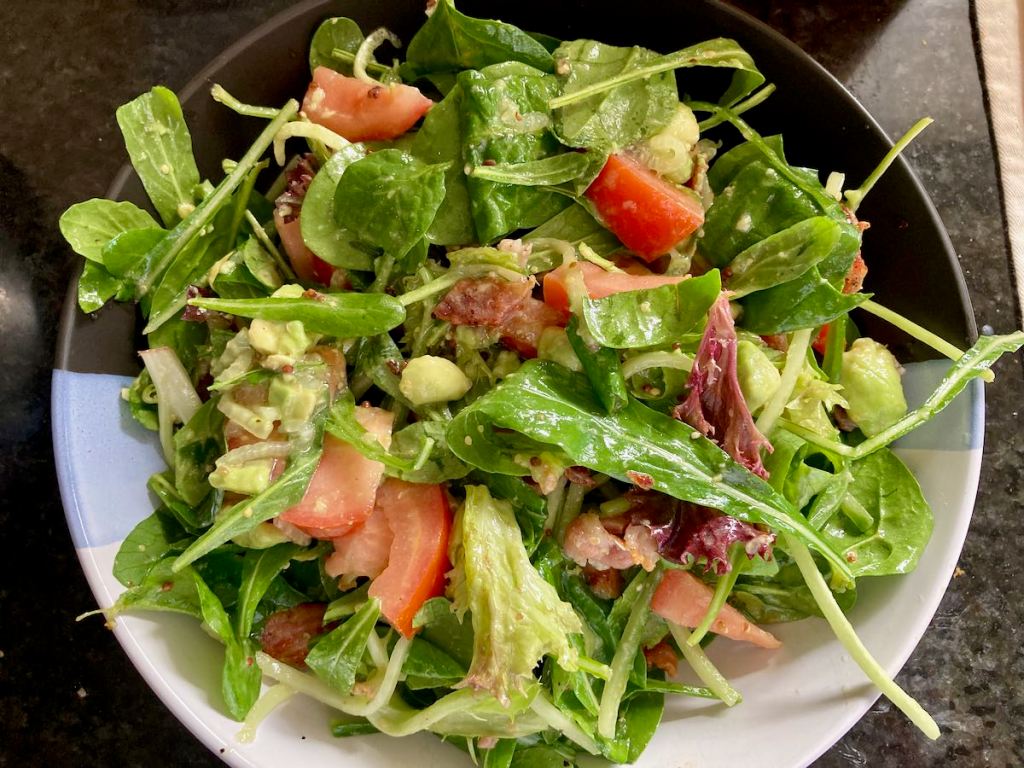
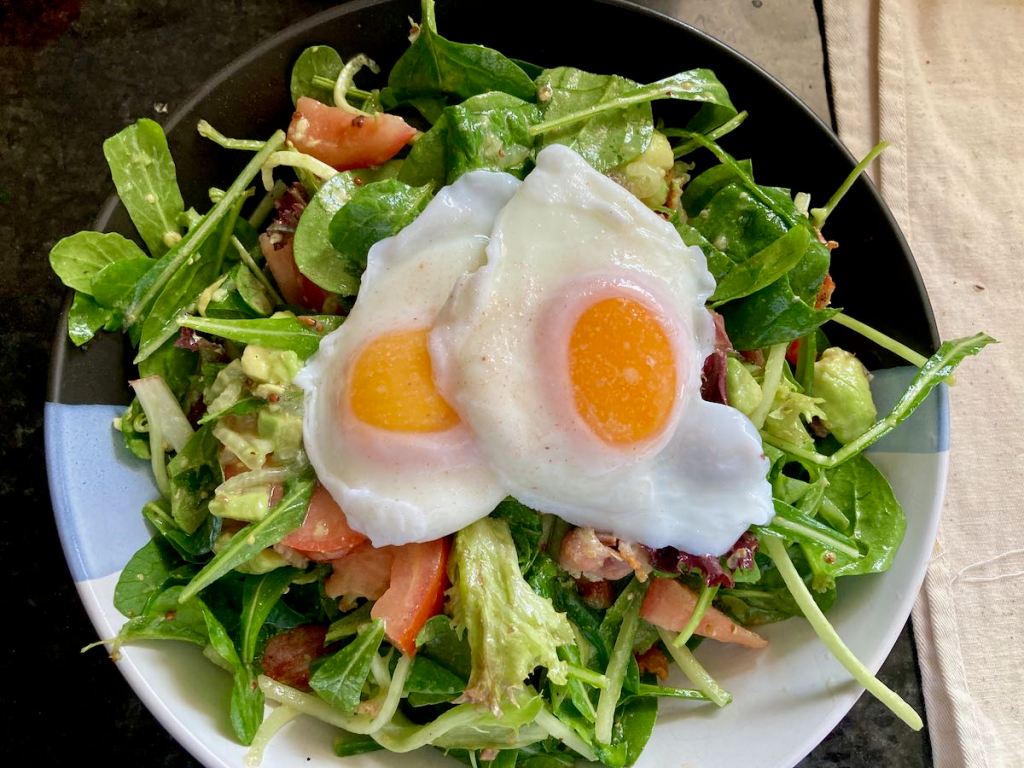
I love salad—sad but true. I could probably eat salad for every meal and never get bored. Breakfast salads are a great option when you want something a little different to start your day. This breakfast is clean, easy, and a cool take on cooked breakfast. The recipe is enough to feed two hungry people, so you can scale it to suit your needs.
Friday morning treat breakfast
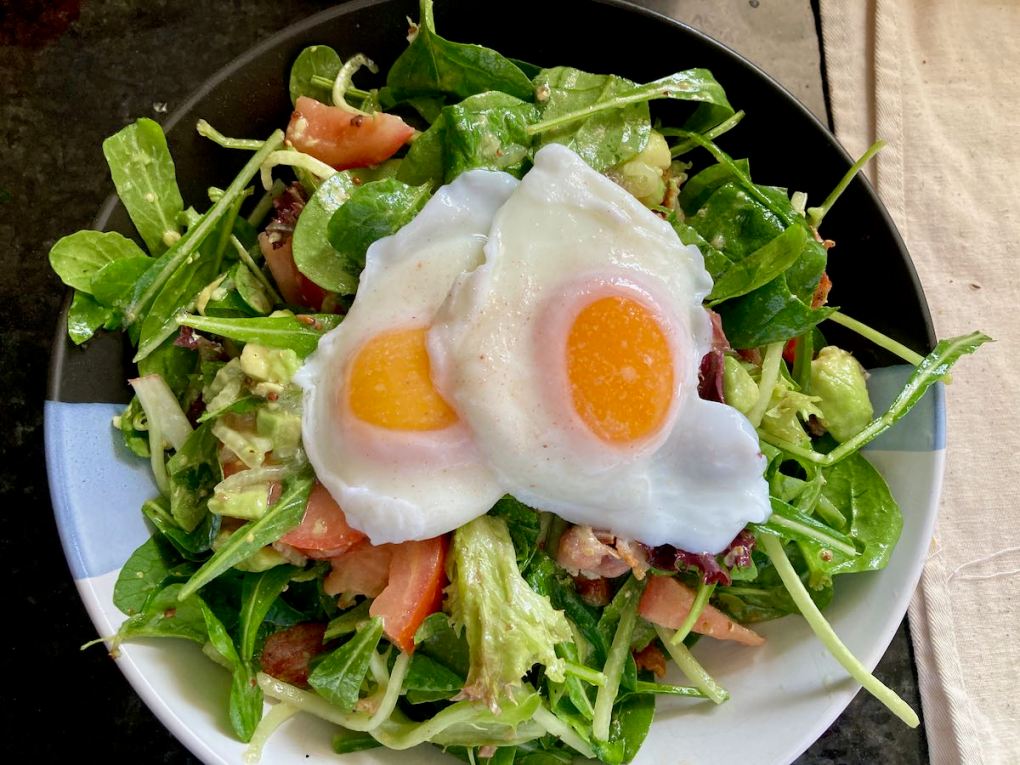
This morning, I started work later than usual, which meant I had an opportunity to make myself a nice breakfast. A breakfast salad with coffee would be enough to set me up for the day. Perfectly poached eggs with bacon and fresh salad were just what I needed.
Breakfast salad recipe
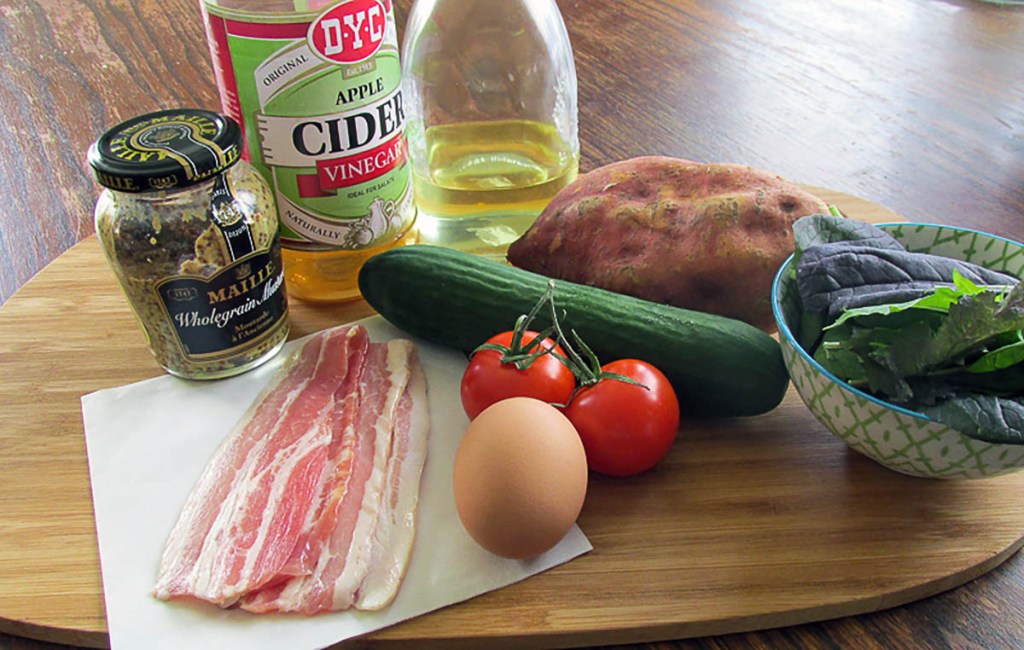
Ingredients
4 eggs
4 bacon rashers
2 handfuls mixed leaves
1 cucumber, julienne
1 avocado, cubed
10 cherry tomatoes, halved
1 handful of sweet potato strips
1 tsp. Dijon mustard
4 tbsp. olive oil
1 tbsp. apple cider vinegar
Instructions
Over medium heat in a frying pan, cook off the bacon until it is crisp, then set to one side to cool.
Once the bacon has cooled, cut it into thin strips.
In the same frying pan, add some oil and fry off the sweet potato pieces until they are crisp, then drain on some kitchen paper.
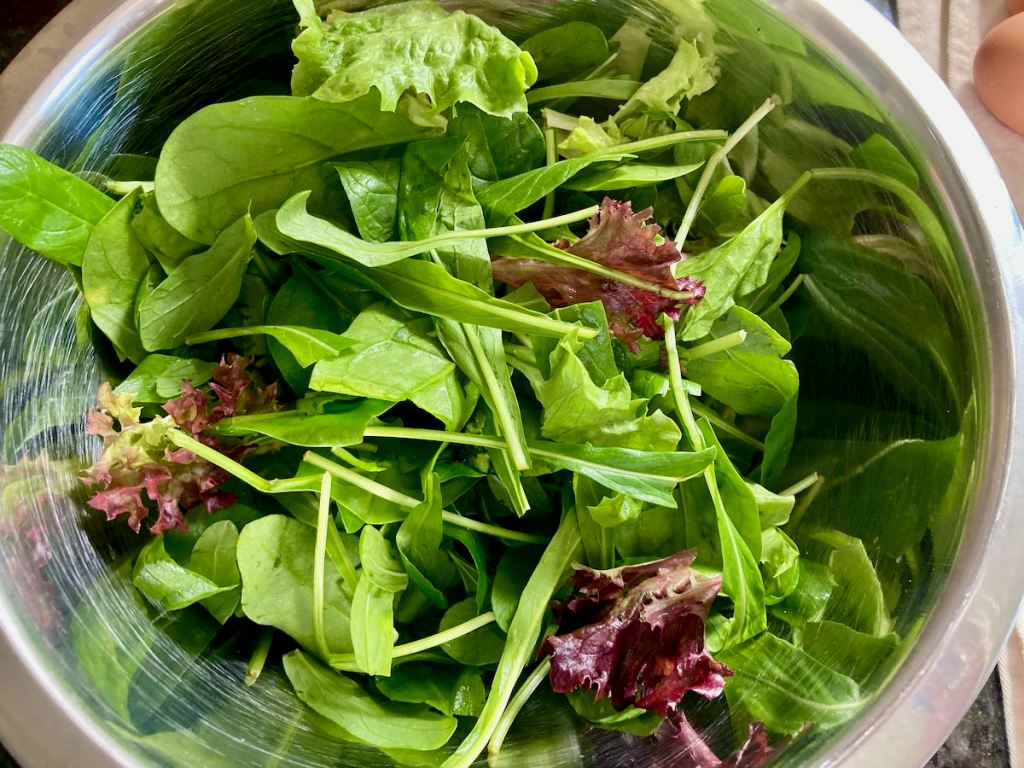
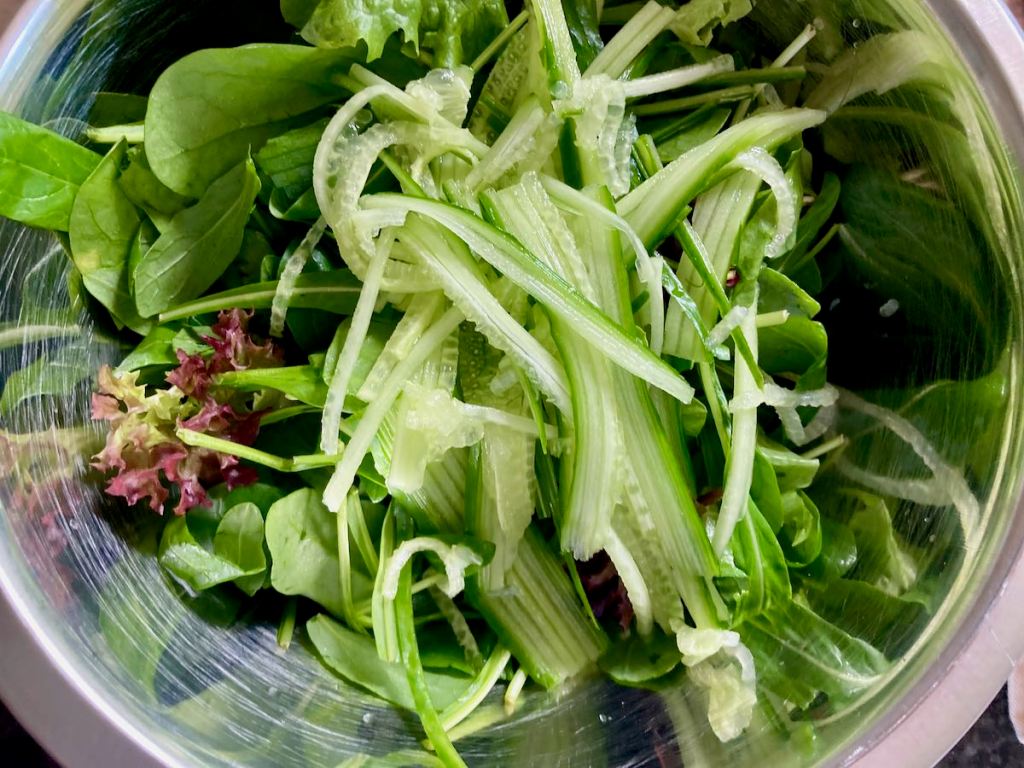
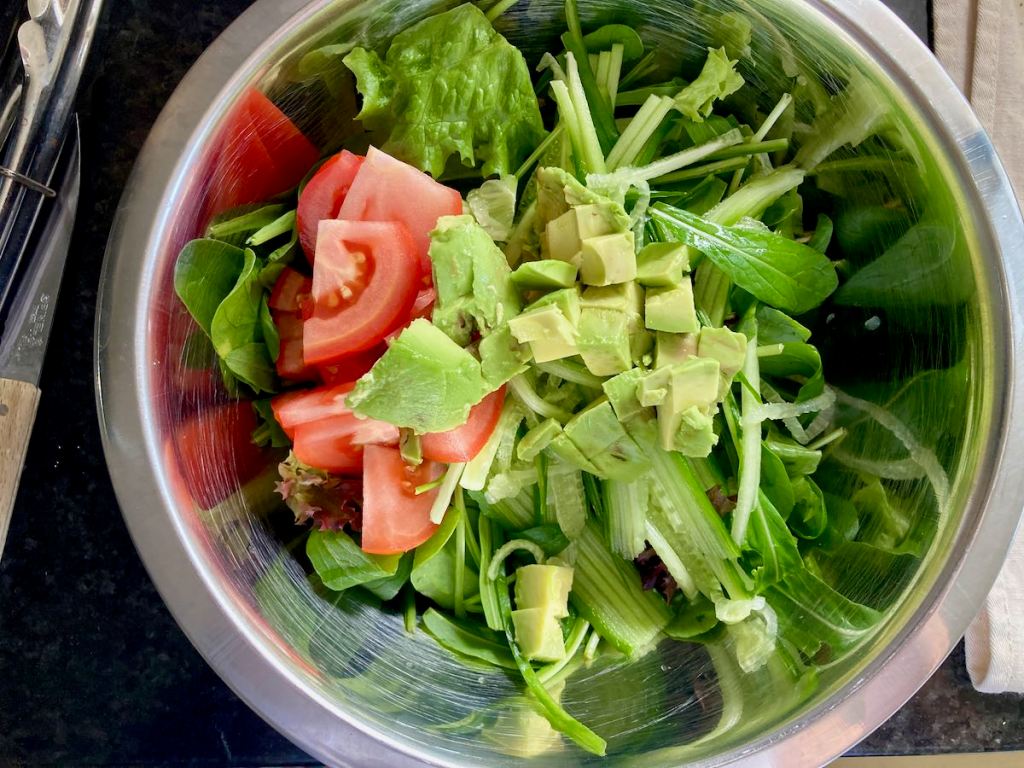
Combine the cucumber, leaves, avocado, and tomatoes in a large mixing bowl.
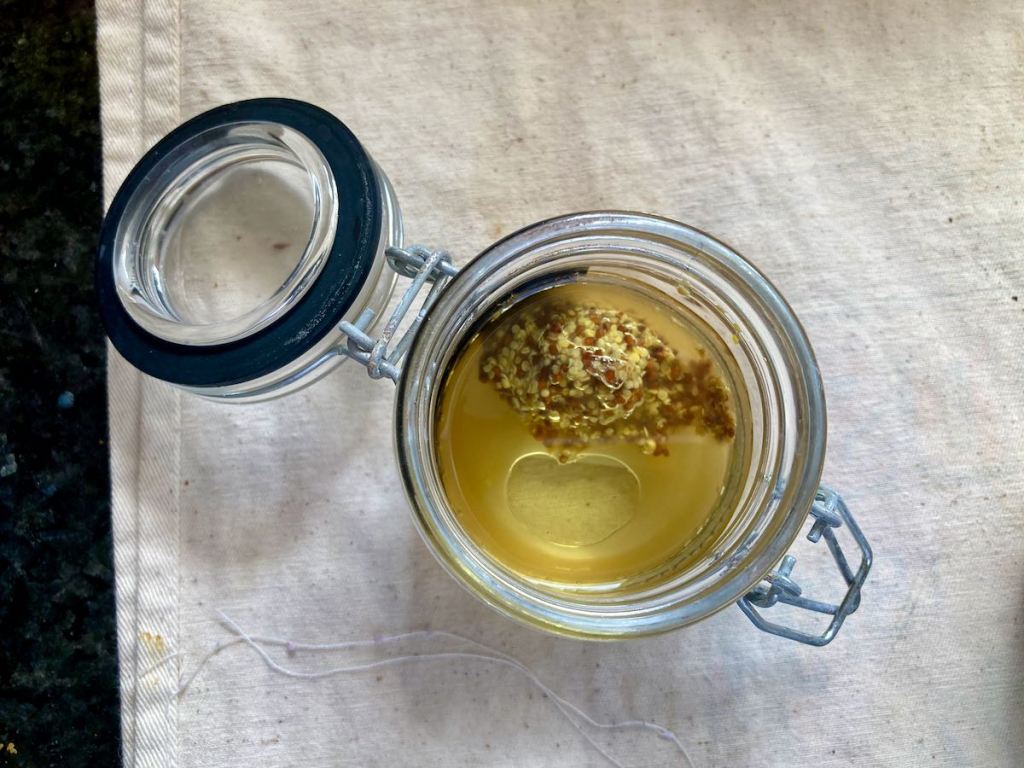
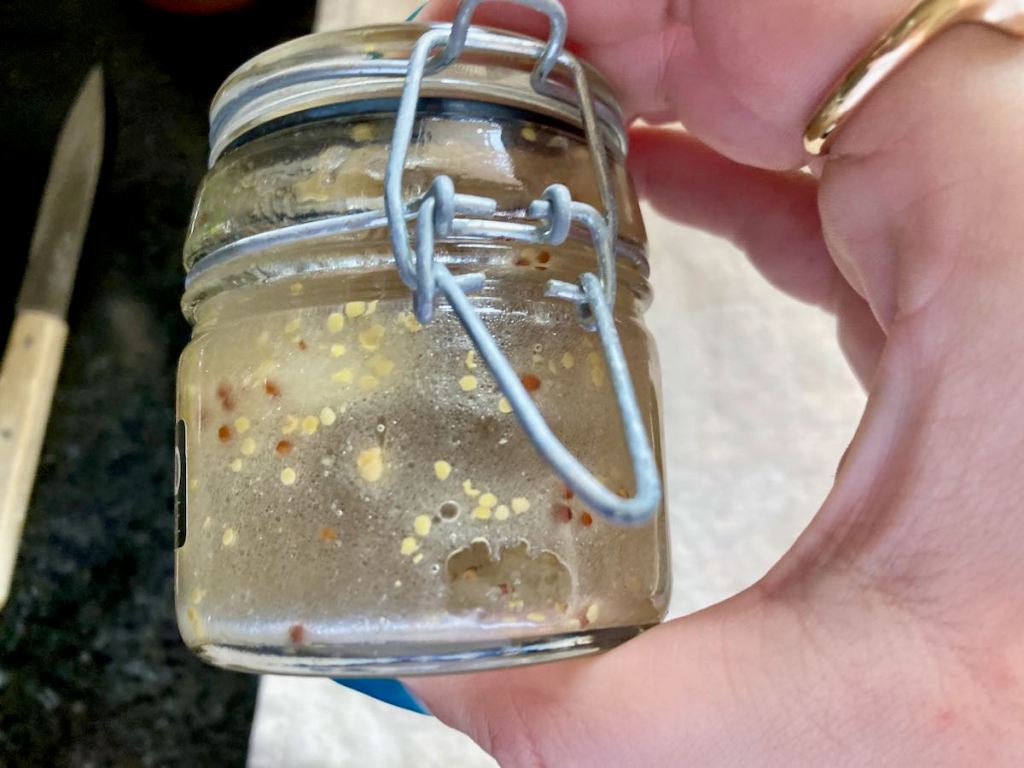
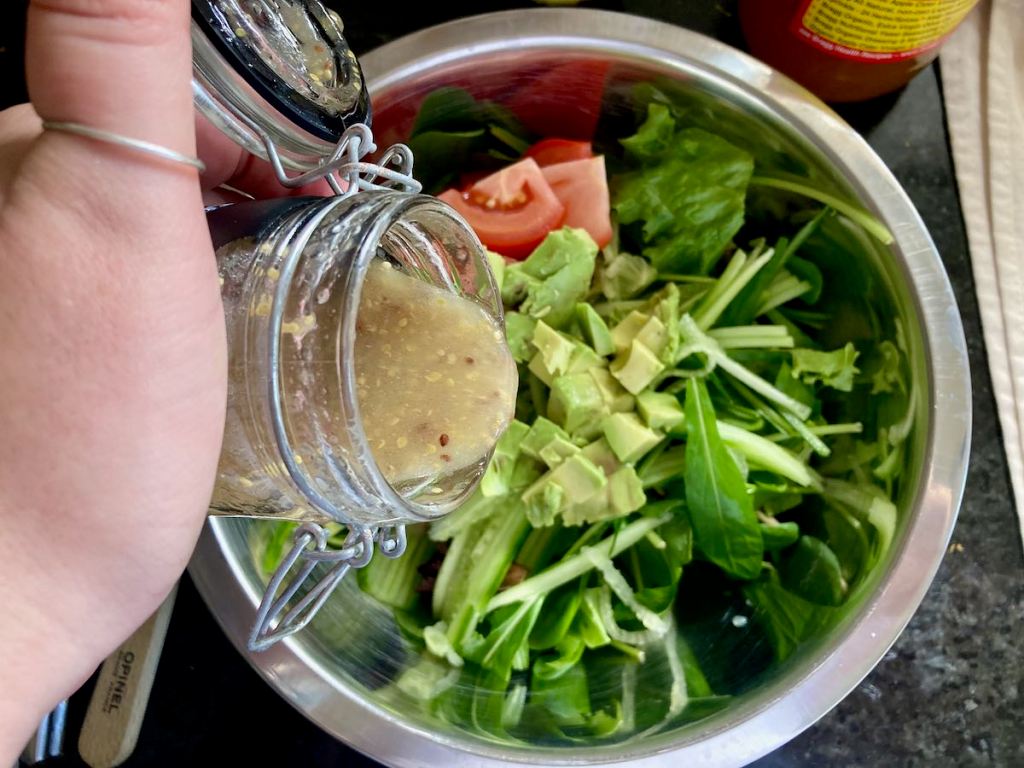
Mix the mustard, oil, and vinegar in a jar, then pour over the salad.
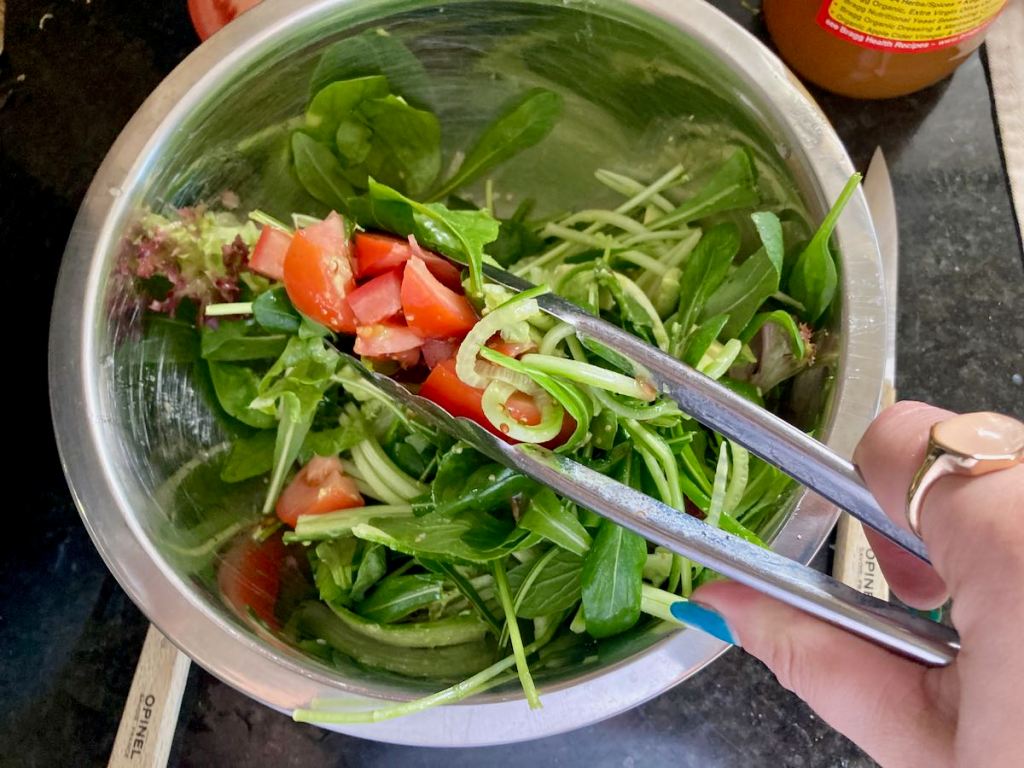
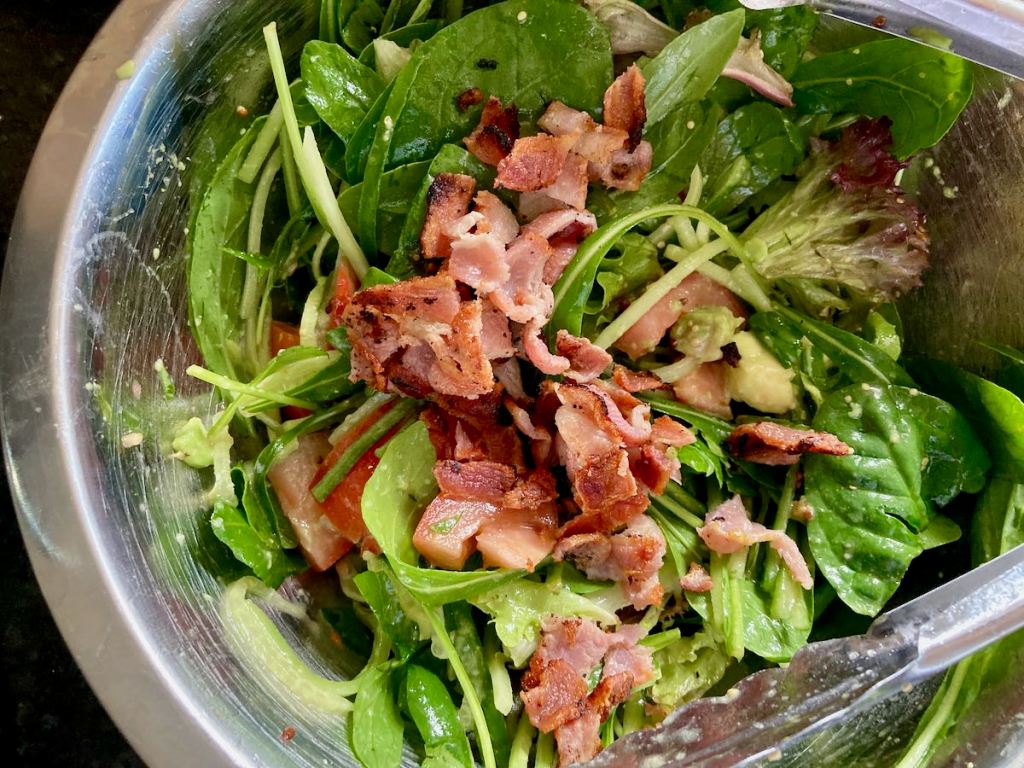
Mix the salad, ensure the dressing covers everything, and then mix in the bacon.
Divide the salad between two plates.
While mixing the salad, boil a pan of water, ready to poach the eggs.
Once boiling, reduce the heat and crack in the eggs.
When the egg whites have set, remove the eggs from the water and place them on the salad.
Over medium heat in a frying pan, cook off the bacon until it is crisp, then set to one side to cool.
Once the bacon has cooled, cut it into thin strips.
In the same frying pan, add some oil and fry off the sweet potato pieces until they are crisp, then drain on some kitchen paper.
Combine the cucumber, leaves, avocado, and tomatoes in a large mixing bowl.
Mix the mustard, oil, and vinegar in a jar, then pour over the salad.
Mix the salad, ensure the dressing covers everything, and then mix in the bacon.
Divide the salad between two plates.
While mixing the salad, boil a pan of water, ready to poach the eggs.
Once boiling, reduce the heat and crack in the eggs.
When the egg whites have set, remove the eggs from the water and place them on the salad.
Finish the salad with the sweet potato strips.
Nutrition
Per Serving:560 calories;49 g fat; 14g carbohydrates; 24g protein
Equipment
Frying pan x2
Knife
Chopping board
Mixing bowl
Tongs
Slotted spoon
Nutritional disclaimer
Nutrition information is provided as an estimate based on the ingredients used and available in my area (New Zealand). The nutritional information is here to help you understand the recipe; I use MyFitnessPal to generate my estimates. For more accurate nutritional information, please use a nutritional calculator with the ingredients in your area.
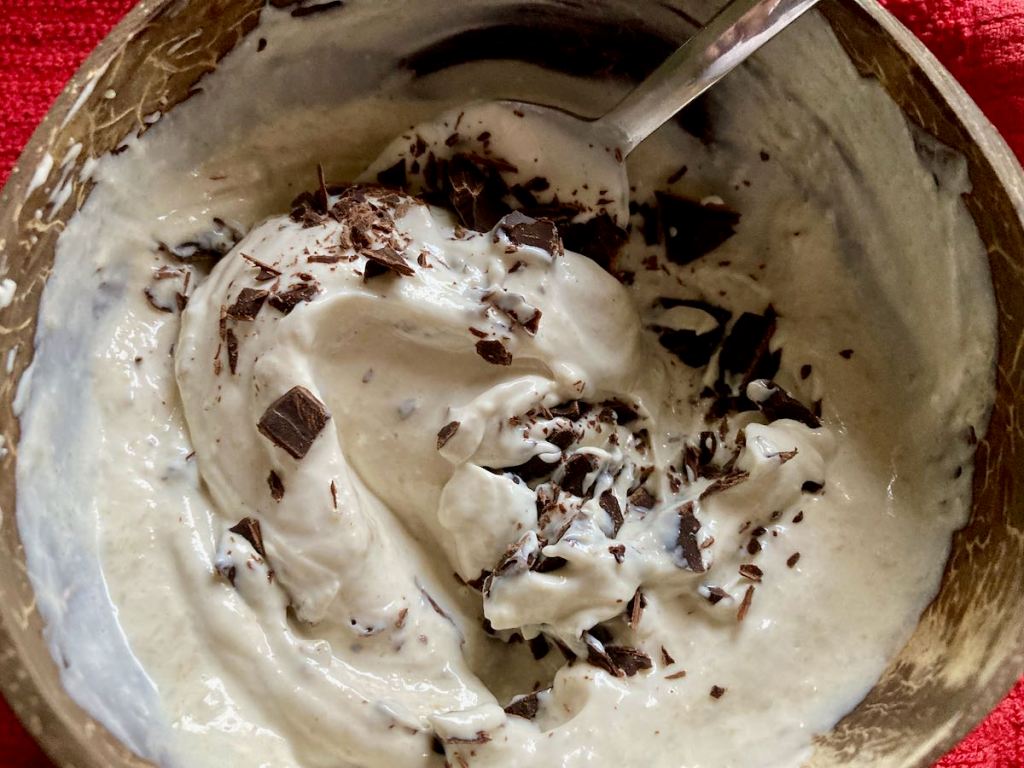
I’m trying different things as snacks at the moment; I had been munching on yoghurt and fruit for a while, so I needed to switch things up a bit. I had a stack of bananas and some protein white chocolate in the cupboard, so I thought I would have a go at making my own banana bites.
No peanut butter, thanks
I am one of those unfortunate people who is allergic to not only peanuts but also tree nuts. When it comes to food options, not having nuts on the menu can be challenging at times and frustrating at others. Not eating nuts doesn’t have to be the end of the world; there are always replacements and alternatives that give you a nut-free option. I’ve seen peanut butter banana bites all over the internet, but it was not an option for me. This recipe is my attempt to create a nut-free version of a usually nut-packed recipe.
Sunflower seed butter
Instead of using peanut butter, I decided to use my homemade sun butter as the alternative filling on my banana bites. As I am not a milk or dark chocolate fan, I decided to use my white chocolate for a perfect coating.
Banana bites recipe
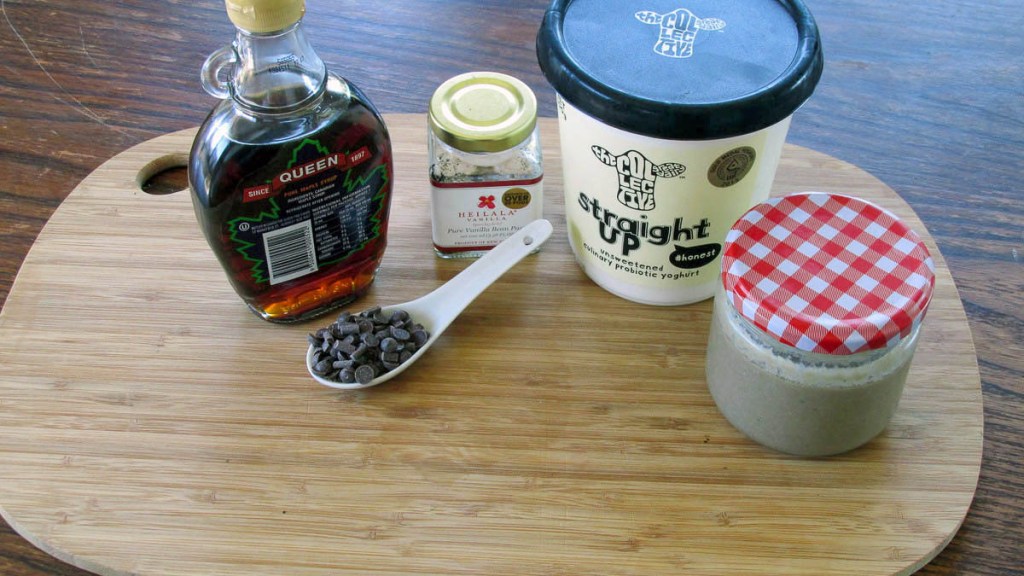
Ingredients
1 banana
1/4 cup sun butter
1 bar protein white chocolate
Instructions
Peel the banana and slice it into 26 pieces.
Line a baking sheet or flat plate with a silicone liner.
On half of the banana pieces, add a small dollop of the sun butter.
Top each piece that has sun butter on it with another piece of banana.
Place the banana in the freezer to harden the sun butter for about 15 minutes.
Before taking the banana bites from the fridge, melt the chocolate.
Take a small microwave-safe bowl and break up the chocolate.
Microwave the chocolate for 30 seconds at a time and mix between.
Repeat until the chocolate is melted and runny.
Take the banana bites from the freezer.
Dip half of each bite into the melted chocolate and place it back on the lined baking sheet.
Return the bites to the freezer for another 15 minutes.
Transfer the set bites to an airtight container and stop in the fridge for up to 3 days.
Peel the banana and slice it into 26 pieces.
Line a baking sheet or flat plate with a silicone liner.
On half of the banana pieces, add a small dollop of the sun butter.
Top each piece that has sun butter on it with another piece of banana.
Place the banana in the freezer to harden the sun butter for about 15 minutes.
Before taking the banana bites from the fridge, melt the chocolate.
Take a small microwave-safe bowl and break up the chocolate.
Microwave the chocolate for 30 seconds at a time and mix between.
Repeat until the chocolate is melted and runny.
Take the banana bites from the freezer.
Dip half of each bite into the melted chocolate and place it back on the lined baking sheet.
Return the bites to the freezer for another 15 minutes.
Transfer the set bites to an airtight container and stop in the fridge for up to 3 days.
Nutrition
Per Serving: 156 calories; 11g fat; 11g carbohydrates; 5g protein
Equipment
Knife
Chopping board
Spoon
Small microwave-safe bowl
Fork
Baking sheet
Silicone liner or baking paper
Nutritional disclaimer
Nutrition information is provided as an estimate based on the ingredients used and available in my area (New Zealand). The nutritional information is here to help you understand the recipe; I use MyFitnessPal to generate my estimates. For more accurate nutritional information, please use a nutritional calculator with the ingredients in your area.
I love avocados and get very excited when they come into season. I would happily eat them with every meal, but guacamole is my favourite way to have them.
I will be honest; I am eating guacamole with almost every meal at the moment. I may add a healthy dose of jalapeño to make it too spicy for everyone else. I didn’t say I was doing that; I might be doing it. It could be that the jalapeños are extra spicy.
Back to the point
I have two ways to make guacamole; both are easy, but they give two different textures, so it is a matter of personal preference. If you are making guacamole for the kids to enjoy, you can leave the chilli out of the recipe. This Guacamole recipe is suitable for those eating Primal, Paleo, and Clean. With minor modification, it is also kid-friendly; leave out the chilli.
Guacamole recipe
Ingredients
2 avocados
1/2 red onion
1 jalapeno chilli (optional)
1 tbsp. lemon juice
Take your avocados, cut them in half, remove the stones, and then scoop out the flesh
This is where you get to choose.
Option 1 Chunky
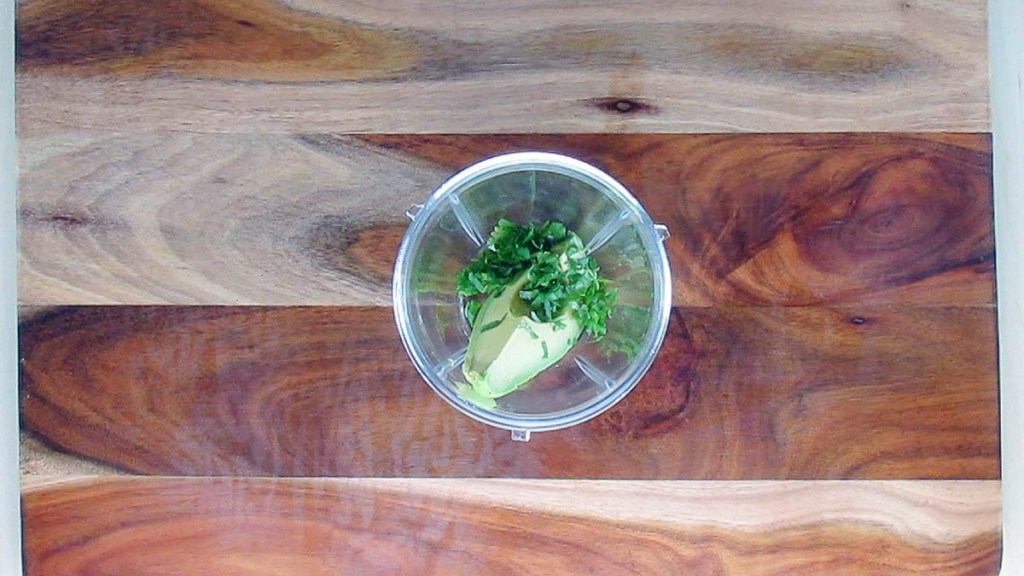
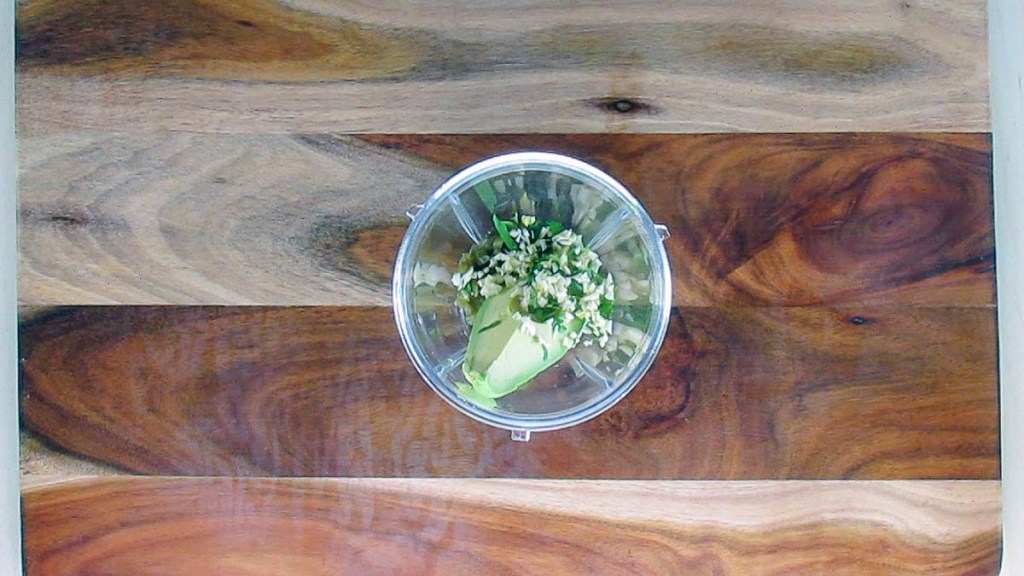
For a more chunky texture, I use a food processor to finely mince the chilli, pulse the onion then add the avocado with lemon juice and pulse again, this gives a part chunky part smooth texture that is great as a dip or addition to something spicy.
Option 2 Smooth
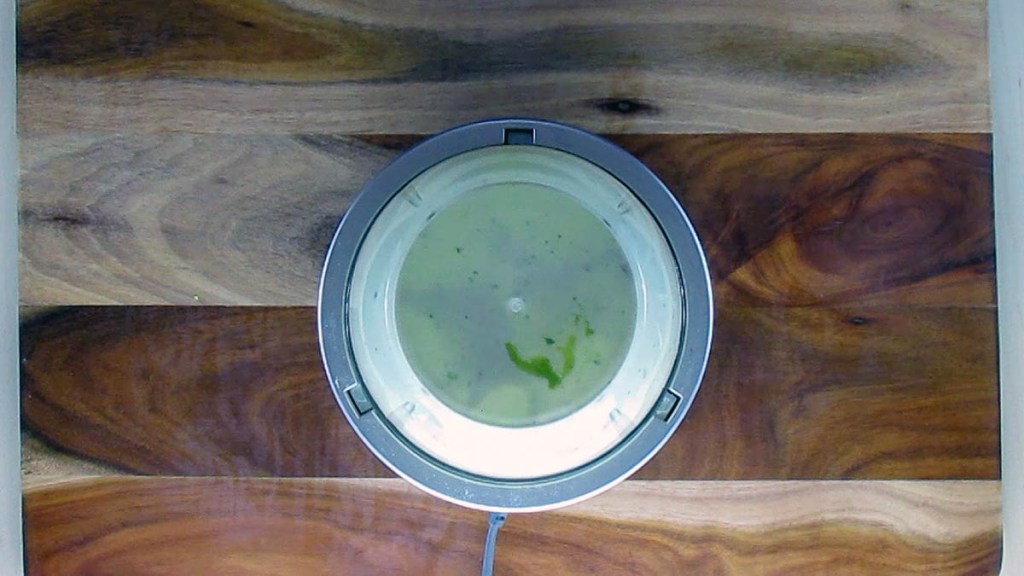
For a smoother texture, I like to finely mince the chilli and onion together into a paste, add the avocado and lemon juice and blend until you get a smooth texture.
If you are making guacamole without a food processor, it is down to you how finely you want to chop your ingredients and how much you mush the avocado with a fork.
The result should still be great tasting guacamole
Take your avocados, cut them in half, remove the stones, and then scoop out the flesh
This is where you get to choose.
For a more chunky texture I use a food processor to finely mince the chilli, pulse the onion then add the avocado with lemon juice and pulse again, this gives a part chunky part smooth texture that is great as a dip or addition to something spicy.
Or
For a smoother texture, I like to finely mince the chilli and onion together into a paste, add the avocado and lemon juice and blend until you get a smooth texture.
If you are making the guacamole without a food processor, it is down to you how finely you want to chop your ingredients.
The result should still be great tasting guacamole
Nutrition
Per Serving: 39 calories; 3 g fat; 2 g carbohydrates; 1 g protein
Equipment
Knife
Chopping board
Food processor
Measuring spoons
Fork
Nutritional disclaimer
Nutrition information is provided as an estimate based on the ingredients used and available in my area (New Zealand). The nutritional information is here to help you understand the recipe; I use MyFitnessPal to generate my estimates. For more accurate nutritional information, please use a nutritional calculator with the ingredients in your area.
It’s time to break out the BBQ down here in the Southern Hemisphere, which means lots of burgers being made in the sunshine. I’m not looking to add all the carbs that go with the beef burgers, so I’ve been whipping up quick bread with a twist.
Avocadoabundance
Whenever avocados are in season, I try to make the most of them. We all know that avocados have a small window of perfect ripeness, and they all hit that point simultaneously. So as not to waste them, I buy and then freeze the avocado pulp. To make my quick break a little more interesting, I’ve used some avocado pulp to make my burger buns extra. If you have fresh avocados, they also work for this recipe. If you use frozen avocado pulp, make sure it is completely thawed before folding it into the mix.
Burger buns recipe
Ingredients
4 egg whites
2 avocados
4 tbsp. buckwheat flour
1/4 tsp. cream of tartar
1/4 tsp. baking soda
Instructions
Preheat oven to 160 degrees C/ 320 degrees F.
Line a baking tray with baking paper or a silicone liner.
In a large mixing bowl, whisk the egg whites for 30 seconds using an electric whisk or stand mixer.
Add the cream of tartar and keep whisking on high speed until stiff peaks form.
Place the avocado flesh into a food processor, and blend until you get a smooth puree.
Add the avocado puree to the egg whites.
Add the buckwheat flour and baking soda to the bowl with the egg whites.
Use a spatula to combine the ingredients together; fold the ingredients together, don’t stir them.
You want a smooth, fluffy batter.
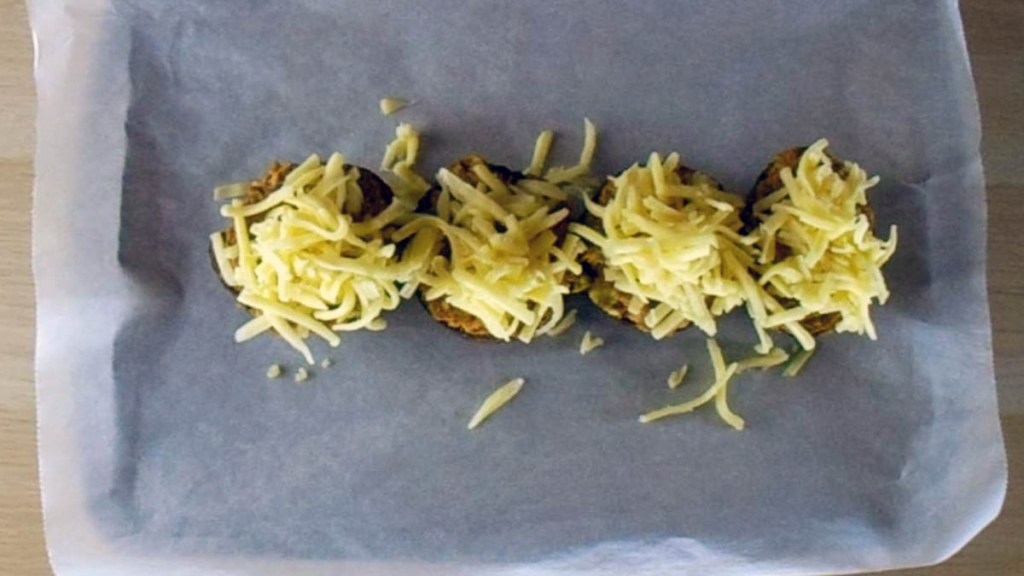
Divide the batter into 12 rounds on the baking tray.
Bake the buns for 15 – 20 minutes or until the edges are slightly golden.
Remove the buns from the oven and transfer the buns on the baking paper to a cooling rack.
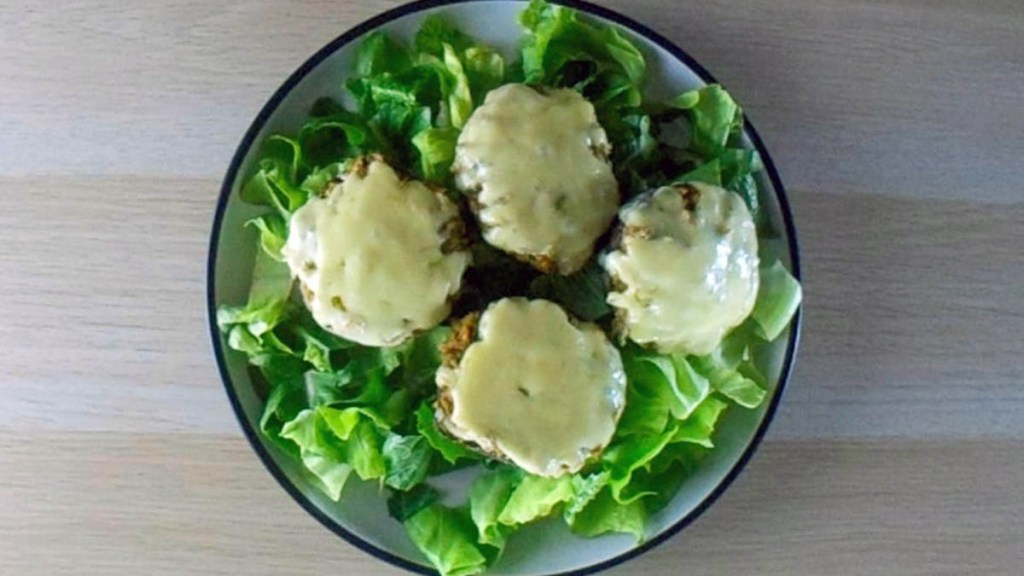
Let the buns cool for 10 minutes before filling them up with burgers.
Remove the buns from the oven and transfer the buns on the baking paper to a cooling rack.
Let the buns cool for 10 minutes before filling them up with burgers.
Line a baking tray with baking paper or a silicone liner.
In a large mixing bowl, whisk the egg whites for 30 seconds using an electric whisk or stand mixer.
Add the cream of tartar and keep whisking on high speed until stiff peaks form.
Place the avocado flesh into a food processor, and blend until you get a smooth puree.
Add the avocado puree to the egg whites.
Add the buckwheat flour and baking soda to the bowl with the egg whites.
Use a spatula to combine the ingredients together; fold the ingredients together, don’t stir them.
You want a smooth, fluffy batter.
Divide the batter into 12 rounds on the baking tray.
Bake the buns for 15 – 20 minutes or until the edges are slightly golden.
Remove the buns from the oven and transfer the buns on the baking paper to a cooling rack.
Let the buns cool for 10 minutes before filling them up with burgers.
Nutrition
Per Serving: calories; 4g fat; 4g carbohydrates; 2g protein
Equipment
Baking tray
Whisk
Food processor
Spatula
Mixing bowl
Cooling rack
Nutritional disclaimer
Nutrition information is provided as an estimate based on the ingredients used and available in my area (New Zealand). The nutritional information is here to help you understand the recipe; I use MyFitnessPal to generate my estimates. For more accurate nutritional information, please use a nutritional calculator with the ingredients in your area.
I’ve been revisiting recipes that have been some of my old-school recipes and favourites that were staples when I got started eating clean. I first posted this recipe in 2015; at that time, my step kids were fussy, vegetables had to be hidden and disguised, and there was no potential for intense flavours or spice.
As the kids grew, my recipes changed organically to meet their palates and preferences. I’ve updated this recipe because of that, but fear not; the original recipe suitable for kids and less developed palates is at the bottom of the post.
Hot lasagne fresh from the oven
Clean eating take of a classic
This was one of the first meals I made with a pasta alternative; much like replacing pasta with zoodles/coodles. I was always game to sneak some extra vegetables into the family meals, but this is one of the few meals I don’t need to hide the vegetables at all. The popular opinion of the kids back then was that this lasagne was better than one made with traditional pasta. I can’t say I disagree. As times have changed and this lasagne recipe is no longer entirely consumed in one sitting, it has become one of my favourite freezer meals. I can either make it in bulk and portion it out to enjoy some comfort food when needed or have a tray in the freezer for when I have company over.
Secret to success
The secret to a good lasagna is the depth of flavour. Flavour isn’t instant; it takes time and some effort. When I’m making lasagna, I tend to make the meat sauce the day before to let the herbs get to know the meat and sauce, mingle, and start the flavour party. The longer you leave the meat and herbs to party, the better your lasagna will taste.
Pasta free lasagne recipe
Lasagne ingredients
Ingredients
500g minced beef
1 onion finely diced
2 celery sticks, finely chopped
1 can tomatoes, chopped
2 garlic cloves minced
1 tsp. basil
1 tsp. oregano
1 tbsp. red chilli flakes
1 tbsp. coconut oil
4 carrots cut into ribbons
2 cups cheese, grated
250g cottage cheese
Instructions
Add the coconut oil to a stockpot over medium heat.
Add the onion and cook until the onion starts to soften.
Add the onion to a stockpot and cook until the onion starts to soften
Add the garlic, basil, chilli and oregano to the pan.
Add the garlic, basil and oregano to the panCook until the onion is softening
Add the beef mince to the pan and cook the beef until it browns.
Add the beef mince to the panCook the beef until it browns
Add the chopped tomatoes to the pan along with the chopped celery.
Add the celery Add the chopped tomatoes to the pan
Simmer the mixture for 10 minutes, then turn off the heat.
Simmer the mixture for 10 minutes then turn off the heat
While the meat and sauce are simmering, take a baking dish and ensure you have enough carrot ribbons to build your lasagne layers.
When the meat simmers, you can start to layer the lasagne.
Start with a carrot ribbons layer at the baking dish’s bottom.
Start with a layer of carrot ribbons at the bottom of the baking dish.
Next, add half the meat and sauce to create a layer in the baking dish.
Next add a half of the meat and sauce to create a layer in the baking dish.Create a layer in the baking dish.
Add another layer of carrot ribbons on top of the meat.
Next, add half of the cottage cheese and spread it across the dish, then top it with half the grated cheese.
Next add half of the cottage cheeseTop with half the cheese
Top with half the cheese, and another layer of carrot ribbons.
Repeat the layers with meat, carrot ribbons, cottage cheese and grated cheese.
If you can leave the lasagna overnight before baking it, the longer you leave it, the better it will taste.
Bake the lasagne at 180 degrees C/ 350 degrees F for 30 minutes.
Remove the lasagne from the oven when the cheese is brown and bubbly.
Bake the lasagne at 180 degrees C/ 350 degrees F for 30 minutes
Let the lasagne rest for 5 minutes before slicing and serving.
Let the lasagne rest for 5 minutes before slicing and serving
Add the coconut oil to a stockpot over medium heat.
Add the onion and cook until the onion starts to soften.
Add the garlic, basil, chilli and oregano to the pan.
Add the beef mince to the pan and cook the beef until it browns.
Add the chopped tomatoes to the pan along with the chopped celery.
Simmer the mixture for 10 minutes, then turn off the heat.
While the meat and sauce are simmering, take a baking dish and ensure you have enough carrot ribbons to build your lasagne layers.
When the meat simmers, you can start to layer the lasagne.
Start with a carrot ribbons layer at the baking dish’s bottom.
Next, add half the meat and sauce to create a layer in the baking dish.
Add another layer of carrot ribbons on top of the meat.
Next, add half of the cottage cheese and spread it across the dish, then top it with half the grated cheese.
Top with half the cheese, and another layer of carrot ribbons.
Repeat the layers with meat, carrot ribbons, cottage cheese and grated cheese.
If you can leave the lasagna overnight before baking it, the longer you leave it, the better it will taste.
Bake the lasagne at 180 degrees C/ 350 degrees F for 30 minutes.
Remove the lasagne from the oven when the cheese is brown and bubbly.
Let the lasagne rest for 5 minutes before slicing and serving.
Nutrition
Per Serving: 350 calories; 25.7 g fat; 8.2 g carbohydrates; 21.7 g protein
Equipment
Stockpot
Wooden spoon
Vegetable peeler
Knife
Grater
Chopping board
Baking dish
Nutritional disclaimer
Nutrition information is provided as an estimate based on the ingredients used and available in my area (New Zealand). The nutritional information is here to help you understand the recipe; I use MyFitnessPal to generate my estimates. For more accurate nutritional information, please use a nutritional calculator with the ingredients in your area.
Pasta free lasagne – kid friendly recipe
Ingredients
500g minced beef
1 courgette diced
1 onion finely diced
1 red pepper diced
1 can tomatoes
2 garlic cloves minced
1 tsp. basil
1 tsp. oregano
1 tbsp. coconut oil
2 courgettes cut into ribbons
2 carrots cut into ribbons
2 cups cheese, grated
Instructions
In a stockpot heat the coconut oil, garlic, onion basil and oregano over a medium heat, cook until the onion is soft.
Add the beef mince and cook off until browned.
Pour in the tomatoes along with the diced vegetables to the meat and cook for 10 minutes.
In a baking dish create a layer of carrot ribbons to cover the bottom add a layer of meat then cover with a layer of courgette ribbons, top with cheese.
Repeat until you reach the top of the baking dish, top the final layer with cheese.
If you can leave the lasagne overnight before you bake it, the longer you leave it the better it will taste.
Bake the lasagne at 180 degrees C/ 350 degrees F for 30 minutes.
When the cheese is brown and bubbly remove the lasagne from the oven.
Let the lasagne rest for 5 minutes before slicing and serving.