Early in 2021, I relocated and started updating my website; I’ve been making changes and improving everything as I go. This recipe is one of the many things I’ve tried to improve.
Make your own
If you are like me and you try to avoid mass-produced processed foods, the best option is to make your own. When you make your own, you control which ingredients you use and how much or how sweet you want it to be. Once you have a go at making your own and realise how easy it is, you will never go back to store-bought again.
A way to make tuna interesting
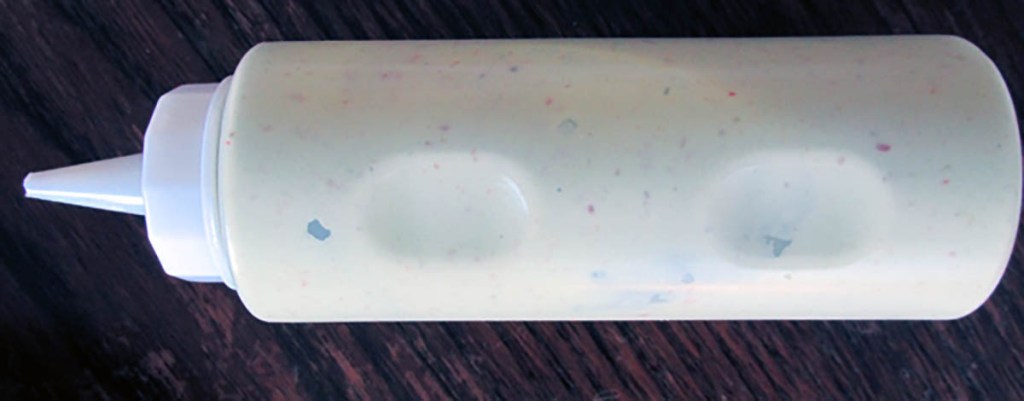
For a long time, tuna was on the menu almost every weekend; it was tuna melts all around, and I got bored with it. To spice things up a little, I decided to replace the easy mayo I would typically use with something creamy and spicy, which wouldn’t lead to complaints from the kids. I made this dressing for tuna lettuce wraps, which were a welcome alternative to tuna melts.
Avocado dressing recipe
Ingredients
1/2 cup plain yoghurt
1/4 avocado
3 tbsp. fresh coriander, chopped
1/2 jalapeño pepper, seeds removed
1 garlic clove
Juice from 1/4 lime
pinch of salt
freshly ground pepper, to taste
1 tbsp. water, as needed
Instructions
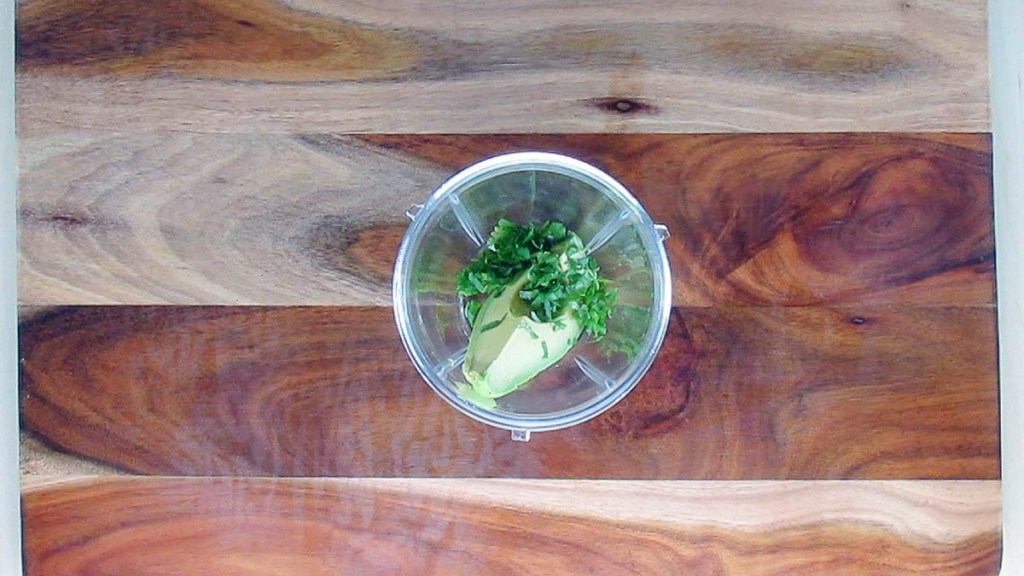
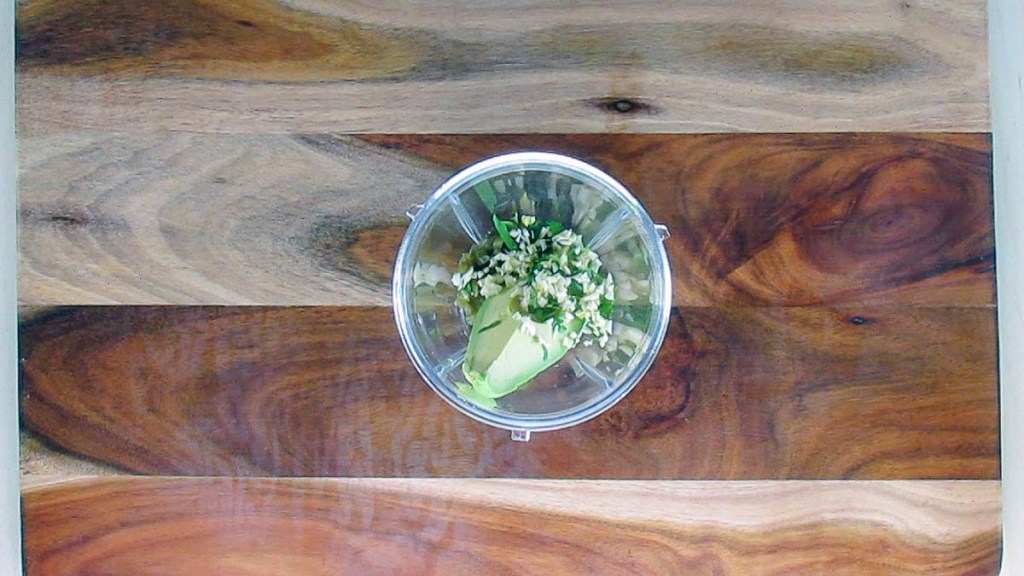
Place all of the ingredients into a blender.
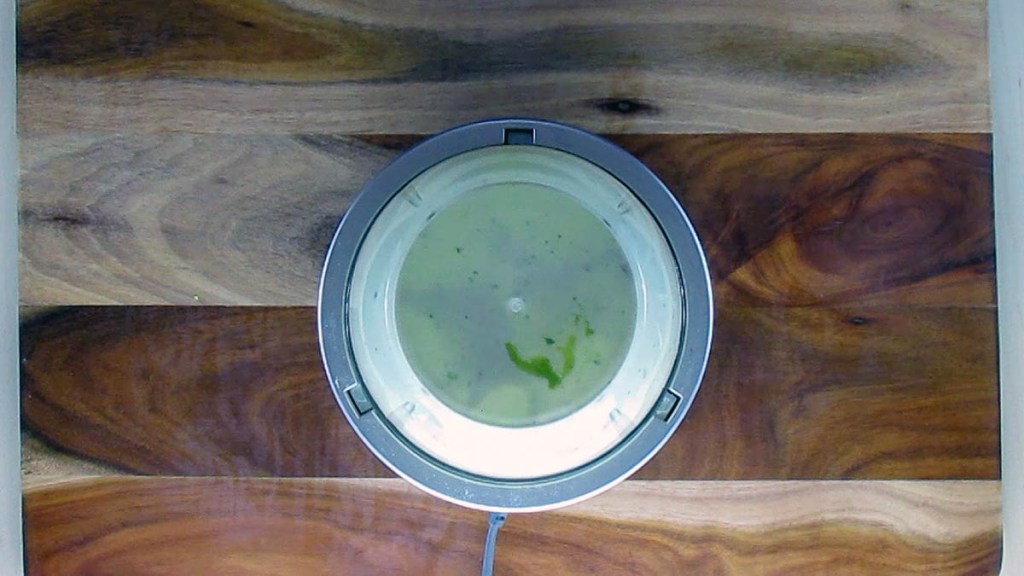
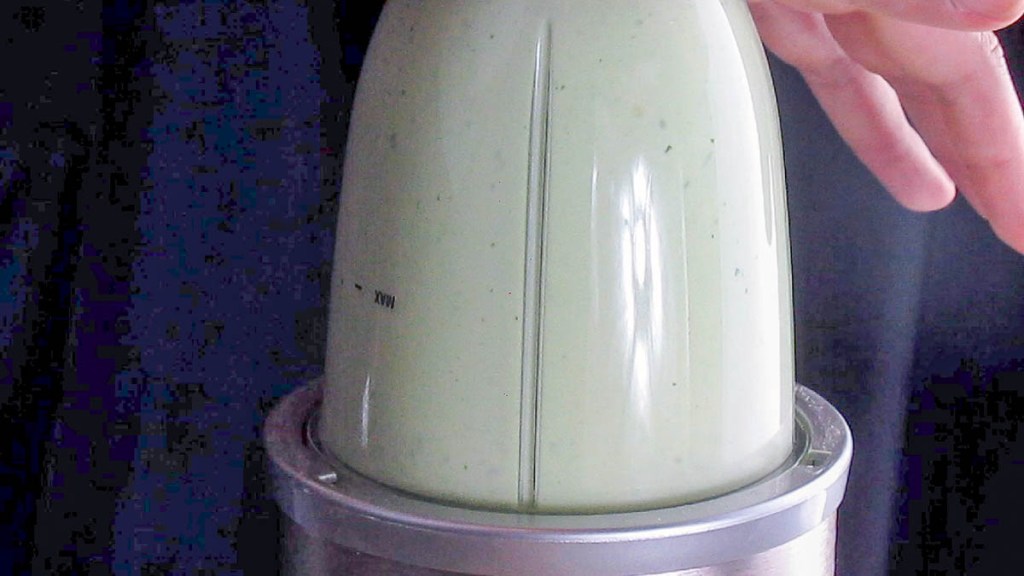
Blitz until the dressing is completely smooth and thick.
If the dressing is too thick, add a little more water.
Blitz until the dressing is completely smooth and thick, if the dressing is too thick add a little more water.
Nutrition
Per Serving: 108 calories; 4g fat; 16.2g carbohydrates; 3.9g protein
Equipment
Blender
Spatula
Chopping board
Knife
Spoon
Measuring cups
Measuring spoons
Citrus juicer
Nutritional disclaimer
Nutrition information is provided as an estimate based on the ingredients used and available in my area (New Zealand). The nutritional information is here to help you understand the recipe; I use MyFitnessPal to generate my estimates. For more accurate nutritional information, please use a nutritional calculator with the ingredients in your area.
If you are like me and you try to avoid mass-produced processed foods, the best option is to make your own. When you make your own, you control which ingredients you use and how much or how sweet you want it to be. Once you have a go at making your own and realise how easy it is, you will never go back to store-bought again.
Soy-free sauce
Soy and I don’t get along very well, actually, soy and my joints don’t get along very well. I try my best to stay away from soy, which can be difficult at times, especially when soy is the primary ingredient of what you want to eat. This soy-free alternative to Teriyaki sauce is my go-to for stir-fry and marinades. It is easy to make and uses coconut aminos, which are a great soy sauce alternative. If you have children who aren’t fans of spice, you can leave out the chilli flakes.
Teriyaki Sauce
Ingredients
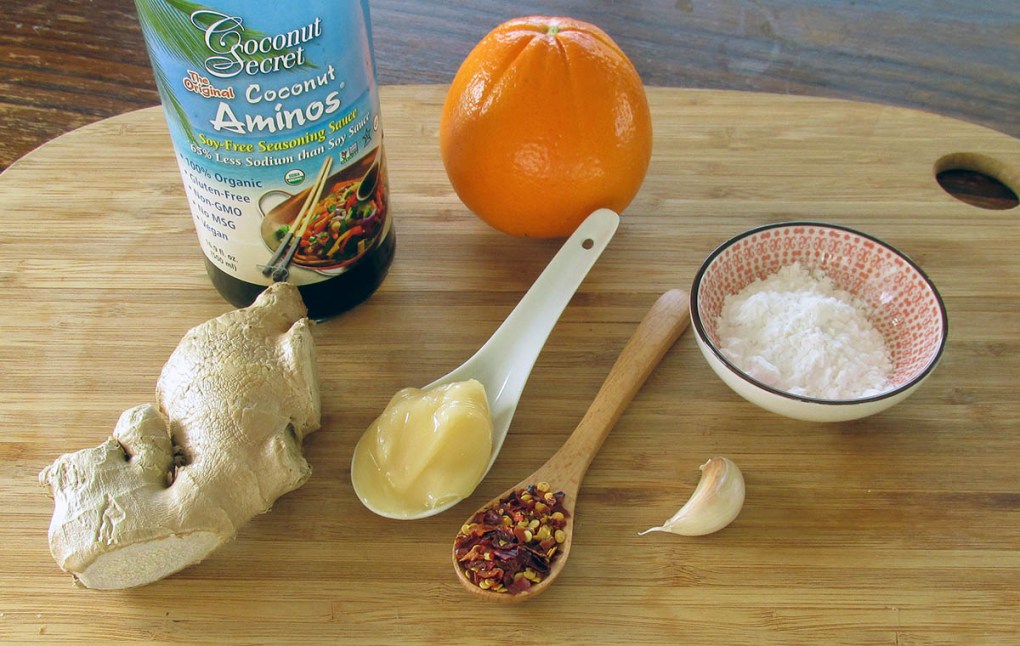
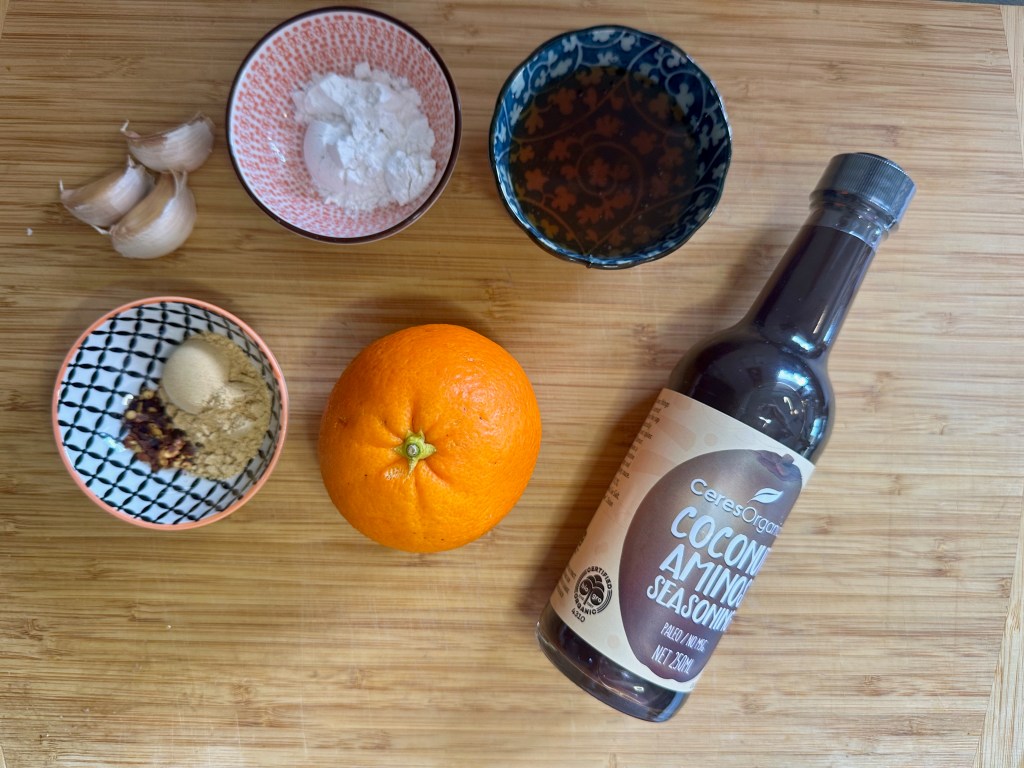
½ cup coconut aminos
¼ cup fresh orange juice
3 tbsp. honey
2 tbsp. freshly grated ginger
3 garlic cloves, minced
pinch chilli flakes
2 tsp. tapioca flour (optional- this is for thickening)
2 tbsp. water
Instructions
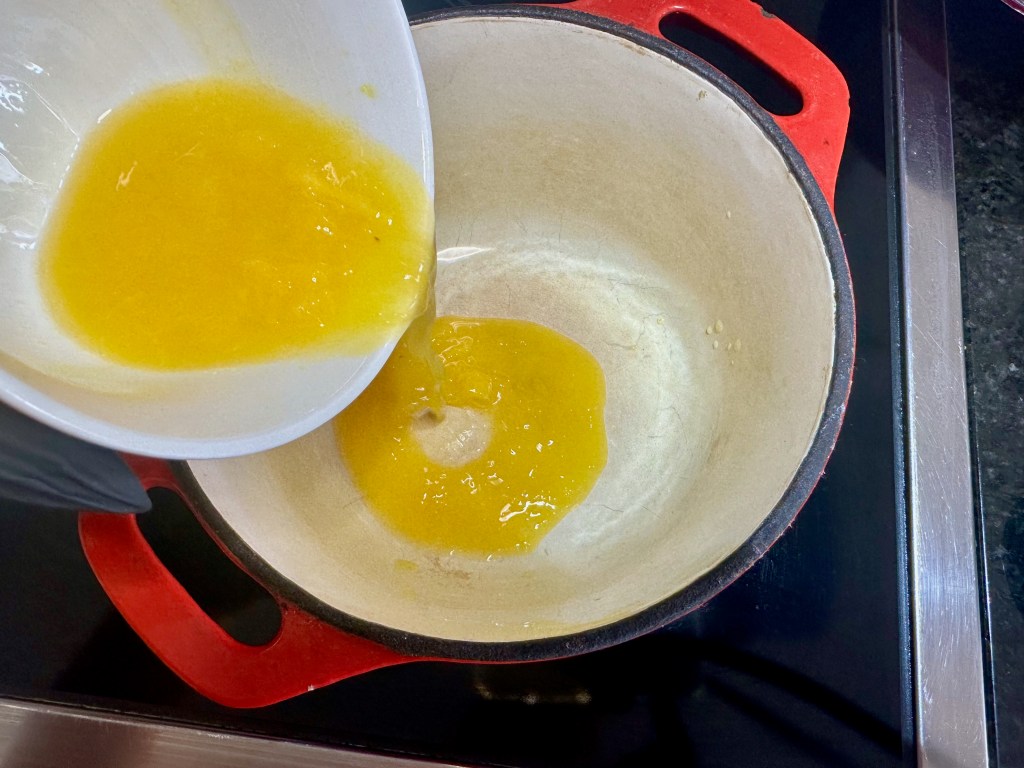
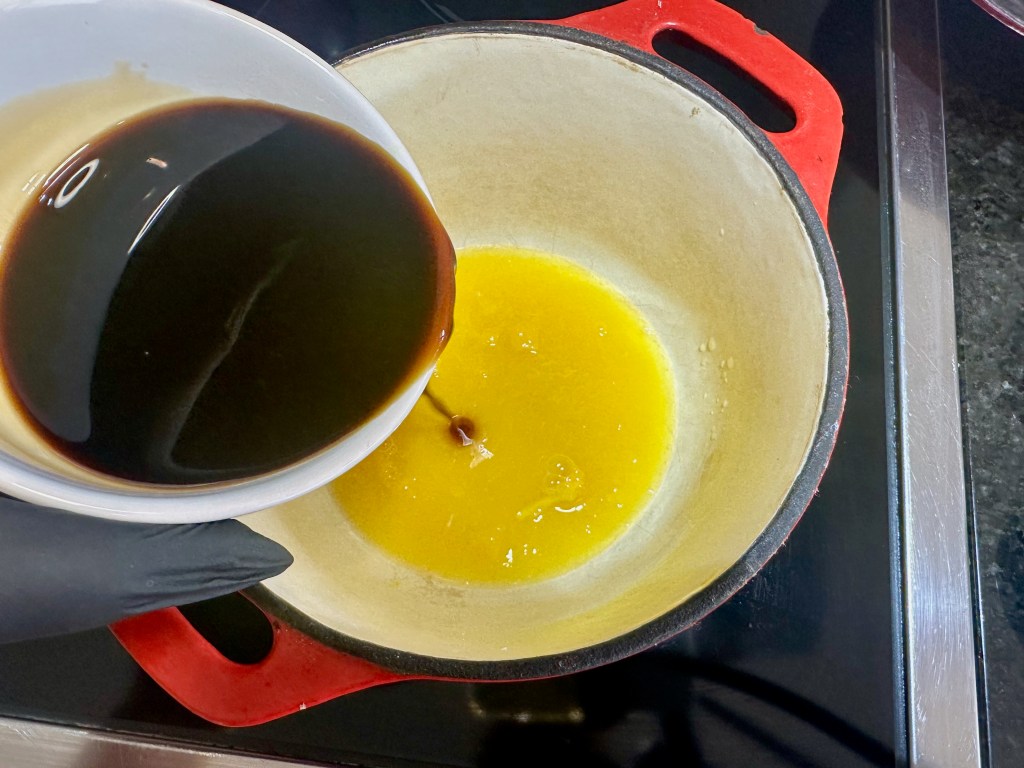
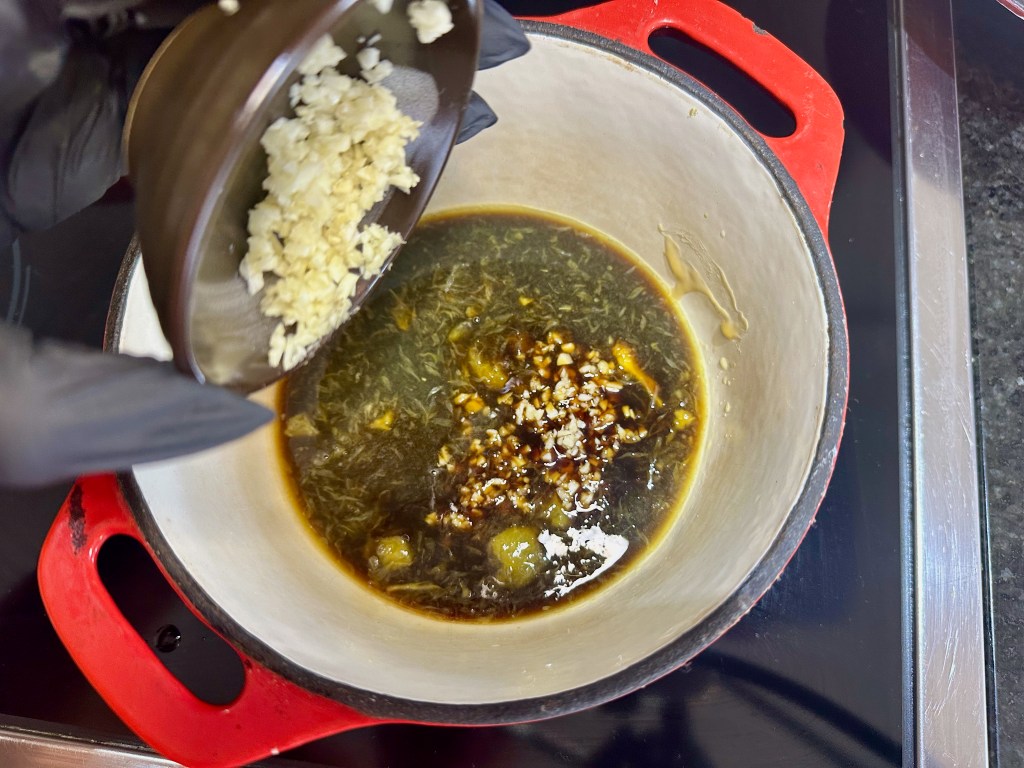
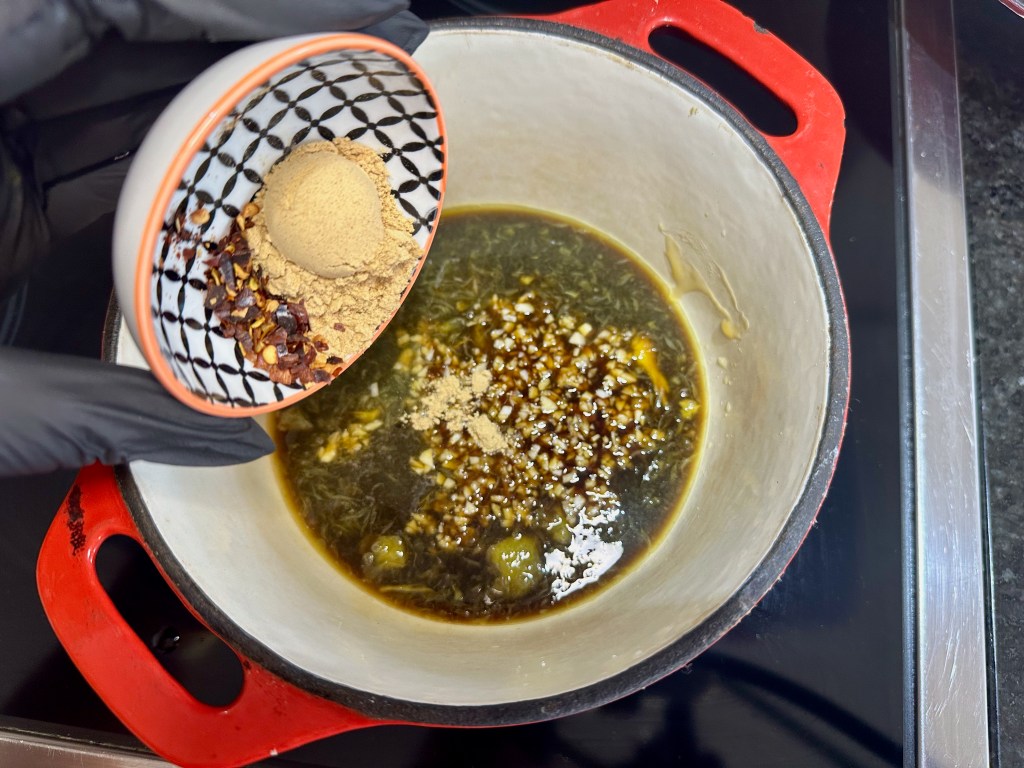
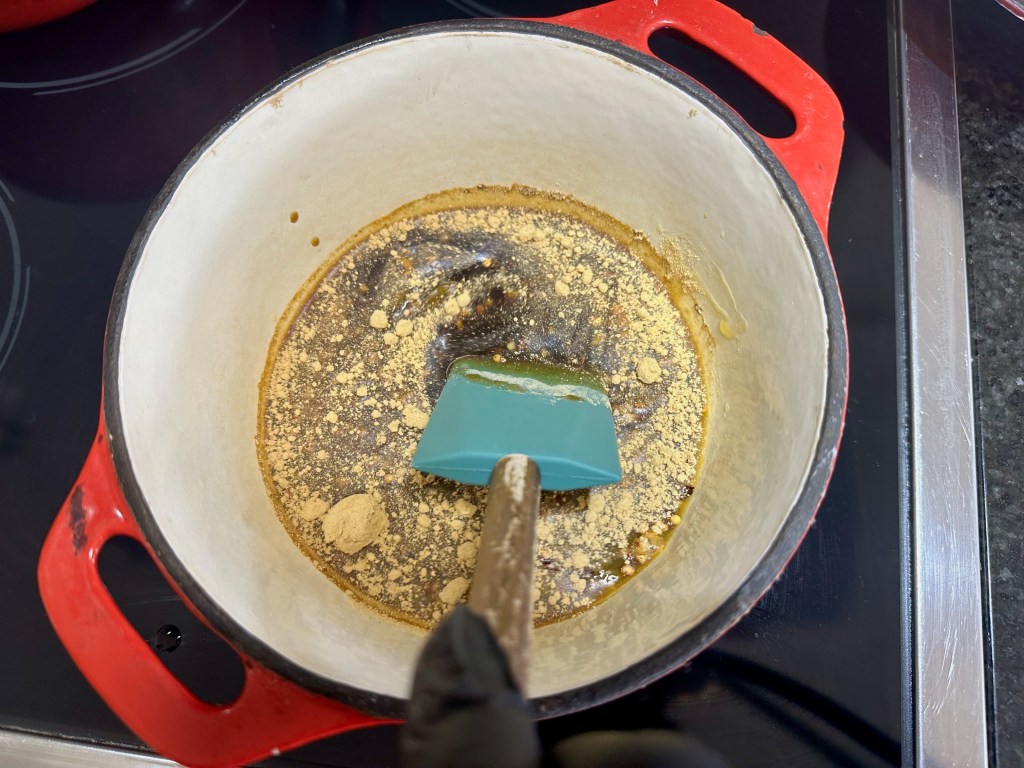
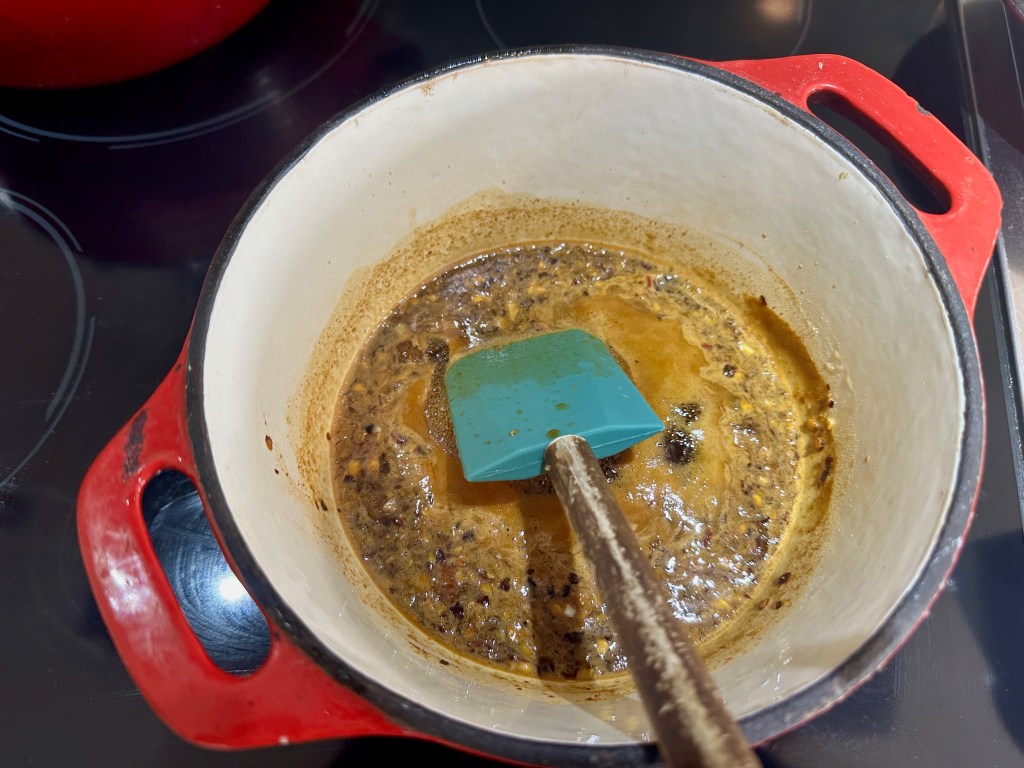
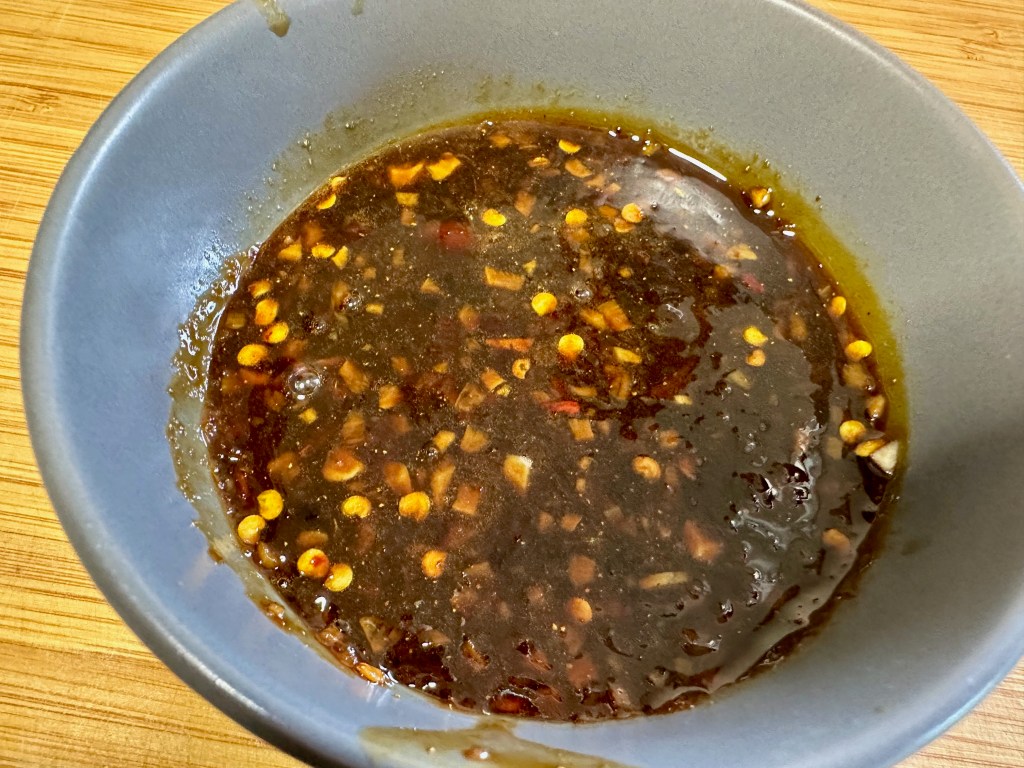
In a small saucepan over a medium heat mix together the coconut aminos, orange juice, honey, ginger, garlic and chilli flakes.
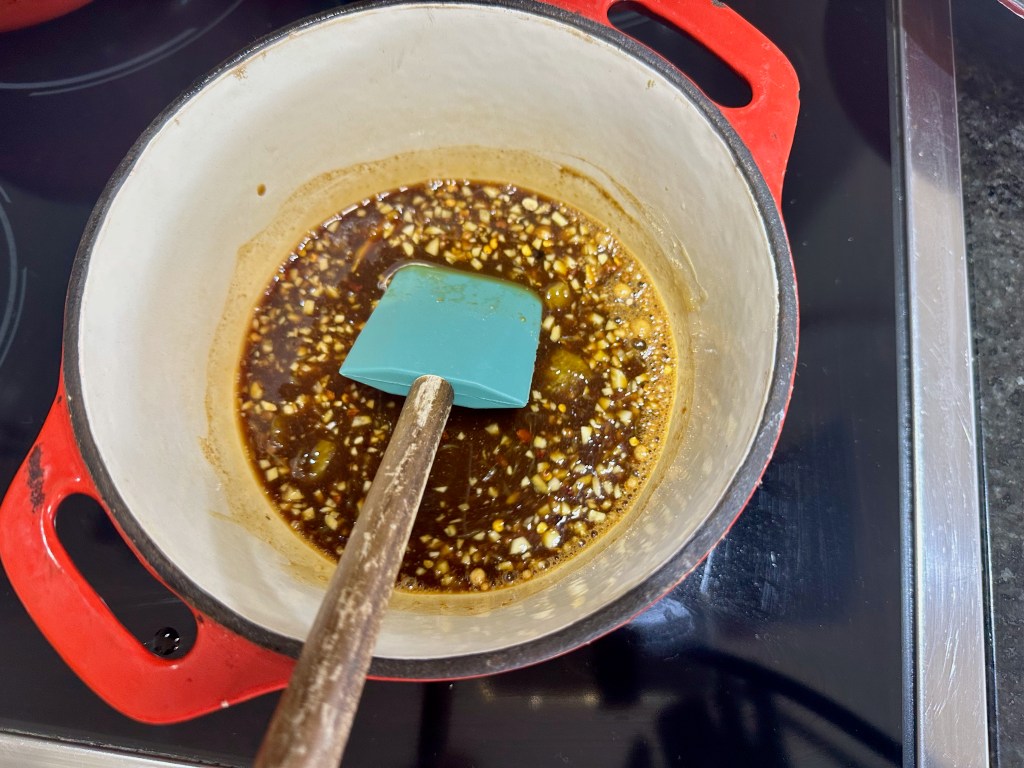
Simmer the sauce until it thickens.
Alternatively, you can thicken the sauce using tapioca flour, mix it with 2 tablespoons of cold water, and add the mixture to the sauce and cook until thicken.
2 tsp. tapioca flour (optional- this is for thickening)
2 tbsp. water
Directions
In a small saucepan over a medium heat, mix the coconut aminos, orange juice, honey, ginger, garlic and chilli flakes.
Simmer the sauce until it thickens.
Alternatively, you can thicken the sauce with tapioca flour: mix two tablespoons of cold water with one tablespoon of tapioca flour, then add the mixture to the sauce and cook until thickened.
Nutrition
Per Serving: 63 calories; 0g fat; 14.8g carbohydrates; 0.2g protein
Equipment
Measuring cups
Measuring spoons
Saucepan
Whisk
Spatula
Nutritional disclaimer
Nutrition information is provided as an estimate based on the ingredients used and available in my area (New Zealand). The nutritional information is here to help you understand the recipe; I use MyFitnessPal to generate my estimates. For more accurate nutritional information, please use a nutritional calculator with the ingredients in your area.
I am one of those unfortunate people who are allergic to not only peanuts but also tree nuts. When it comes to food options, not having nuts on the menu can be challenging at times and frustrating at others. There are so many foods I would love to try or eat regularly, but will never get the chance, thanks to nuts. Not eating nuts doesn’t have to be the end of the world; there are always replacements and alternatives that mean you can have a nut-free option. This recipe is my attempt to create a nut-free version of a usually nut-packed recipe.
Crackers are back on the menu
Crackers and cheese, oh, how I had missed thee. For a long time, crackers were off the menu because the wheat flour and sugar didn’t agree with my system. I wanted to find a suitable replacement that didn’t taste like cardboard.
Perfect cracker
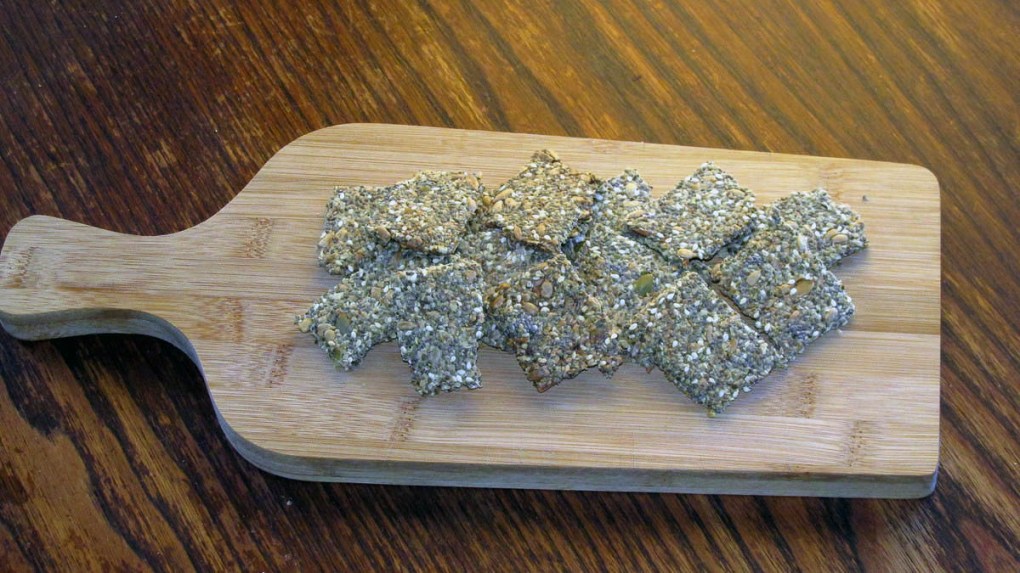
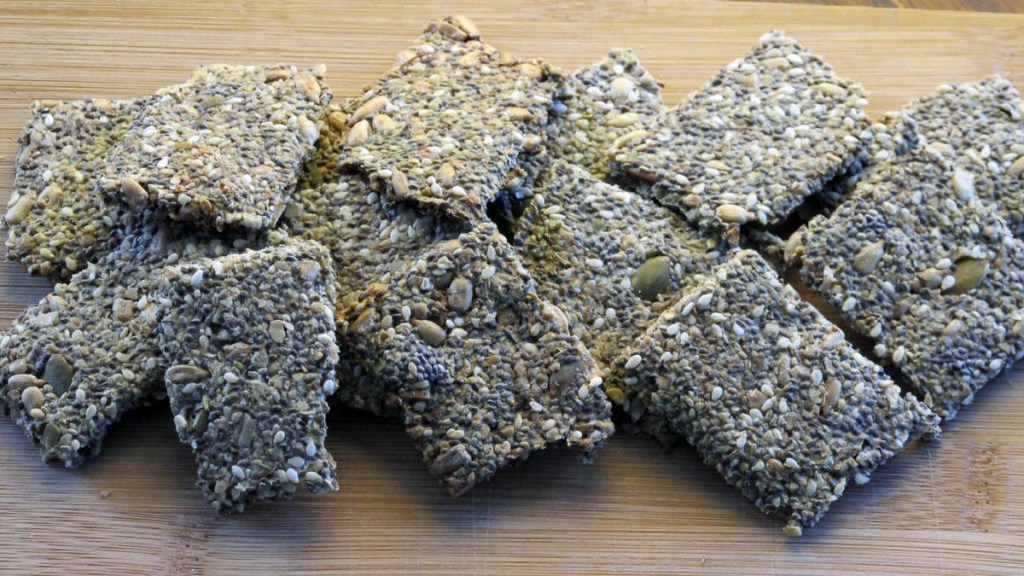
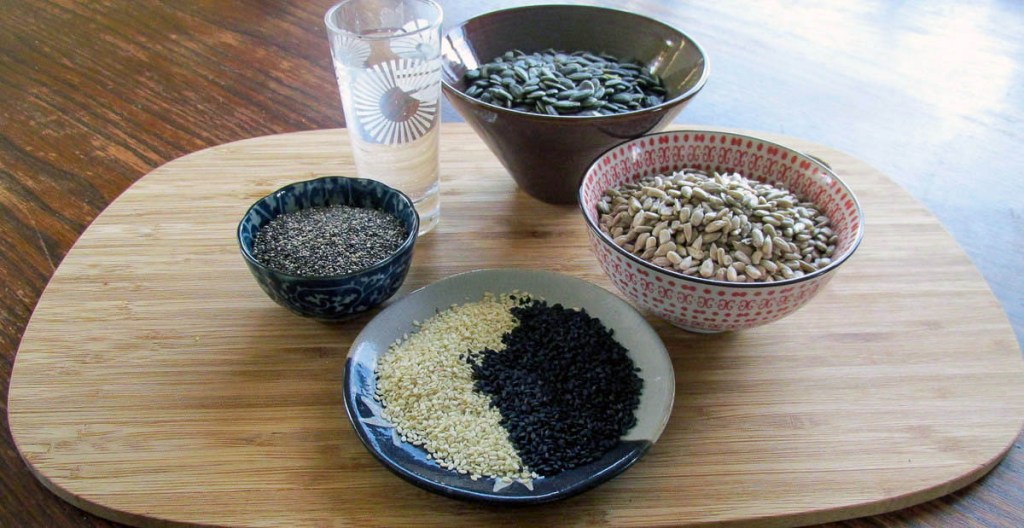
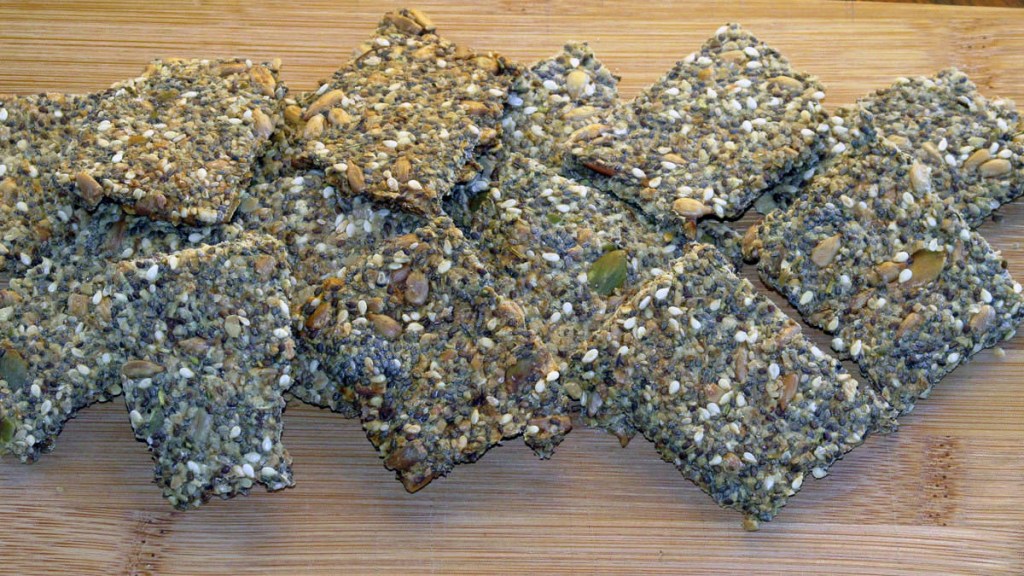
After a little trial and error, I came up with these nut-free crackers that are family-friendly and guilt-free. There are no fillers or gums in these crackers; the water and chia seeds bind everything together without ending up with soggy crackers. The recipe below creates plain and unflavoured crackers; they are an excellent starting point to add any flavour you want.
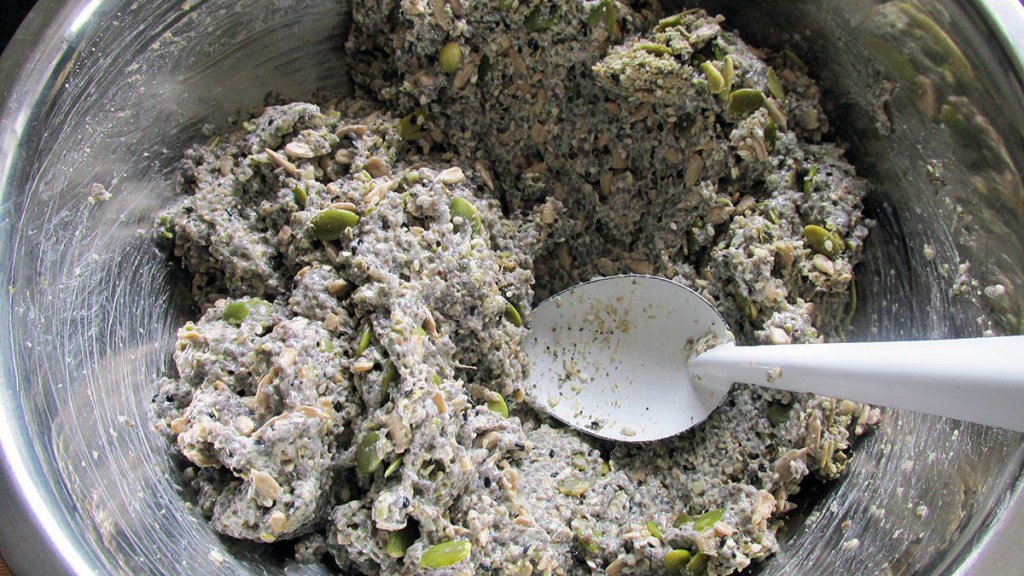
In a bowl, mix chia seeds with water and let them sit for 10 minutes. The chia seeds will then soak up the water and become sticky.
In a food processor, blend half of the sunflower seeds and pumpkin seeds until they are ground to a powder consistency.
Transfer the ground seeds to a bowl.
Add the remaining seeds to the bowl along with any seasoning and mix well.
Add the chia seed mix to the bowl and make sure it is well combined.
Preheat the oven to 170 degrees C/ 330 degrees F.
Line a baking tray with baking paper or a silicone liner and spread the seed mix over the tray.
The mix should be thin but without holes.
Use a knife to score marks in the mix, making it easier to break into crackers later.
Bake for 1 hour at 170 degrees C/ 330 degrees F.
When the crackers are completely dry and a light golden colour, take them out of the oven.
Allow the crackers to cool for a few minutes before breaking them along the score marks.
Allow the crackers to cool completely before serving or storing.
Nutrition
Per Serving:50 calories; 4g fat; 2g carbohydrates; 2g protein
Try this with
Cheese
Dips
Equipment
Small mixing bowl
Large mixing bowl
Food processor or spice mill
Spatula
Baking tray
Baking paper or silicone liner
Nutritional disclaimer
Nutrition information is provided as an estimate based on the ingredients used and available in my area (New Zealand). The nutritional information is here to help you understand the recipe; I use MyFitnessPal to generate my estimates. For more accurate nutritional information, please use a nutritional calculator with the ingredients in your area.
I love avocados and get very excited when they come into season. I would happily eat them with every meal, but guacamole is my favourite way to have them.
I will be honest; I am eating guacamole with almost every meal at the moment. I may add a healthy dose of jalapeño to make it too spicy for everyone else. I didn’t say I was doing that; I might be doing it. It could be that the jalapeños are extra spicy.
Back to the point
I have two ways to make guacamole; both are easy, but they give two different textures, so it is a matter of personal preference. If you are making guacamole for the kids to enjoy, you can leave the chilli out of the recipe. This Guacamole recipe is suitable for those eating Primal, Paleo, and Clean. With minor modification, it is also kid-friendly; leave out the chilli.
Guacamole recipe
Ingredients
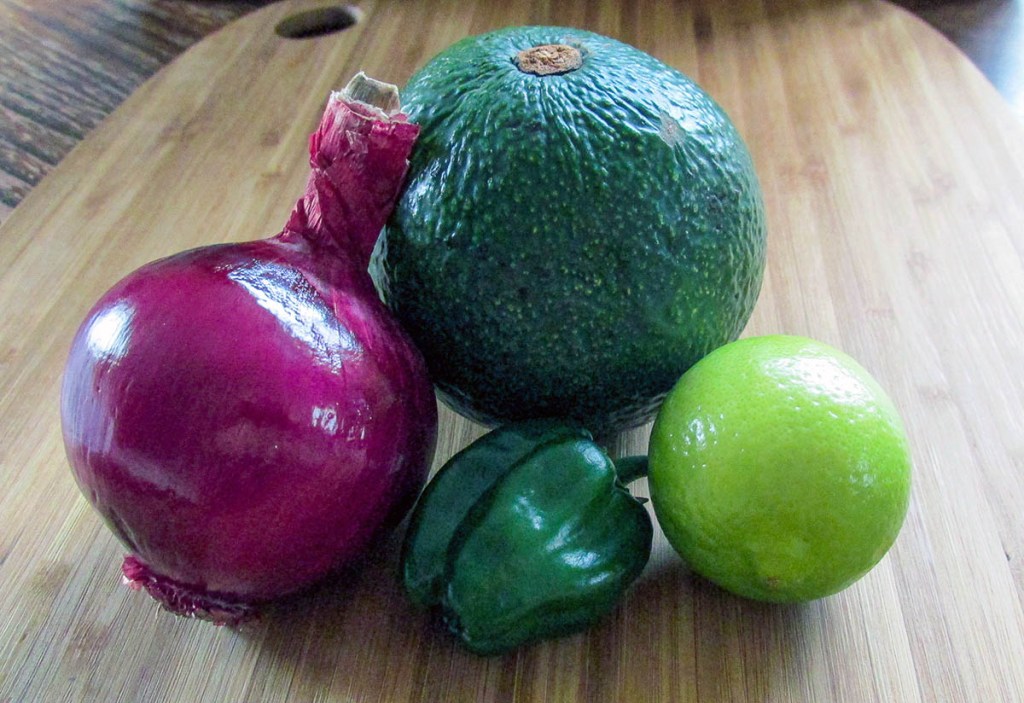
2 avocados
1/2 red onion
1 jalapeno chilli (optional)
1 tbsp. lemon juice
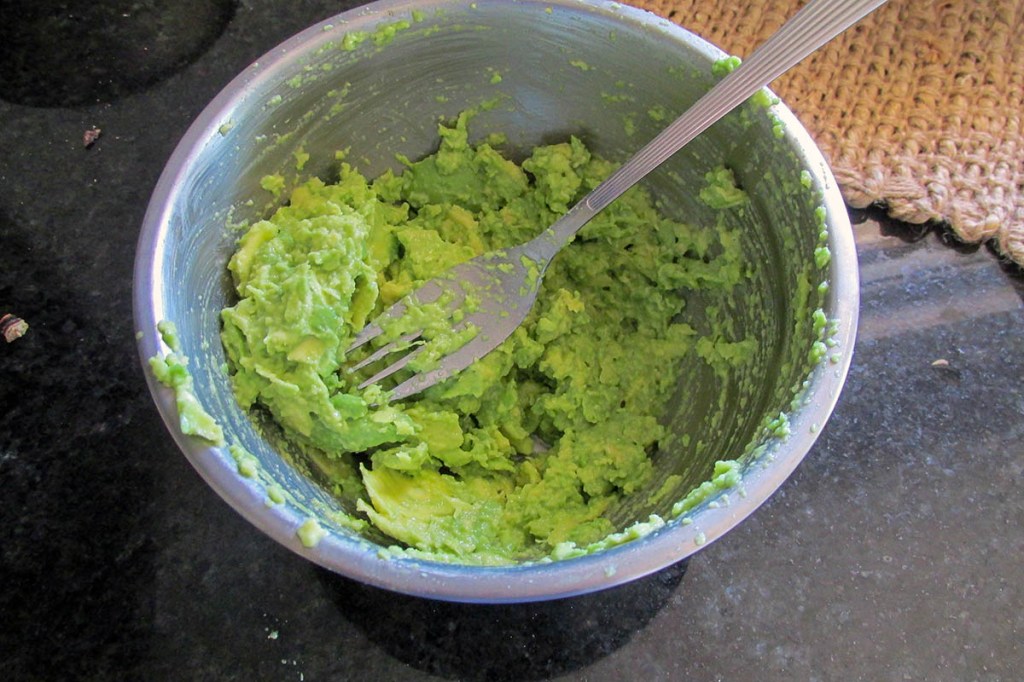
Take your avocados, cut them in half, remove the stones, and then scoop out the flesh
This is where you get to choose.
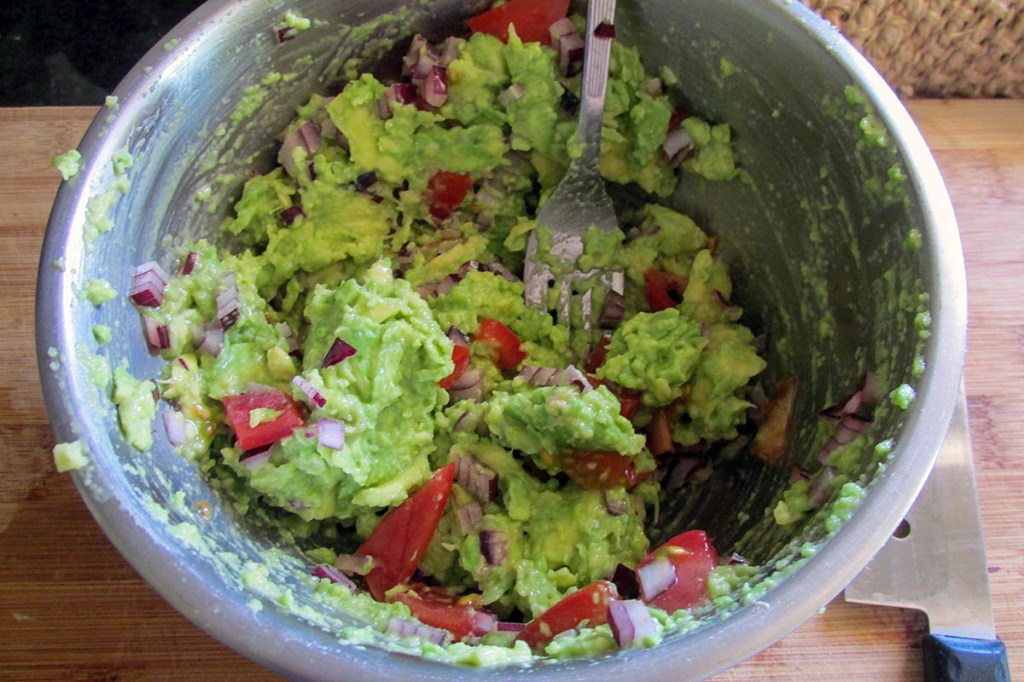
Option 1 Chunky
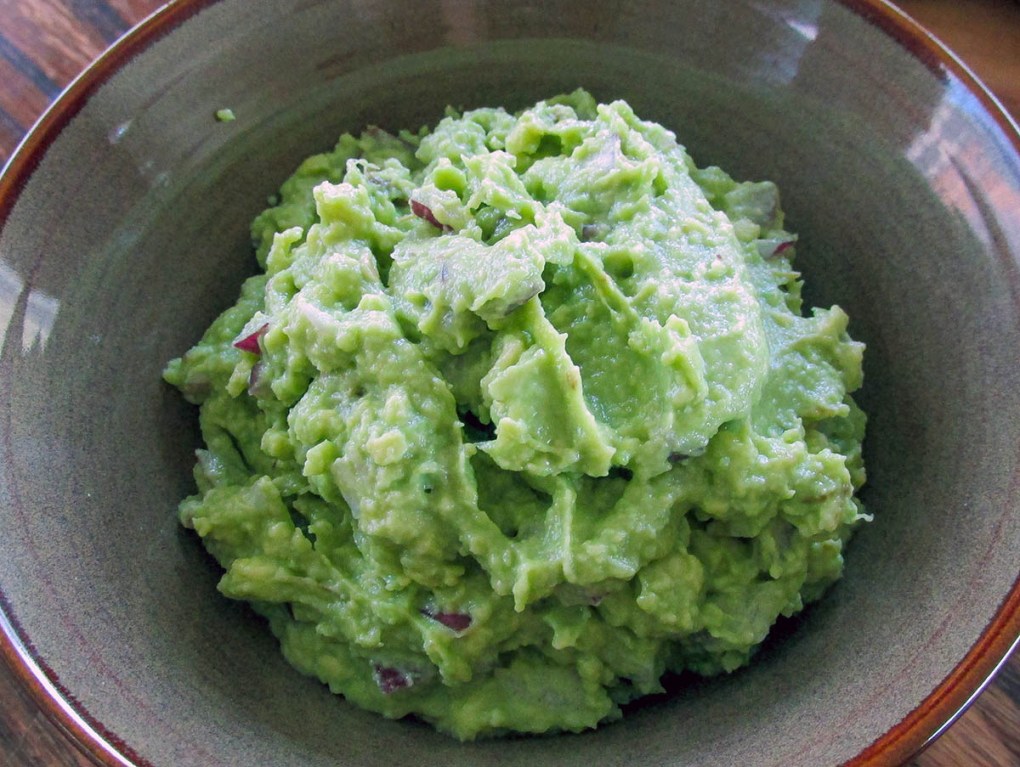
For a more chunky texture, I use a food processor to finely mince the chilli, pulse the onion then add the avocado with lemon juice and pulse again, this gives a part chunky part smooth texture that is great as a dip or addition to something spicy.
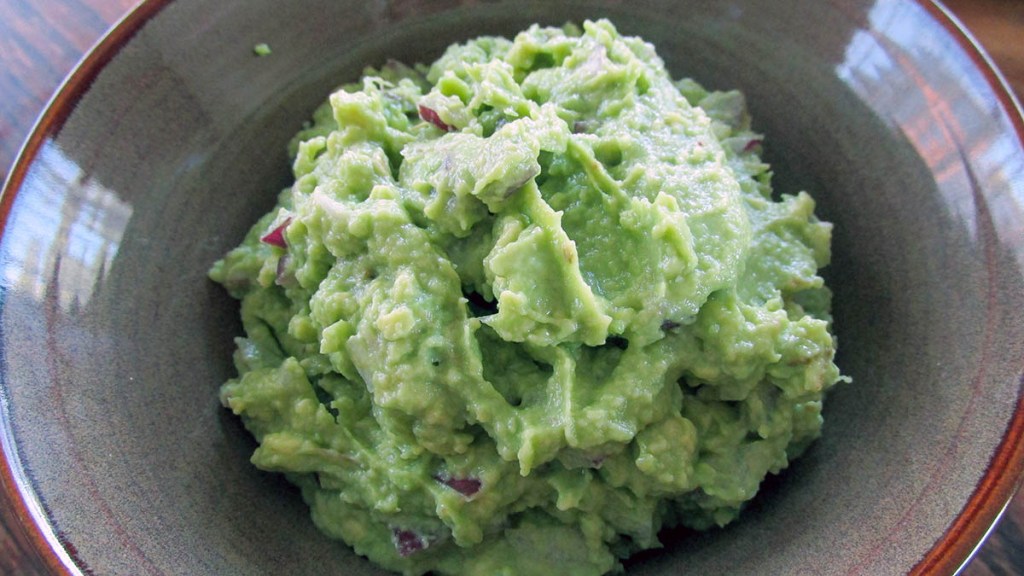
Option 2 Smooth
For a smoother texture, I like to finely mince the chilli and onion together into a paste, add the avocado and lemon juice and blend until you get a smooth texture.
If you are making guacamole without a food processor, it is down to you how finely you want to chop your ingredients and how much you mush the avocado with a fork.
The result should still be great tasting guacamole
Take your avocados, cut them in half, remove the stones, and then scoop out the flesh
This is where you get to choose.
For a more chunky texture I use a food processor to finely mince the chilli, pulse the onion then add the avocado with lemon juice and pulse again, this gives a part chunky part smooth texture that is great as a dip or addition to something spicy.
Or
For a smoother texture, I like to finely mince the chilli and onion together into a paste, add the avocado and lemon juice and blend until you get a smooth texture.
If you are making the guacamole without a food processor, it is down to you how finely you want to chop your ingredients.
The result should still be great tasting guacamole
Nutrition
Per Serving: 39 calories; 3 g fat; 2 g carbohydrates; 1 g protein
Equipment
Knife
Chopping board
Food processor
Measuring spoons
Fork
Nutritional disclaimer
Nutrition information is provided as an estimate based on the ingredients used and available in my area (New Zealand). The nutritional information is here to help you understand the recipe; I use MyFitnessPal to generate my estimates. For more accurate nutritional information, please use a nutritional calculator with the ingredients in your area.
Bread is a funny thing. It is one of the few foods I know that does not agree with me, but I still crave it regularly. I try my very best to avoid it, but some meals just feel incomplete without it. Burgers are one of the meals that don’t feel right without bread. I love a salad bun, but sometimes, I want a burger bun.
Quick bread
Time to experiment
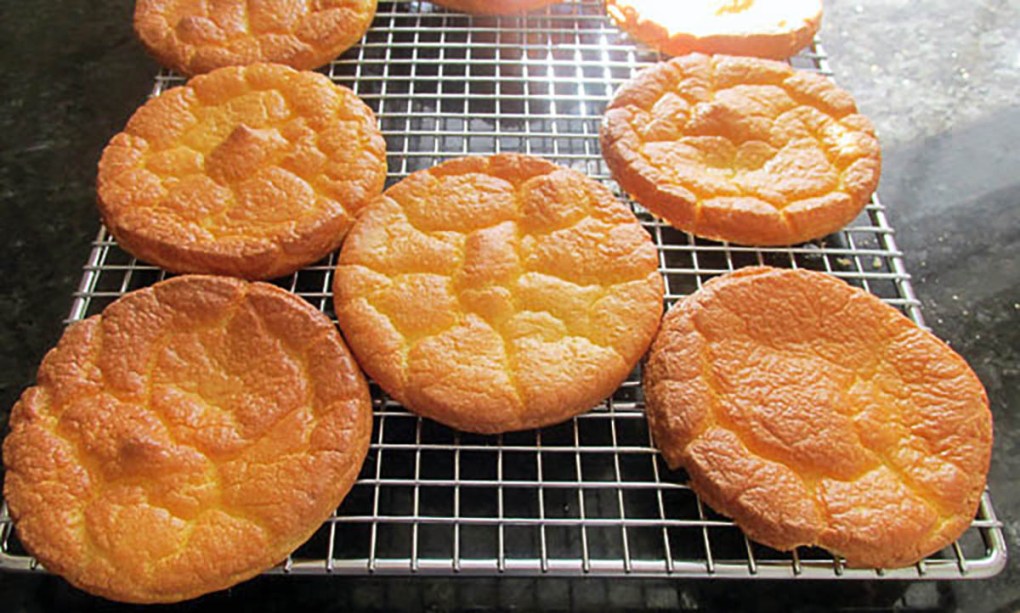
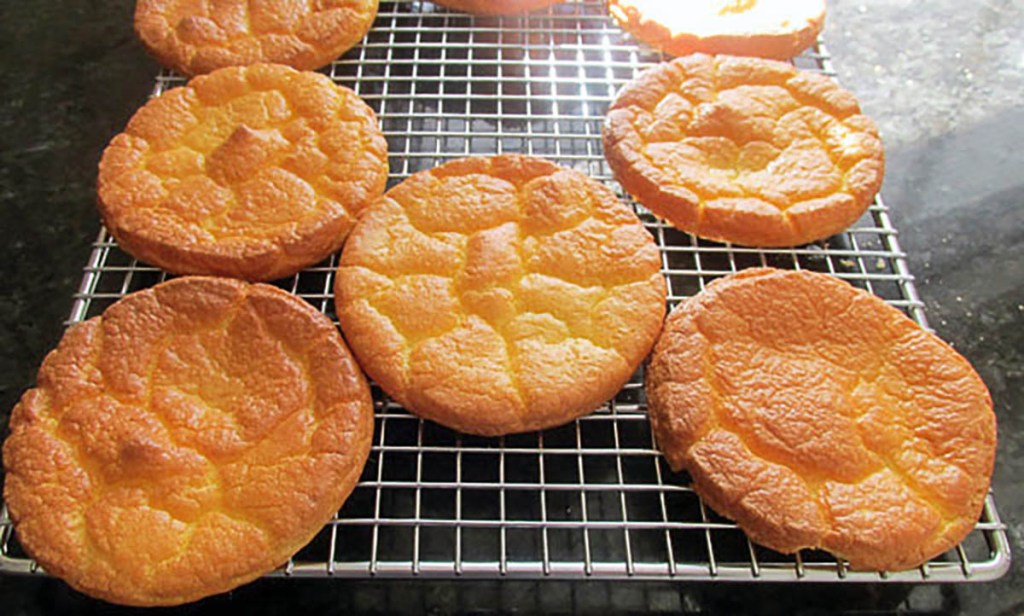
I’ve experimented with different recipes using gluten-free, grain-free flours over the years, but never felt satisfied with the result until now. Now, full disclaimer: This bread is not bread. These little ‘bread’ rounds are made from egg and cream cheese, no flour or yeast, but they are amazing. Don’t get me wrong—they are not ‘like’ bread—they are nothing like bread; they are better than bread in a few ways.
It’s bread Jim but not as we know it
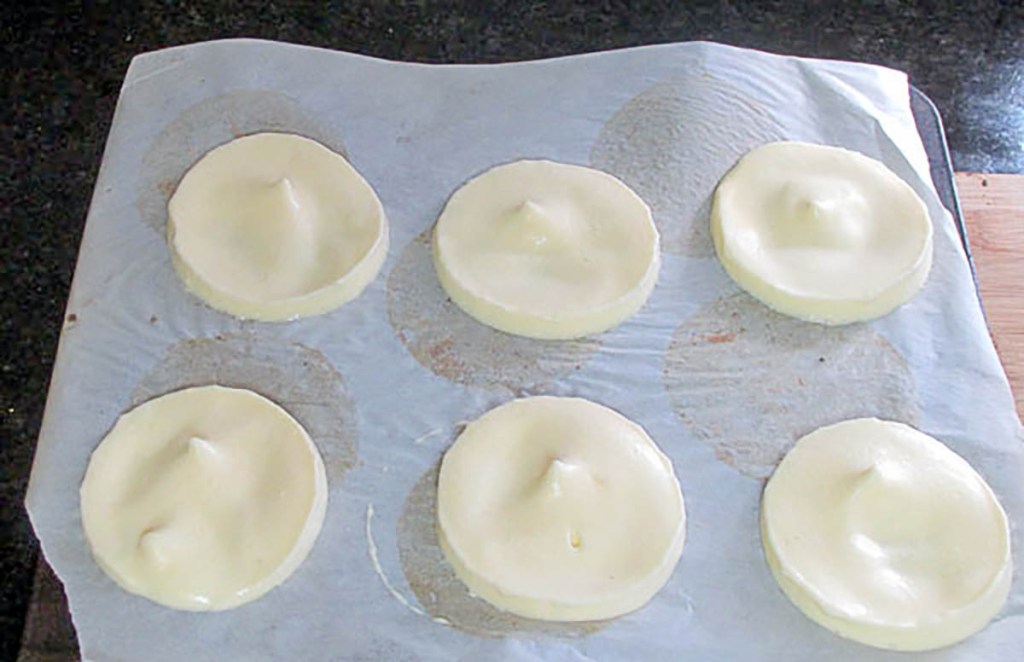
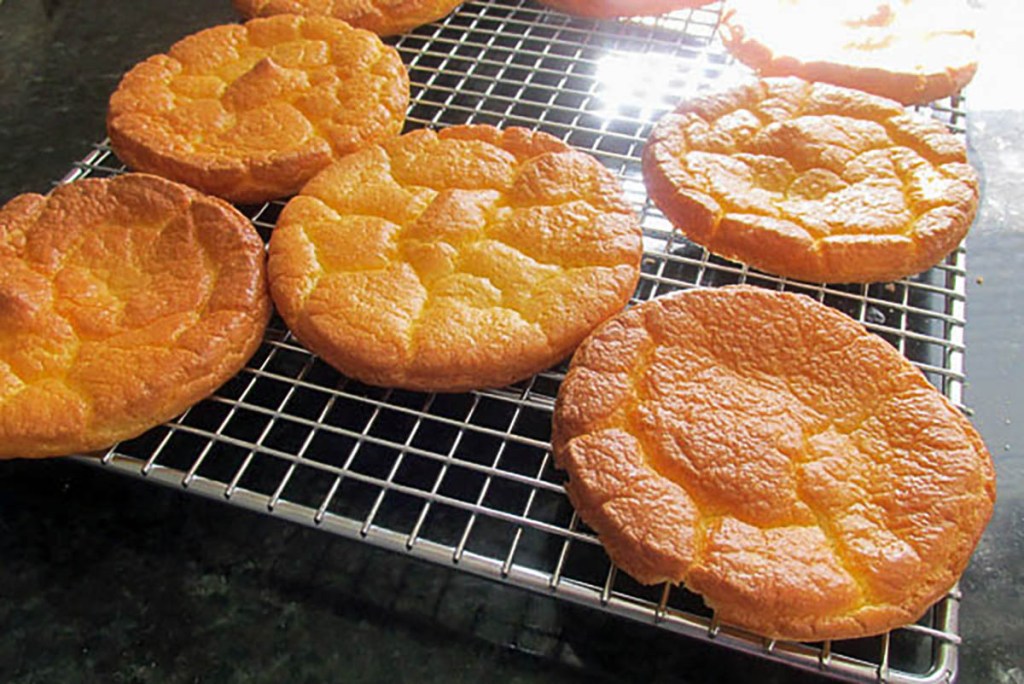
Sorry, my inner geek was showing again. Now with the Star Trek reference out of the way, let us return to the bread. They might look like a squished meringue, but I can assure you they are not. They can stand up to a burger and make a great sandwich option without the downside of a flour-based bread, like feeling very full or bloated. They don’t break apart when you pick them up or crumble while you eat them like some gluten-free breads. The structural integrity of these little bread rounds is impressive. They have stood up to melted cheese, sauerkraut and even sliced tomatoes so far for me. If you are looking for an easy replacement for a slice of bread without feeling like you have cardboard as an alternative, give these bad boys a go.
Quick bread recipe
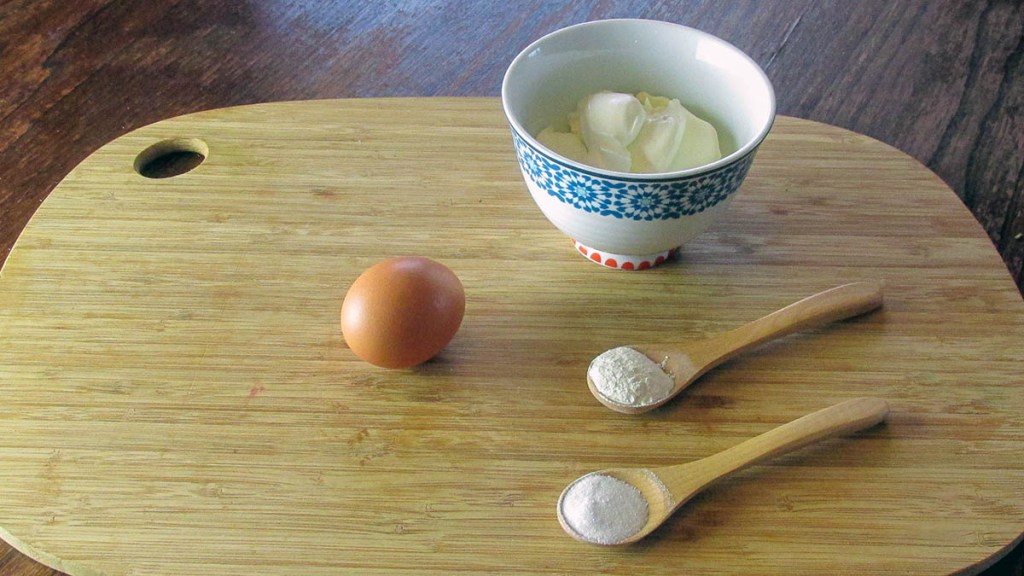
Quick bread ingredients
Ingredients
3 eggs, separated
3 Tbsp. cream cheese
¼ tsp. cream of tartar
1 tbsp. garlic powder
Instructions
Preheat the oven to 150 degrees C, 300 degrees F
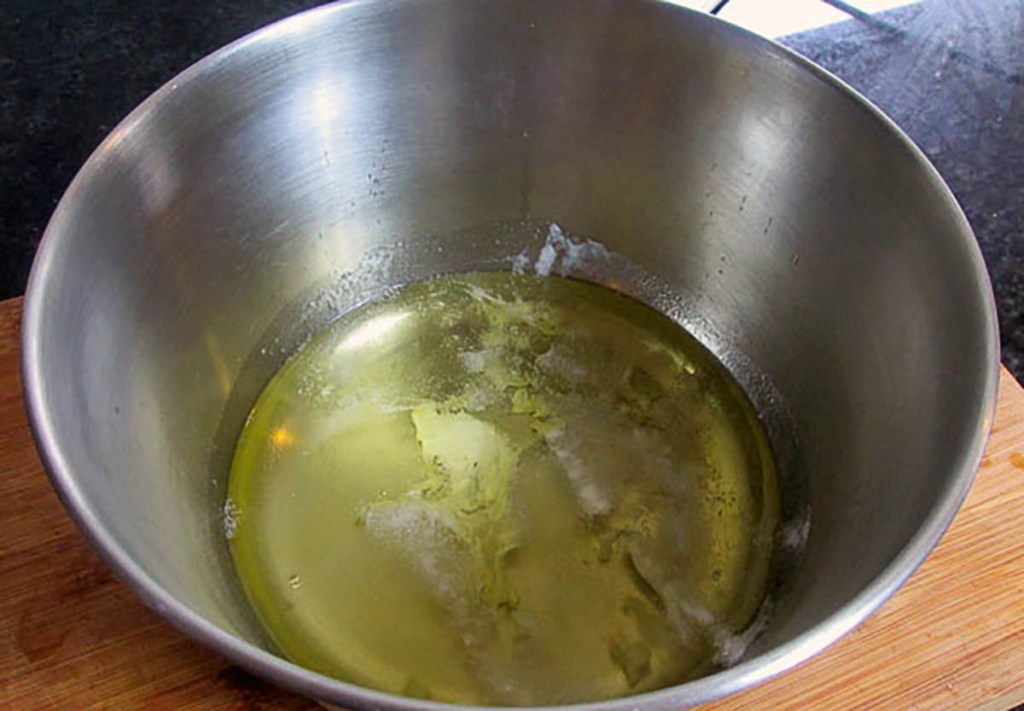
Separate the eggs; there must be no yolk in the white.
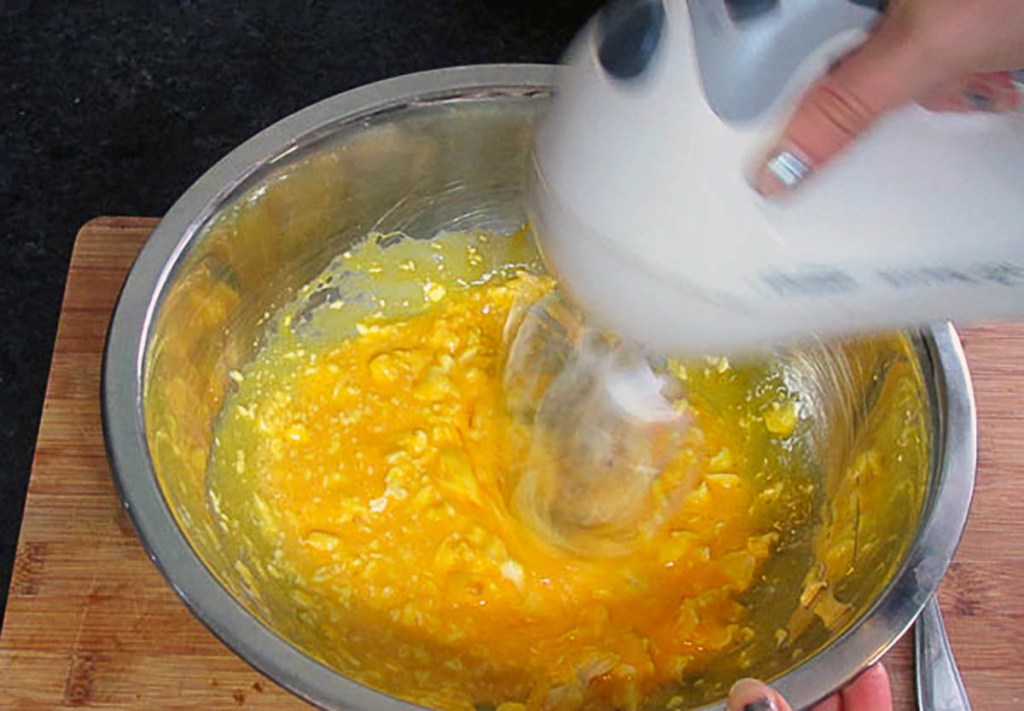
In one bowl add the egg yolks, cream cheese and garlic powder.Whisk together the egg yolks, cream cheese and garlic powder.whisk together the egg yolks, cream cheese and garlic powder until smooth.
Whisk together the egg yolks, cream cheese, and garlic powder in a bowl until smooth.
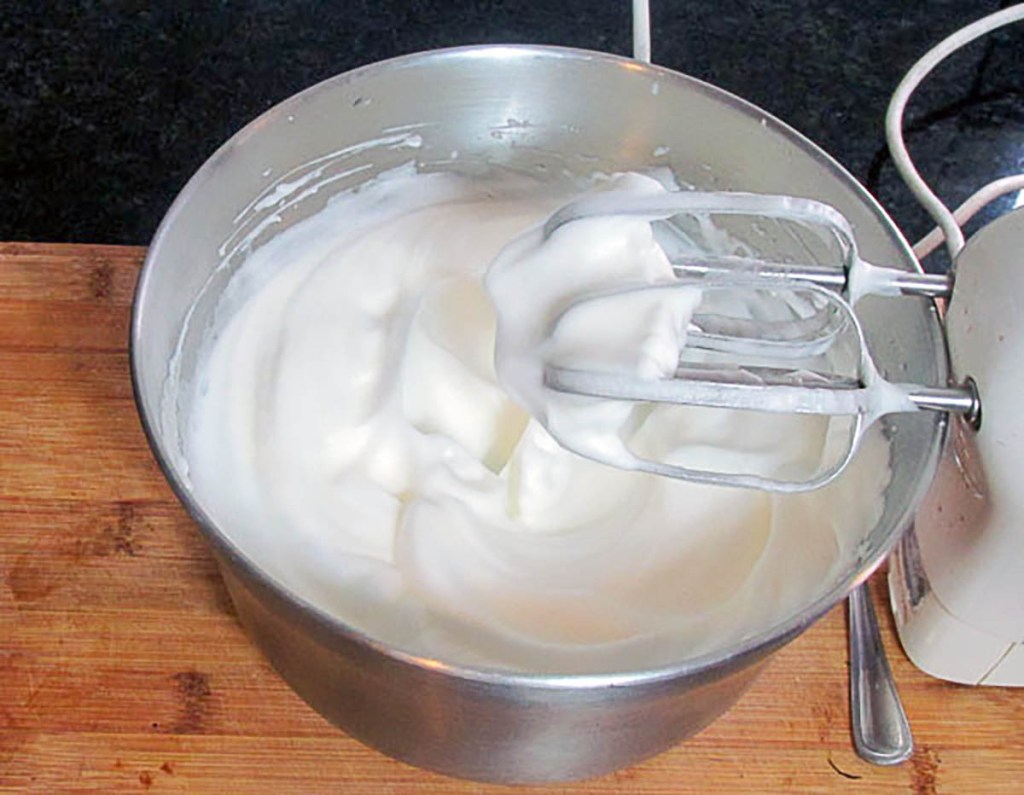
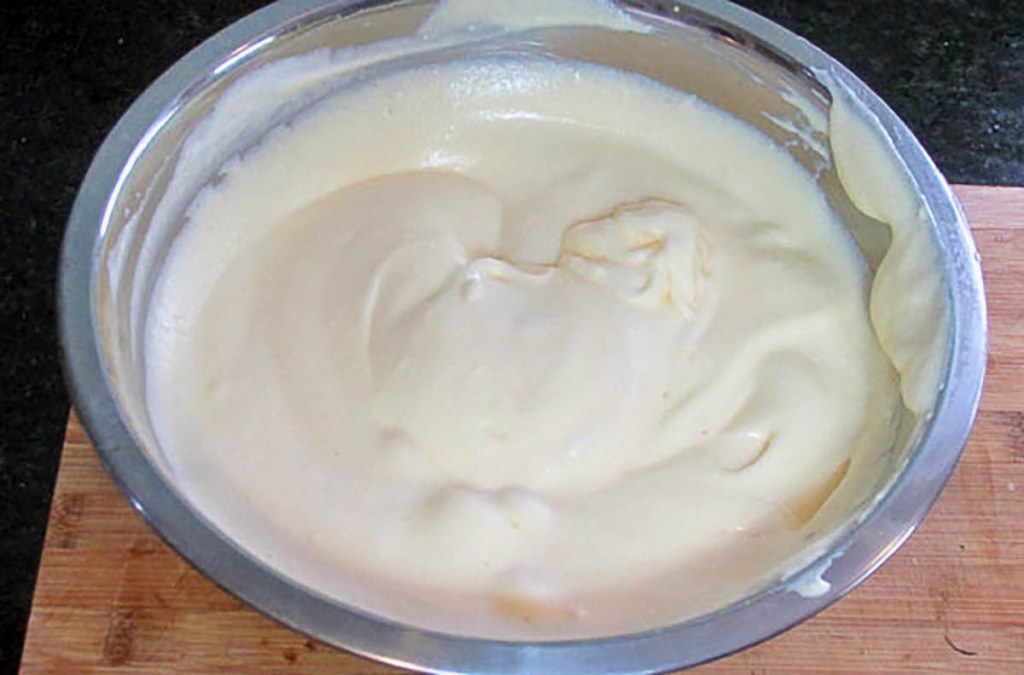
In another bowl, whisk the cream of tartar and the whites; whisk until the whites are fluffy and form stiff peaks.
In another bowl add the egg whites and cream of tartar.Whisk until the whites are fluffy and form stiff peaks.
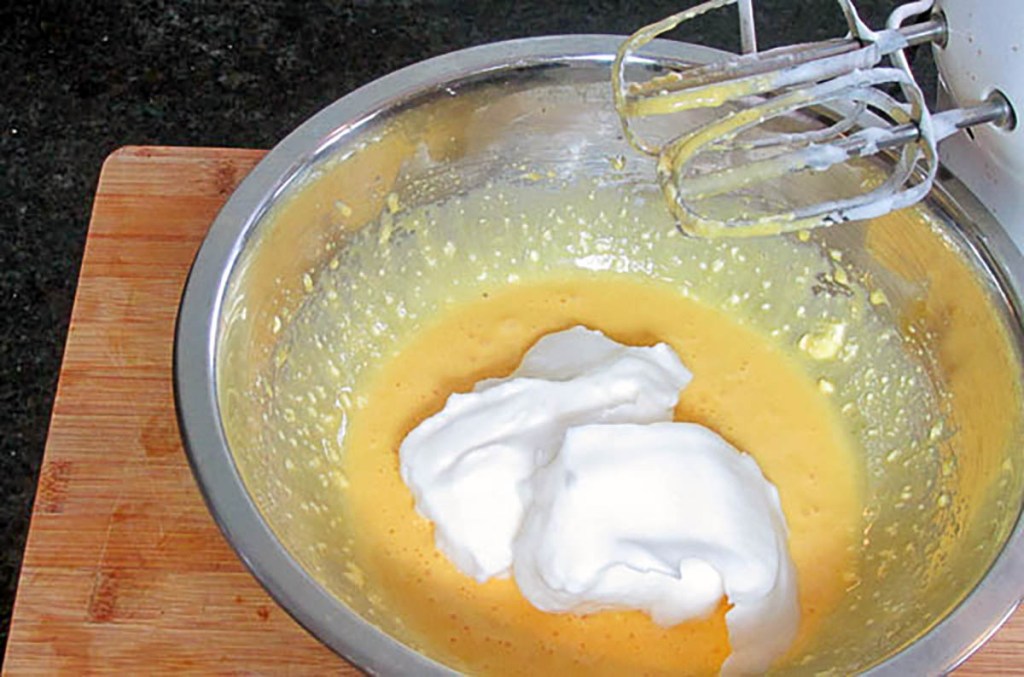
Mix one tablespoon of the egg whites into the egg yolk mix.
Take one tablespoon of the egg whites and mix it into the egg yolk mix.
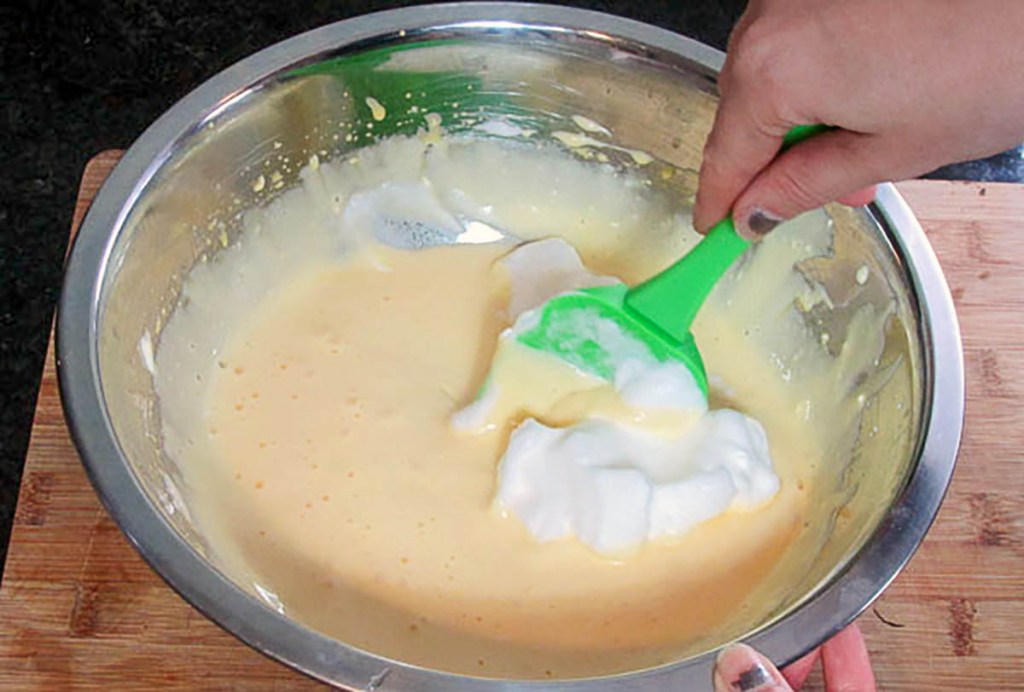
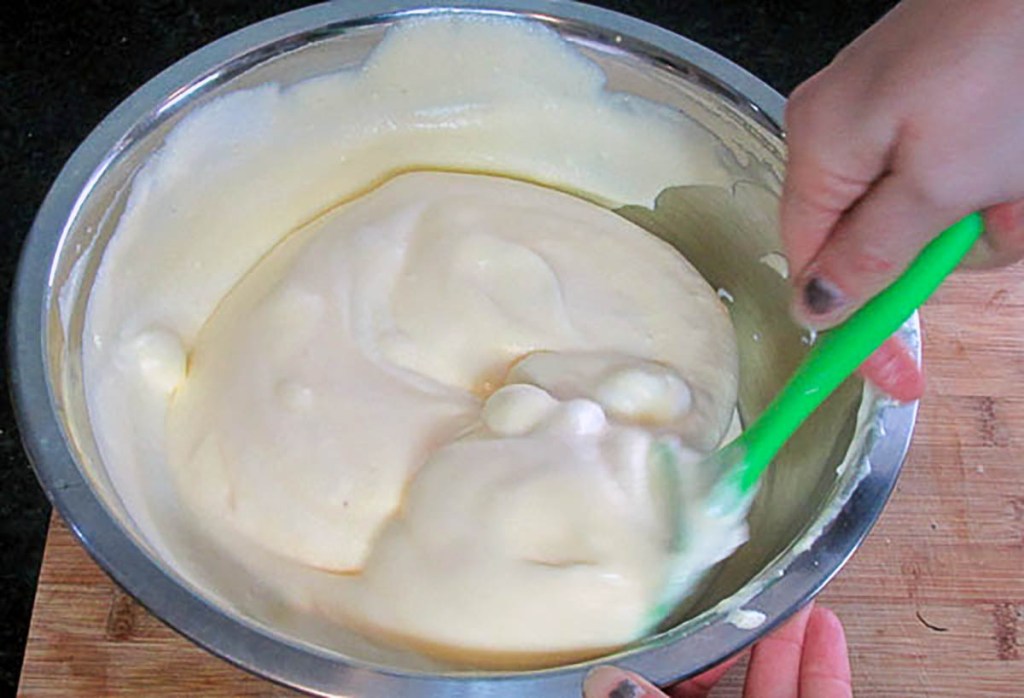
Slowly fold the egg whites into the egg yolk mixture, trying not to break down the egg whites too much.
Slowly fold the egg whites into the egg yolk mixture, try not to break down the egg whites too much.Try not to break down the egg whites too much.Bread mix
Line a baking tray with baking paper
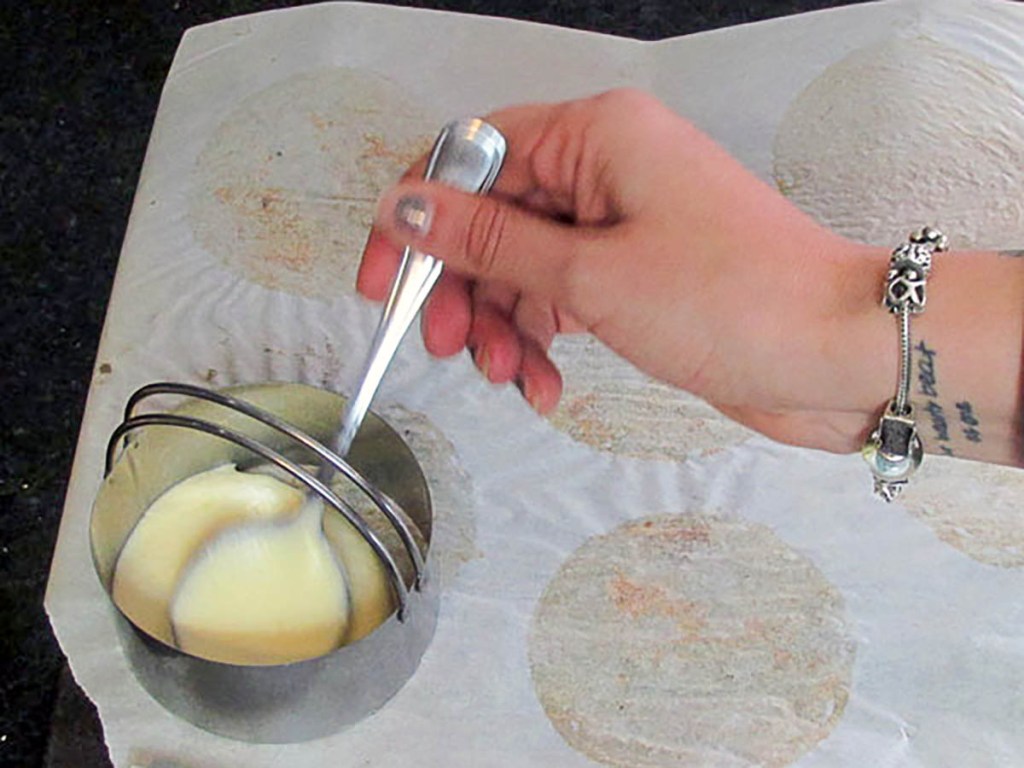
Spoon the mixture into 12 even disks.
Spoon the mixture into 12 even disks.Spoon the mixture into 12 even disks.
Bake for 20 minutes in the middle of the oven.
Move the tray to the top of the oven for a minute to colour the bread, make sure to watch so that the bread does not burn.
Remove the bread from the oven and transfer to a cooling rack for 10 minutes before eating.
This bread will keep in an airtight container in the fridge for 7 days.
This keto friendly bread is easy to make and a great alternative for traditional bread
Credit: Cath @ easycleaneats
Ingredients
3 eggs, separated
3 tbsp. cream cheese
1/4 tsp. cream of tartar
1 tbsp. garlic powder
Directions
Preheat the oven to 150 degrees C, 300 degrees F
Separate the eggs; there must be no yolk in the white.
In a bowl, whisk together the egg yolks, cream cheese and garlic powder until smooth.
In another bowl, whisk together the cream of tartar and the whites; whisk until the whites are fluffy and form stiff peaks.
Take one tablespoon of the egg whites and mix it into the egg yolk mix.
Slowly fold the egg whites into the egg yolk mixture, try not to break down the egg whites too much.
Line a baking tray with baking paper
Spoon the mixture into 12 even disks.
Bake for 20 minutes in the middle of the oven.
Move the tray to the top of the oven for a minute to colour the bread, make sure to watch so that the bread does not burn.
Remove the bread from the oven and transfer to a cooling rack for 10 minutes before eating.
This bread will keep in an airtight container in the fridge for 7 days.
Nutrition
Per Serving: 58 calories; 2 g fat; 6 g carbohydrates; 3 g protein
Equipment
Fork
Spatula
Whisk
2 bowls
Baking tray
Baking paper
Cookie cutter for discs
Cooling racks
Measuring spoons
Nutritional disclaimer
Nutrition information is provided as an estimate based on the ingredients used and available in my area (New Zealand). The nutritional information is here to help you understand the recipe; I use MyFitnessPal to generate my estimates. For more accurate nutritional information, please use a nutritional calculator with the ingredients in your area.
I think I have a problem. No, I am not talking about my addiction to buying workout clothing or Post-its. I am talking about my addiction to all of the Mexican food.
It could be the spicy and fresh flavour combinations, the colours, or the avocados. It is most likely all of the above.
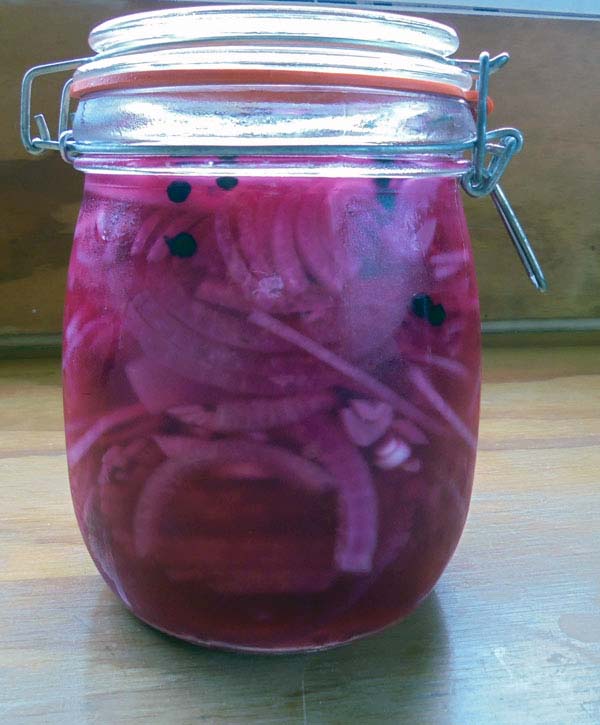
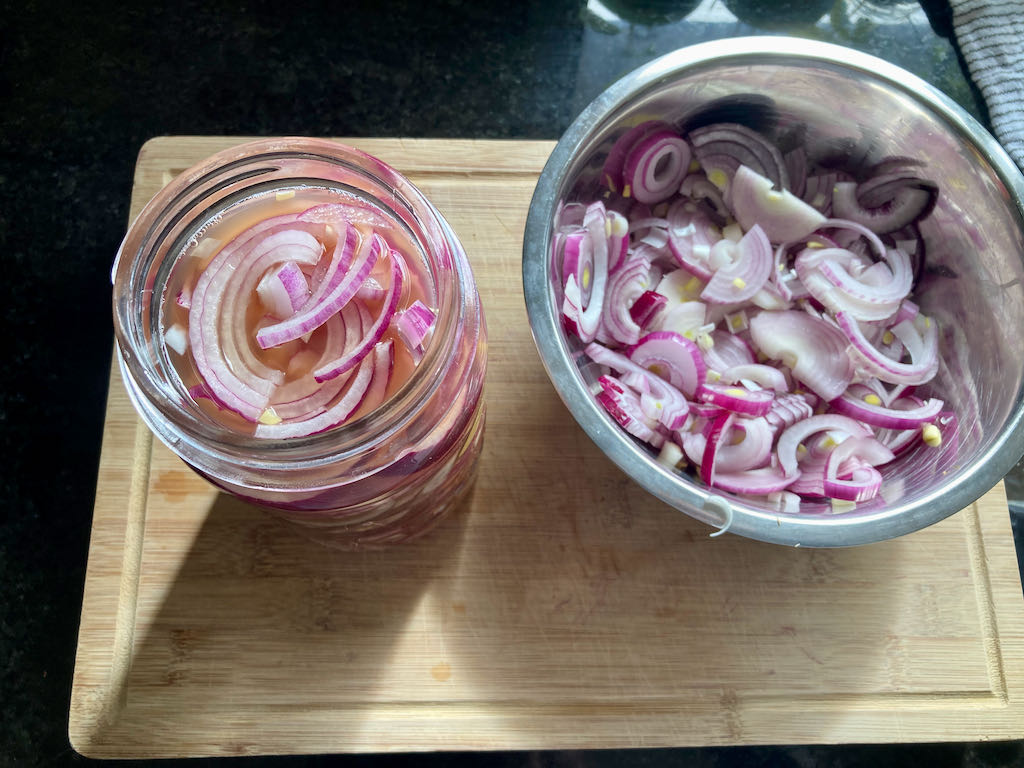
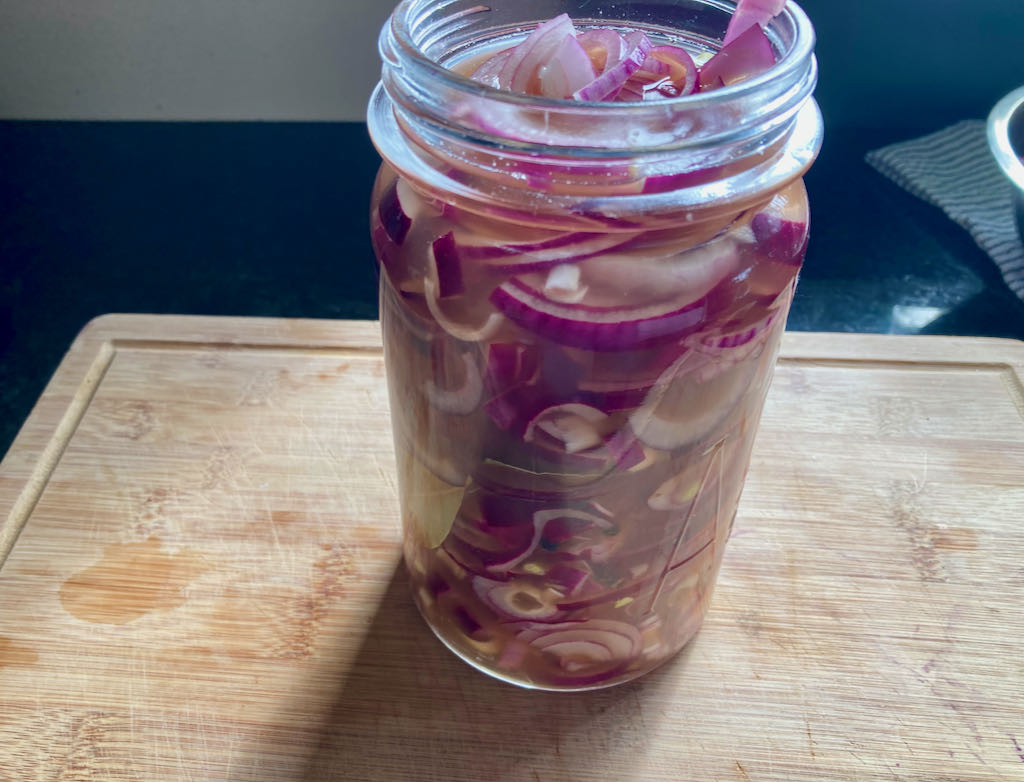
I adore topping my salads (enchiladas and tacos) with pink pickled onions. Full disclosure, I also love adding jalapeños to the top of all those things (and other things, too). I digress. Pink pickled onions are the best; the colour and crunch are amazing. They add a little sharp dimension to a meal.
As with everything, I search for a way to have the things I want without them being bad for me.
Traditionally, pickling requires a combination of vinegar, sugar, and water. I try to avoid sugar whenever possible, so I set about making a sugar-free pickle solution without compromising on flavour.
Bro science warning
I’m going to attempt to explain what the pickle solution does.
What is pickling? Pickling is the process of soaking foods in solutions to prevent spoilage.
There are two basic types of pickling.
Type one pickling uses an acidic solution that kills bacteria, often vinegar. Sugar and spices are often added to a vinegar solution to add more flavour. Some examples of type one pickling are pickled cucumbers and onions.
Type two uses salt or brine (saltwater) to encourage fermentation, which means that good bacteria grow and beat out the harmful bacteria that make food spoil. Some examples of type two pickling are sauerkraut and kimchi.
Bro science completed
So, the challenge was to find a replacement for the sugar usually added to a pickling solution without having a negative impact. I found a way to preserve the onions like a traditional pickle solution, but I replaced the sugar with something else.
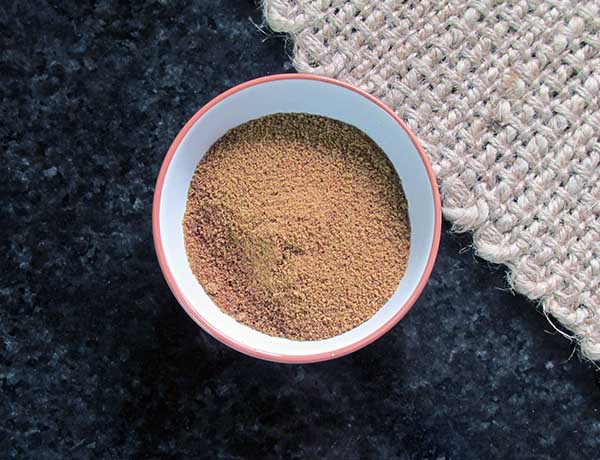
Test 1 coconut sugar
The first attempt used three tablespoons of coconut sugar as a replacement. I used apple cider vinegar, which has its own slight sweetness while still acting as a preservative.
The result was onions that were far too sweet for me, the mixture worked well, and the pickles were good to eat for four weeks, but I didn’t enjoy the flavour.
Test 2 maple syrup
maple syrup
For this test, I decided to use two tablespoons of maple syrup to see if it would give the right flavour. I stuck with the apple cider vinegar, as I do like the flavour.
The result, while this batch was much better than the coconut sugar version, I still didn’t really like it.
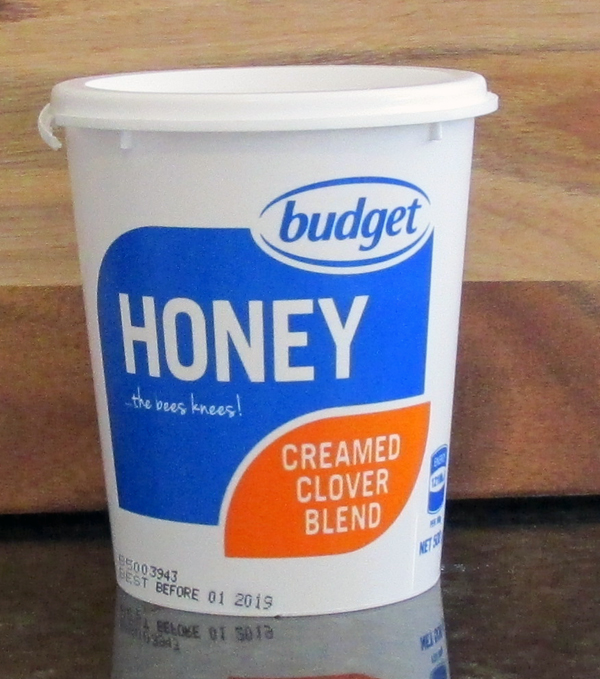
Test 3 honey
Honey
For this test, I used two tablespoons of honey to see if it would give the right flavour I was looking for.
The result is that we have a winner! The honey gave the onions the perfect amount of sweetness without changing the vinegar’s flavours. The bonus was that honey also gave me onions that were good to eat for about 6 weeks.
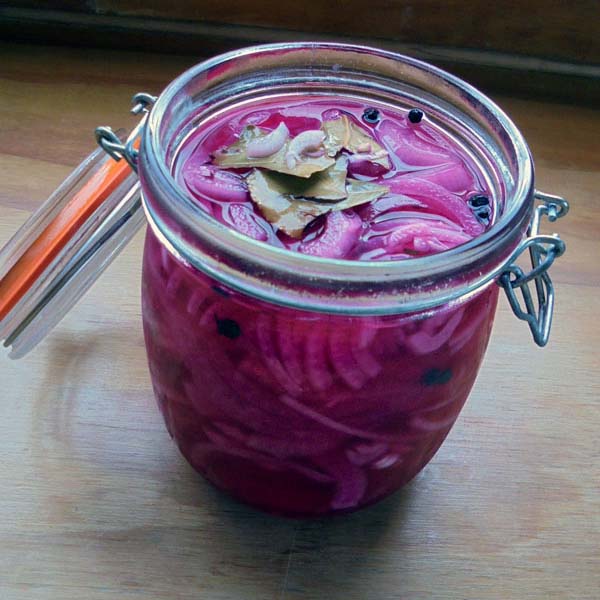
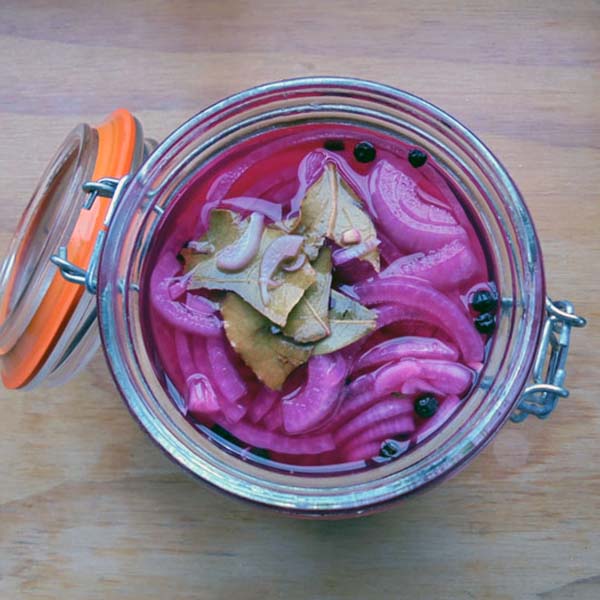
Quick pickle pink onions
Quick pickle pink onions ingredients
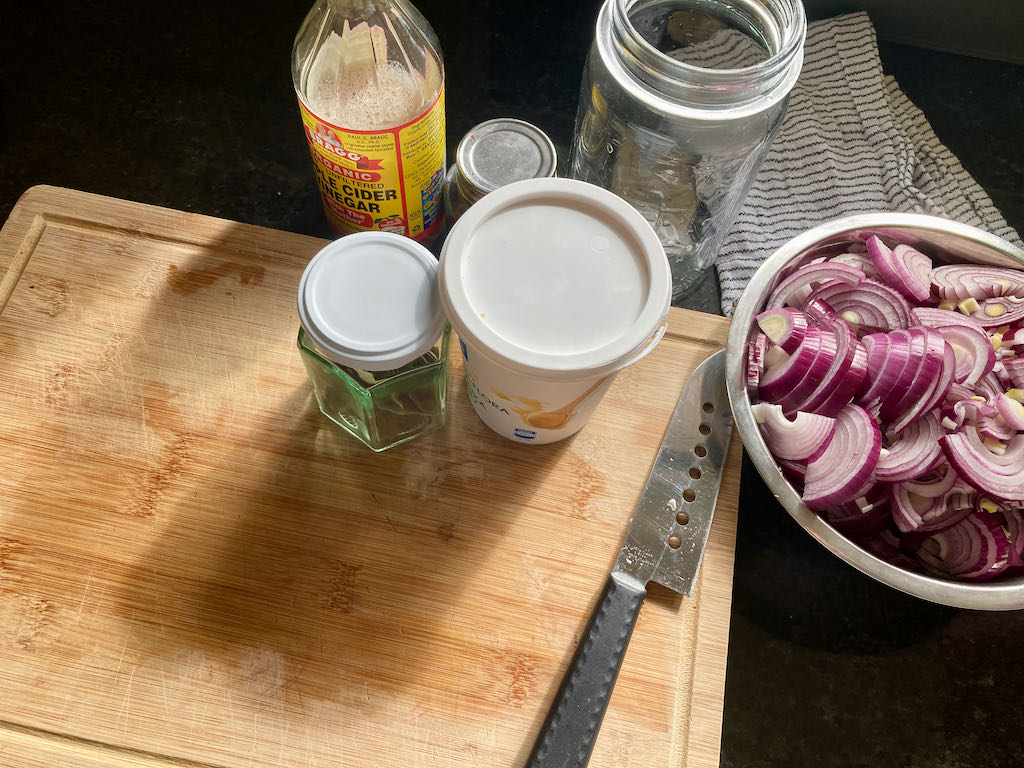
Ingredients
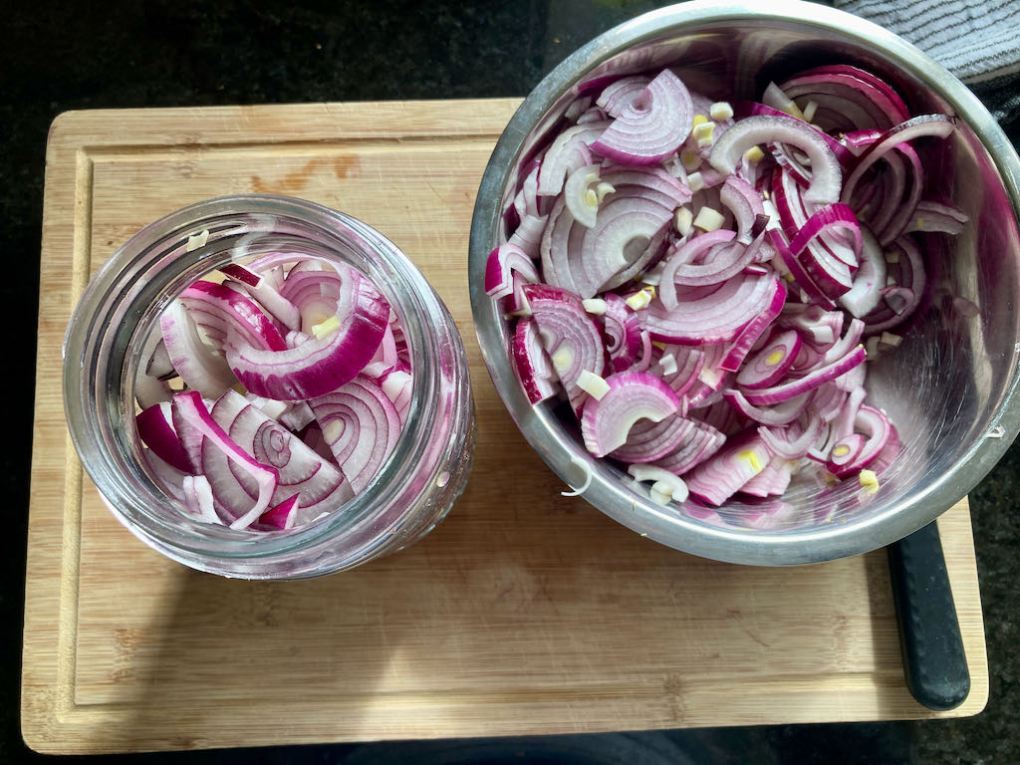
1 red onion, thinly sliced
3/4 cup apple cider vinegar
1 tsp. Salt
2 tbsp. Honey
1 bay leaf
6 peppercorns
Quick pickle pink onions
Instructions
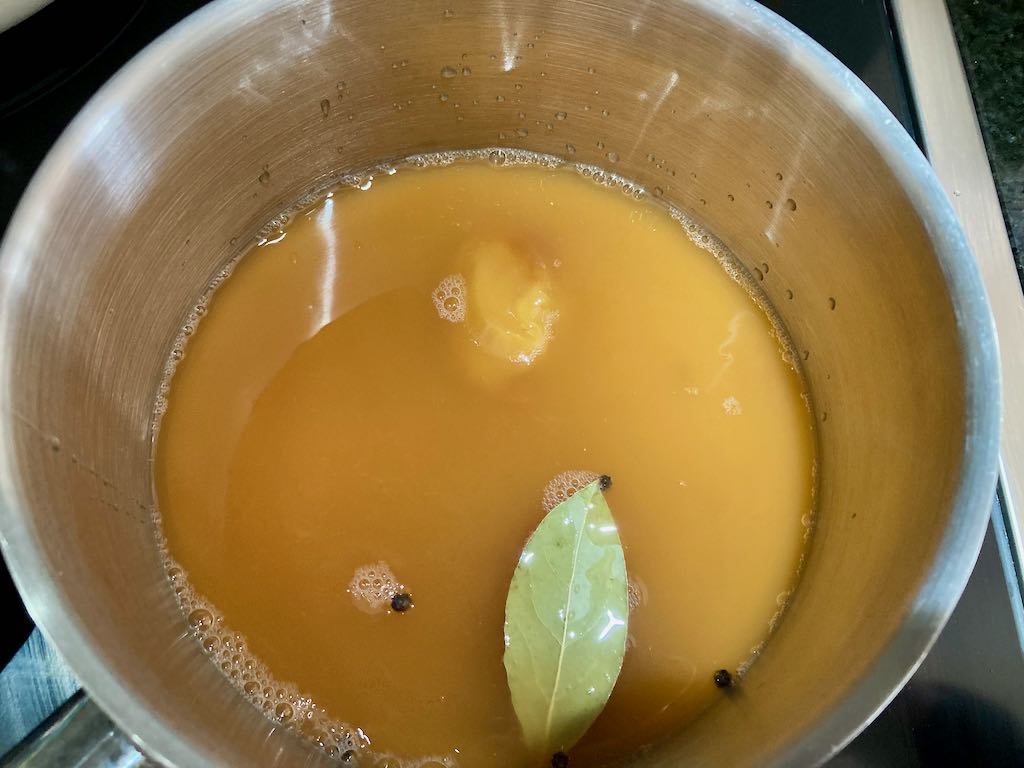
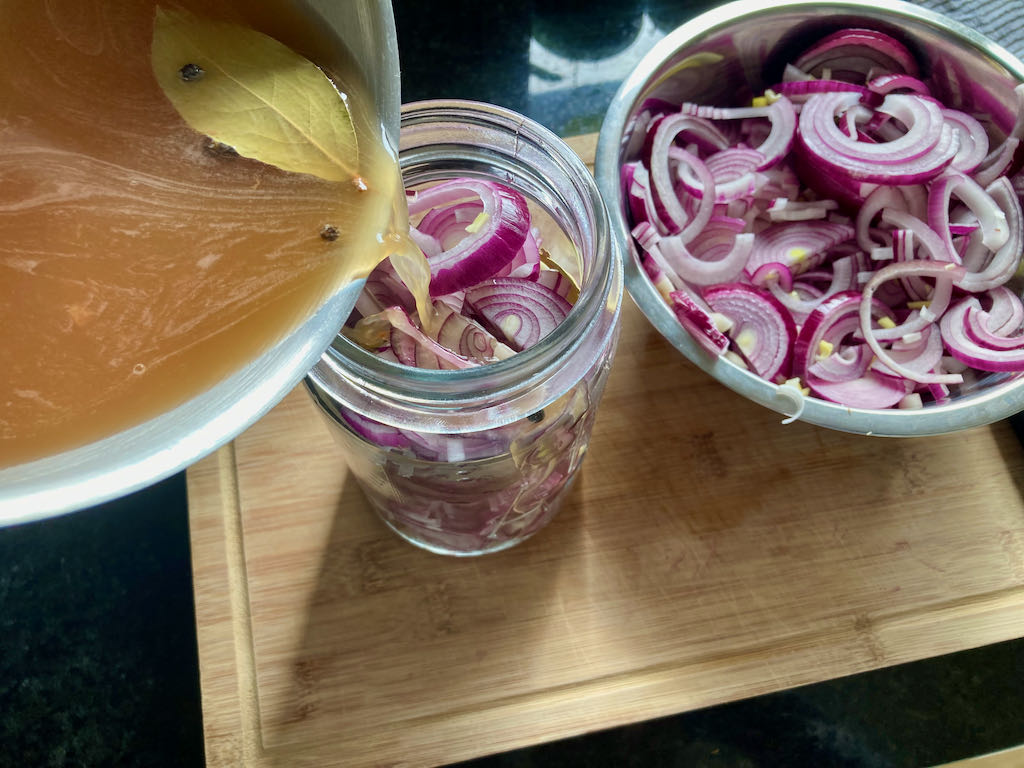
In a pan, combine the vinegar, salt, honey, bay leaf and peppercorns over a medium heat.
Remove the pan from the heat when the honey and salt have dissolved.
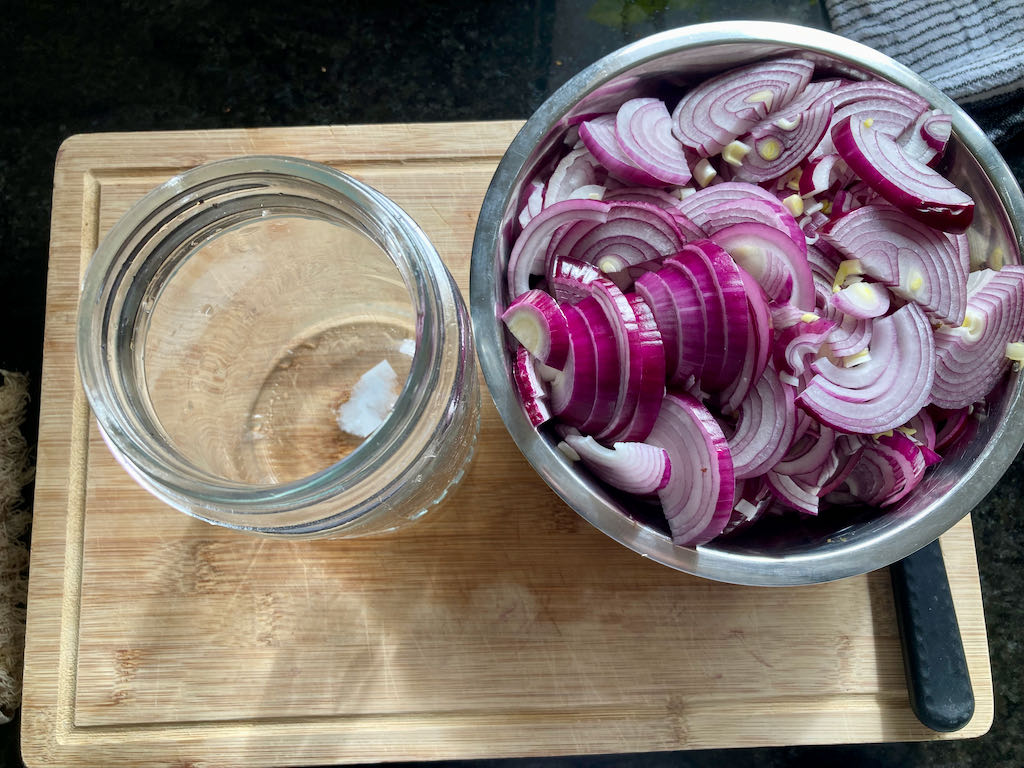
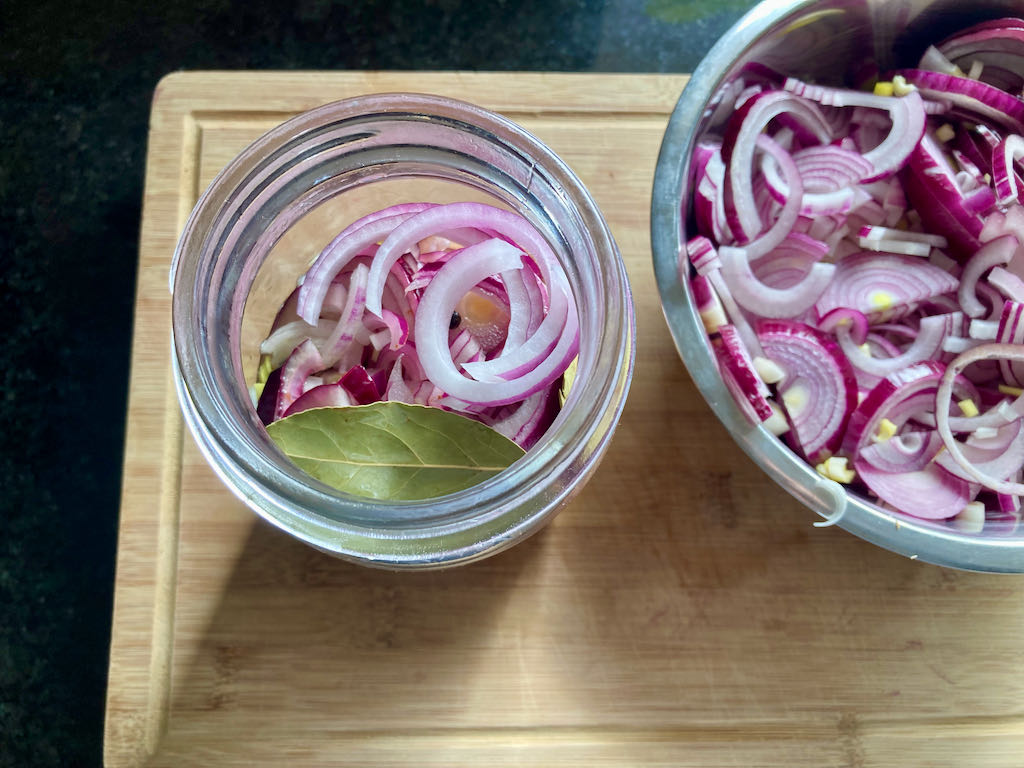
Add the sliced onions to the jar.
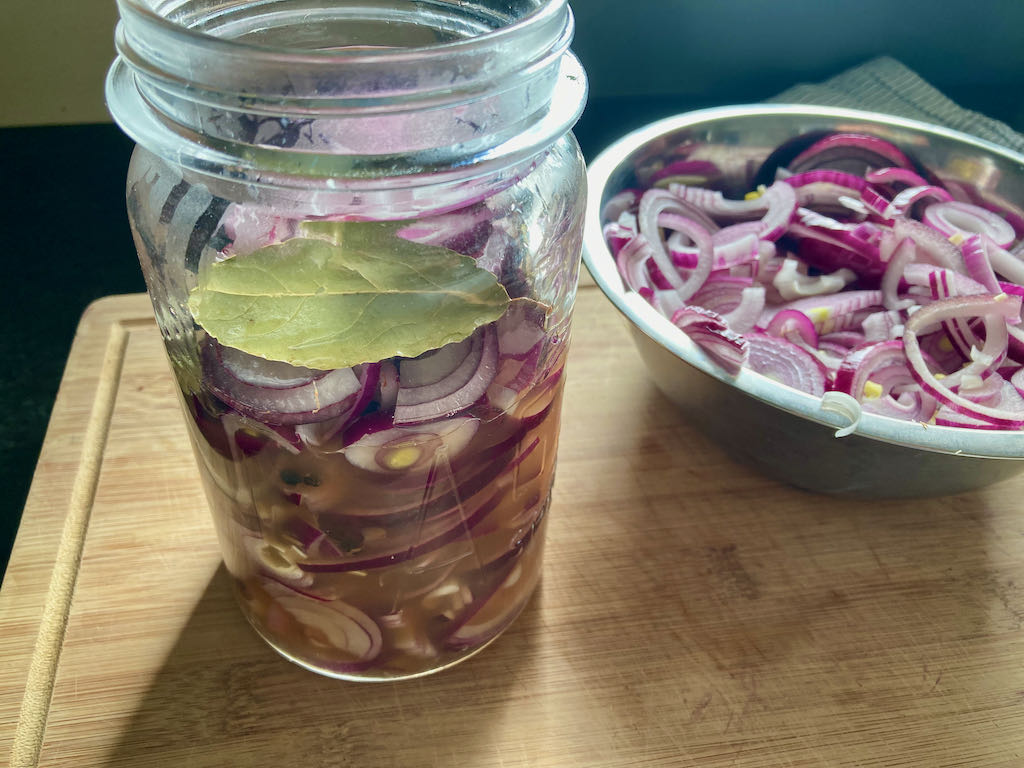
Pour the mix into a sterilised jar.
Seal the jar and put it in the fridge for at least one hour before using.
The onions will keep in the fridge for four weeks.
I topping my salads (enchiladas and tacos) with pink pickled onions. Pink pickled onions are the best, the colour and crunch are amazing. They add a little sharp dimension to a meal. As with all things, I search for a way to have the things I want without them being bad for me.
Credit: Cath @ easycleaneats
Ingredients
1 red onion, thinly sliced
3/4 cup apple cider vinegar
1 tsp. Salt
2 tbsp. Honey
1 bay leaf
6 peppercorns
Directions
In a pan combine the vinegar, salt, honey bay leaf and peppercorns over a medium heat.
When the honey and salt has dissolved remove the pan from the heat.
Pour the mix into a sterilised jar.
Add the sliced onions to the jar.
Seal the jar and put in the fridge for at least one hour before using.
The onions will keep in the fridge for four weeks.
Nutrition
Per Serving: 21 calories; 0 g fat; 6 g carbohydrates; 0 g protein.
Equipment
Saucepan
Wooden spoon
Measuring cup
Measuring spoons
Mason jar/ preserve jar
Nutritional disclaimer
Nutrition information is provided as an estimate based on the ingredients used and available in my area (New Zealand). The nutritional information is here to help you understand the recipe; I use MyFitnessPal to generate my estimates. For more accurate nutritional information, please use a nutritional calculator with the ingredients in your area.
If you are like me and you try to avoid mass-produced processed foods, the best option is to make your own. When you make your own, you control which ingredients you use and how much or how sweet you want it to be. Once you have a go at making your own and realise how easy it is, you will never go back to store-bought again.
Updating as we go
Early in 2021, I relocated and started updating my website; I’ve been making changes and improving everything as I go. This recipe is one of the many things I’ve tried to improve.
Fancy a fakeaway
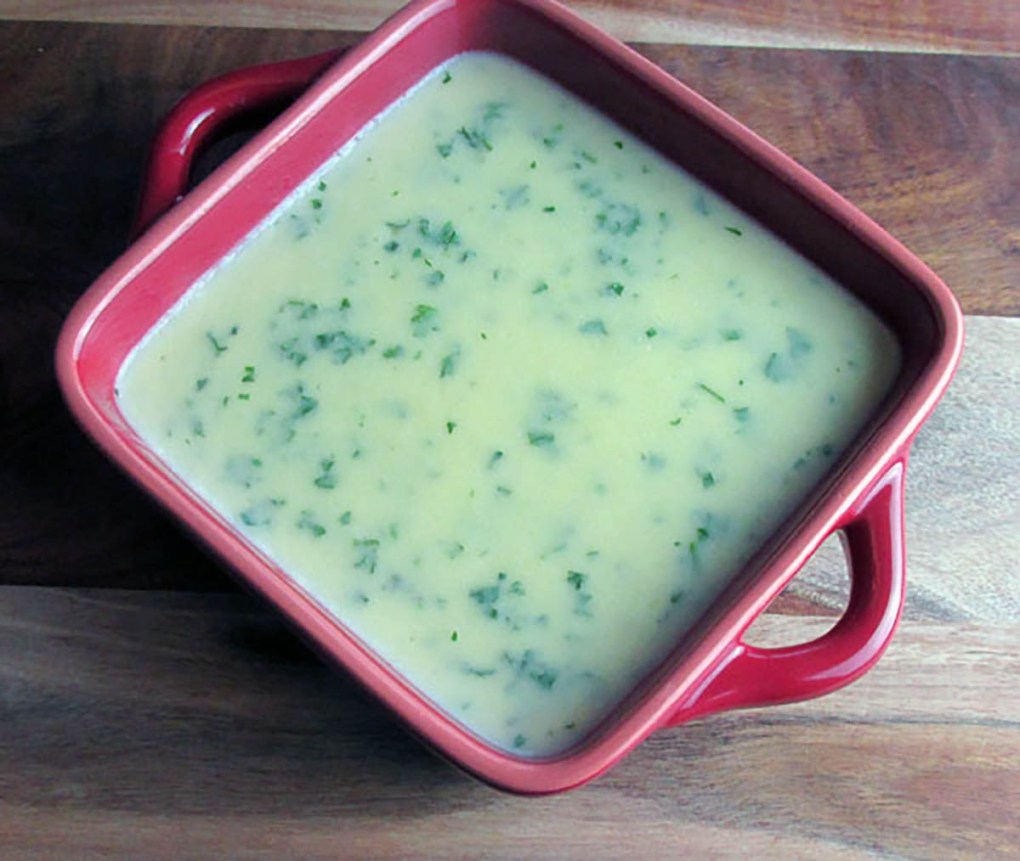
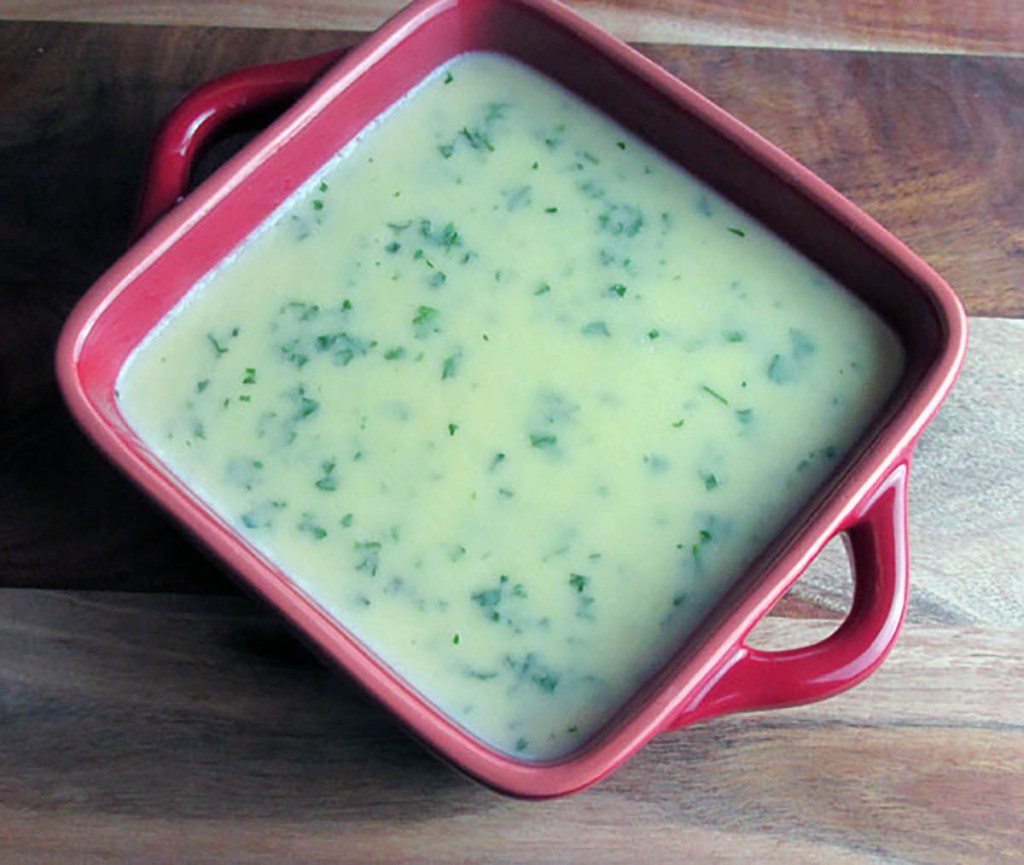
We all love a naughty takeaway, but we can all live without the extra calories and the expanding waistlines. You don’t need to live without your takeaway; swap it out for a delicious, healthier fakeaway. Fettuccine Alfredo was one of my favourite takeaway pasta dishes back in the day. As much as I would love the carb-filled dinner after a long day and a hard workout, it is never worth the carb coma afterwards. A while ago, I started experimenting to perfect my Alfredo sauce, which I could quickly whip up to pour over a bowl of coodles and generous chicken. It is ideal as a healthier takeaway option and keeps in the fridge for a few days.
Alfredo sauce recipe
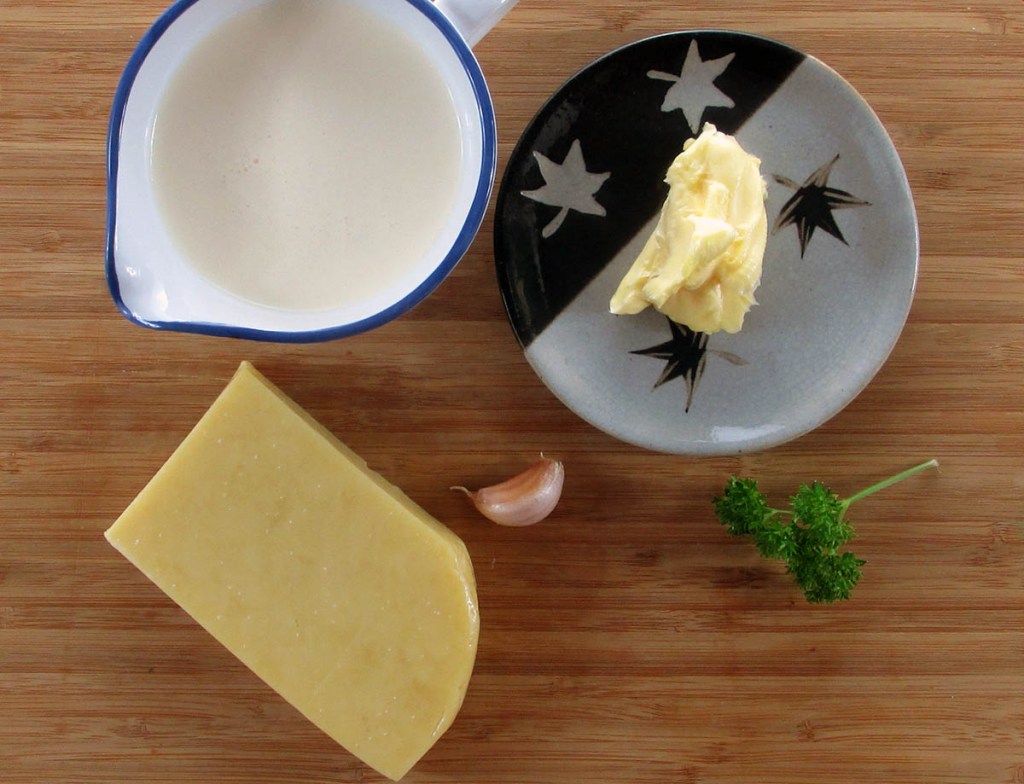
Ingredients
1/4 cup butter
1 cup heavy cream
1 garlic clove, crushed
1 1/2 cups Parmesan cheese, grated
1/4 cup parsley, chopped
Instructions
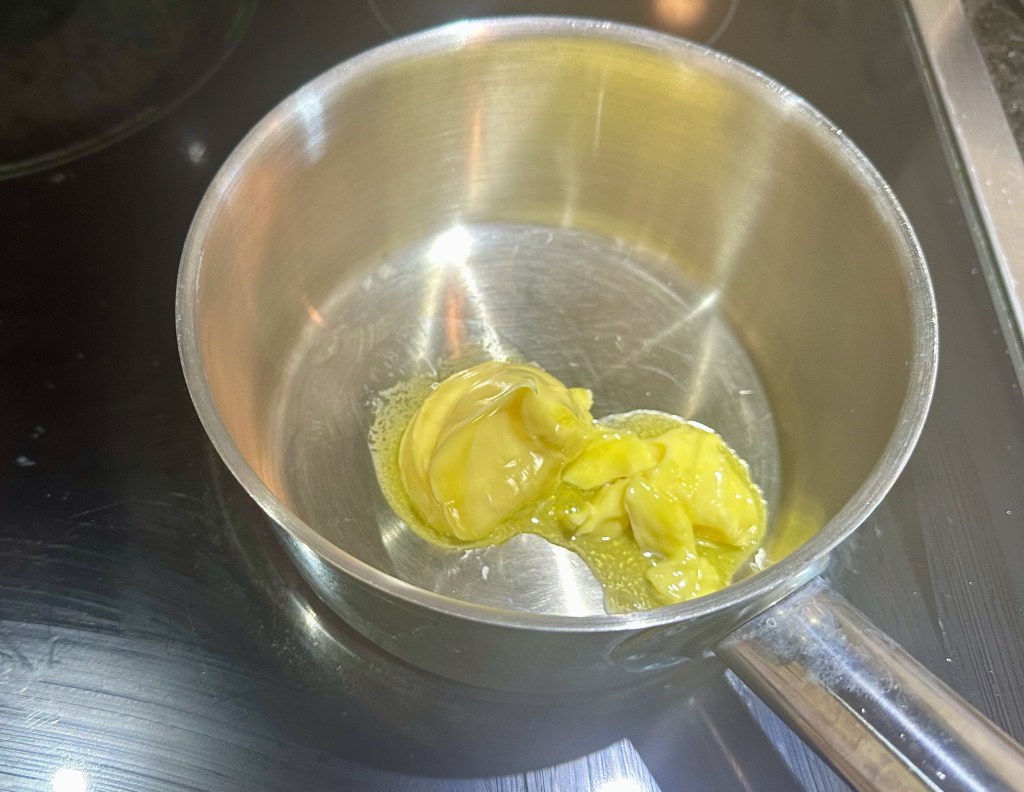
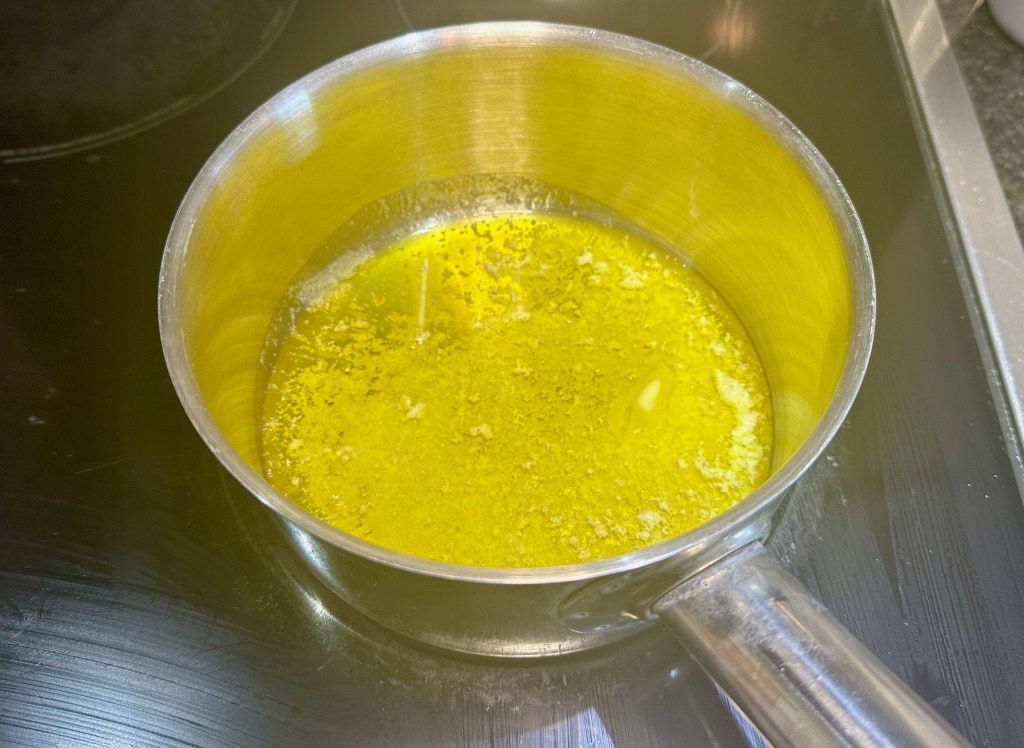
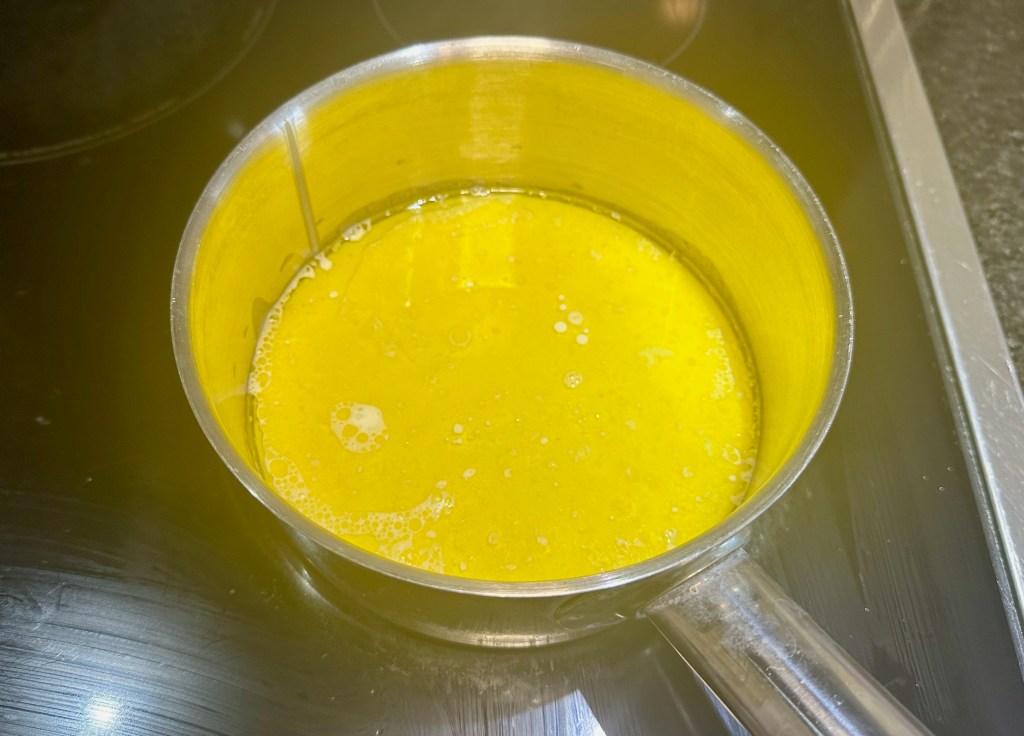
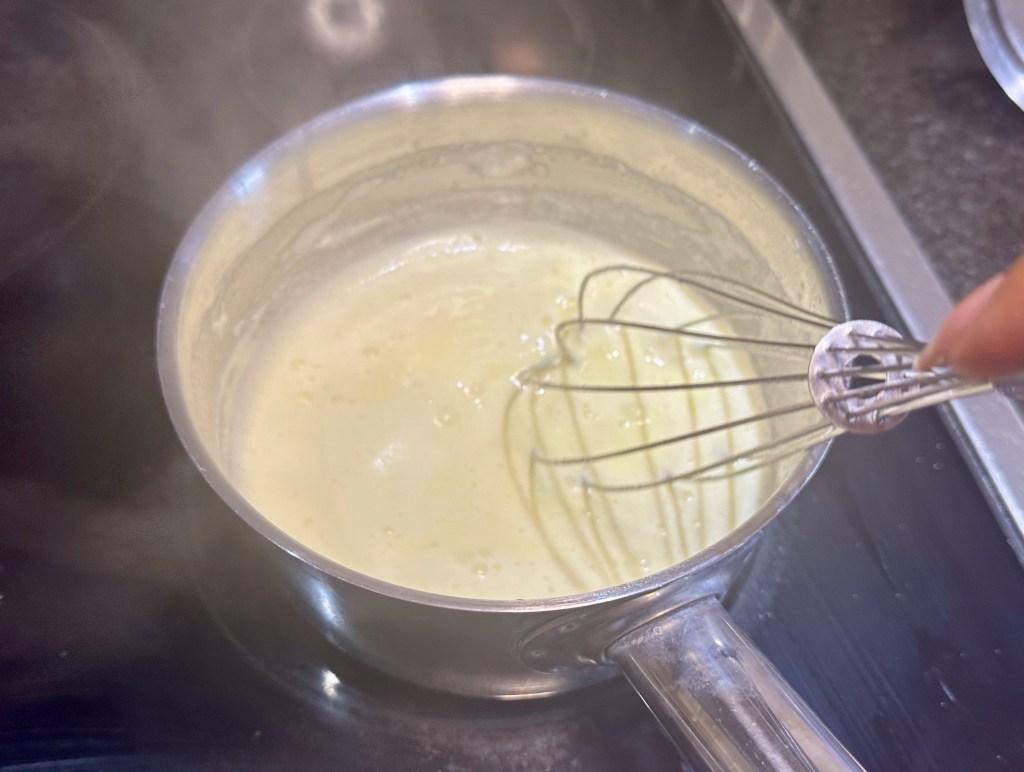
Melt butter in a medium saucepan over medium-low heat.
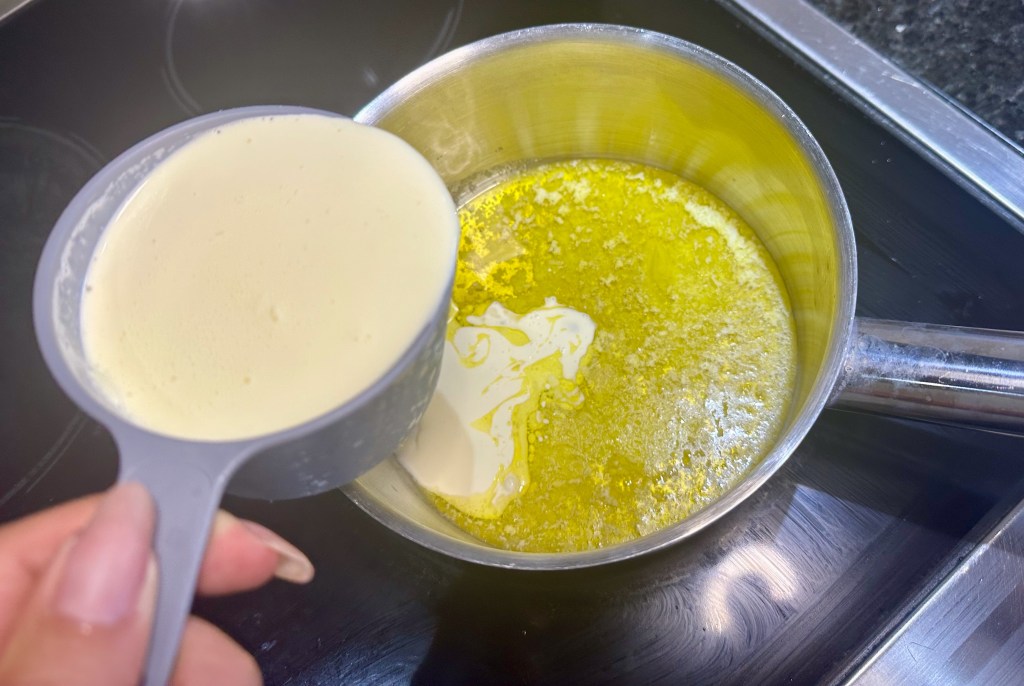
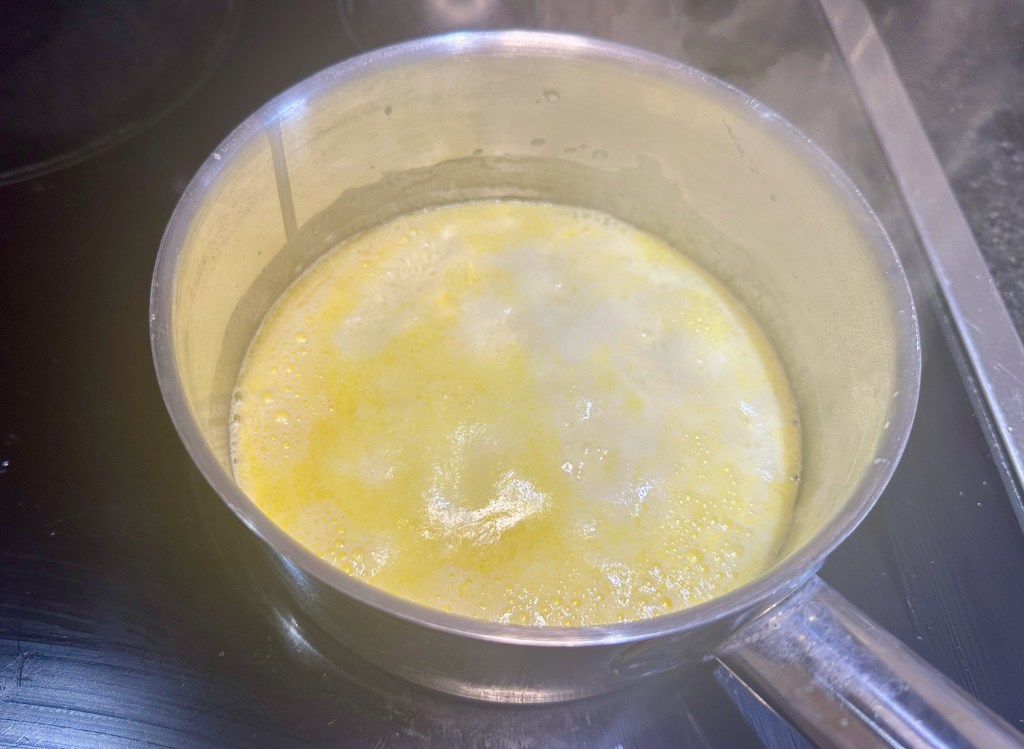
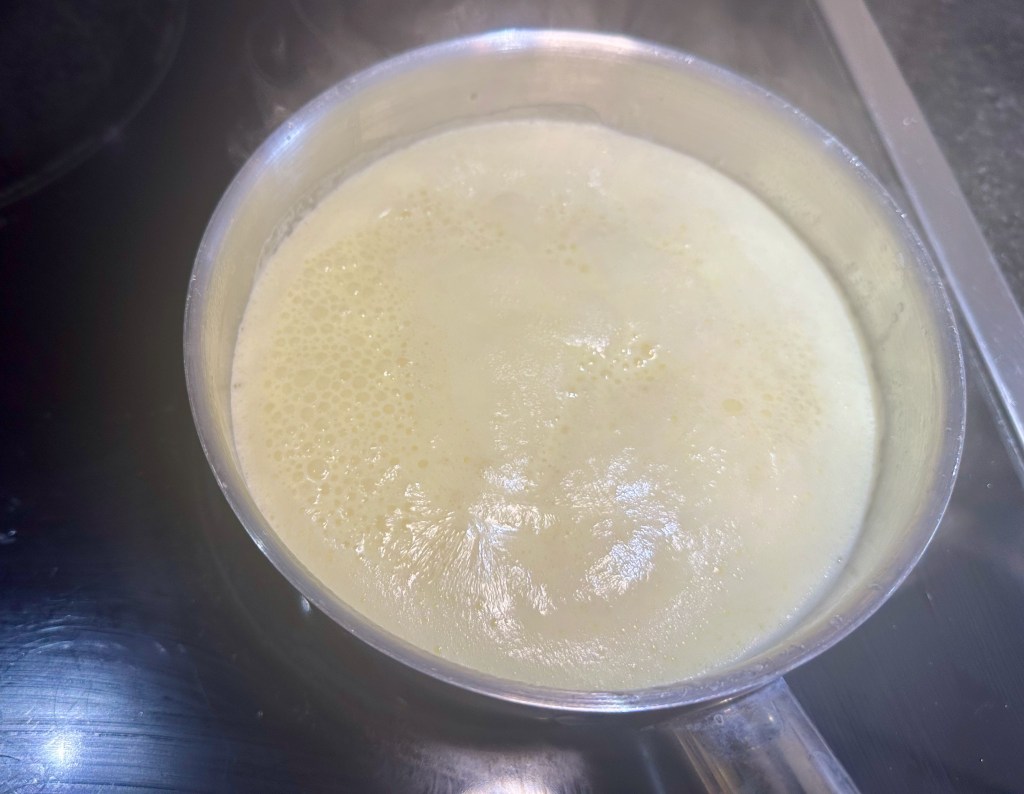
Add cream and simmer for 5 minutes.
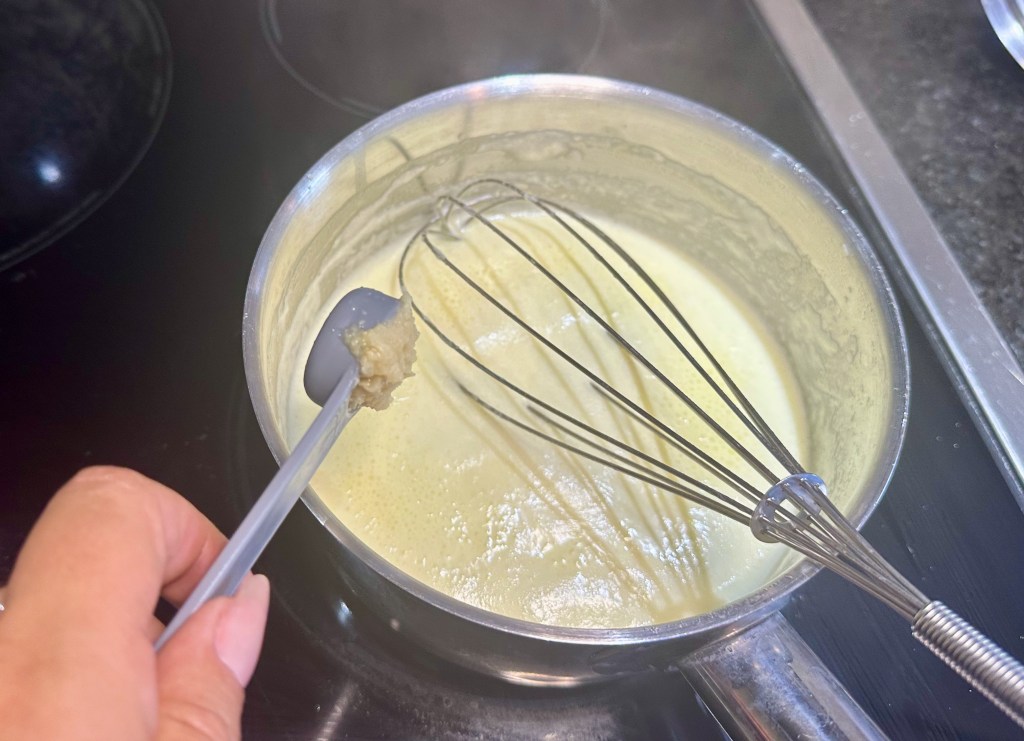
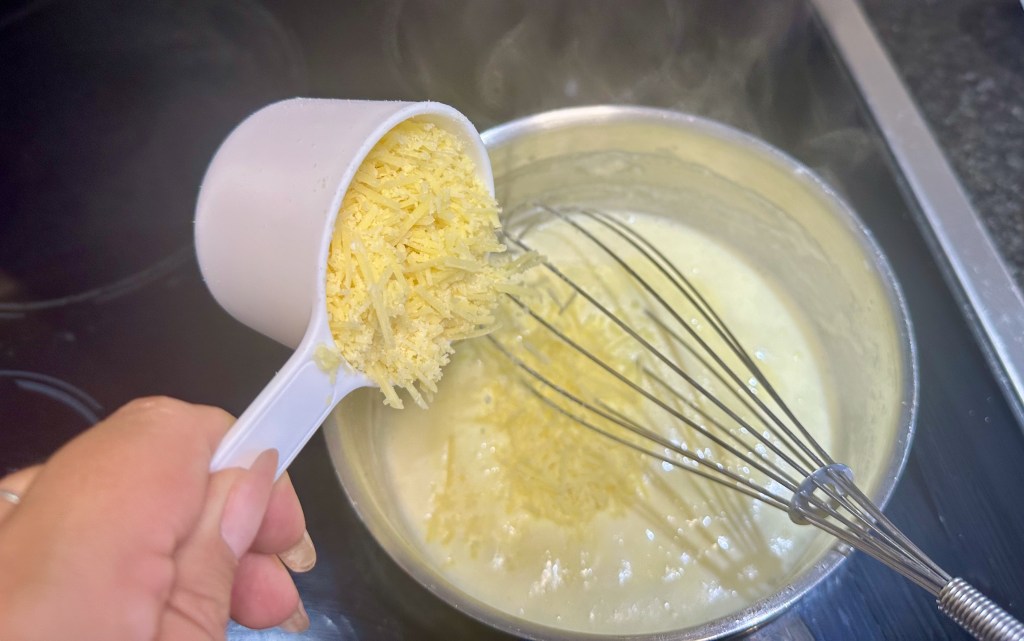
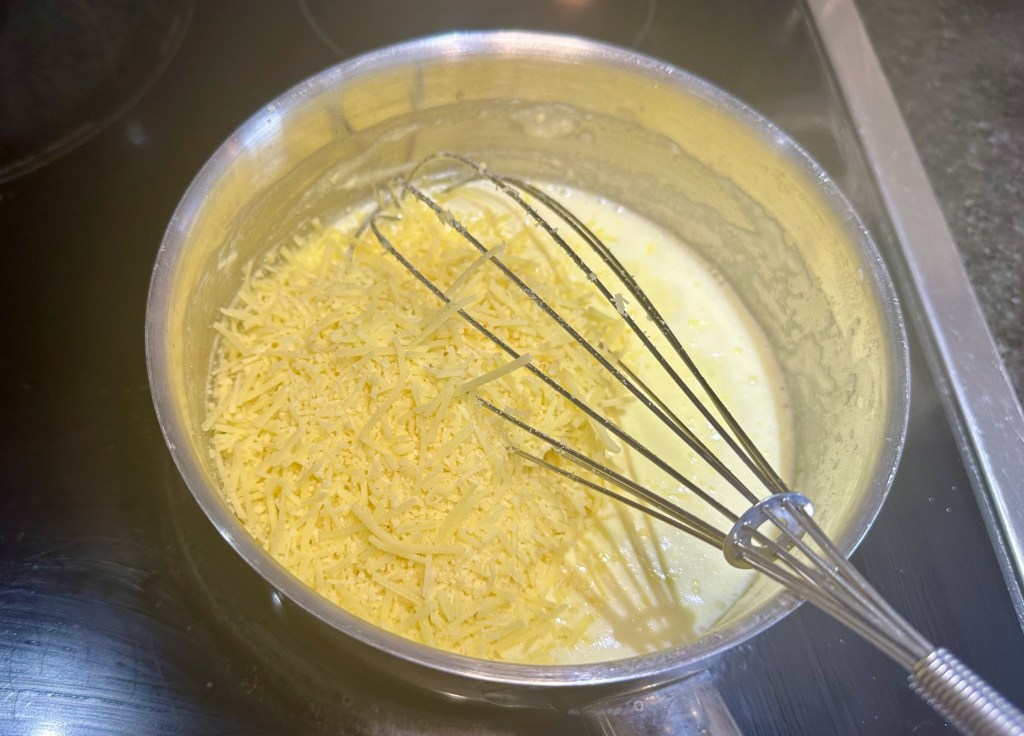
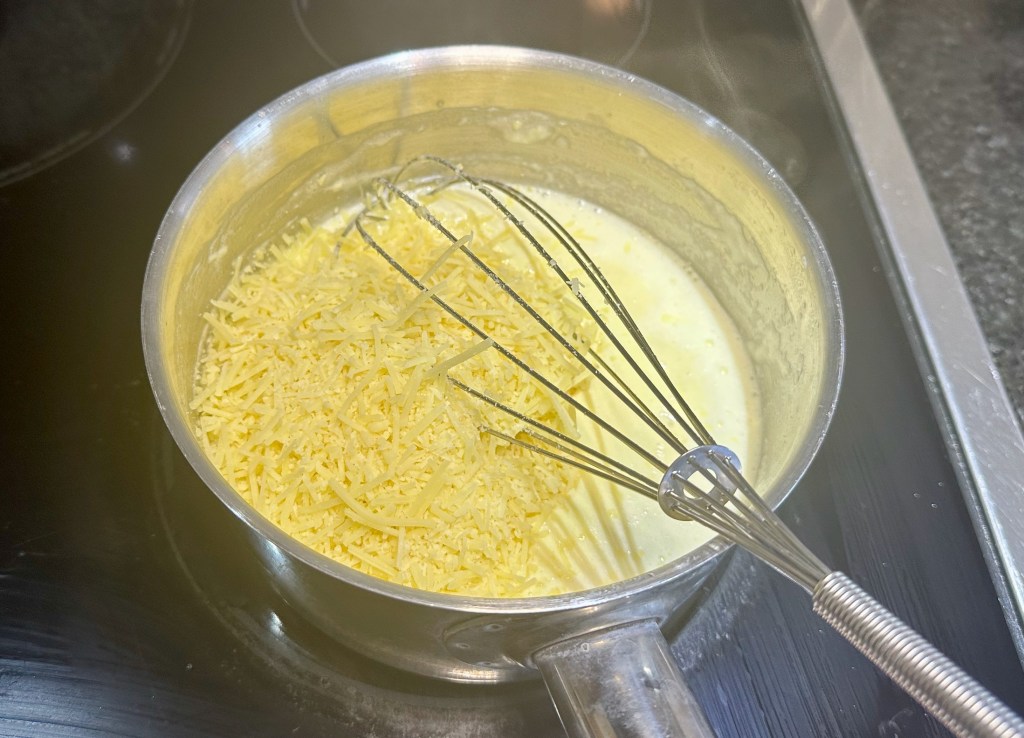
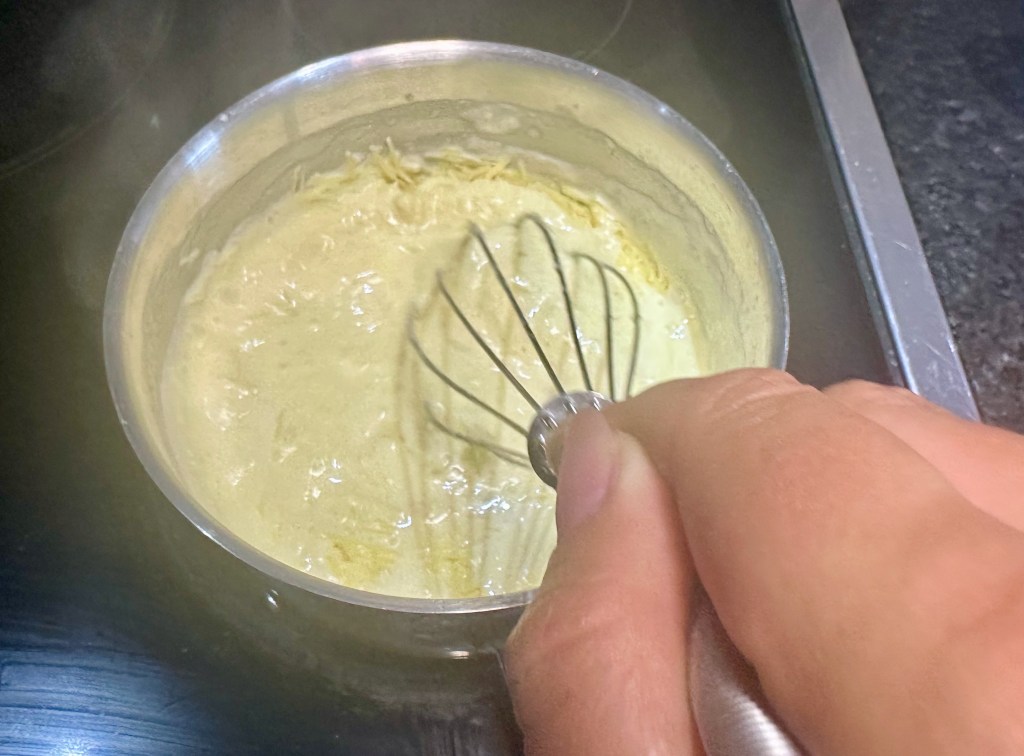
Add the garlic and cheese and whisk quickly, heating through.
Melt butter in a medium saucepan over medium-low heat.
Add cream and simmer for 5 minutes.
Add the garlic and cheese and whisk quickly, heating through.
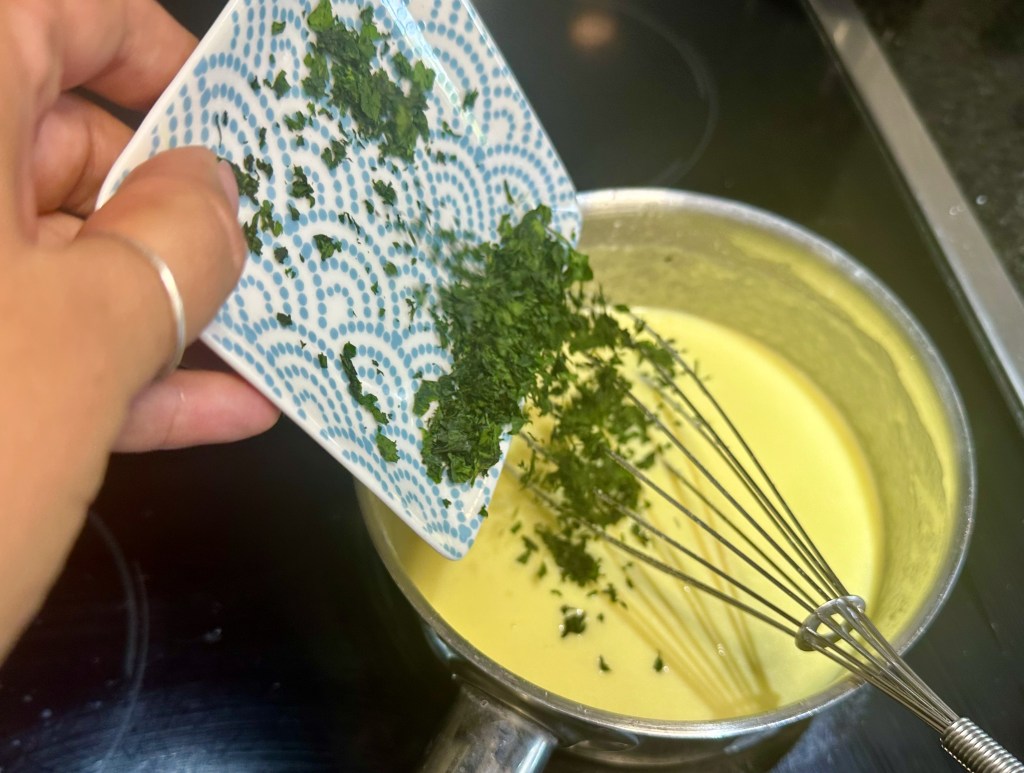
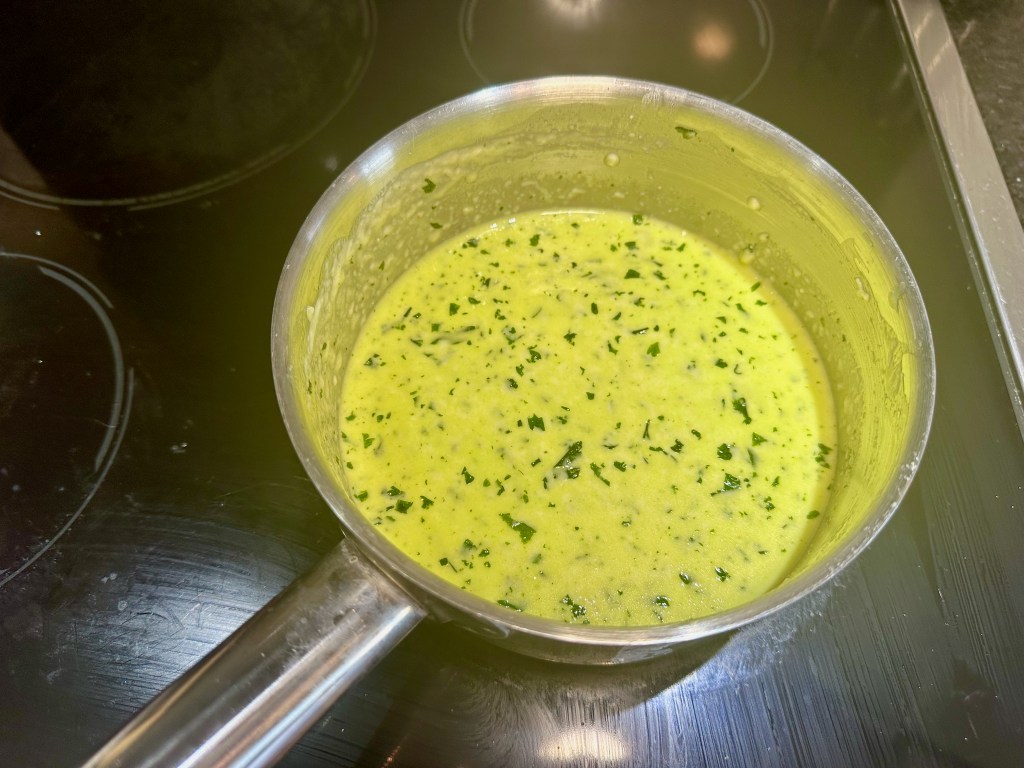
Stir in parsley and serve.
Nutrition
Per Serving: 230 calories; 21 g fat; 3.5 g carbohydrates; 5.4 g protein
Equipment
Measuring cups
Knife
Chopping board
Saucepan
Spatula
Grater
Nutritional disclaimer
Nutrition information is provided as an estimate based on the ingredients used and available in my area (New Zealand). The nutritional information is here to help you understand the recipe; I use MyFitnessPal to generate my estimates. For more accurate nutritional information, please use a nutritional calculator with the ingredients in your area.
Can you believe it is 2025? I have no idea where the time is going. The last few weeks have been crazy busy at work, and non-work life has been a blur. This week I’ve had my first holiday in 3 years if you can call a 20km walk across the Tongariro Crossing as a holiday. I do; it was the first time I had been out of Auckland for over a day.
After my mini break, I had the joy of a work trip to Wellington before the end of the week, which meant I wasn’t overly enthused about spending hours in the kitchen cooking. I decided to use an easy recipe born of my laziness and a fridge raid at the end of the long Auckland Covid lockdown a few years ago.
Fridge raid
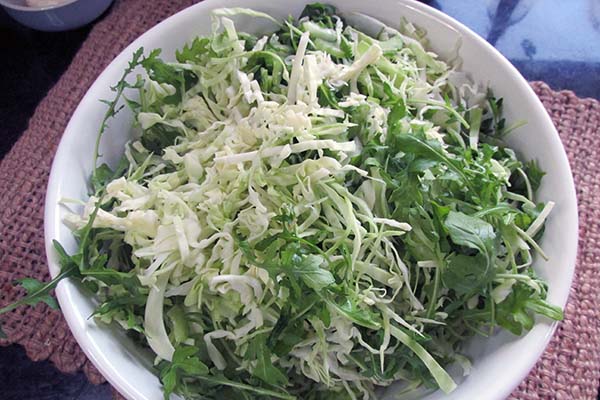
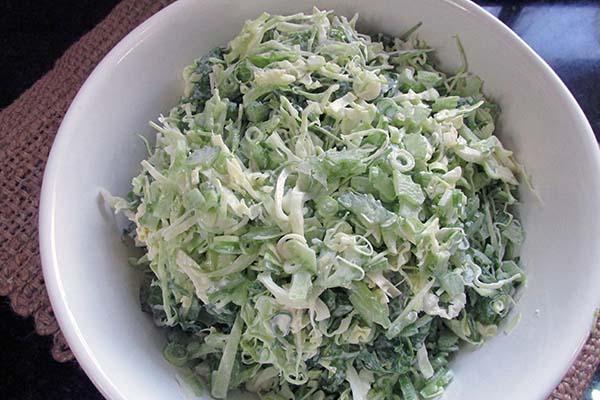
Inspirational always strikes me when I can’t be bothered to do a supermarket run but have a collection of random foods in the fridge. This is another of those kinds of recipes. A quick raid of the fridge and pantry presented the ingredients for a new type of crunchy salad to go with the chicken skewers that originally were cooking happily on the BBQ but, in this case, were ready and waiting in the fridge.
Crunch salad recipe
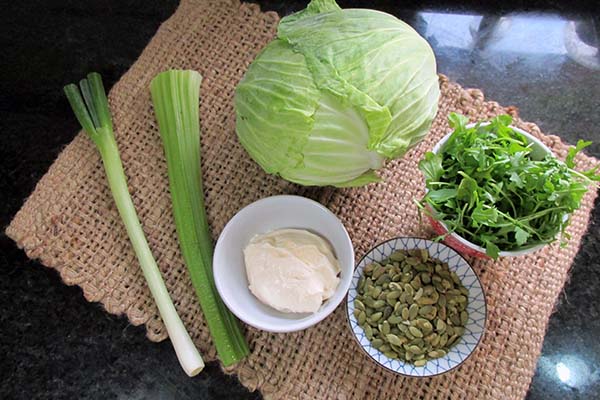
Ingredients
1/4 cup pumpkin seeds, toasted
1 head green cabbage, shredded
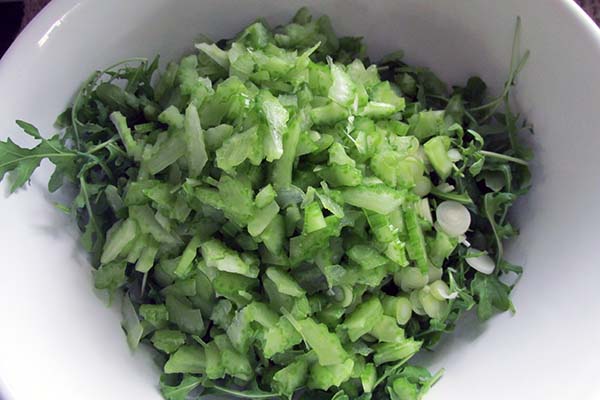
4 celery stalks, sliced
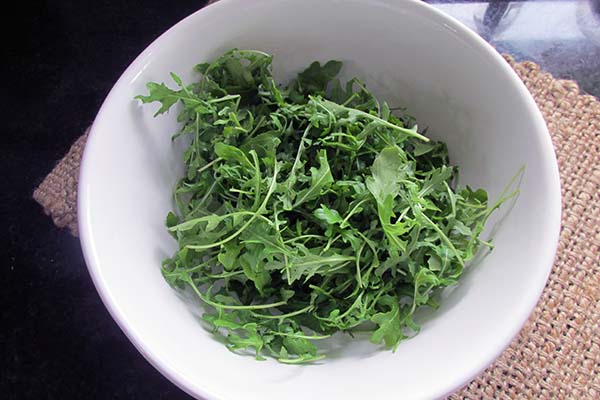
2 handfuls rocket
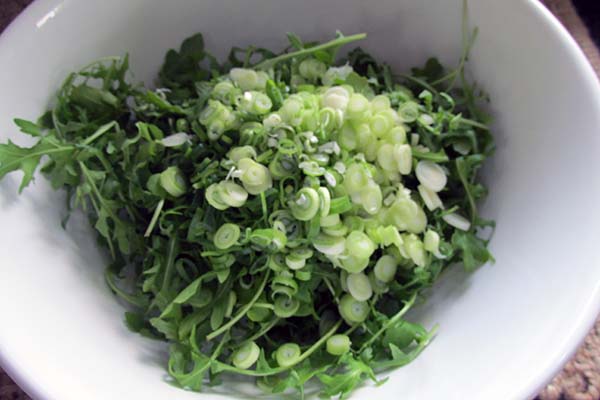
1/2 cup spring onions, sliced
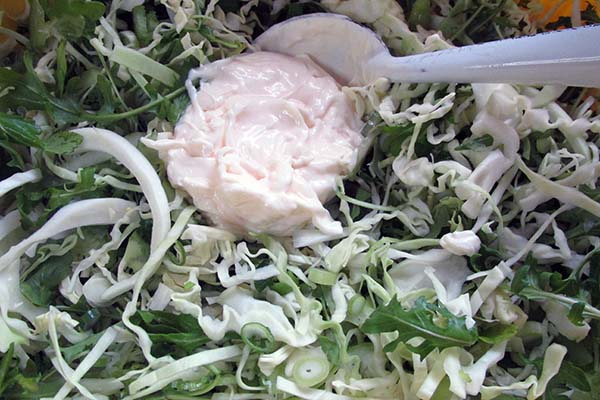
1/4 cup easy mayo
Instructions
In a large bowl mix together all of the ingredients and serve.
Per Serving: 123 calories; 9 g fat; 10 g carbohydrates; 6 g protein
Equipment
Knife
Chopping board
Measuring cups
Mixing bowl
Tongs
Nutritional disclaimer
Nutrition information is provided as an estimate based on the ingredients used and available in my area (New Zealand). The nutritional information is here to help you understand the recipe; I use MyFitnessPal to generate my estimates. For more accurate nutritional information, please use a nutritional calculator with the ingredients in your area.
If you are like us and you try to avoid mass-produced processed foods, the best option is to make your own. When you make your own, you get to control which ingredients you use and how much or how sweet you want it to be. Once you have a go at making your own and you realise how easy it is, you will never go back to store-bought again.
A nut-free option
I have never had the pleasure of eating satay sauce; that pesky nut and peanut allergy does get in the way, but rather than miss out, I decided to come up with a nut-free option that was easy to make and would be a great alternative to any store bought sauce.
Satay-style sauce
Ingredients
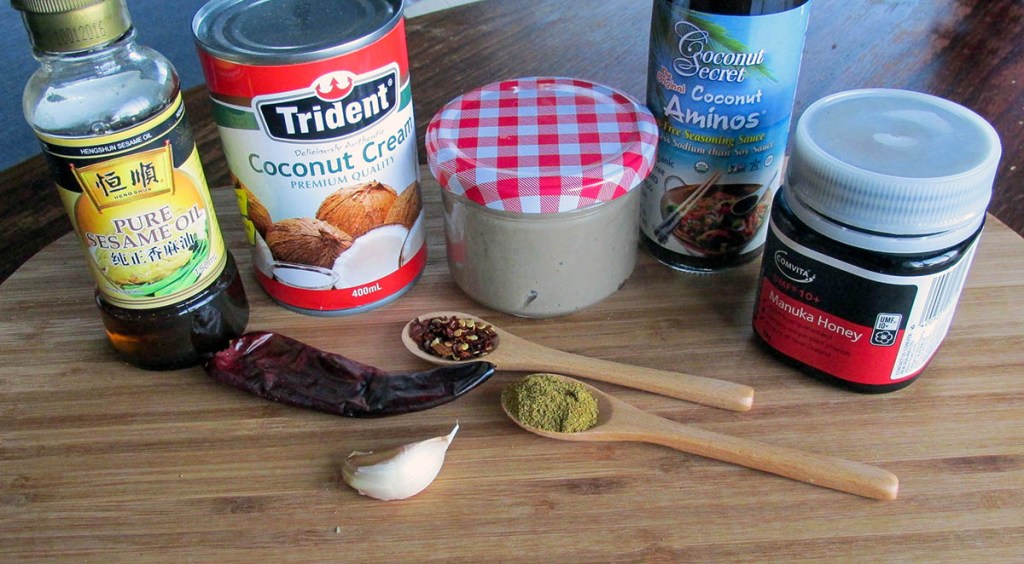
1 can of coconut milk
1/4 cup sun butter
1 tbsp. coconut aminos
1 tbsp. chilli
1 clove of garlic
1 tsp. sesame oil
1 tsp. honey
2 tbsp. curry powder
1/2 tsp. red chilli flakes
A pinch of salt
Instructions
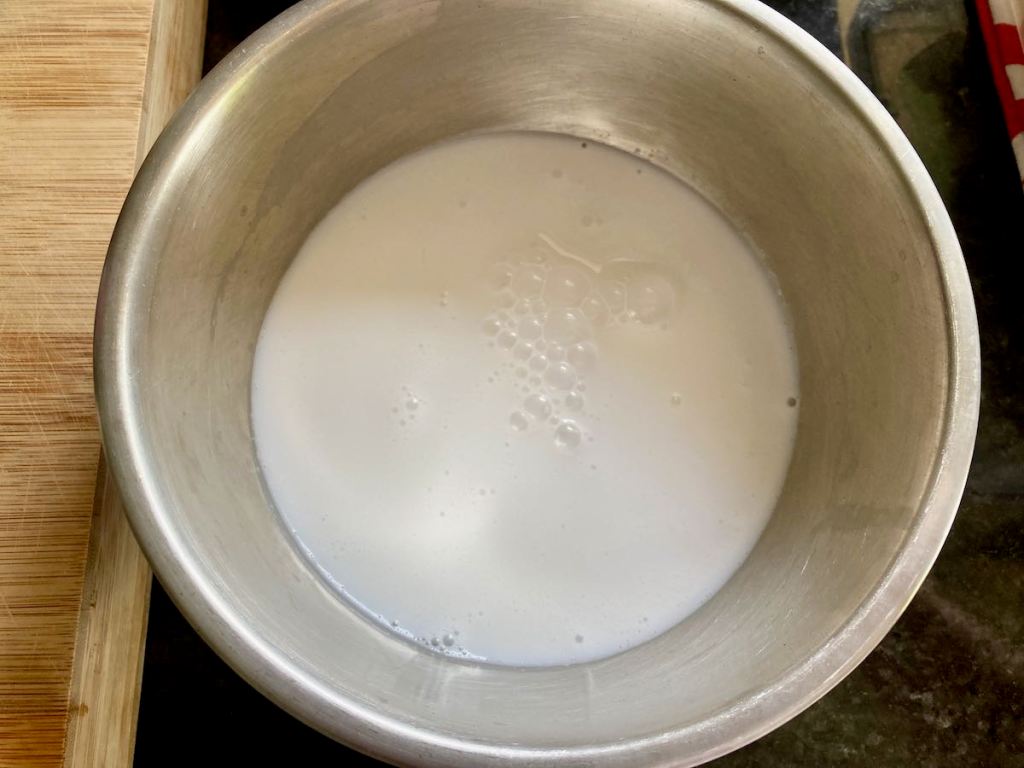
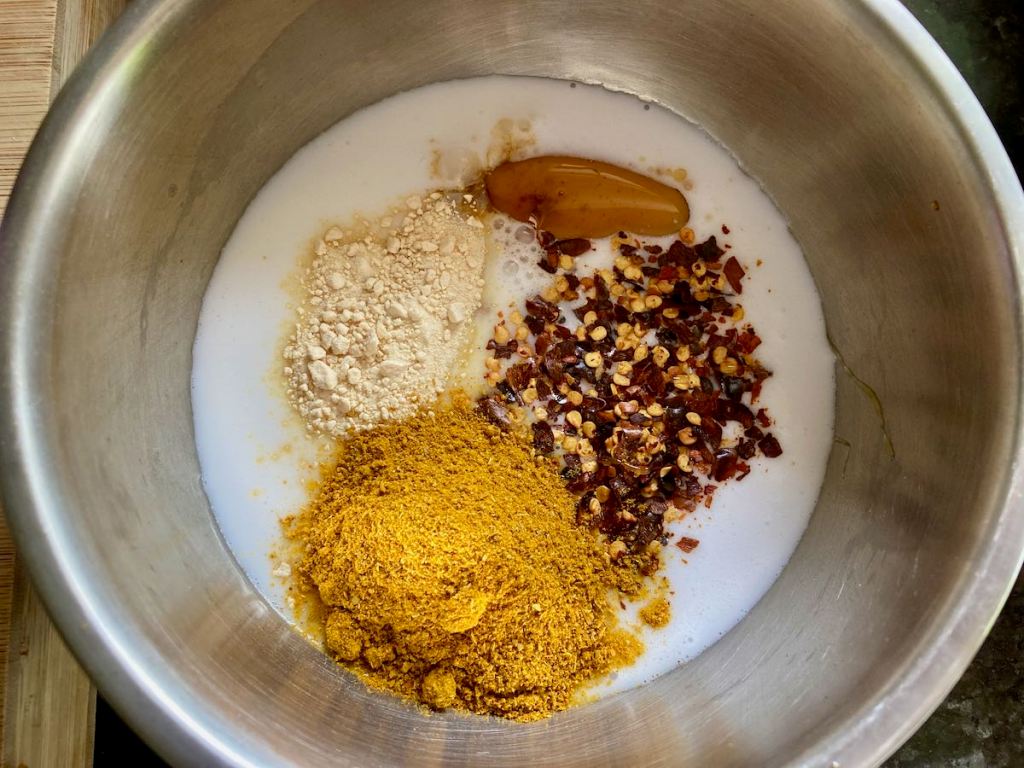
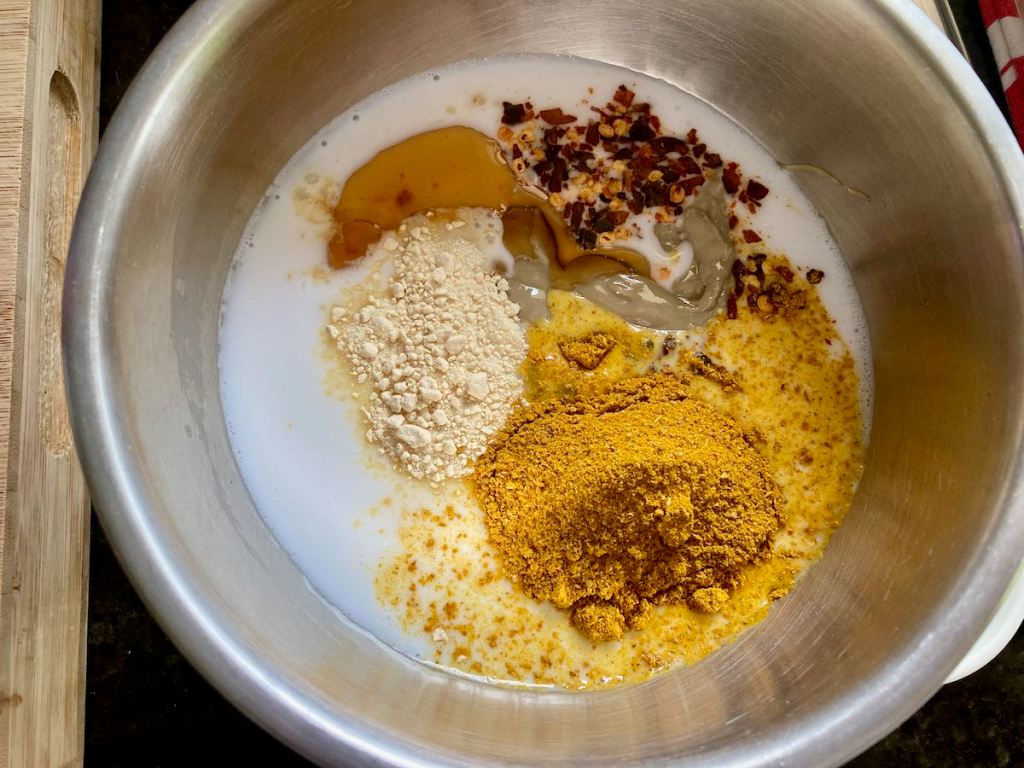
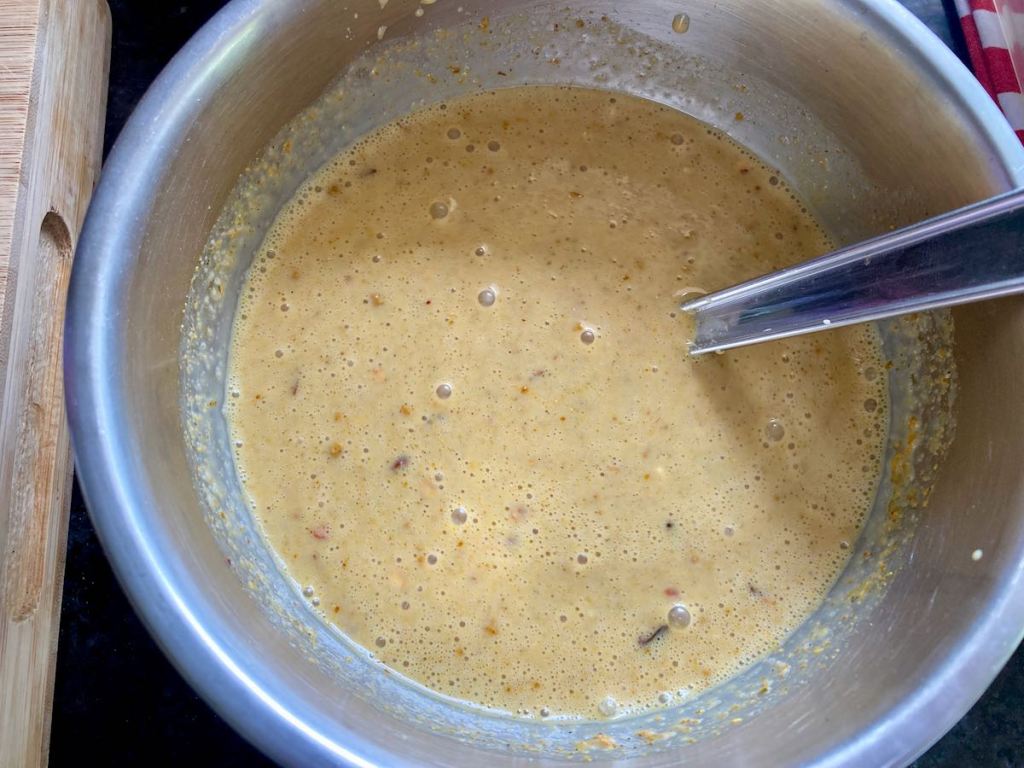
In a medium bowl, whisk together all sauce ingredients until completely combined.
Nutrition
Per Serving: 106 calories; 8g fat; 6g carbohydrates; 3g protein
Equipment
Mixing bowl
Whisk
Measuring cups
Measuring spoons
Nutritional disclaimer
Nutrition information is provided as an estimate based on the ingredients used and available in my area (New Zealand). The nutritional information is here to help you understand the recipe; I use MyFitnessPal to generate my estimates. For more accurate nutritional information, please use a nutritional calculator with the ingredients in your area.
If you are like me and you try to avoid mass-produced processed foods, the best option is to make your own. When you make your own, you get to control which ingredients you use and how much or how sweet you want it to be. Once you have a go at making your own and realise how easy it is, you will never go back to store-bought again.
Reinvention
Years ago, I was looking for something to go with my garlic pulled pork. I had a great recipe from my former mother-in-law for a classic slaw that I decided to tinker with. This recipe is what I ended up with. The crisp apple goes so well with the crunchy cabbage and tangy honeygar. Like the normal slaw, it is quick and easy to make but packs a lot more punch in the flavour stakes.
If you have the attachments on a food processor, I recommend using the shredding and grating features to make it even faster to make your slaw.
Add in the honeygar and lemon juice, mix and serve. This makes enough slaw to go with a 2kg pork shoulder and will easily fill six grown and hungry men.
Mix vegetables together in a bowl.
Add in the honeygar and lemon juice, mix and serve.
Nutrition
Per Serving: 71 calories; 0.2g fat; 17.5g carbohydrates; 1.8g protein
Equipment
Chopping board
Knife
Grater
Vegetable peeler
Mixing bowl
Fork
Nutritional disclaimer
Nutrition information is provided as an estimate based on the ingredients used and available in my area (New Zealand). The nutritional information is here to help you understand the recipe; I use MyFitnessPal to generate my estimates. For more accurate nutritional information, please use a nutritional calculator with the ingredients in your area.